Closure and Time Frames: Mareenah Galang

The graphic novel that I chose for this blog post is They Called Us Enemy by Eisinger Scott Becker. The novel explains the story of George Takei, a well known actor of the Star Trek movies, and his and family’s experience in the Japanese internment camps. This is actually a book that I picked up from the store recently. I have always been interested in novels about historical events, so I thought a graphic novel about a historical event would be even more interesting. 
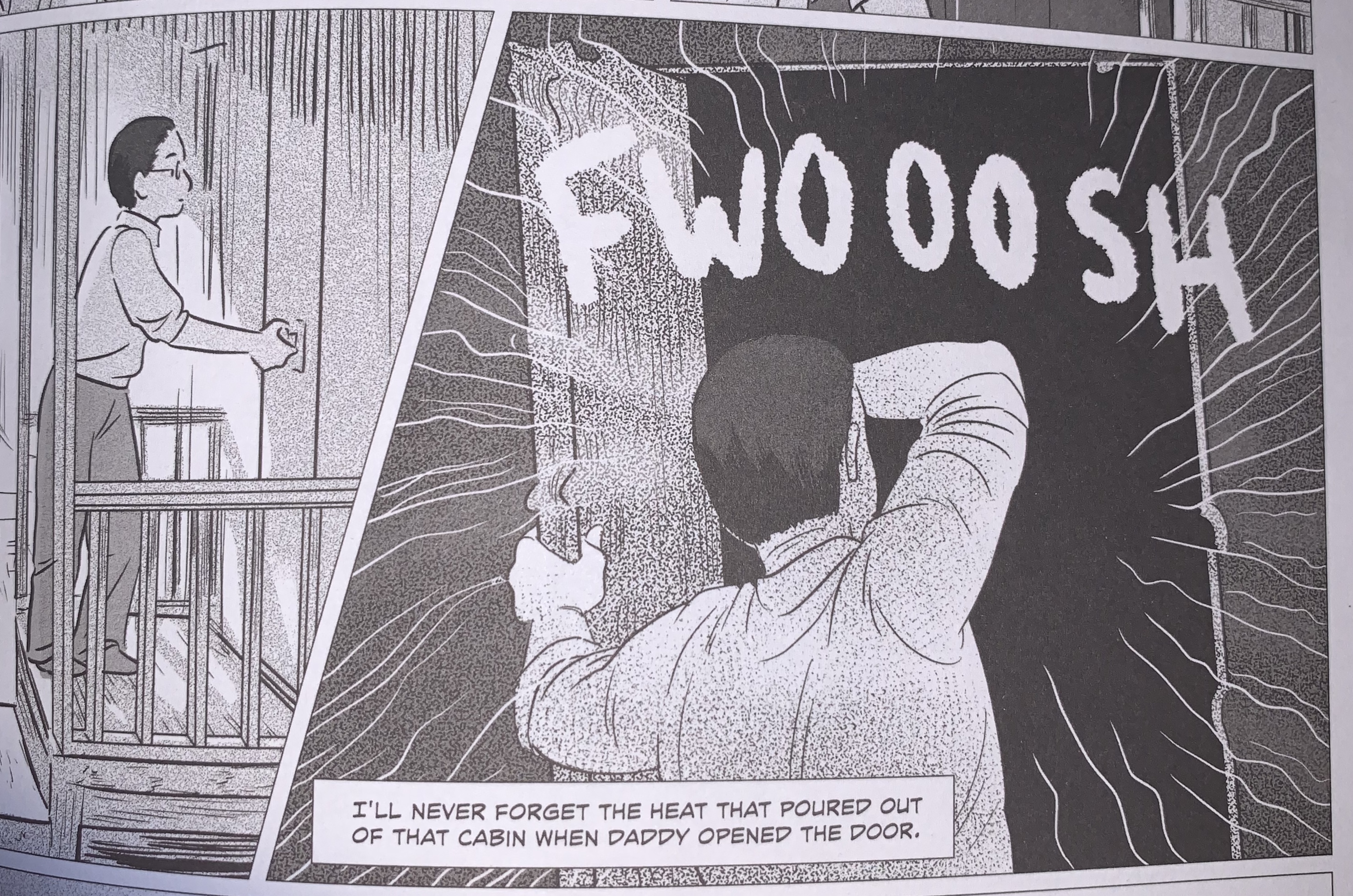
Page 63 of They Called Us Enemy

One example of closure (action to action) is on page 63 of They Called Us Enemy. In this scene, George Takei’s father went to go look for the barracks that his family was assigned to stay in during the camps. There are two different panels in this example. In the first one, Takei’s father goes to open the door of the barrack. In the second panel, Takei’s father opens the door and is met by an intense heat coming from inside. This is an action to action example because it features one subject (the dad) and is showing one complete action (opening the door). 

Page 146 of They Called Us Enemy

One example of time frames is on page 146 of They Called Us Enemy. In this example, Herbert, a missionary, is driving a truck in the first panel. In the next panel, he is being shot at from a car behind him. This is an example of time frames because the reader is led to wonder just how long he was driving for before getting attacked. When you look at the first panel, it looks like a relatively calm scene. It does not seem like he would get shot at in the next moment. One might wonder just how long the time frame was for this scene, and how long that car may have been following him.
Posted in Fall 2019 Archive (201 Blog) | Leave a comment

Closure and Time Frames: Dawson Bolen

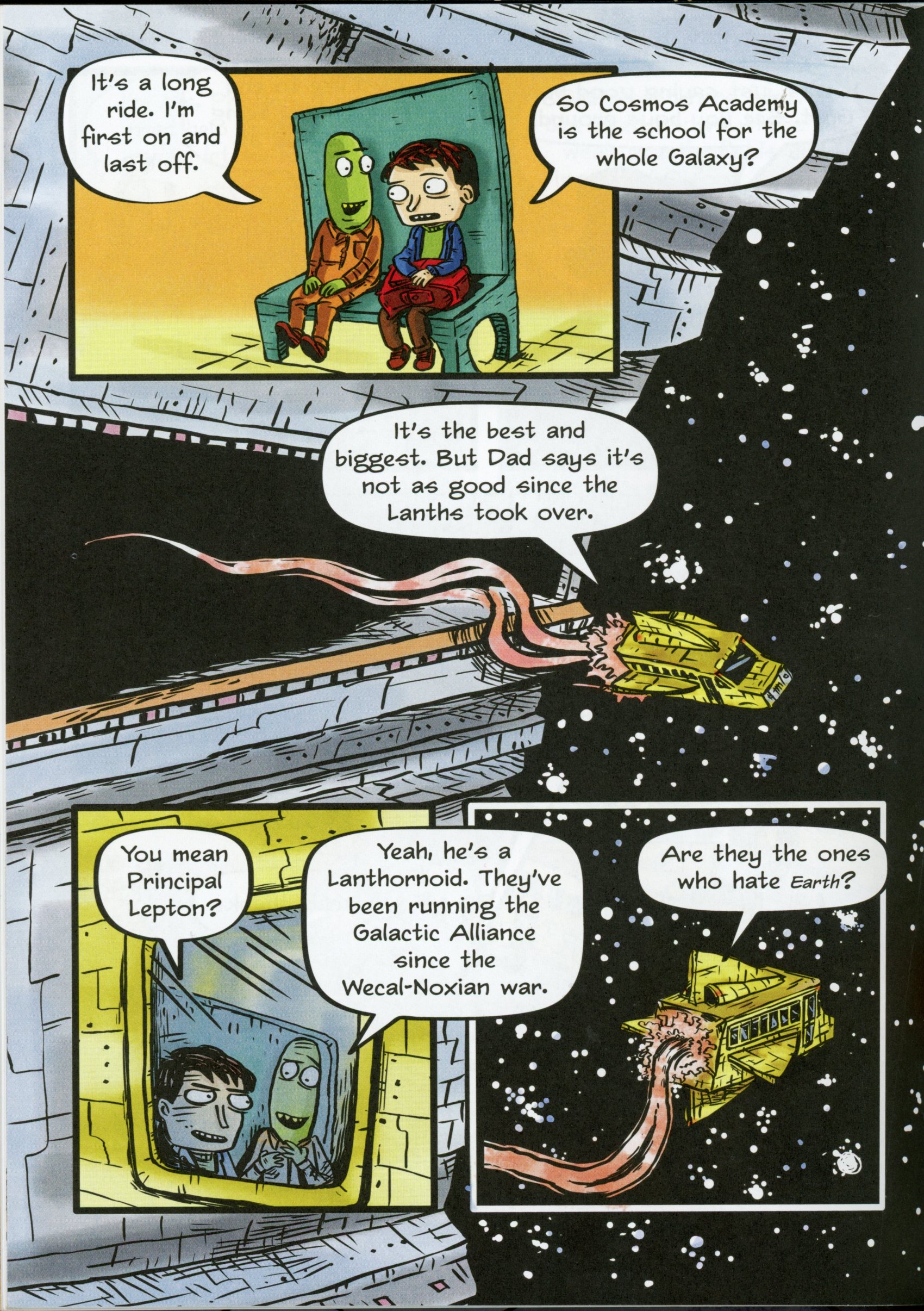
Page 58 of Mark Fearing’s “Earthling”.

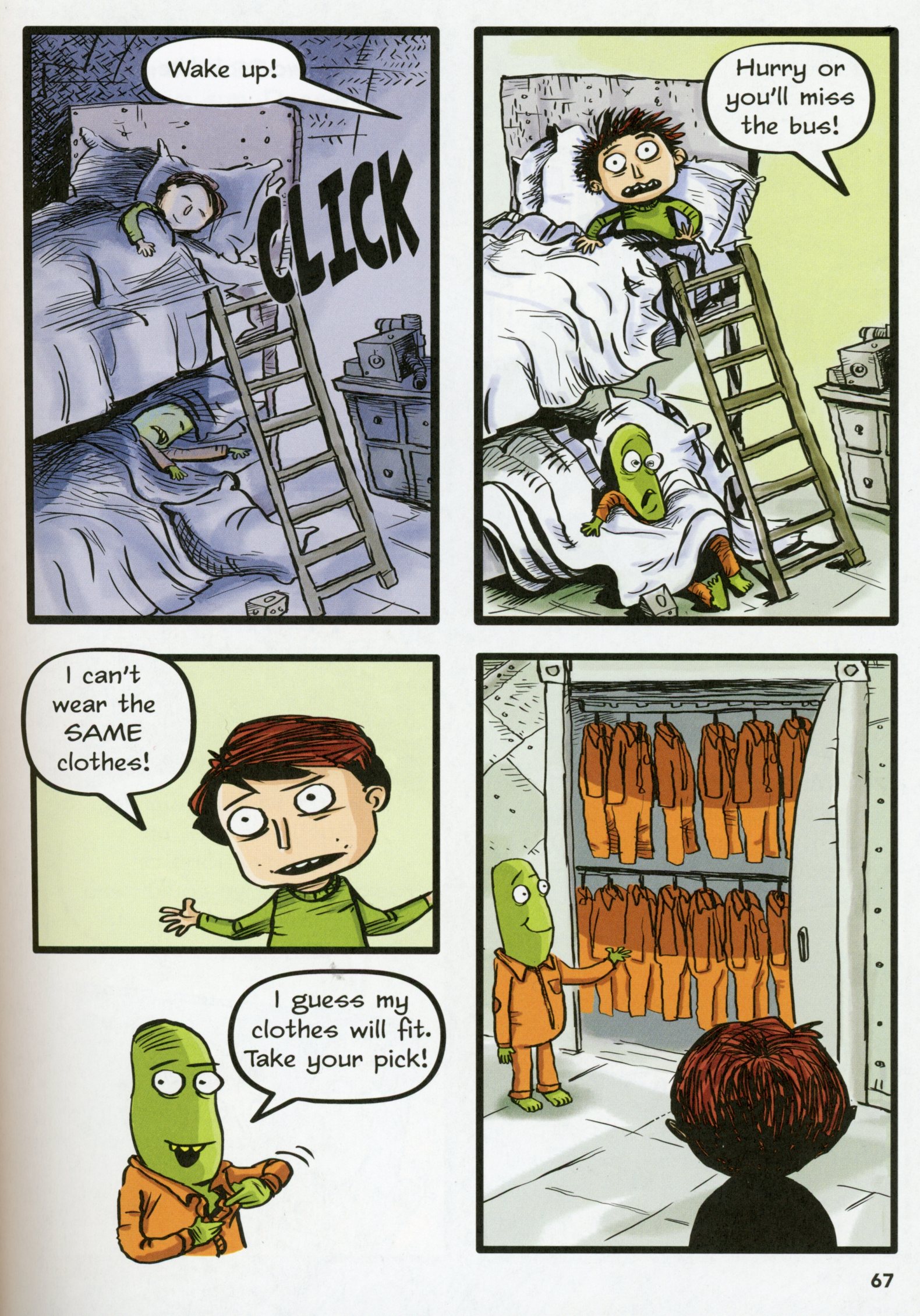
The graphic Novel I chose to read is called Earthling by Mark Fearing. It’s a science fiction novel about a boy who goes to school in outer space. This sequence on page 67 is an example of action to action closure as it walks through the process of the boy waking up. It goes from the room being dark to the light being on and someone yelling at the boy to wake up. It then shows him getting dressed for school. 


Page 67 from “Earthling” by Mark Fearing

Page 58 has 3 panels over a big background. The first panel shows the boy sitting down and talking to an alien. The image is very still and the frame is pretty wide showing time passage. It appears that their conversation lasts at least a few minutes. The sequence then moves toward the boy and the alien looking out the window to a far away view of the spaceship school bus flying through space. This sequence does a good job of letting the viewer know that a lot of time is passing.

Posted in Fall 2019 Archive (201 Blog) | Leave a comment

Closure and Time Frames: Erika Epperson

For my comic I chose Earl and Mooch by Patrick McDonnell. I chose this comic because I like the lightheartedness of the comic and the innocence of its humor. It reminded me of my childhood days when I would sometimes checkout library books like this one at my elementary school. 

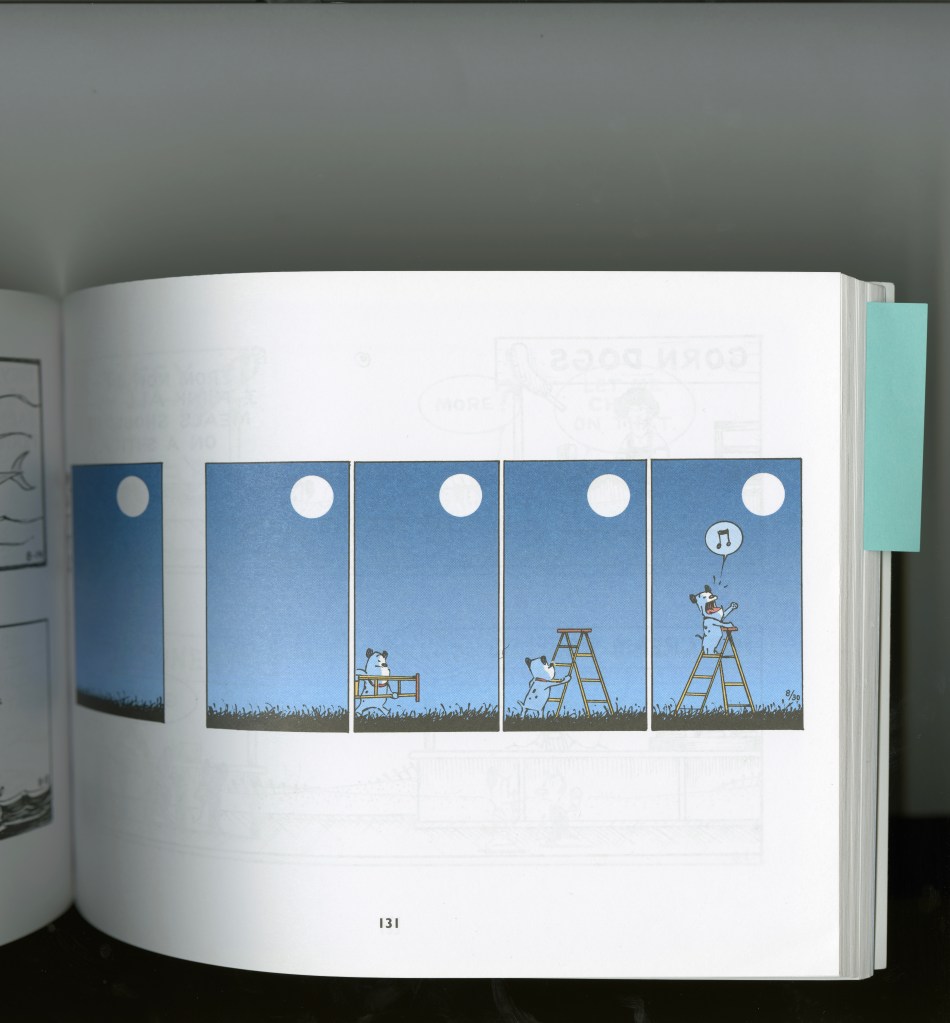
Earl and Mooch by Patrick McDonnell Scan

McClouds definition of action to action are transitions featuring a single subject. In this panel you can see that there is a step by step of this dog bringing a ladder outside, putting it down, climbing on it, and starts serenading to the moon. It’s a single subject but the transition is the dog putting a ladder outside and singing to the moon.

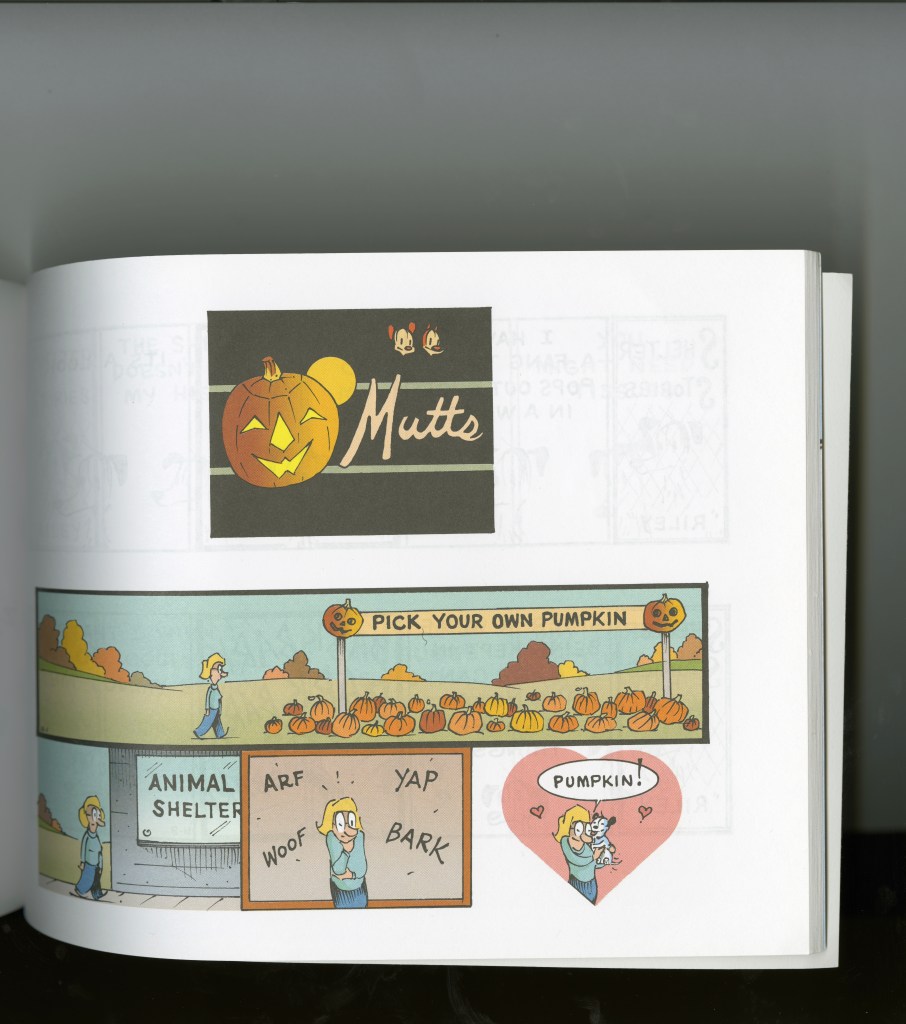
Earl and Mooch by Patrick McDonnell scan

In this panel you can see the owner is looking for her dog. In the first picture you see  her at a pumpkin patch and then it cuts to her at an animal shelter. Between these two scenes most people would just automatically think that she walked from the pumpkin patch to the animal shelter looking for her dog. Even though there isn’t a separate frame showing her walking to the animal shelter, we just assume that. Although it doesn’t show it, she could have drove to the animal shelter or maybe even a took a taxi. Theres another part where she is standing while there are barking noises around her and then it cuts to her holding her dog. Most likely the dog didn’t just appeared out of nowhere, and into her hands like magic, at least most of us wouldn’t think that. It doesn’t necessarily show her finding a dog at animal shelter, but we, as the audience just assume that. Because you see her show up at the animal shelter then, all of a sudden she was holding her dog in her arms and seems very happy, too.

Posted in Fall 2019 Archive (201 Blog) | Leave a comment

Closure and Time Frames: Justin Pardini

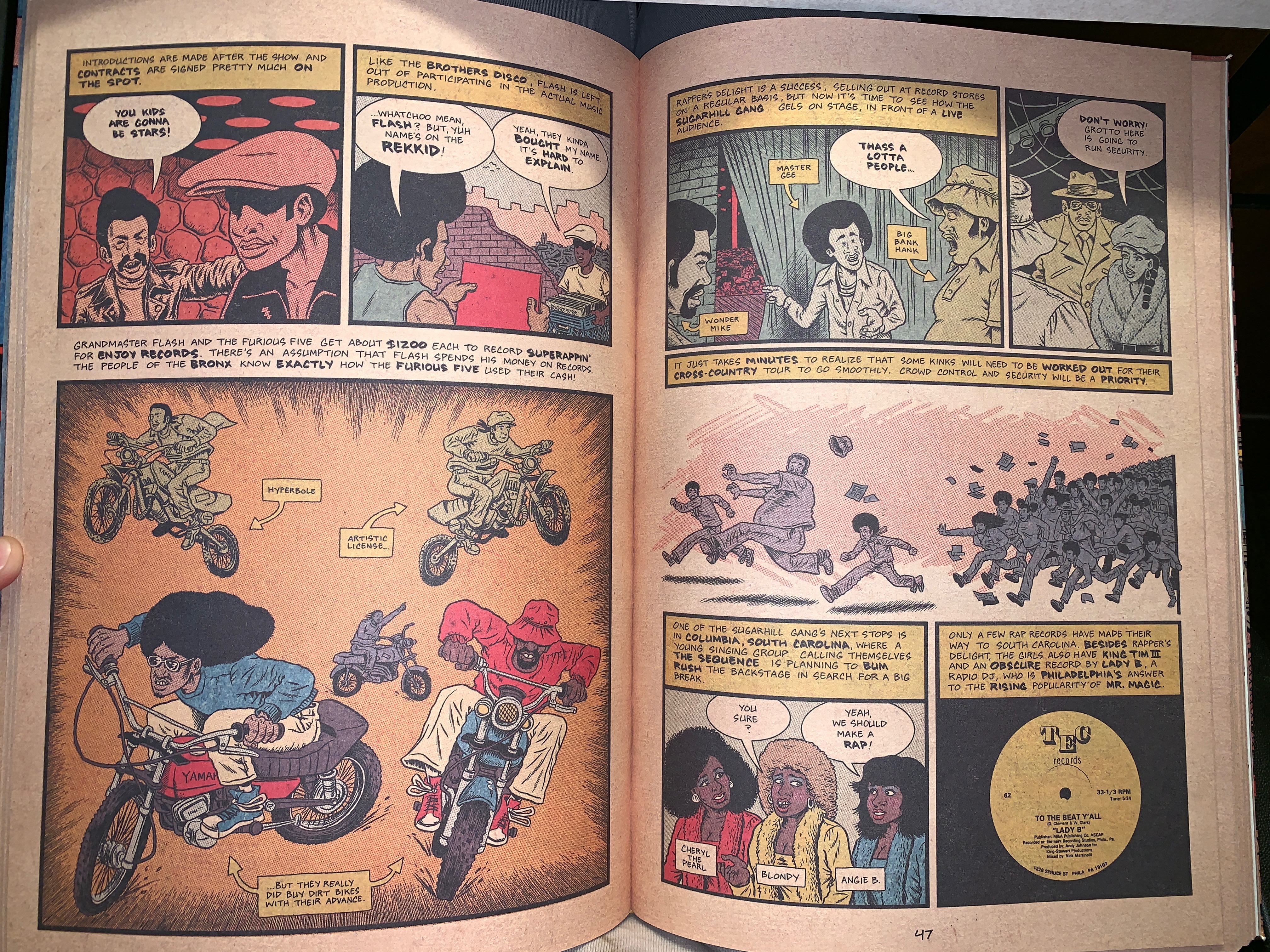
  1. Hip Hop Family Tree

    The graphic novel that I have chose to read for this month is the Hip Hop Family Tree by Ed Piskor. This novel delves into the roots of Hip Hop and DJ’s and multiple other historical upbringings of music. It looks at different artists and groups to truly show the influence they’ve had on contemporary music. One example I saw of closure was on page 46, where it shows an image of a group on motorcycles. This showed Grandmaster Flash and the Furious Five spending their money on these motorcycles, which displays scene-to-scene and action-to-action sequencing. It gives the readers a glimpse of what they would do for fun, without straying too far away from the main purpose. Ultimately, I thought this image was cool and grabbed my attention, which is why I chose to include it.

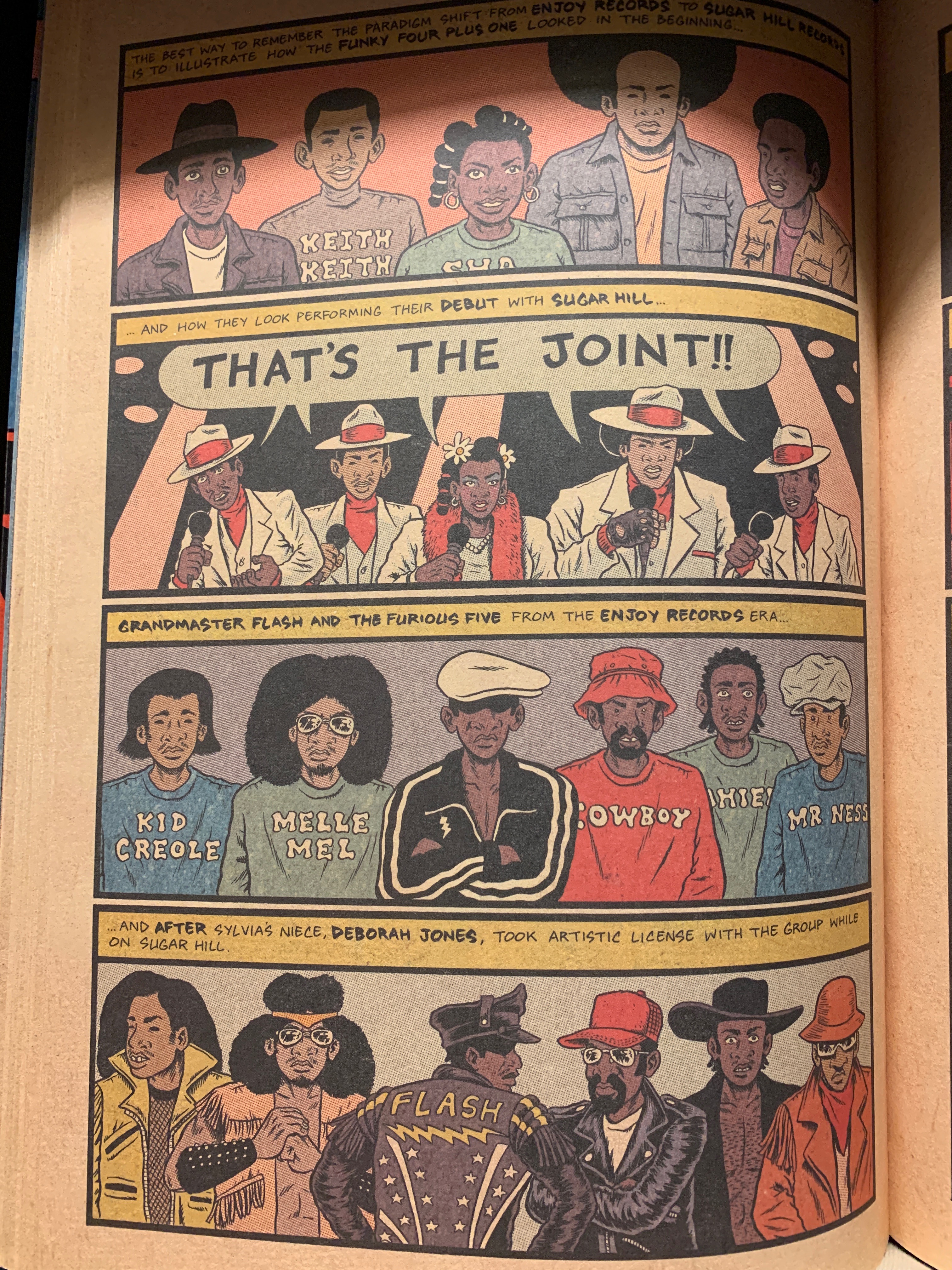
  2. Hip Hop Family Tree

    The next image I chose to analyze in terms of interpretation, was an image of four different depictions of the same group, one from this era. I thought this illustration was interesting because it shows the members of the group, but in different outfits and demeanors, which allows the reader to think of different backstories and personalities for each. Although some members might be more well known than others, this page leaves lots of notions up for grabs, and gives room for the audience to create an illusion of their own.

Posted in Fall 2019 Archive (201 Blog) | Leave a comment

Closure and Time Frames: Joseph Gardner

IMG_20191010_132355174

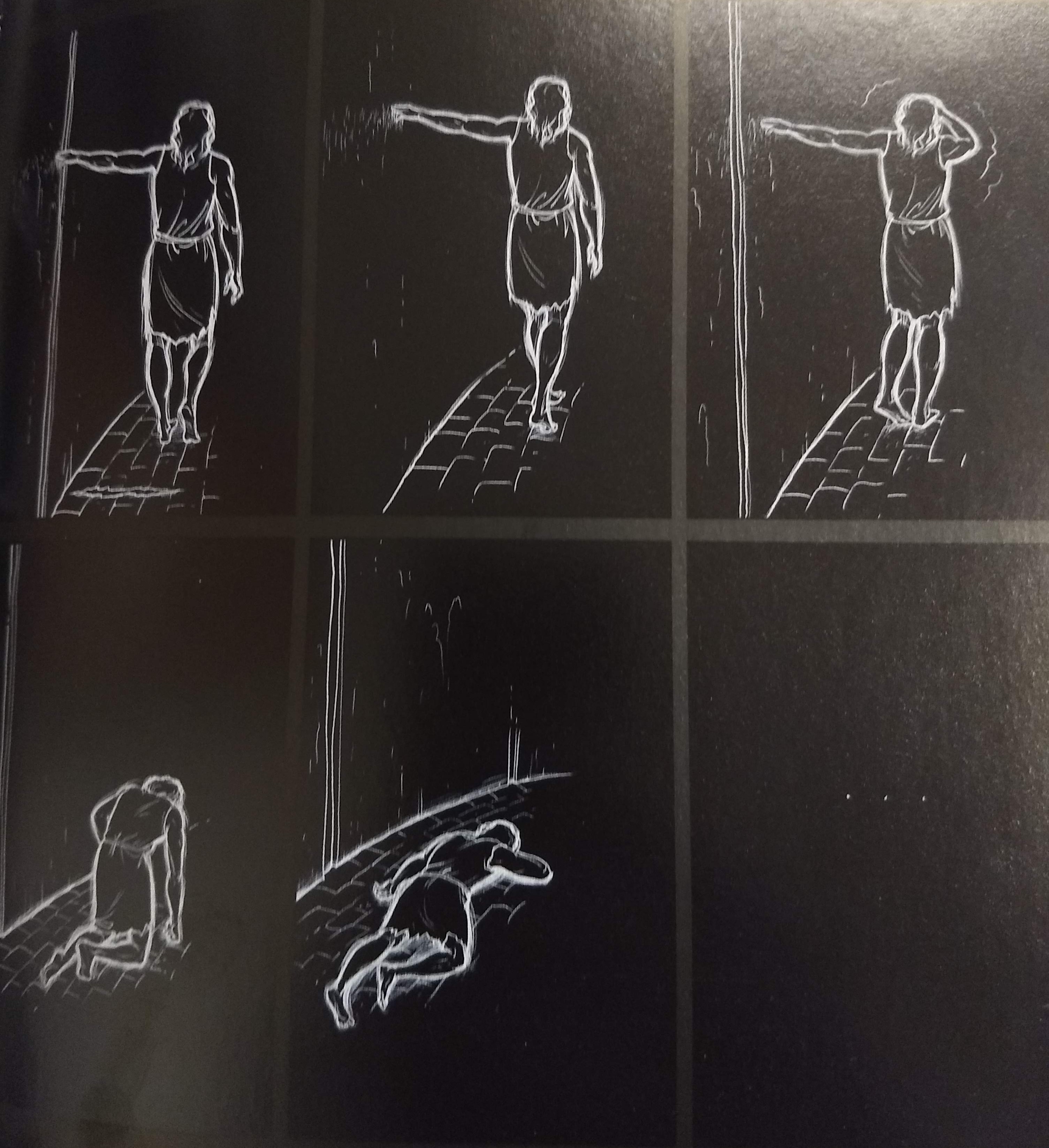
Page 45 of Poe: Stories and Poems by Gareth Hinds

This scene is primarily moment to moment. In this scene, the main character is lost in a dark room, wandering around aimlessly. In the first frame, he is entering the room. He continues walking in the second frame, which we can see by the movement of his feet. By the third frame, the character is getting tired. We can tell by the fact that there are shaky lines around the main character and he has a hand against his forehead. In the fourth frame, the main character is clutching his stomach and crawling on the floor. By the fifth, he is laying down, defeated. In the final frame, it goes black, signifying that the main character has passed out of consciousness. You can tell that there’s something going on, but there is a low amount of closure, so it is a moment to moment scene. There aren’t any drastic changes, they’re all very similar and emphasise the misery that the main character is going through.


IMG_20191010_133724757 (1)

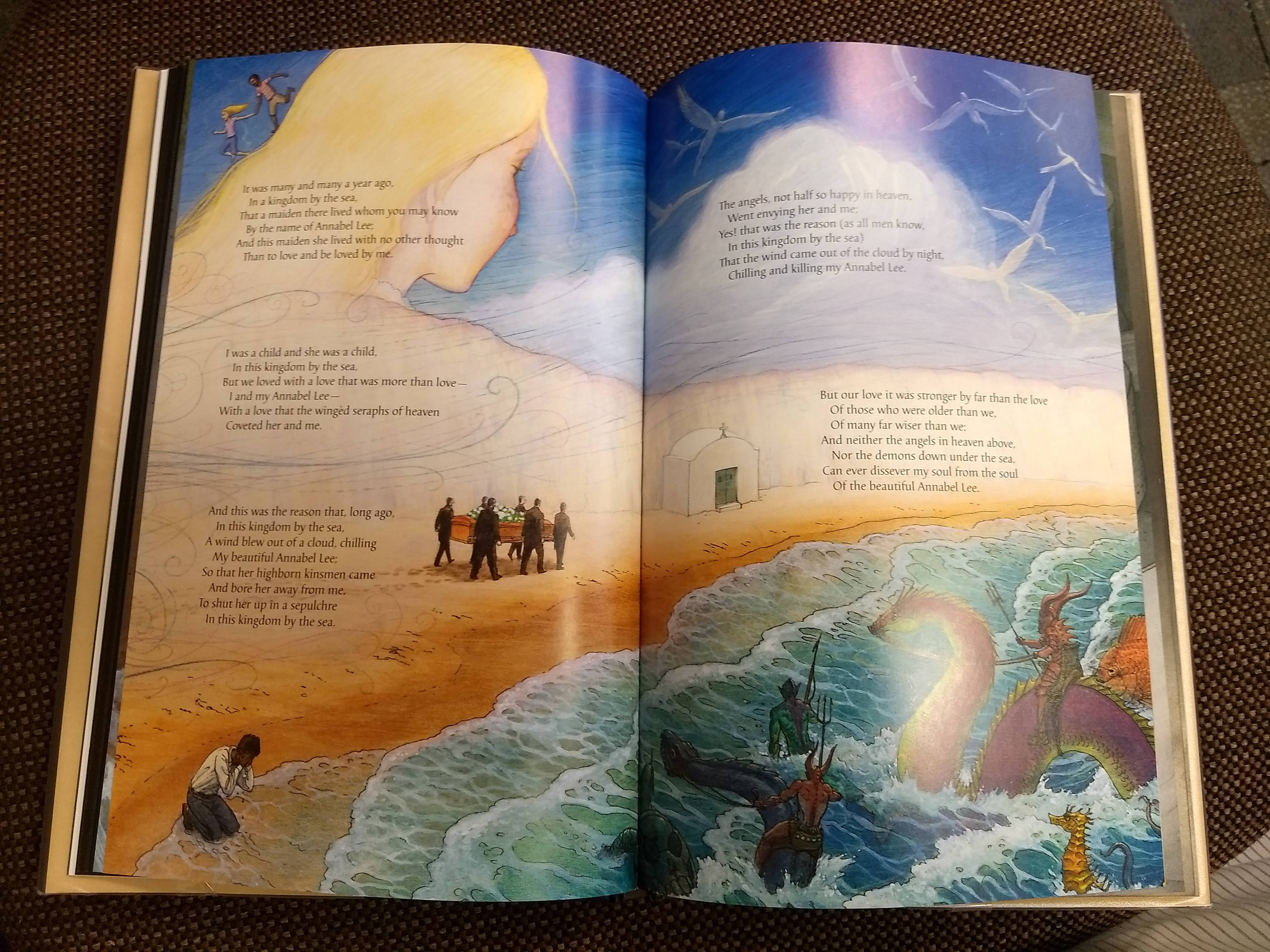
Pages 38 and 38 of Poe: Stories and Poems by Gareth Hinds

This portrays half of an entire poem in one image. It is displayed chronologically from the top the bottom of each of the pages. The progression of the main characters relationship with his wife is shown through the images in each section. In the first section, it shows them growing up together and falling in love. Under this it shows the wife dying and being carried away in a casket. Under this, it shows the husband crying while sitting by the ocean. After this it shows angels, and it talks about the death of his wife. Under this, it shows various sea creatures. The passage of time is not immediately apparent to the reader, but through viewing the image and following along with the story, you can see that there is a connection between the images and the text, but it’s not meant to be happening all at once.


Posted in Fall 2019 Archive (201 Blog) | Leave a comment

Closure and Time Frames: Jon Klaveano

The comic book I choose was created by Robert Venditti and Mike Huddleston. The comic book is titled “The Homeland Directive.” Huddleston is an award winning comic-book artists, illustrator, and concept designer. Venditti on the other hand is a New York Times Bestselling author of the sci-fi graphic novel series “The Surrogates.” His most recent work has become an international bestseller “Percy Jackson & The Olympians: The Lighting Theif. I really enjoyed the art work in this comic and that is why I choose it. Its biggest attribute to me is how diverse each page is in color and style. Each page is like a different comic book.

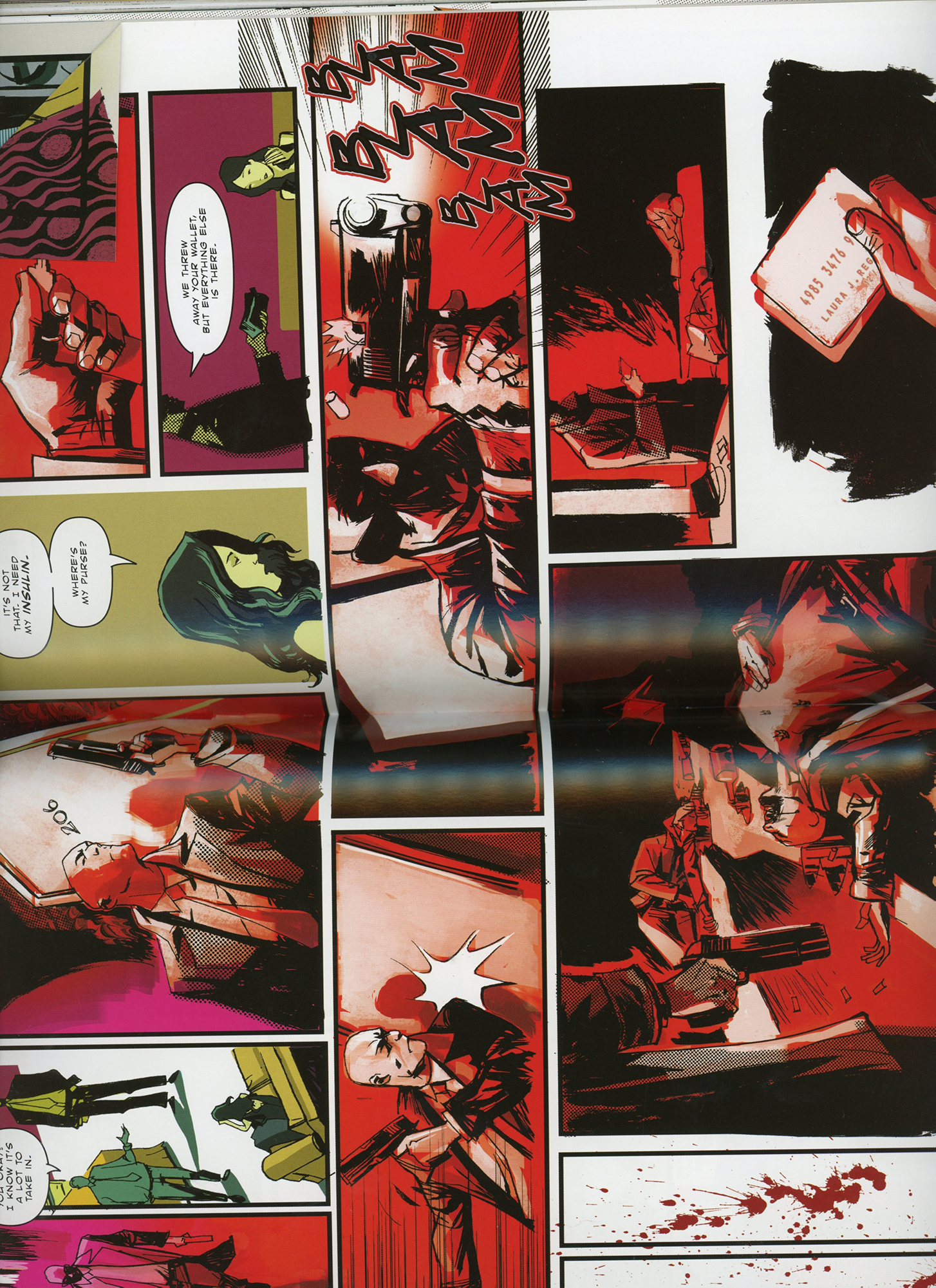
Example of action-to-action. Found in (The Homeland Directive)

I choose this photo to represent closure because I really enjoyed the action sequence represented in these pages. The scene represented is quite intense and you can obviously see there is a lot going on here. These two pages do a great job of showing what closure is.Especially in particular the two frames in the middle where you see what i’m assuming to be the protagonist burst through a door and then fire his weapon. We also see the product of him firing off his weapon at the bottom of the page.


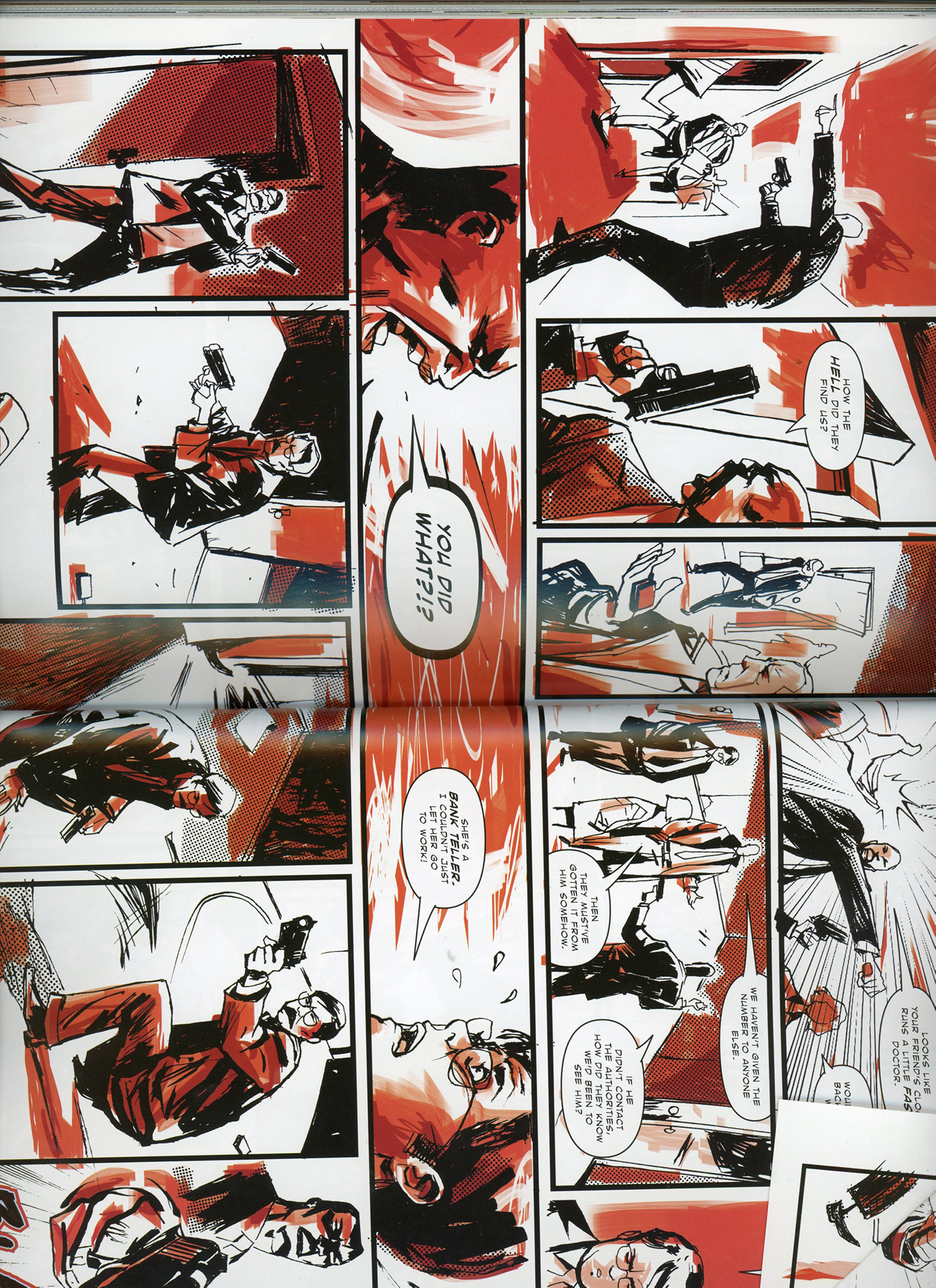
Example of a weird timeline. Found in (The Homeland Directive)

The next scan I took of the comic book represents a unusual timeline.  When considering what frame is next and how much time has passed between frames. That being said I found these pages and thought they would work best. Like the last scene this is a very intense time. I think this is perfect because whether you read from the bottom-up or top-down it always meets in the middle with the interaction between our protagonist and his foe. At the bottom of the page you also have the choice of reading from left to right, or right to left.

Posted in Fall 2019 Archive (201 Blog) | Leave a comment

Closure and Time Frames: Brayden Jacobs

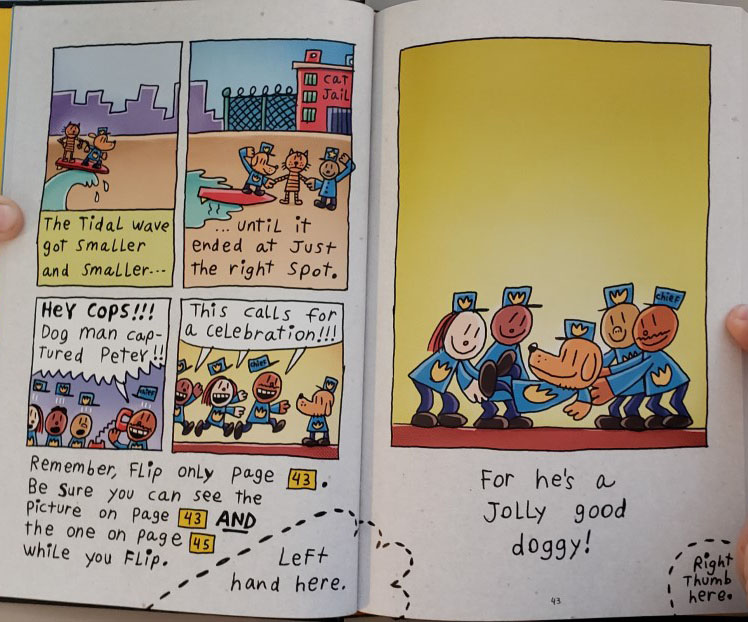
Dav Pilkey’s “Dog Man” – Pages 42 & 43

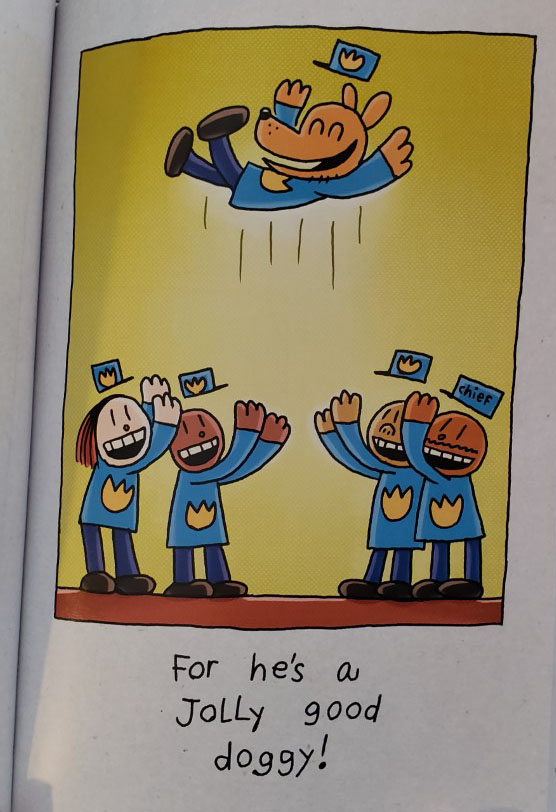
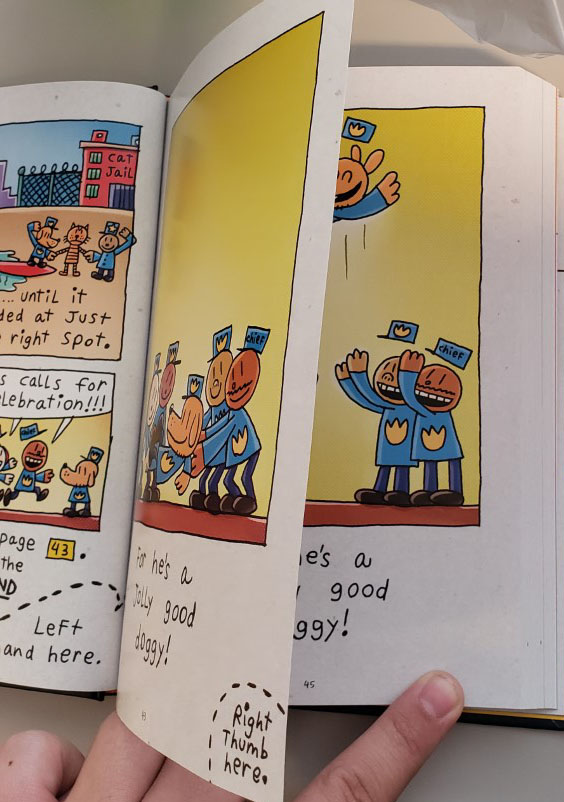
The graphic novel I chose to investigate is “Dog Man” by Dav Pilkey. It’s children’s comic and was specifically chosen because of this. I was curious to see if these examples of closure and time frames existed in comics meant for children, and not just more advanced graphic novels. When skimming through the book, I these pages jumped out at me. Dac Pilkey takes advantage of the movement of pages under the reader’s control, directing the reader to “Remember, Flip only page 43. Be sure you can see the picture on 43 AND the one on page 45 while you flip”. To a child this is a fun way that lets you ‘play’ with your book, but from my perspective, learning what I have from Scott McCloud, this use of closure brings the readers focus between two panels simultaneously. For this trick to work however, serious viewer participation is required. If one simply read through the graphic novel, they would flip the page onto a blank page 44 and miss the action of the dog being thrown into the air.

Dav Pilkey’s “Dog Man” Page 45
Dav Pikey’s “Dog Man” Pages 42, 43 & 45. Showing the reader’s involvement

The following image, depicting page 137 of Dav Pilkey’s “Dog Man”, has an interesting use of Subject to Subject, as described my Scoot McCloud: “A subject-to-subject transition changes the subject, whilst staying within the same scene or idea”. Petey the Cat is seen in the same slumbering animations throughout all 5 panels, as random zany actions are occurring around him. He’s just trying to get home unbothered, but all these things are happening around him but he ignores them all. We can see he is slowly moving down the street and not standing still, as maybe 5 seconds pass in each gutter and he eventually reaches his secret lab. Subject-to-subject seems to be the most common panel transition within the book, but the stagnation of Petey the Cat within this page caught my attention.

Dav Pilkey’s “Dog Man” page 137
Posted in Fall 2019 Archive (201 Blog) | Leave a comment

Closure and Time Frames: Ruby Pitts-Cranston

I decided to look at Book One of The Complete Calvin and Hobbes by Bill Watterson. I chose this because Watterson uses a lot of different imagery throughout the comic to represent what’s happening in Calvins life. I also find Calvin and Hobbes entertaining, and like the style that Watterson uses. Flipping through the book I also noticed plenty of examples of different time frames and closure, so I felt it would work well.

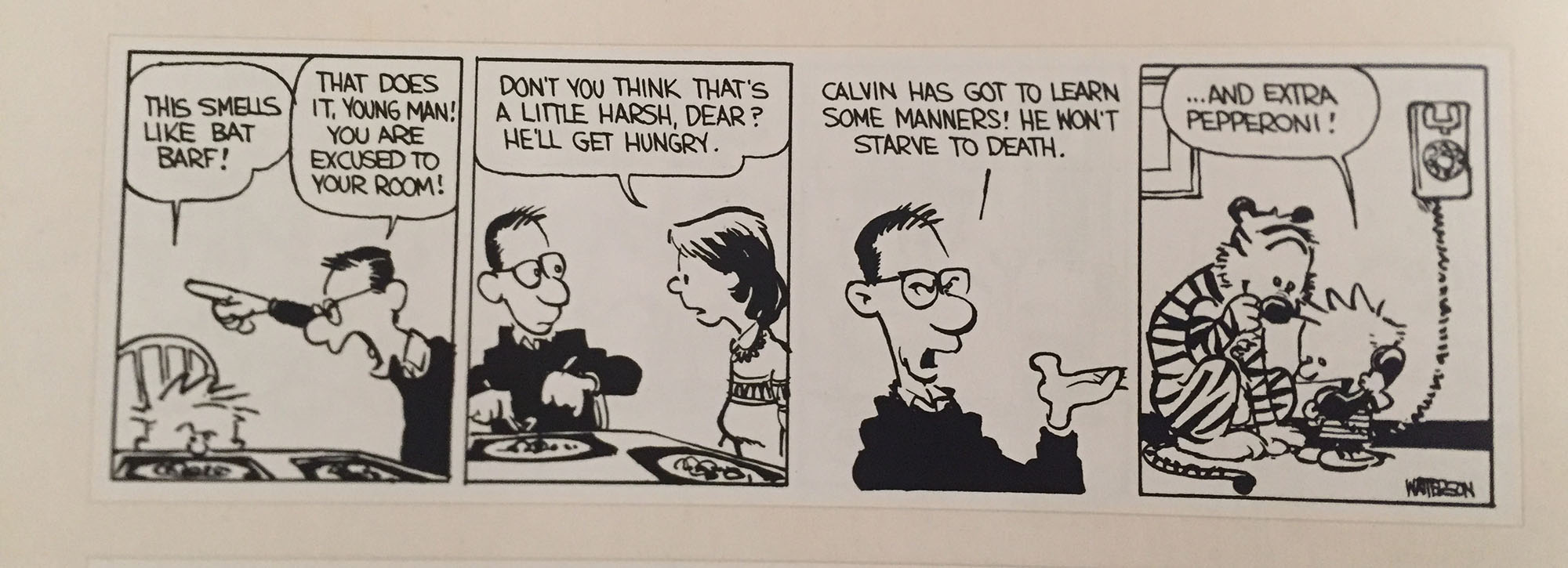
“Calvin and Hobbes” by Watterson

The example I found for closure is a panel where Calvin gets sent to his room for complaining about dinner, so him and Hobbes order pizza.  I chose this panel for closure because its a good example of scene to scene. The first scene takes place at the dinner table, with Calvin and his parents arguing, and then it cuts to the second scene which shoes Calvin on the phone with the pizza place. Even though we don’t see what happens in between, we can fill in the gaps and assume that after being sent from the table, instead of going to his room Calvin goes straight to the phone.

“Calvin and Hobbes” by Watterson

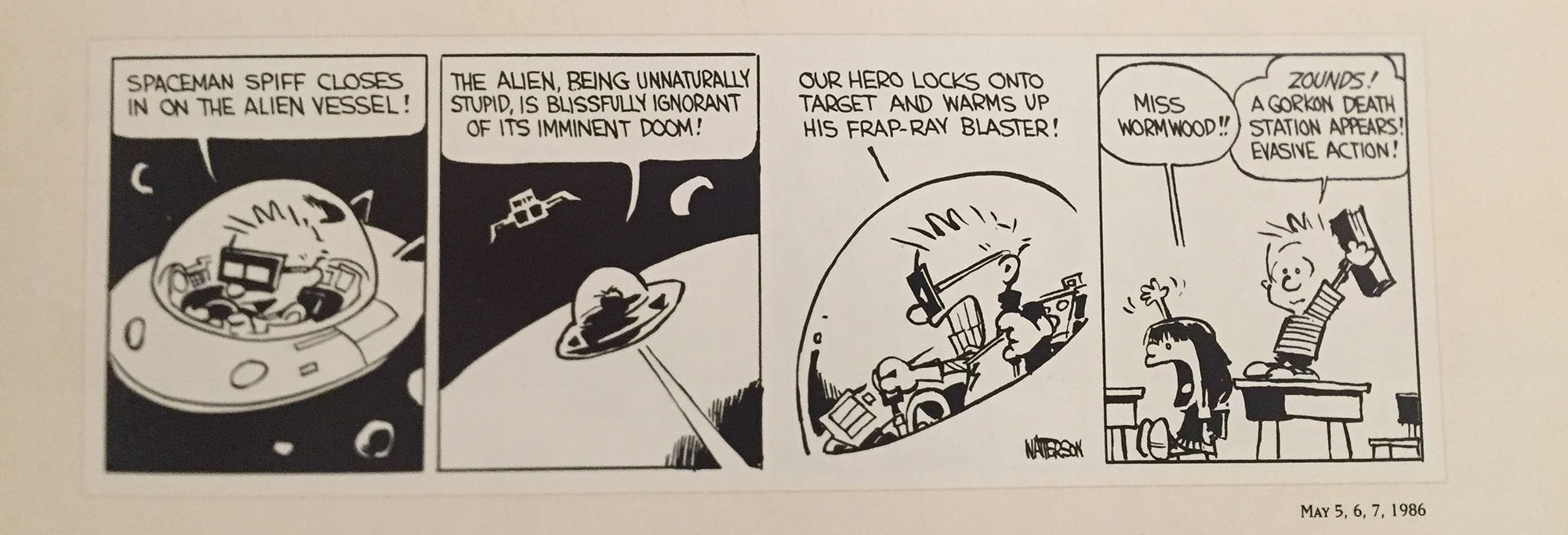
For time frames I chose this panel which portrays Calvin daydreaming that he’s fighting aliens while he’s in class. It portrays two overlapping stories, one that’s in Calvins head where he’s about to attack an alien ship, and the other where he is in class about to hit a classmate over the head with a book. Watterson uses this type of time frame a lot throughout the comic, where it will show how Calvins imagination meshes with reality.

Posted in Fall 2019 Archive (201 Blog) | Leave a comment

Closure and Time Frames : Janet Okeago

A graphic novel By i. Mercy, 4 Ever

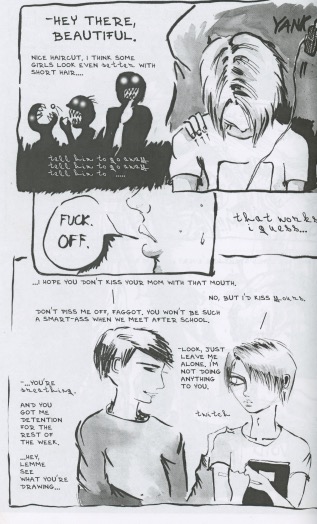
I chose a graphic comic book 4 ever by  Mercy which talks of a story powered by yearning and it is a love story.  The book seemed to be interesting to me since i fell in love with how the author uses her drawing in a unique way that makes me want to read what is in it, She uses a black and white color in the story and her writings some are graphic which tend to tell the view that she was trying to impress her lover. At some point in the comic book the use of rude words are used  where i think a guy was trying to b nice to the young lady by mentioning how beautiful her hair is but ended up replying rude, the picture shows some dark pictures on the background yelling which one can tell the difference. whether its at night in bar?

A graphic novel By i. Mercy, 4Ever

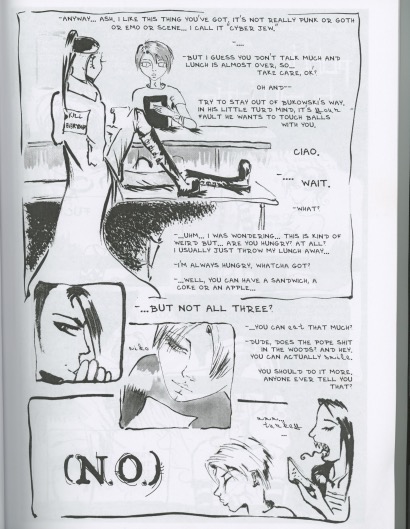
This other picture am posting attracted my eyes because of the alignment, and use frames is used as discussed in class  and it gives a clear picture. The comic book gives a story of how young girls get into a relationship and the diagrams illustrate the way the young generation dresses and the language they use while talking. And i find it different that some teenagers may be rude to older people due to peer pressure. The book is kind of targeting people of 18 years and older since they are in a generation where people play hard to get.

The comic book 4 ever illustrates on a boy who is cursed with a beautiful androgynous face. He is kind of harassed by some guys where he is punched and the girls slag him which later affects him such that he does not want to be touched by anyone. The use of Art have impacted him positively where he uses it to escape from an emotional empty life.

Posted in Fall 2019 Archive (201 Blog) | Leave a comment

Closure and Time Frames: Dane Graves

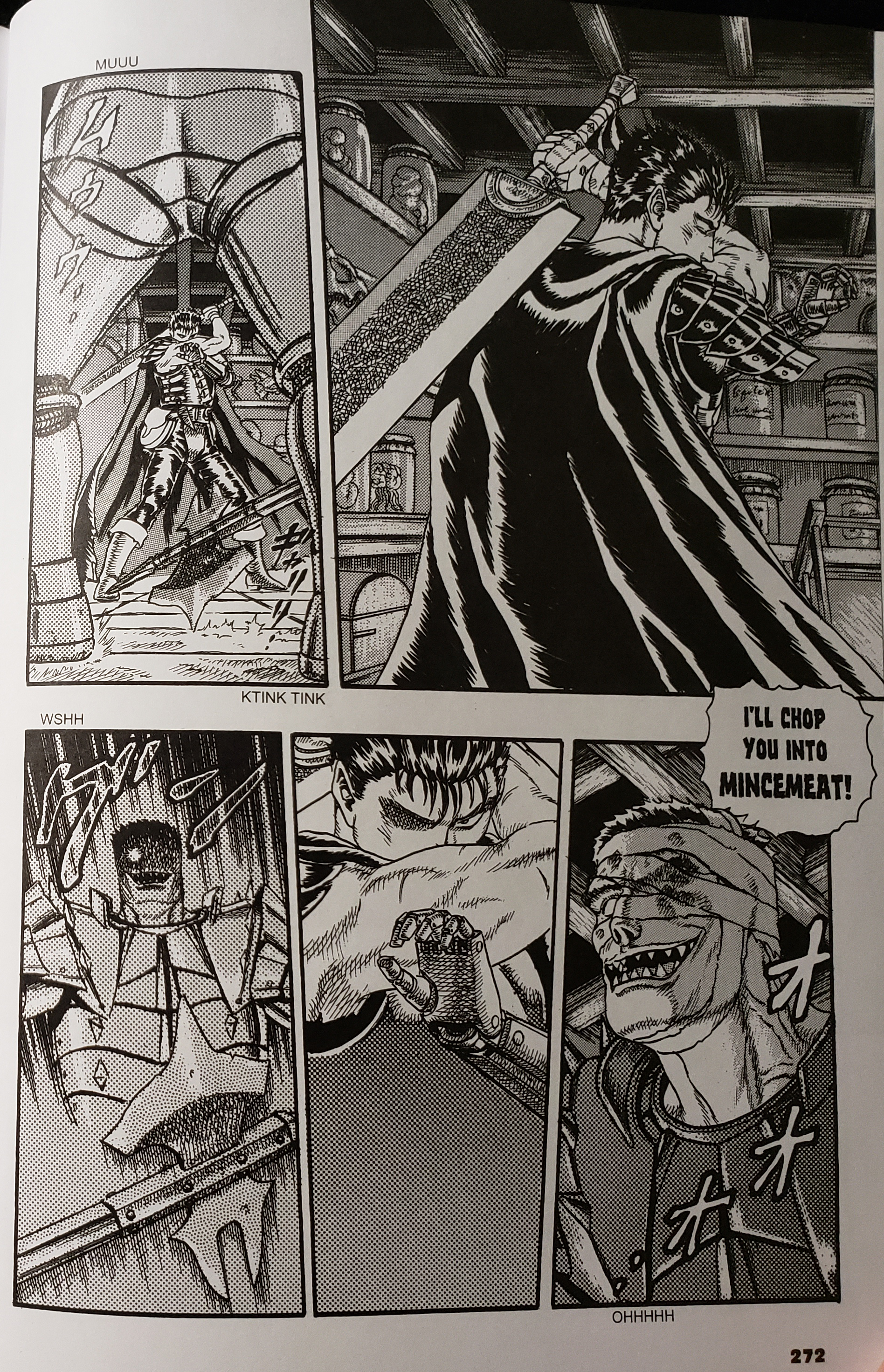
Berserk Deluxe Edition Volume 1, Page 272

The book I chose to read over October is a Manga called Berserk. I actually had interest in Berserk before we got assigned a reading of our choosing because a friend had recommended it to me. I purchased the first deluxe volume near the start of the semester planning on reading it but never did. What made me pick out this scene as an example of closure was its use of aspect to aspect, uncommonly used in western comics. Remember to read left to right as this is a manga. The first two panels perfectly fit aspect to aspect closure as its showing the same scene at the same time from two different angles to “establish a mood or sense of place” as Scott McCloud puts it (Understanding Comics). I specifically looked for aspect to aspect transitions being as this was a Manga and I expected to find some.

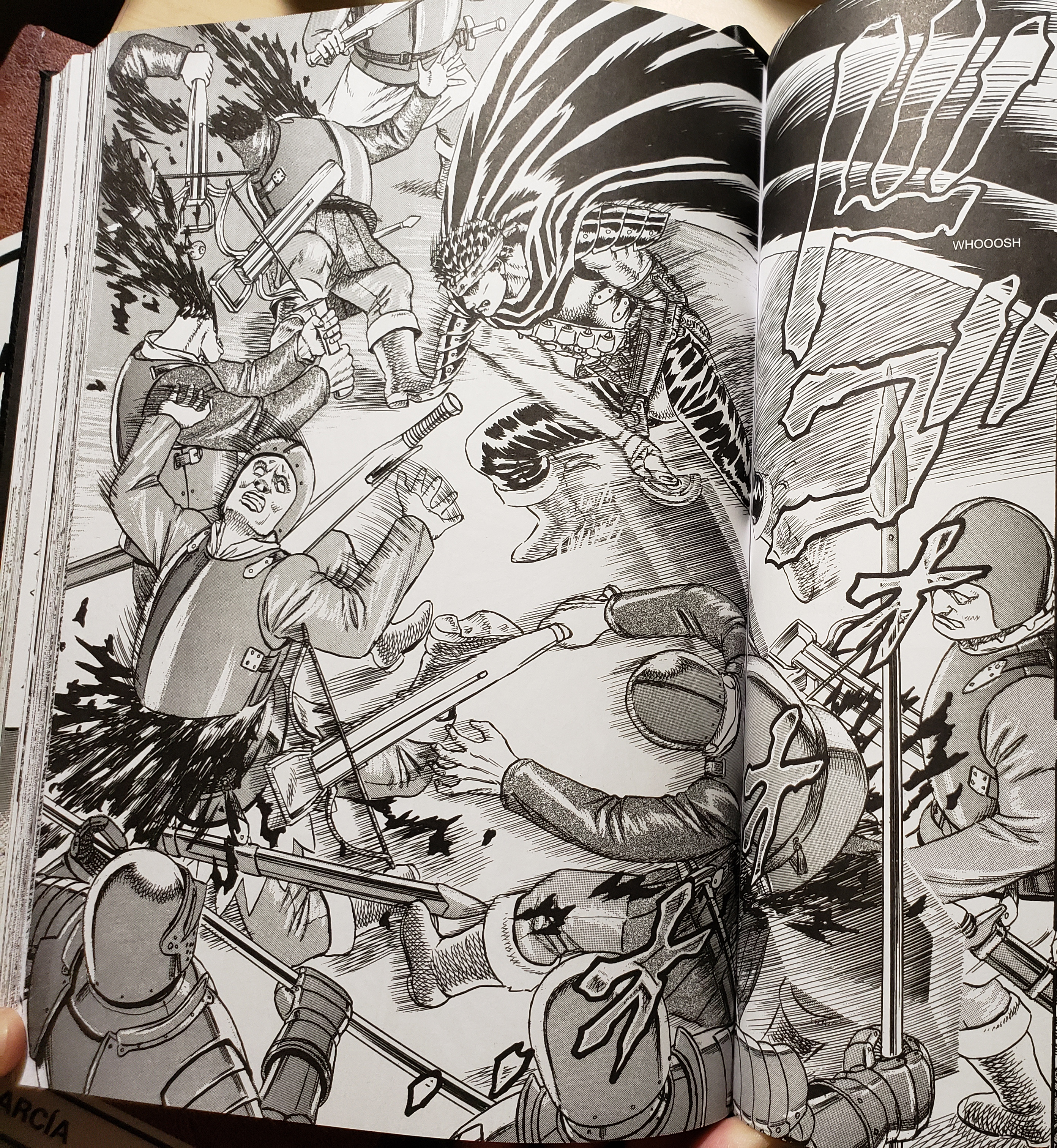
Berserk Deluxe Edition Volume 1 Page 394-395

For an example of timescale I chose a giant multi-page panel from pages 394-395. In this scene, Guts the main character swings his comically large blade through multiple men. I picked this scene for its example of motion in a panel. Kentaro Miura uses the technique described in Understanding Comics of blurring objects in motion rather than motion lines. This scene shows one moment or one very short moment as shown by how the sword has already followed through the arc and is coming to the end of his swing. If you follow the trail of movement in this panel with your eyes you can see the trail of destruction it made from the men starting to fall apart and the lines of the men’s movement. This type of time frame of movement needed to be done in an extremely large panel to get the intended effect of the moment, forcing the reader to follow through with his eyes around the arc of the blade.

Posted in Fall 2019 Archive (201 Blog) | Leave a comment