Closure and Time Frames: Peter Dowell

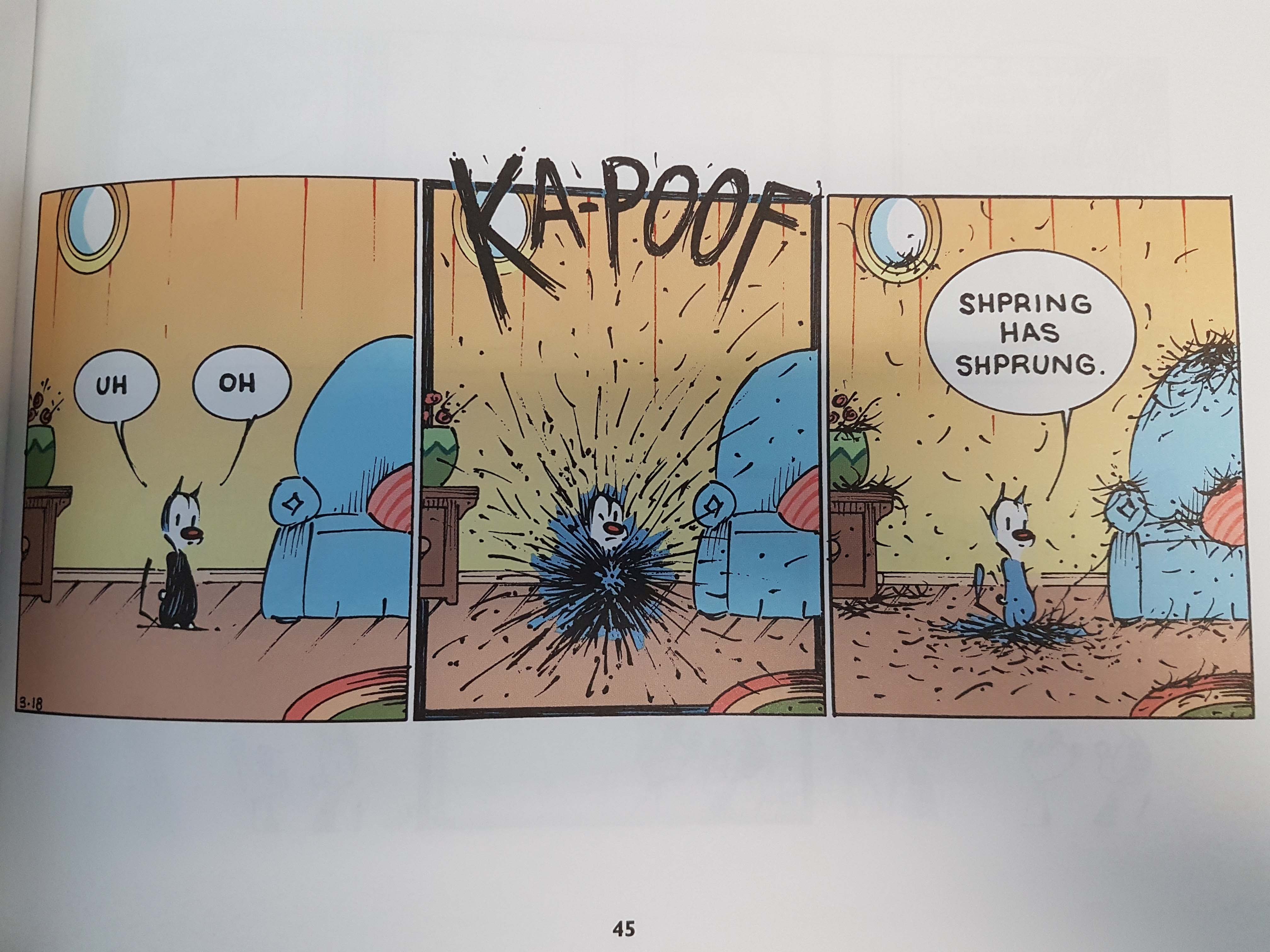
Patrick McDonnell, Call of the Wild: A MUTTS Comic Strip Treasury, page 45

Patrick McDonnell, Call of the Wild: A MUTTS Comic Strip Treasury, page 45

The comic book that I chose to look through was Patrick McDonnell’s, Call of the Wild: A MUTTS Comic Strip Treasury. I chose to read this because the art style looked interesting to me and I think the characters look fun as well. I think it’s comic strips that are all put together in one book. When I was skimming through it there was a particular strip that I thought showed closure very well. On page 45, it shows the cat sitting there, when suddenly all of his fur comes off with the words KA-POOF and then shows all of his fur off  in the next panel. I think this represents action-to-action because at one moment the fur is there and the next it is exploding and then in the end it is everywhere and still falling. Even though the character did not move, the fur was the part that had action going on with it and normally with action-to-action it is the character that is doing the action, but in this scene it is the fur that is doing the action.
Patrick McDonnell, Call of the Wild: A MUTTS Comic Strip Treasury, page 79

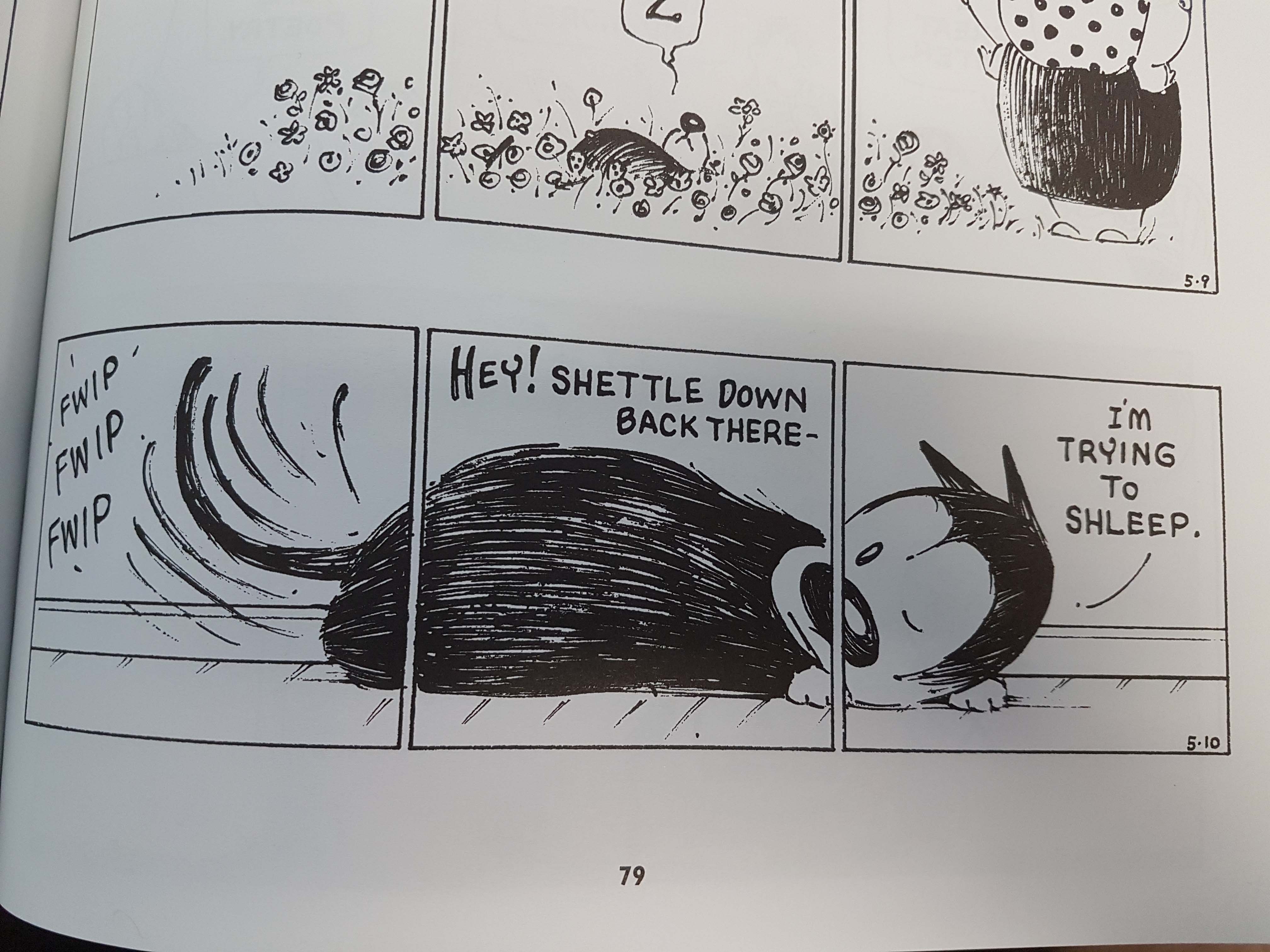
Patrick McDonnell, Call of the Wild: A MUTTS Comic Strip Treasury, page 79

The next thing that I wanted to talk about was how the author portrayed time in this next strip. In the strip it shows the cat laying down on the ground and it looks like it could just be a single image of the cat laying down. There are multiple different things that are happening in the image such as the sound of the tail wagging, then the cat is telling it to stop because he is trying to sleep. I think this is a good portrayal of time in a comic because it separates out the time by putting gutters in between the events that are happening even though if you were to look at the strip you could see it as something happening all at once rather than, tail wagging then cat telling it to stop because he is trying to shleep. You know from looking at the image that first the tail starts wagging and you can hear it because of FWIP FWIP FWIP and then the character hears it too, but he is trying to sleep so he is telling it to stop and it happens in that order.
Posted in Fall 2019 Archive (201 Blog) | Leave a comment

Closure and Time Frames: Joseph Alonso

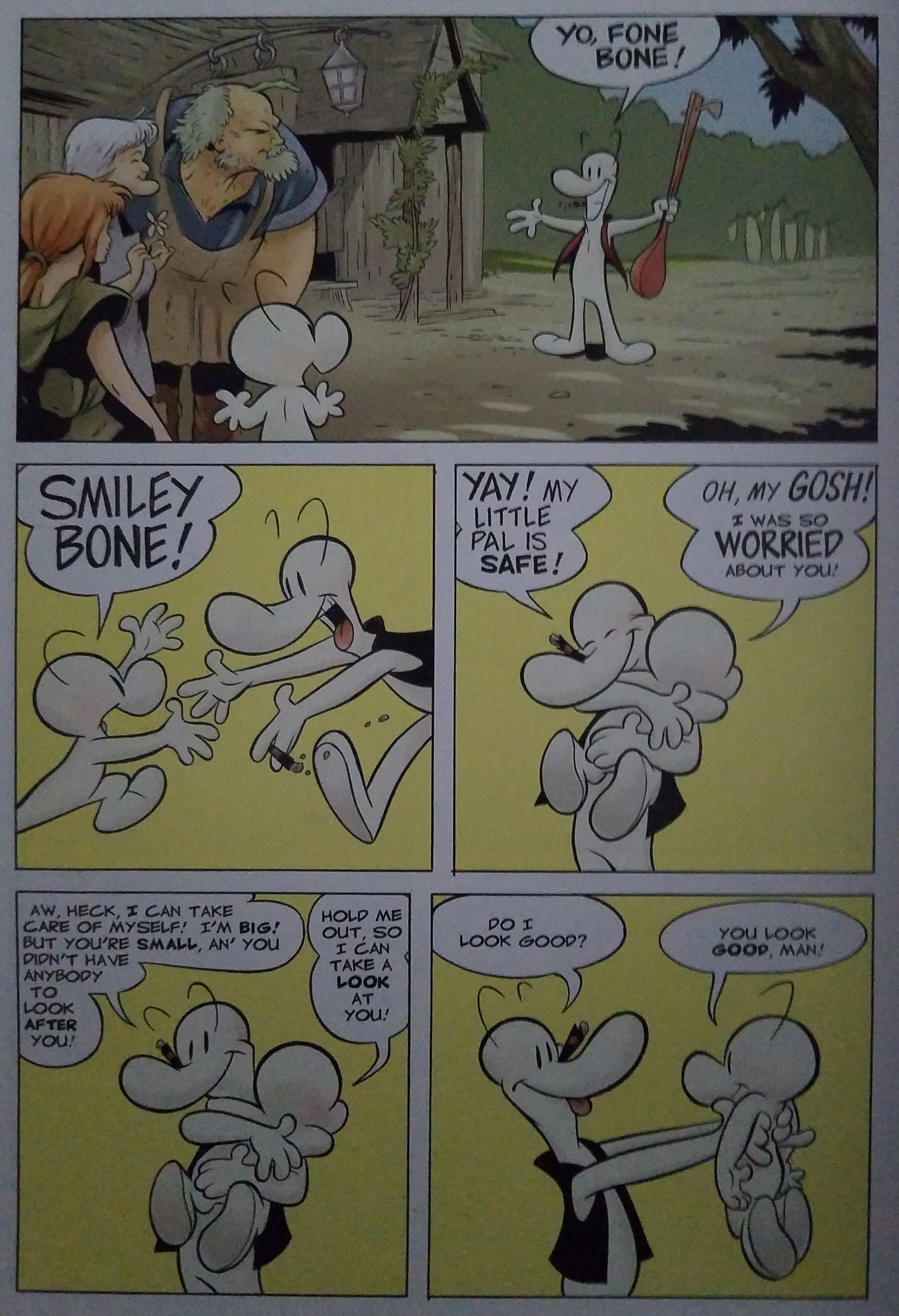
Comic created by Jeff Smith, 1991.

The book I chose to read is the first book in the Bone series, Out From Boneville.  The example of closure that I chose is the scene where Fone Bone, the main character, reunites with his cousin Smiley Bone, which is one of his main goals throughout the book.  This scene is both an example of moment-to-moment, and action-to-action.  It is moment-to-moment when the scene goes from Fone and Smiley see each other to them running to hug each other.  Another neat detail is how the background goes from the detailed forest to a single color to denote that their reunion was all that mattered in that moment.  The page then goes to an action-to-action format when they talk to each other.  Going from a hug to Smiley holding Fone out so he can get a better look at his cousin.

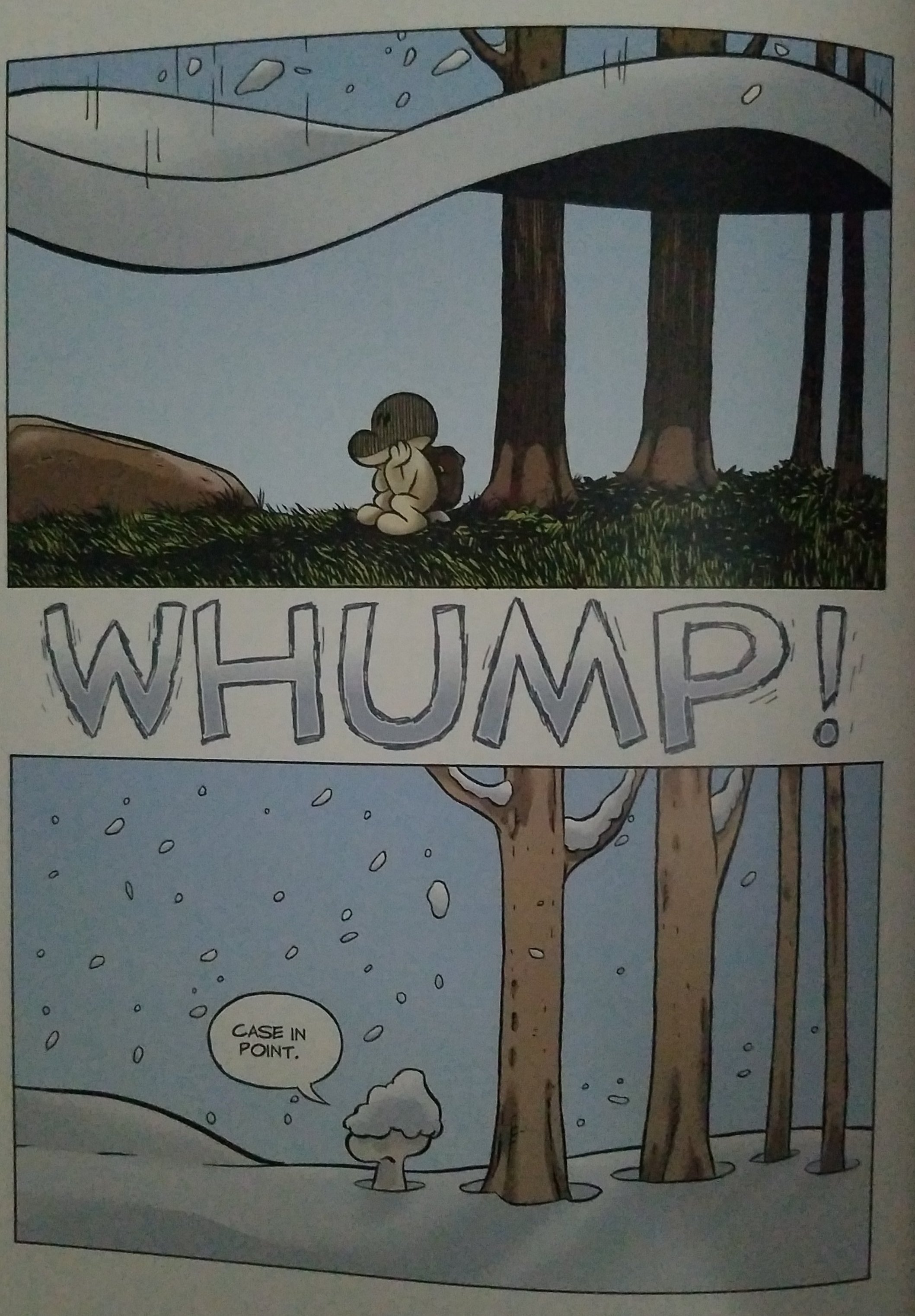
Comic created by Jeff Smith, 1991

The example I chose for the time frame, is the part of the book where winter arrives.  Earlier in the story, Fone Bone is warned by Ted, a leaf-shaped bug, about winter in the Valley, which hits “fast n’ hard in these parts.”  Fone Bone sits to ponder what he should do next when winter hits.  This scene, while telling the readers what exactly happened before and after, leaves it up to our interpretation exactly how hard the snow fell.  For all we know, the ground could have quaked a bit because of the WHUMP! onomatopoeia.  Fone Bone could have been completely buried before poking back up out of the snow.  That’s not even counting what happened off-screen, as this snow falls all over the valley like this.

Posted in Fall 2019 Archive (201 Blog) | Leave a comment

Closure and Time Frames: Elora Buschini

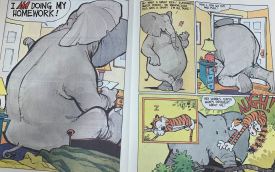
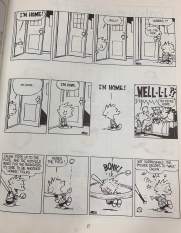
For my graphic novel I chose The Authoritative Calvin and Hobbes. I chose this book in particular because I grew up reading the newspaper everyday and was always excited to read the comics. It gives me a nostalgic familiar feeling, it stuck out more to me in comparison to the others. I liked how some pages are in color and there is a lot of variation in the size and kind of frames. (This is something I had notices as a kid reading these comic strips.)I feel like it puts an emphasis on what is happening within the story. The images I chose show how some pages, panels or even just frames can appear in different sizes, shapes and in color. I also wanted to show how sometimes the frames could be absent from the page but the scene continues (like in the black and white page).

IMG_2253

Calvin & Hobbes pg 8-9

IMG_2250

Calvin & Hobbes pg 17

I can see a good amount of motion, it is shown by using lines (to act as wind). I feel like the movement is represented well and shows step by step what is happening.  I can tell from frame to frame the type of movement that is supposed to be represented. Since the characters Calvin and Hobbes are well known they are easy to identify and see from action to action. The identification o characters also help for subject to subject because I can also tell what characters are interacting. Since the frames and panels are always changing it brings an element of action to each scene, it lets the reader have a chance to intemperate it a certain way. For aspect to aspect my eyes are always wondering, although there is limited detailing there is always something eye-catching to look at. The non-sequitur element is not as present, I never really seemed to be confused by the order in which I should be reading/looking at things.

Posted in Fall 2019 Archive (201 Blog), Uncategorized | Leave a comment

Closure and Time Frames: Emily Bartholomew

The Graphic Novel I decided to read “The case of the missing man”. I choose this book because I like to read mystery books and I thought it was a cool idea to make a mystery novel into a graphic novel. I have never read this book before and I normally don’t really read graphic novels so I didn’t really know what I would like, or if I would like to read these types of books.

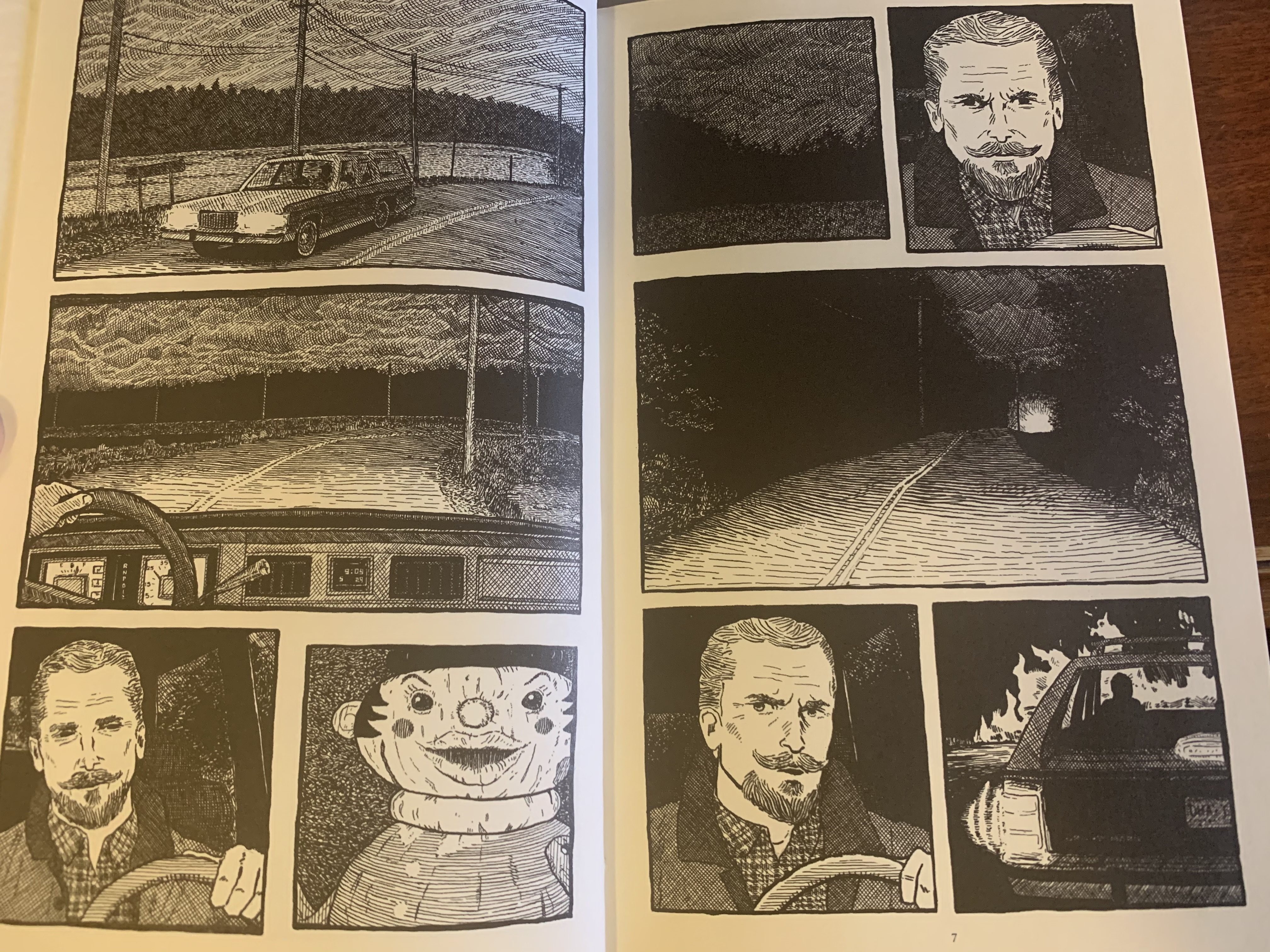
The Case of the missing men page 6 and 7

The example I decided to use for closure was page 6 and 7. In these pages, you get a sense of a man driving in the dark through a town and during the middle of the scene you get interrupted by this smaller panel of a toy clown. Then it resumes to his drive in the dark. These pages are before the first chapter in the book, so it’s like what happened before the story starts. It’s a background of the story before it even starts, to let the reader know what everyone else knows in the town about the missing man.

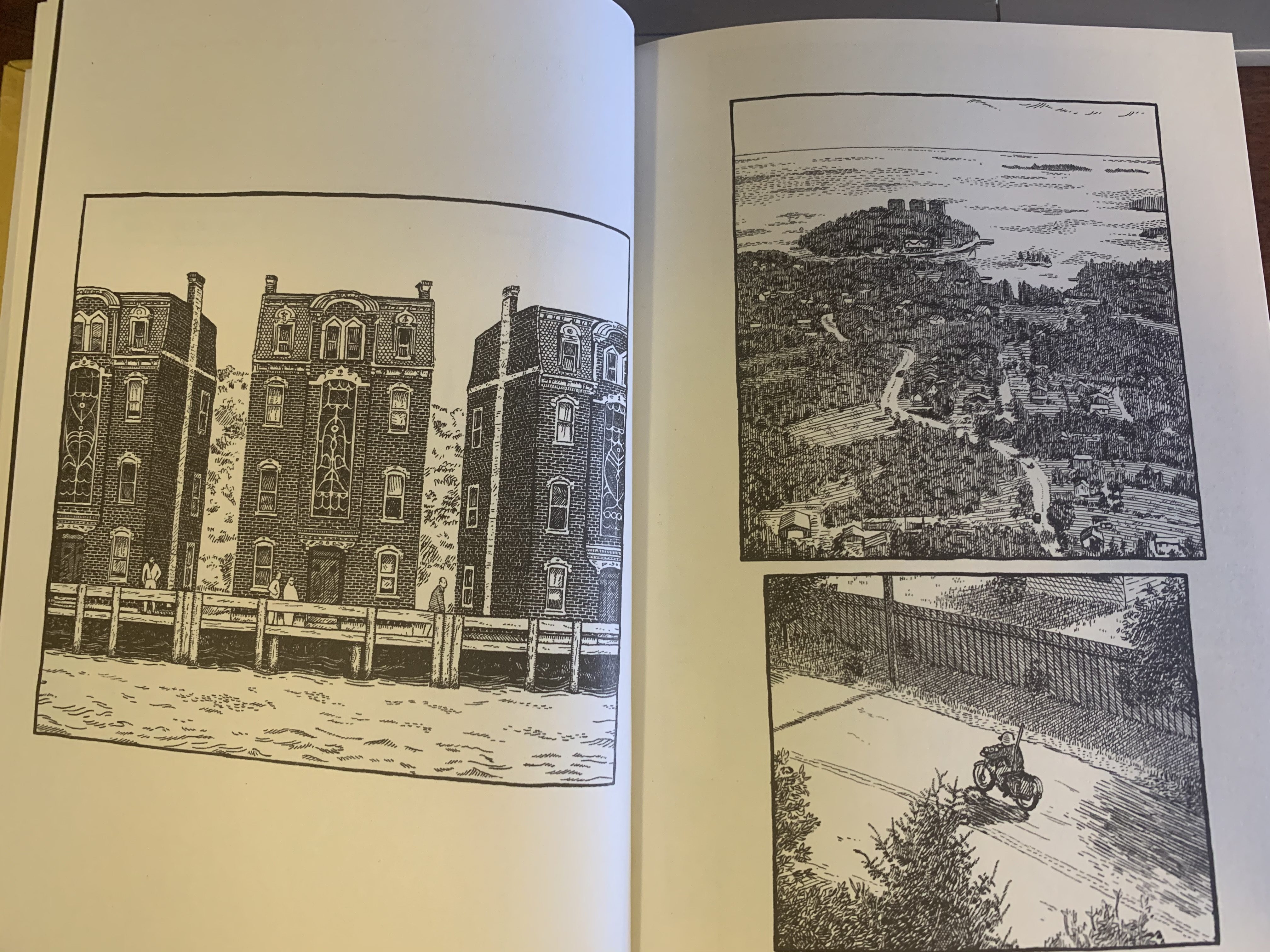
The Case of the Missing Men Pages 14 and 15

The example I decided to use for a time frame is pages 14 and 15. These panels don’t take up all the space in the pages and have a lot of white space throughout both pages. In the panels it kind of gives an overview of the town that the story is taking place in. The first panel that’s shown in the book focus on one building with other building in the background. The next panel gives a bigger picture of what the town looks like and what’s in it and what its by. The last panel focuses on a person on a motorcycle driving on the street of the town and then follows on the next page of the reader finding out that the person on the motorcycle is a police officer.

Posted in Fall 2019 Archive (201 Blog), Uncategorized | Leave a comment

Closure and Time Frames: Eddie Abellar

“Mimi and the Wolves” by Alabaster.

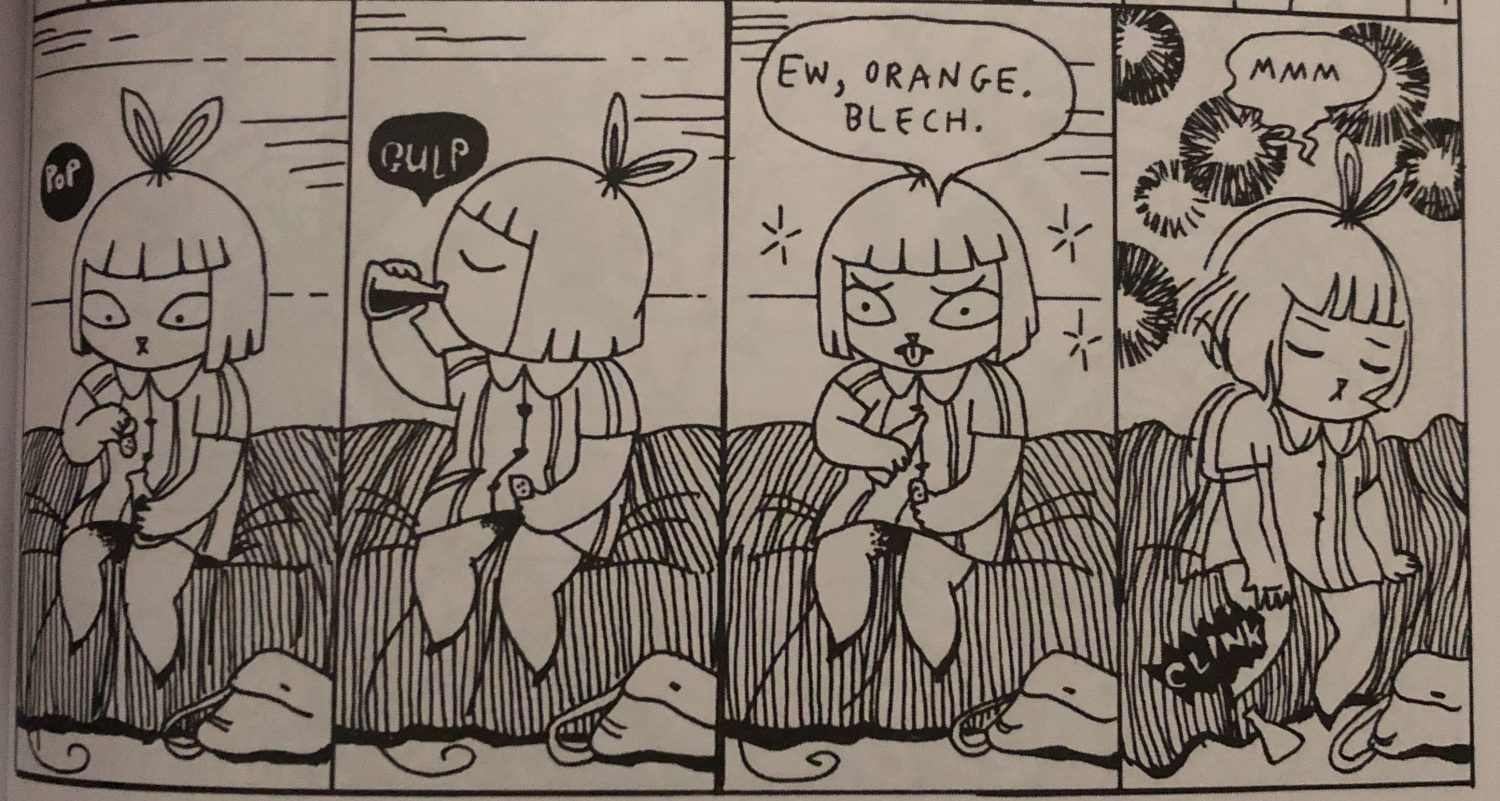
The example of closure I found in the graphic novel “Mimi and the Wolves” is a moment-to-moment transition. This example is moment-to-moment because it follows the main character, Mimi, in a single setting and shows her actions across multiple panels. In each of the panels, she is doing something completely different. The time between panels is very small, maybe a couple seconds between panels, which is why I think it is a moment-to-moment transition. This example of closure could also be an action-to-action transition. In the first panel, Mimi opens a bottle of liquid and proceeds to drink the liquid in the second panel, Mimi then burps in the third panel and by the fourth panel, Mimi is asleep.

“Mimi and the Wolves” by Alabaster.

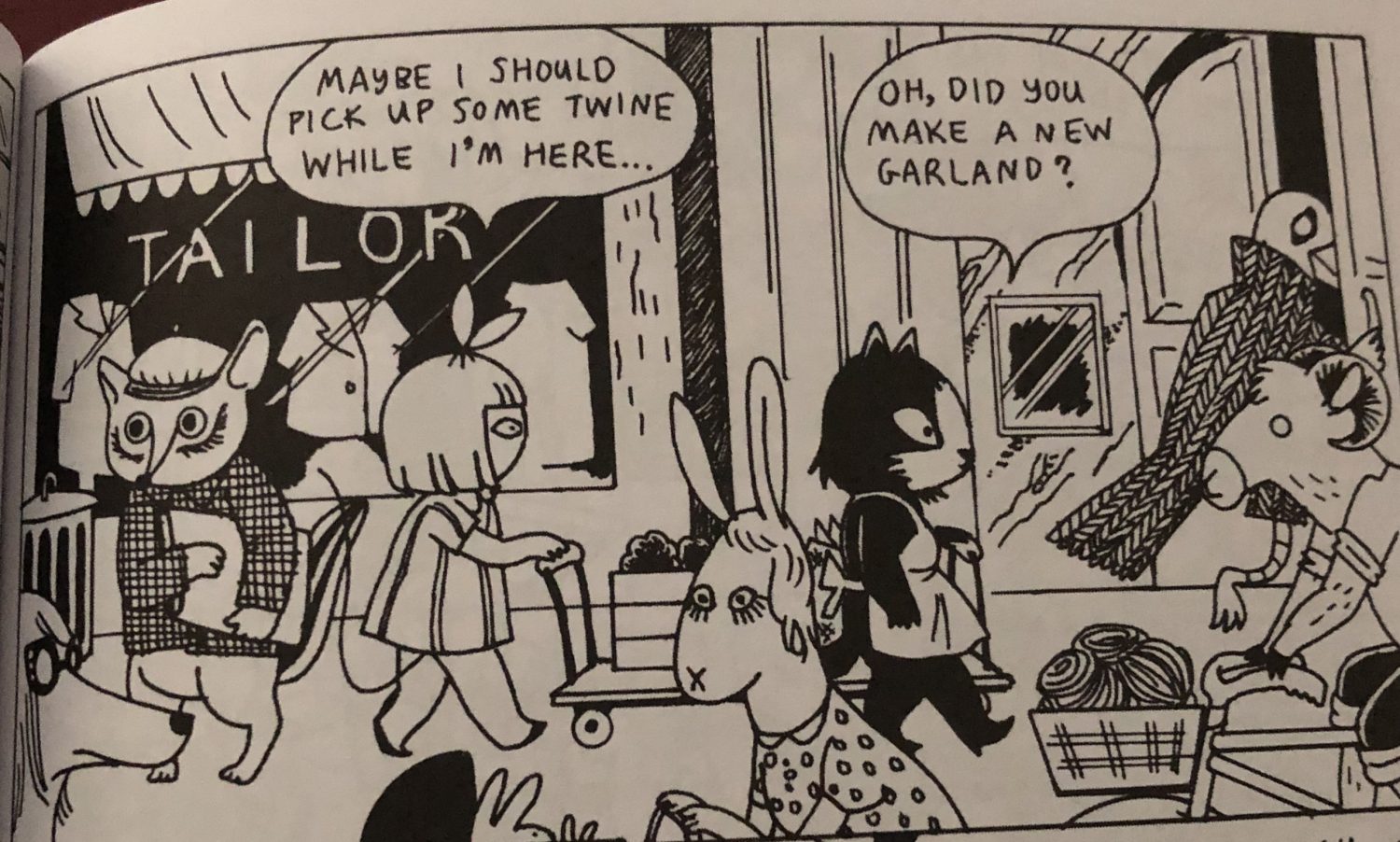
The example of a time frame I found in “Mimi and the Wolves” is a single rectangular panel that has been widened to represent the length of time in the panel. In the panel are two speech bubbles. One of the speech bubbles belongs to Mimi and the other belongs to her talking pet dog Bobo. In the panel, Mimi and Bobo are walking through what seems like an outdoor market. Mimi’s speech bubble appears first, then Bobo’s speech bubble appears after Mimi’s. This second speech bubble reacting or responding to the first speech bubble represents the time that has passed within the frame, which in this example is only a couple of seconds.

Posted in Fall 2019 Archive (201 Blog) | Leave a comment

Closure and Time Frames: Madison Roby

Find a graphic novel that appeals to you, both in terms of aesthetics and in terms of content: Skim your chosen book and look for interesting examples of closure and time frames, based on your understanding of Scott McCloud’s Chapters 3-4. Find examples and write a paragraph about: One interesting example of closure and one interesting example of time frames that asks for serious viewer participation or interpretation.

Octavia E. Butler, Kindred, page 14.

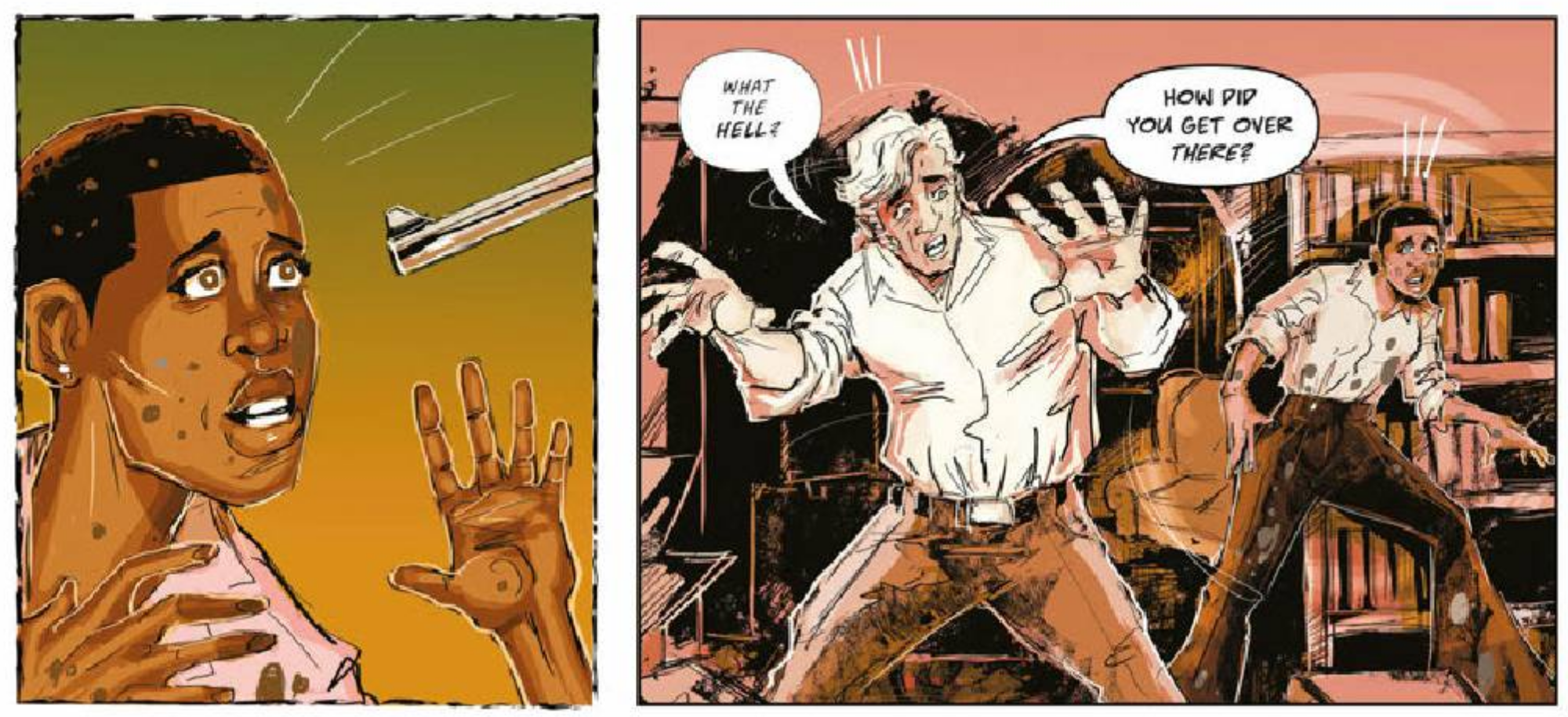
I chose to read Octavia E. Butler’s Kindred, a graphic novel that focuses on a woman of color who frequently travels back in time to the deep south during the time of slavery. This first scene is one of the first times that the main character time travels, an example of scene-to-scene closure, as the subject stays the same but the scene changes. The main character comes from a scene in which she is going to be shot for being around a white, slave owner’s son. In the present, the colors are muted to tones of browns and tans, while the past is generally colorful and more “intense.” This is a form of scene-too-scene closure, as the reader must interpret what happened between the two scenes, particularly what the main character experiences/sees while time traveling. Through skimming the pages, there is no real visual interpretation of what time travel looks like, meaning the reader must fill in the gap and decide what exactly it looks like based off our own experiences/views of it (for instance, how Dr. Who depicts it versus how Marvel’s Endgame depicts it).

Octavia E. Butler, Kindred, page 15.

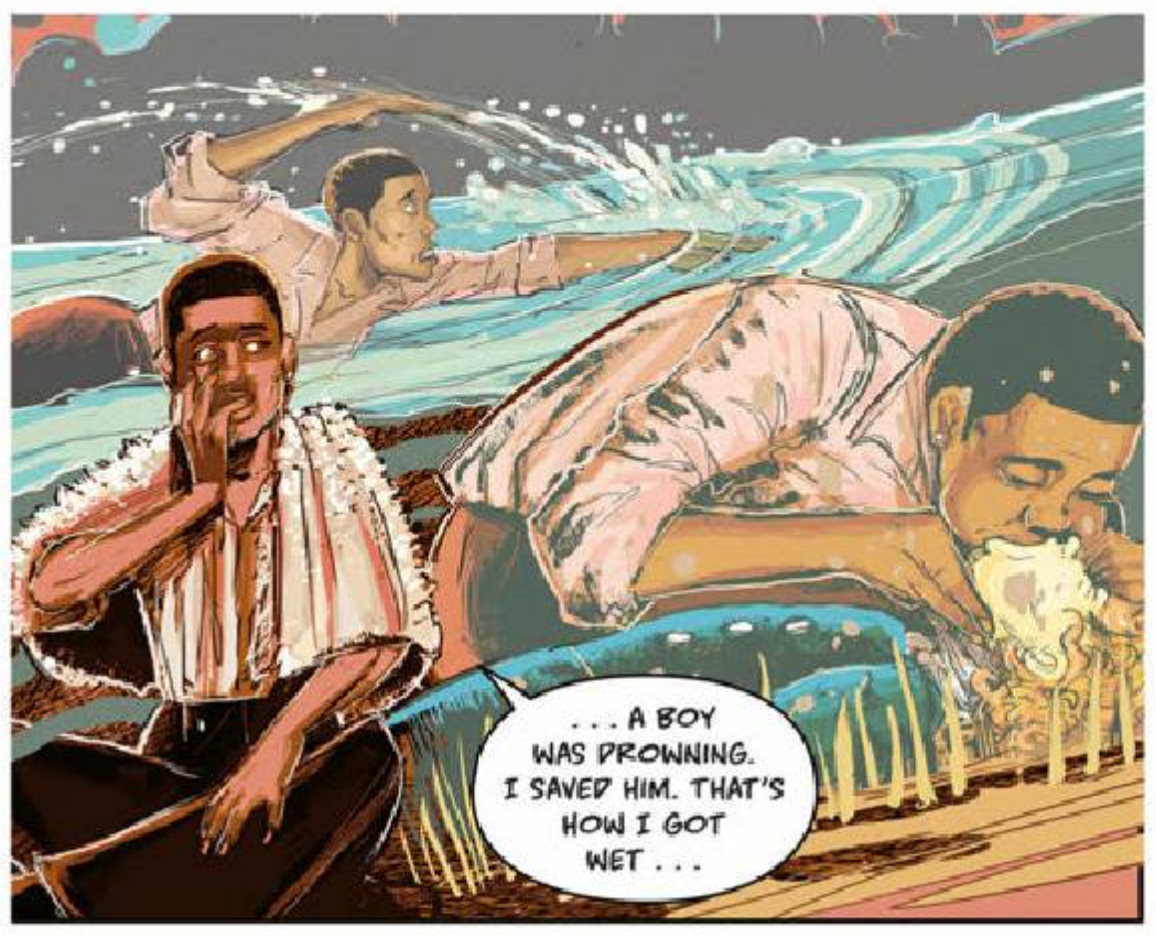
This scene is an example of a time frame. It is one panel, however, it takes up a large portion of the page. This scene depicts the time passing from the main character jumping into a lake, to doing CPR, to then thinking on it after she has already been transported back to the present. This is a good example of a time frame, as there is obvious time passing even though the main character is depicted three times in the scene. The reader must realize that these are three different scenes even though they’re superimposed on top of one another.

Posted in Fall 2019 Archive (201 Blog) | Leave a comment

Matthew Mollet: Closure and Time Frames

635705F9-9E1D-4234-8FF9-5B734CDAE7BB

timeframe

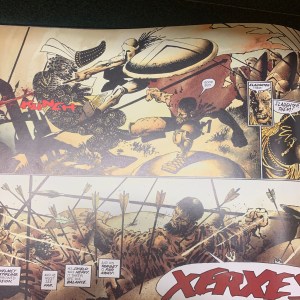
The time frame shifts from Leonidas charging into battle and cuts to him laying wounded. The timeframe allows for the reader to interpret what happened to him, how many arrows were shot or how far he made it before being hit

46565DBC-AE21-4D96-A906-F5F523F82FD1.jpeg

Closure

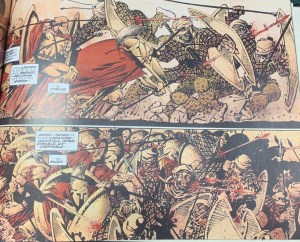
This closure is action to action  the Spartans are shown fighting the Persians and each strike is depicted. The scene shows the Spartans charging and then hitting the Persians with their weapons
Time Frame

Posted in Uncategorized | Leave a comment

Closure and Time Frames: Keanna Maki

Passing For Human (14)

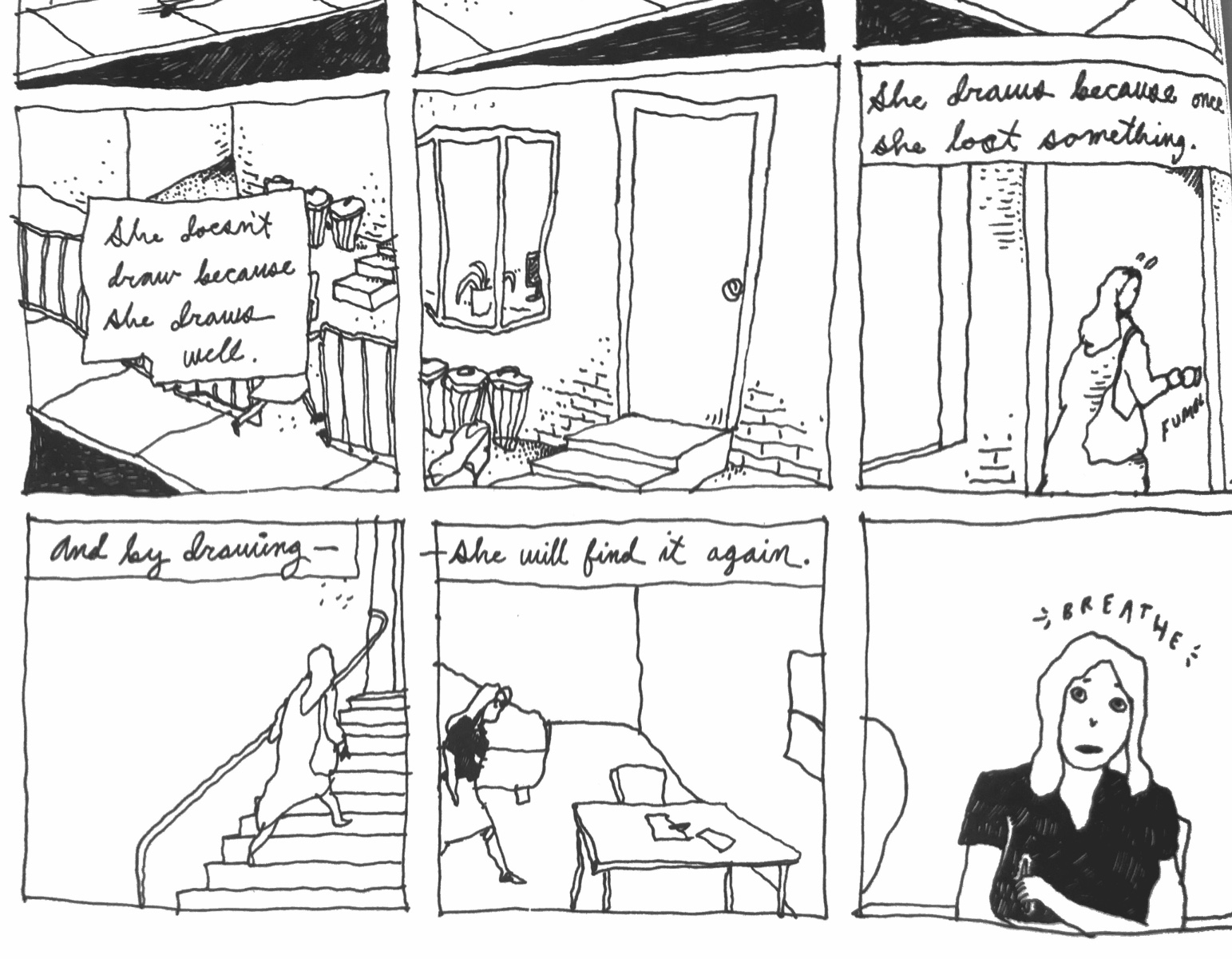
The graphic novel I chose to read is called “Passing For Human” by author Liana Finck. What attracted me to this novel was the cover of it. I like the illustrations it portrayed. I also skimmed the novel and enjoyed the aesthetics with how the whole comic was drawn too. One interesting example of closure that I found in the graphic novel I chose included a mix between moment-to-moment and action-to-action. This is because as you can see in the piece from the novel that I have attached, the scenes in each frame are of an image that goes from one moment to the other. It is like watching a film where the frame continues on without changing context. In this case, it is like the reader is watching a film in comical form. We see that a woman appears as if she is heading home, enters the home, heads towards a table, and then sits at the table. Like I said, one scene after the other. I would also say that it has a mix of action-to-action because she seems to be in a hurry so we see that she is, what it appears to be speed walking back home, to then find herself in a mood to draw. We see this one action of heading home led the women to then start drawing right after.

Passing For Human (10)

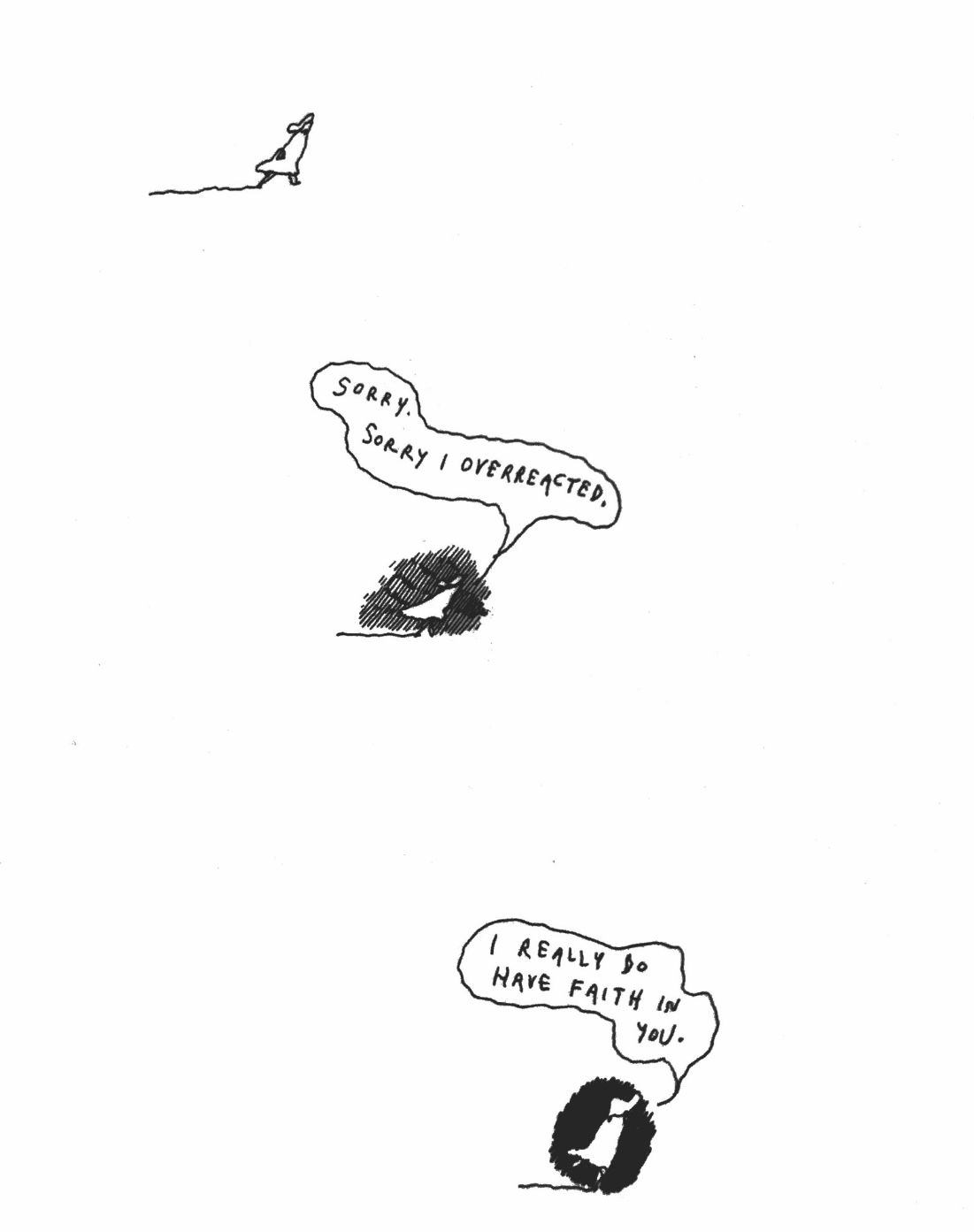
An example of a time frame from my graphic novel would be shown by the following scan that shows a woman running through empty space. This an interesting page because we see these illustrations different from what a normal comics look like. For instance, at the very top, we see this woman that appears to be walking, then we see in the next frame below, she appears to be surrounded by darkness as if she is jogging into a bad place, and then in the final time frame, we see that she has completely been consumed by the darkness and is running in it. If we step back, we notice there is no actual frame that surrounds her each move, just empty space, but we can see how time keeps on going by the woman’s shift into darkness and how she appears to be walking closer to the end of the page, from top to bottom.

Posted in Fall 2019 Archive (201 Blog) | Leave a comment

Closure and Time Frames: Jake Bailey

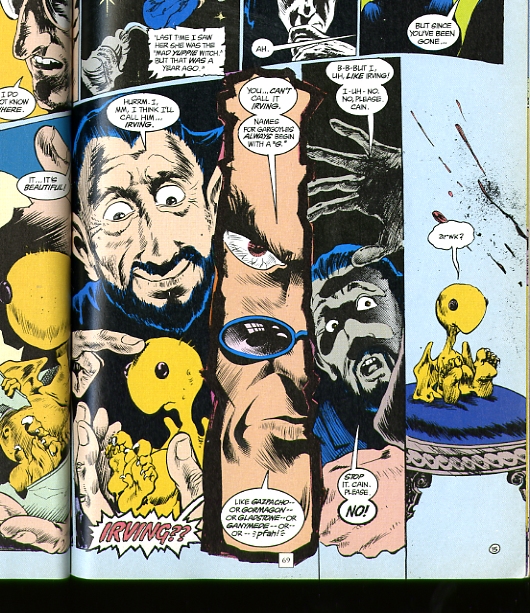
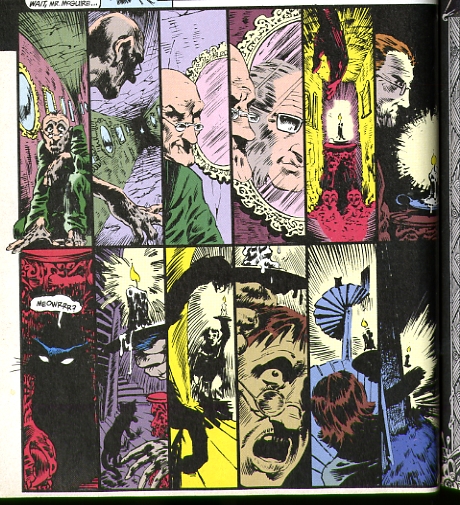
The graphic novel I choose was Volume 1 of Neil Gaiman’s “The Sandman Preludes and Nocturnes”. I mainly choose this book as during our library visit a few weeks ago, I was given a different volume to read in class by Lorena O’English and thought it was interesting so I found the other volumes in the library.

As far as my example of closure it is a similar example to what Scoot McCloud uses in his book. Its an subject to subject scene where it looks like 2 men are arguing and then suddenly one man looks like he is cowering following what looks like a blood splatter on the next page. It changes subject and leaves the reader to interpret what has happened as it switches from the subject of the man cowering to just the gargoyle he had and a splatter of blood.

The example I used for time frames is this one seen on page 46. Its where the character goes about moving around his house in search of something, get startled by a cat and using a candle to guide him in the darkness. This is an example of time frames as it shows a bunch of screenshots in time strung together to create movement. The viewer participation is found in the idea that you can tell he is searching for something and its up to reading to try and figure out what that is, something probably not good based on his last expression.

Posted in Fall 2019 Archive (201 Blog) | Leave a comment

Closure & Time Frames: Helena Matheson

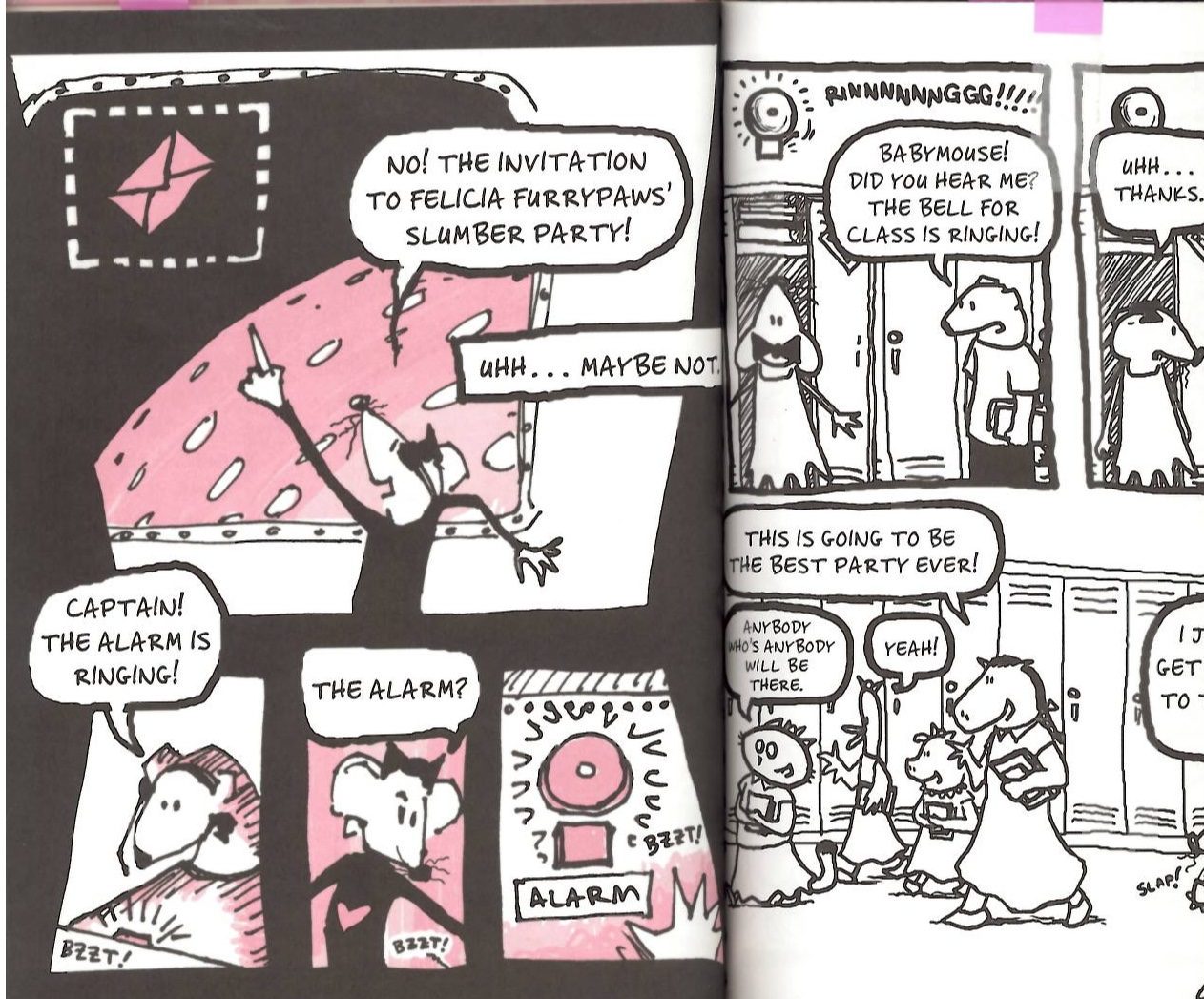
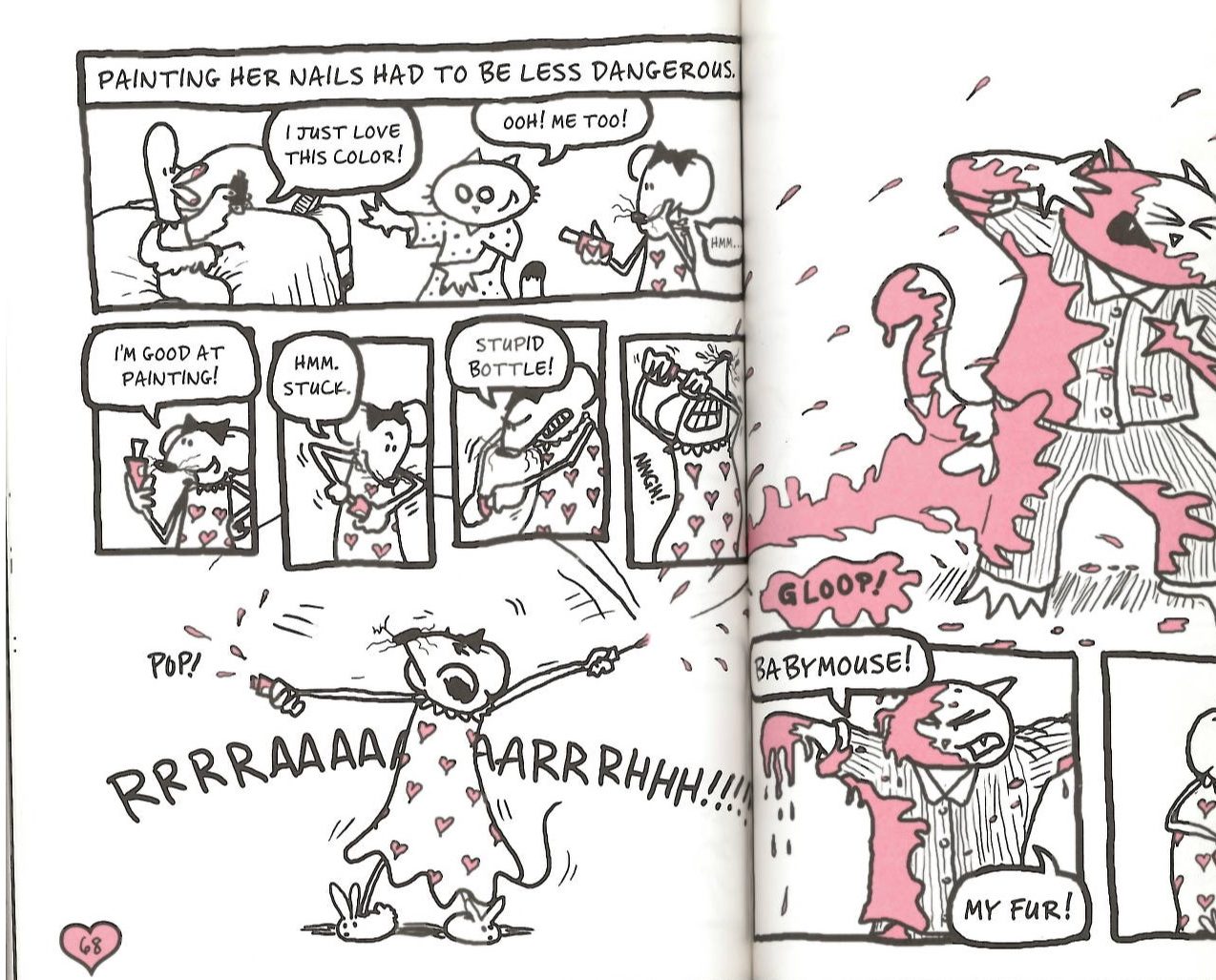
The book that I chose is Babymouse: Queen of the World, by Jennifer & Matthew Holm. I chose this book because it was one of my favorite books as a kid and its aesthetic (pink everything) really matches mine. I remembered there being vivid transitions and time frames and thought it would be perfect for this project.

Babymouse: Queen of the World pg. 48-49

One example of closure I found was on pages 48-49. I felt this exemplified the scene-to-scene transition. On page 48, you see Babymouse in space in a space ship, trying to locate an invitation to another girl(cat)’s sleepover. Toward the bottom of the page, an alarm begins to ring, pulling Babymouse out of her daydream and back into the school hallway on page 49. She moves from space back into the real life, creating a scene-to-scene transition. I also think that there is aspect-to-aspect transitions occurring simultaneously, as all of the image of the bell ringing in the space ship is happening at the same time that the bell is ringing in the school scene.

Babymouse: Queen of the World pg. 68-69

One time frame I felt took serious reader participation was on pages 68-69. This scene shows Babymouse trying to open a bottle of nail polish. The bottle is stuck so she rips it open and it splatters all over the girl(cat)’s fur. I think this is an important scene because it has one image on page 68 spreading into another image on page 69 and continuing the scene. The reader must interpret that this is still in the same scene and not change mindsets. I’d say this is an example of a subject-to-subject transition, as it stays within a specific scene or idea.

Posted in Uncategorized | Leave a comment