

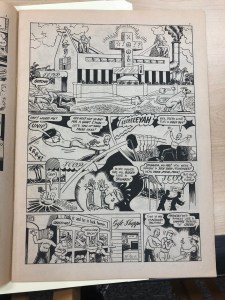
A page from the cartoon short “Crash” depicting a rambunctious mess of collisions and cars zooming by. (Crash, Charles Burns, 1981, pg 88)
In this page of “Crash”, there is a hectic mess of oil, collided cars, and passengers as man in a shanty kart zooms across. As explored in Scott McCloud’s explanation of lines and how they convey meaning, the lines in the first panel communicates a loud thud as what appears to be that the kart had throttled over the wreckage of the truck. The long curving lines all over the panels indicate movement, direction, and speed. In addition, the squiggly lines and symbols depicts these emotions of disarray, chaos, and loudness.
In another concept explored by Scott McCloud, he elaborates on the utilization of pictures and words to convey meaning in a work. The example I chose was from Will Eisner’s narrative portfolio, “The City” and it serves as a prime representation for word-specific combination.
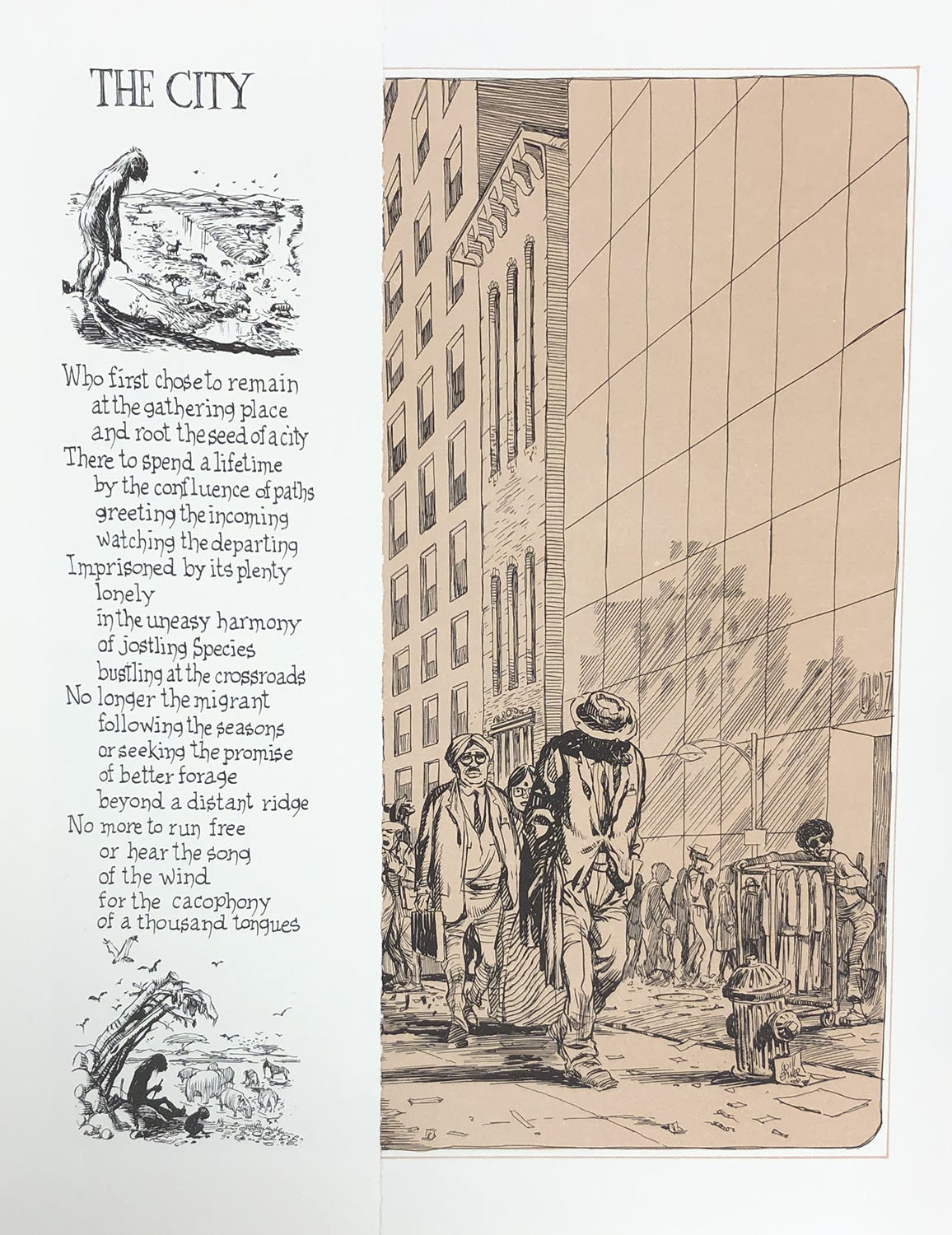
A page from “City” with a passage about the drudgery of urban life along with a illustration of a city street. (City: A Narrative Portfolio, Will Eisner, 1980)
As seen here, when the reader reads the passage, it can stand alone as a complex text and convey its message without any explicit drawing or illustration. It can be completely visualized by the readers themselves without the need of an image. The picture provided illustrates an interpretation of the urban streets; however, the reader may have their own ideation of the city based on the text of the message of a dreary urban life, slaving away from the isolating feeling of a bustling city life.
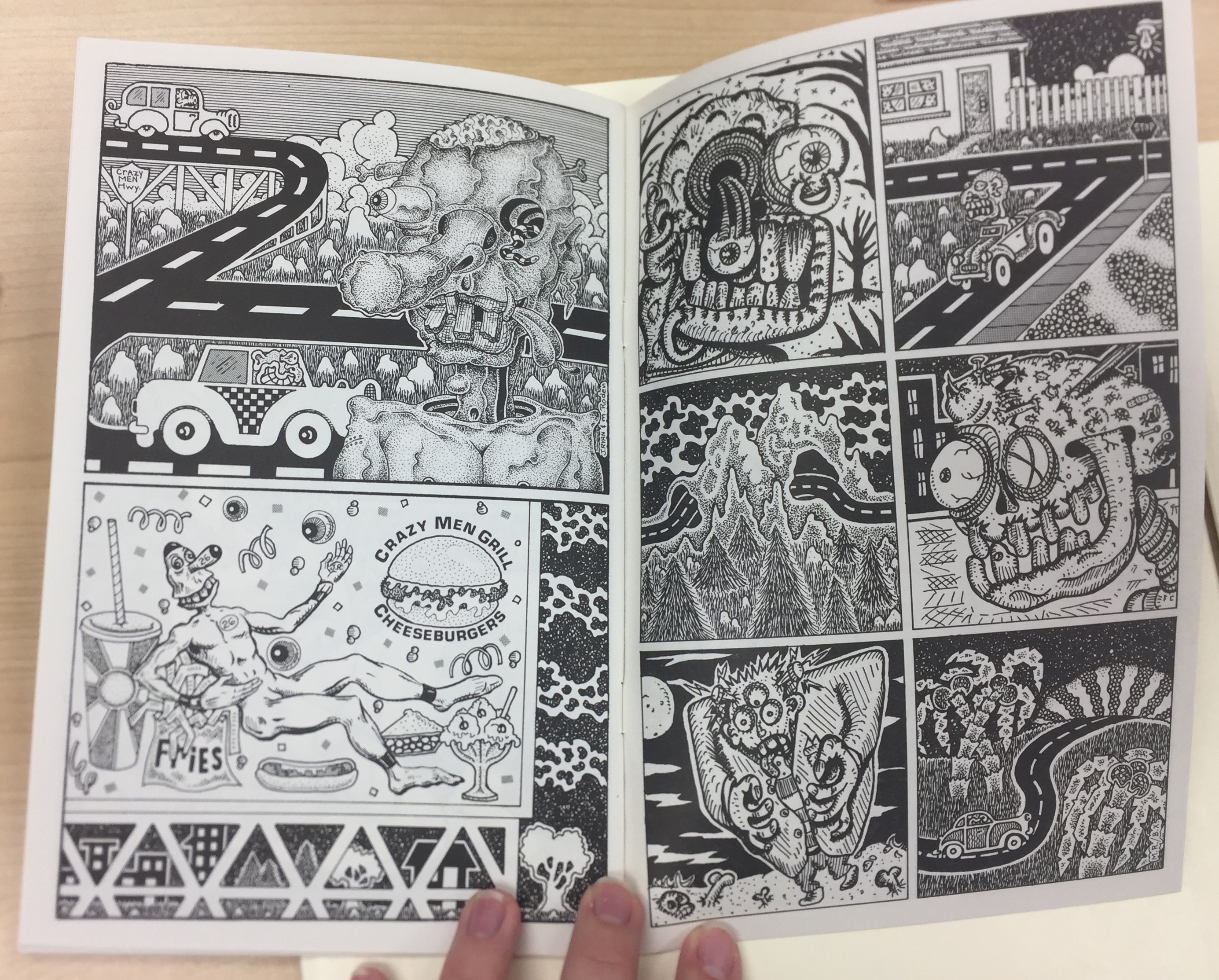
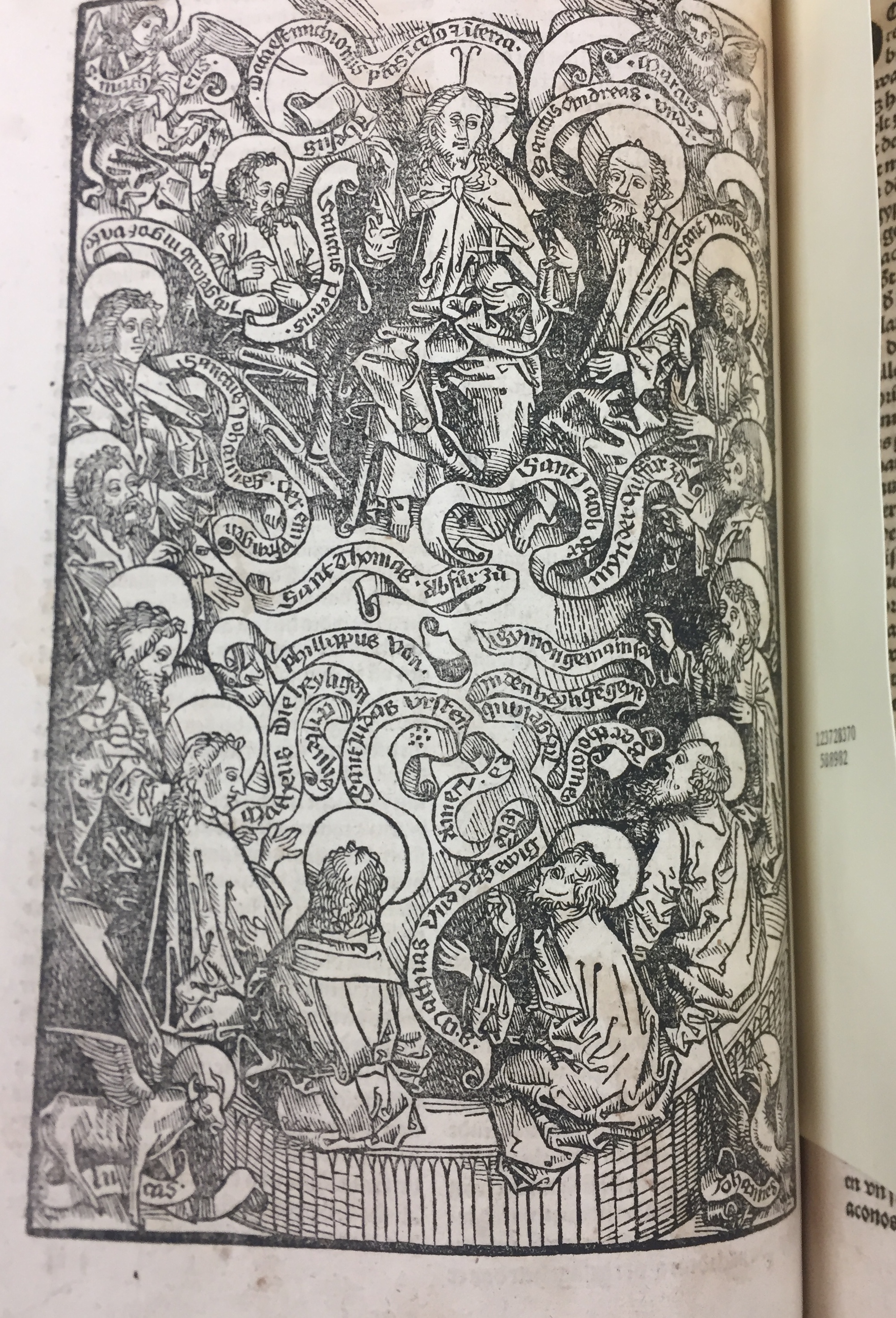
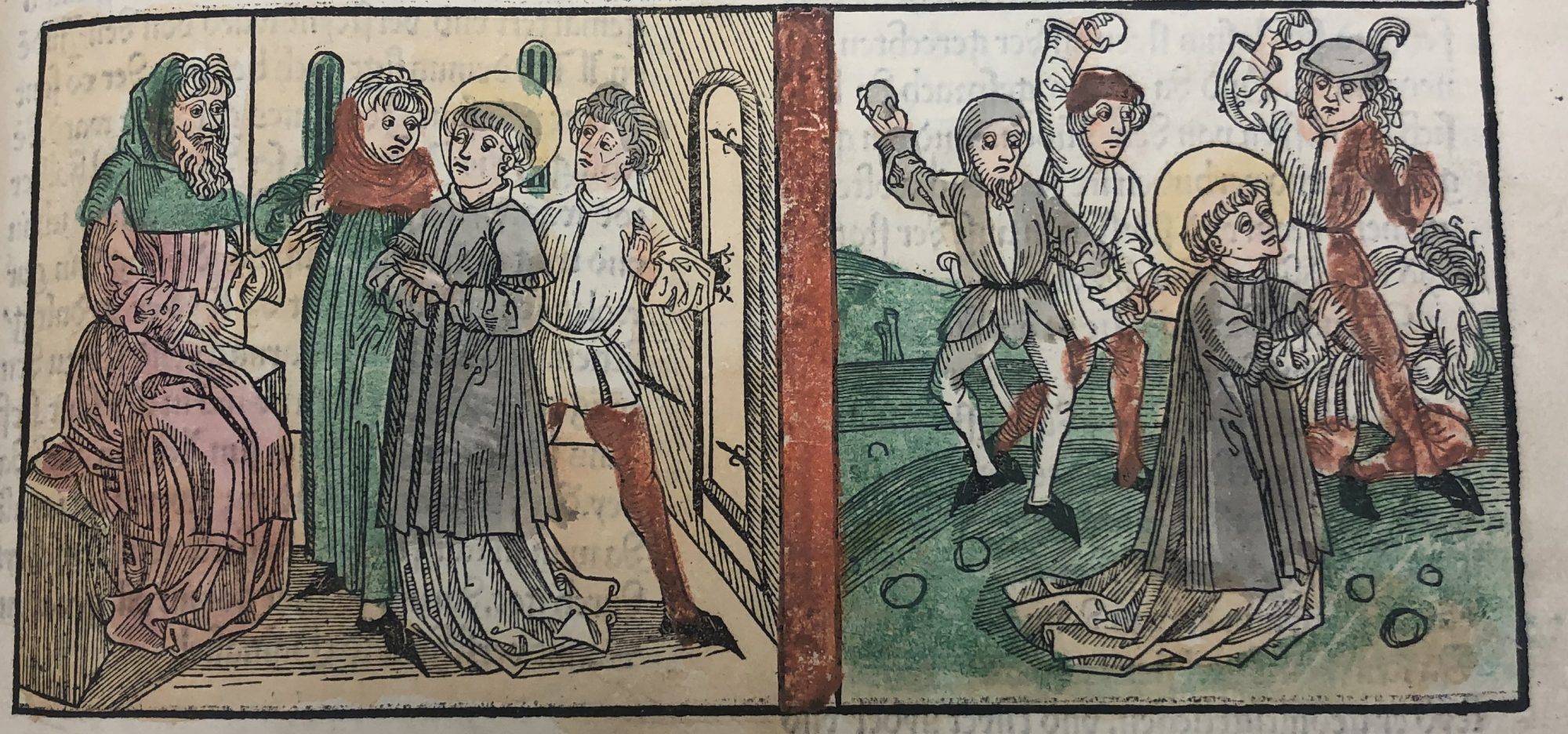


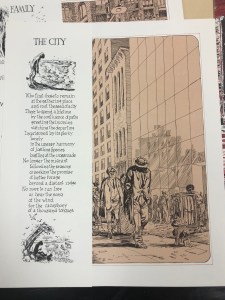 In the MASC, I found some very interesting lines that expressed many different emotions. The one that I chose was The City: A Narrative Portfolio by Will Eisner. This art used many horizantal and diagnol lines that were very close and far apart to indecate dark and light shading. It is very interesting because none of the lines are bolder than the other, they’re just closer to seem bolder. The thinness of these lines brings emotions of coldness, sadness, and depression which definately does its job to set the theme for this comic. The direction of the lines are repetative that also helps set the “dark and gloomy” theme that brings the audiences in the story.
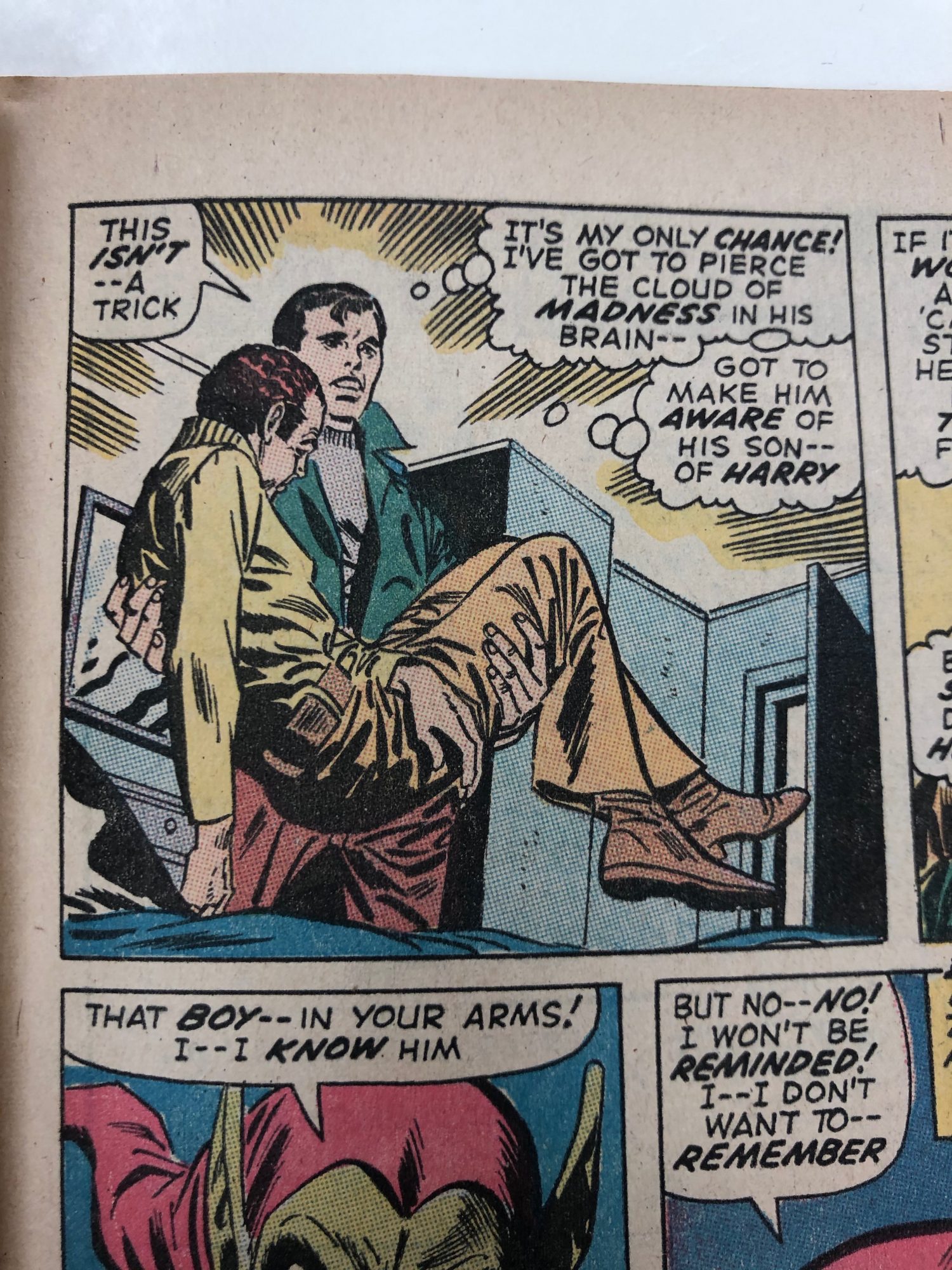
 For Chapter 6: Show and Tell from Understanding Comics, one of term that I focused on for this comic: Sacred and Profance by Justin Green, is Picture-Specific. Picture-Specific is where words do little more than add a soundtrack to a visually told sequence. This example is shown on the sequence where the man is pulling his “imaginary brother” from the stop sign, then releases him which caused him to fall and injure him. This comic showed this sequence of events by using words to describe what words go with what action. Another term that I focused on is Montage. Montage is where words are treated as integral parts of the picture. This term also works with the same visual concept as the Picture-Specific example. My final term that I focused on is Interdependent. Interdependent is where words and pictures go hand in hand to convey an idea that neither could convey alone. This example is shown after the man releases his “imaginary brother” and calls him a “Meek Guy.” This is a great example because you wouldn’t describe the imaginary brother as a “Meek Guy” if they were no text and the same vise versa.

 Kristin Becker's DTC Classes at WSU