Print Versus Digital Comic: Dahlia Xie

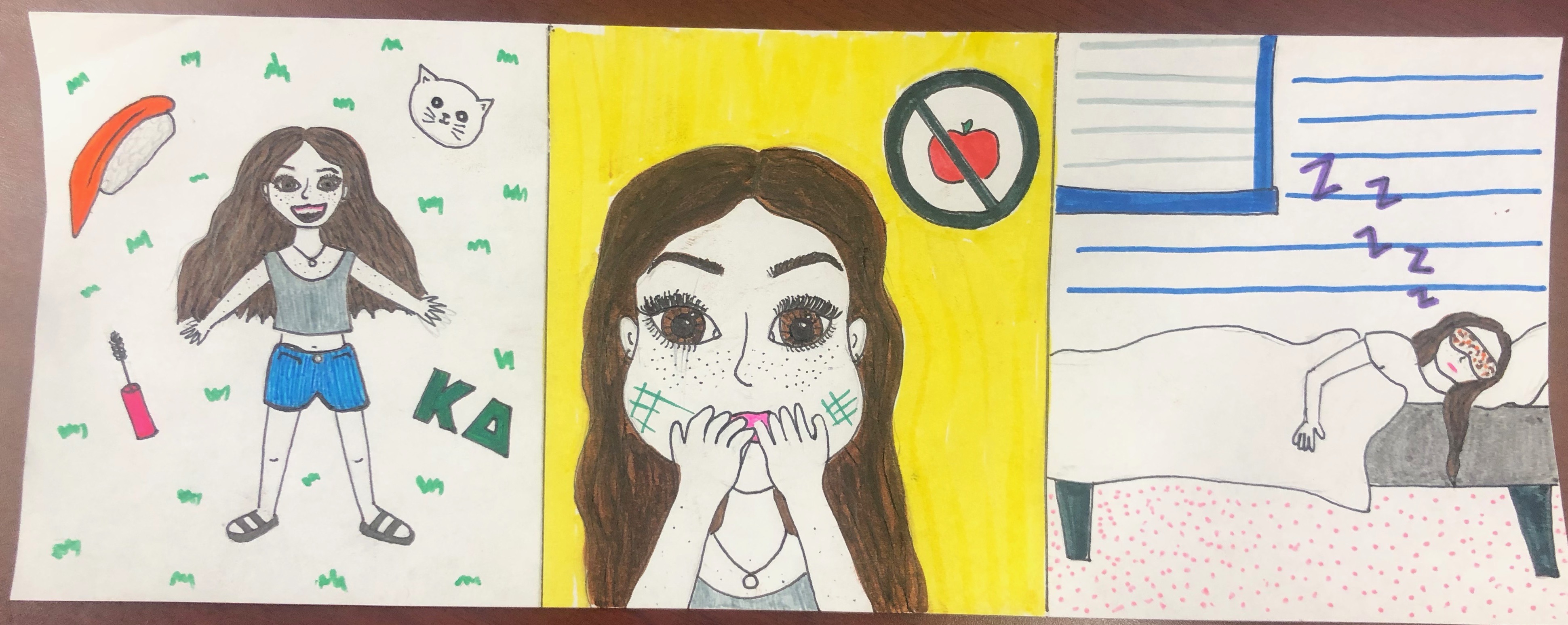
When the hand-drawn comic was initially assigned, I was very excited to start the project. It quickly became apparent to me that the comic was so open-ended and I began to feel stressed. I didn’t really know the definition of a comic, and what that entitled. Despite how minimal my hand-drawn comic is, I went through almost a dozen rough drafts before settling with this one.
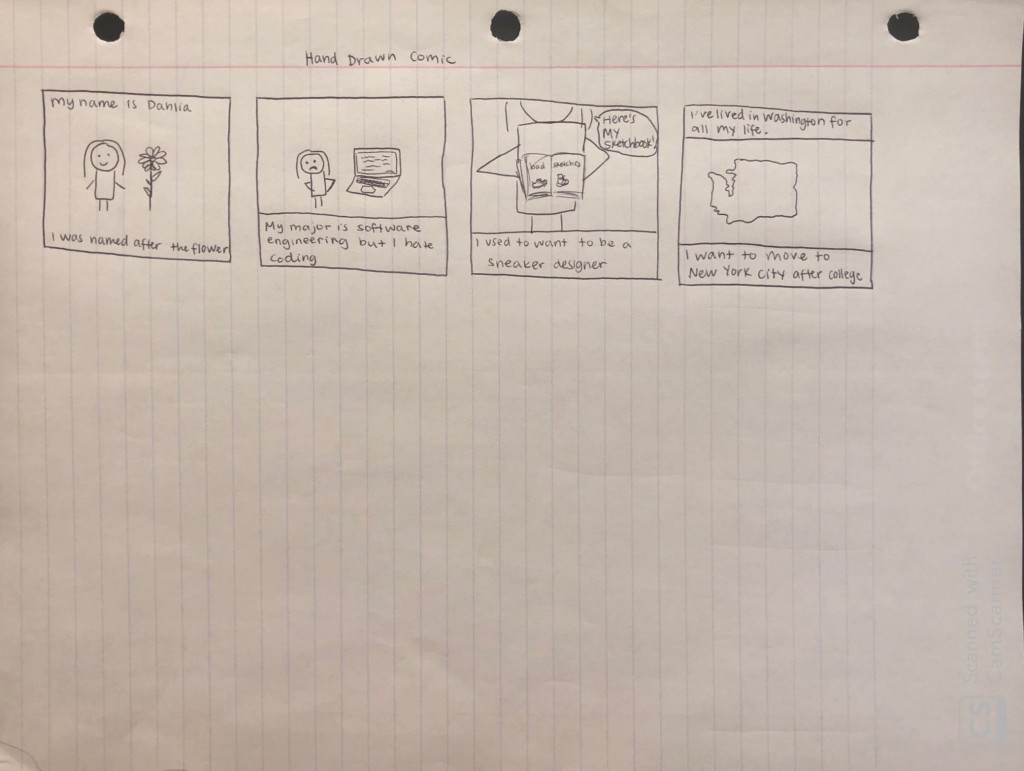
hand-drawn comic
My hand-drawn comic

When it comes to drawing realistic things, I become a little bit of a perfectionist. To counter this problem, I like to use pen to draw because it forces me to accept any flaws that I would typically erase if I was drawing in pencil. A hand-drawn comic shows more of an artist’s character and thoughts, every part of the drawings are created by them and I find that hand-drawn comics to be more personal. One of the downsides to hand-drawn comics is that it’s difficult to share them on a large scale.


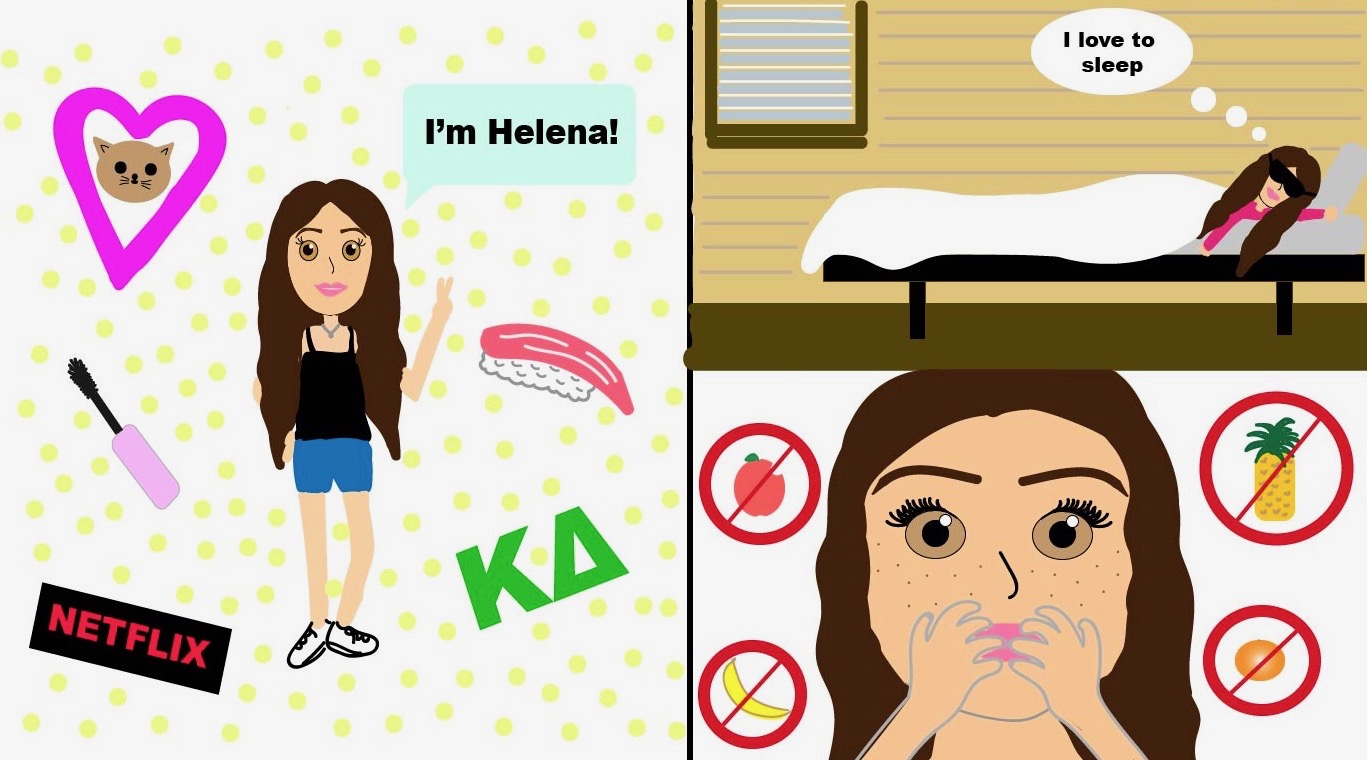
For the digital comic, I drew it with a stylus in the Autodesk Sketchbook application on my Surface laptop.
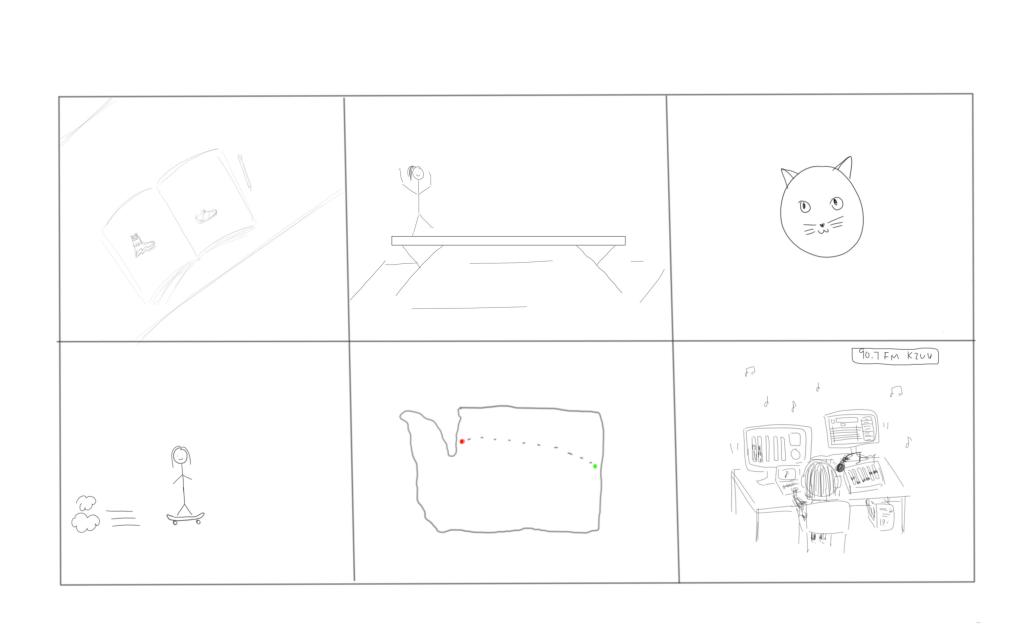
digital comic
My digital comic

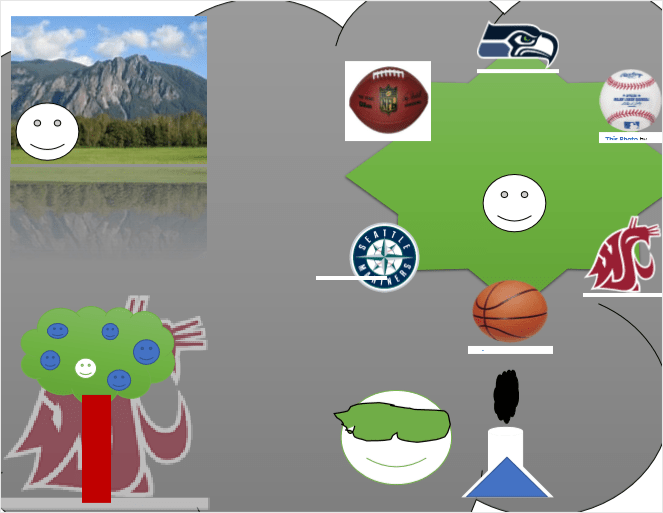
I used the geometric shape tool to create the grid and then I hand drew the rest with the pencil and paintbrush options. In this comic, I wanted to just display activities that I enjoy so I omitted most words. One of the benefits of digital comics is that you can use more sources such as images from online or different colored paints. One of the drawbacks to digital comics is that if you exclusively use images from online in your comics, there can be a lack of originality and creativity in the visuals.

While reading the first chapter of Scott McCloud’s “Understanding Comics”, I was fascinated by the idea that comics don’t require words or text. I decided to implement that in my digital comic by omitting most text.

Posted in Fall 2019 Archive (201 Blog) | Leave a comment

Print Vs Digital Comic: Jake Bailey

Hand Drawn Comic detailing my background
Digital Comic detailing an all about me

To start, I would say without a doubt that for me making digital comics is a lot harder than making print comics. I have very little experience doing digital comics using stuff like Photoshop or illustrator. Also, being a chem major, I haven’t done any sort of online creative projects since the days of High School Spanish projects. In comparison though, I have always been doodling or sketching in notebooks so making comics with a prompt wasn’t too hard at all. While my drawing skills aren’t the best, they are still good enough to portray pretty well what I am visualizing in my mind. I feel digital is also harder because with print you are only restricted by what you physically have never seen before but with digital you are restricted also by whatever your program can and cannot do. The difference to me in reading a comic on paper than online is that to me the comic on paper always feels more real than online. The artist physically thought and drew every line to make it but online sometimes the software is making it look nice and unique and while that, which is still good, just doesn’t feel more real. In terms, I do think the first chapter of Scott McCloud did help me in a small way because it did show me more of what comics are because I definitely am a person whose only influence is the Sunday and Superhero comics and stories. Now I can see they don’t always have to be the classic panels and stories but can essentially be whatever you want.

Posted in Fall 2019 Archive (201 Blog) | Leave a comment

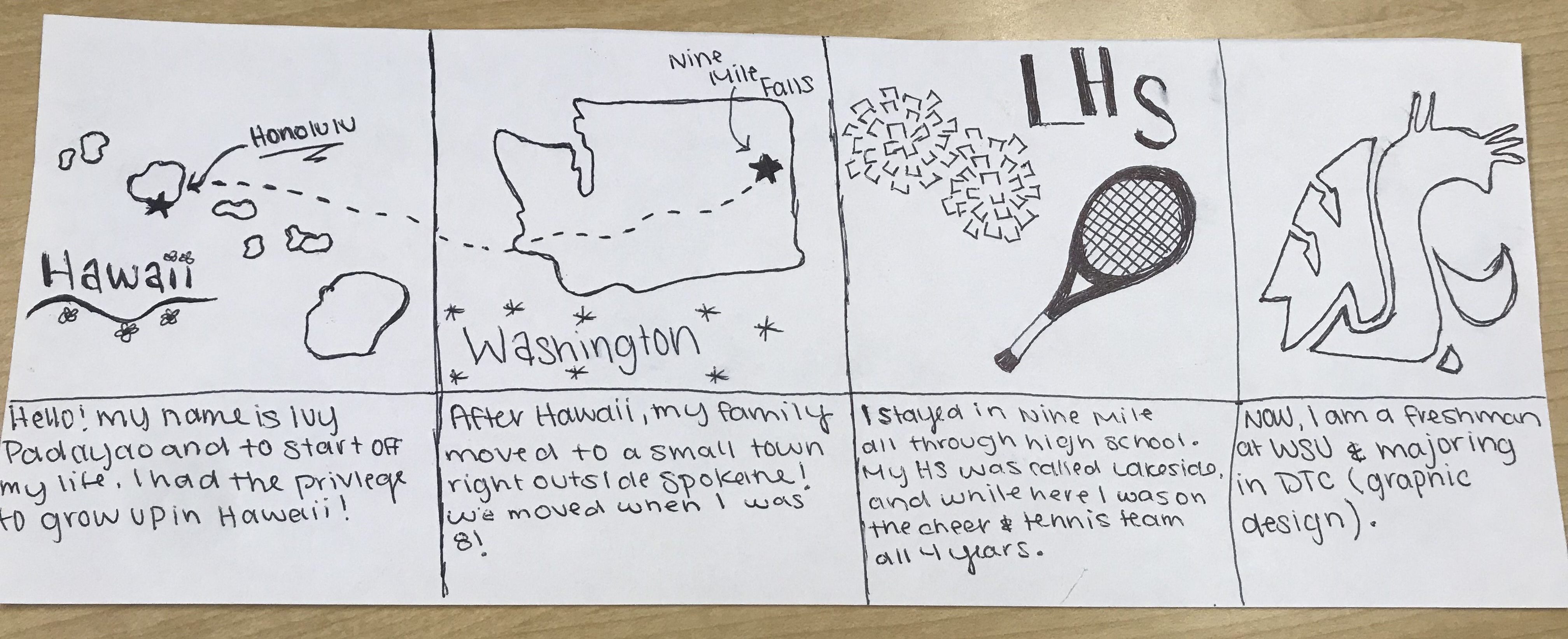
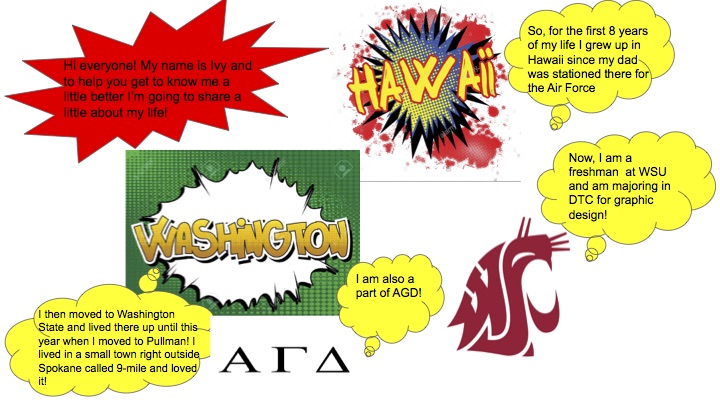
Print Versus Digital Comic: Ivy Padayao


While creating each of these comics, I was able to share my story in a unique way. Before this class, I had never created or even read a comic book before. I was always confused as to where I was supposed to be reading and when. While creating the digital comic, I was able to understand that the way the author places each thing has a meaning. The placement is supposed to help the reader’s eye move across the screen in a simple way.

Hand drawn comic

There are definitely benefits and drawbacks of creating comics by hand and digitally. I have never been the best artist, so creating the hand-drawn comic was a little challenging for me in the artistic aspect. However, what I liked about creating the comic by hand was that I felt I had more control with the layout and spacing. With creating the comic digitally, It was less of a struggle artistically, and more of a problem with spacing. I had to find a way to configure all the different shapes and text to be able to fit in this “box” that I was limited to digitally.

Similarly, while reading comics on paper versus digitally, you are able to feel a more artistic feel to the one paper compared to the digitally made one. Like I said earlier in my post, I have never created a comic let alone read one before this class. Reading Scott McCloud’s book “Understanding Comics”, with the ideology of a textbook in the form of a comic was really interesting to me. After reading the first chapter in his book I felt I could be a little more out of the box with my ideas as a designer and not feel limited to me pre-misconceptions of what I thought comics were.

Digital Comic


Posted in Fall 2019 Archive (201 Blog) | Leave a comment

Print or Digital Comics : Tom McLean

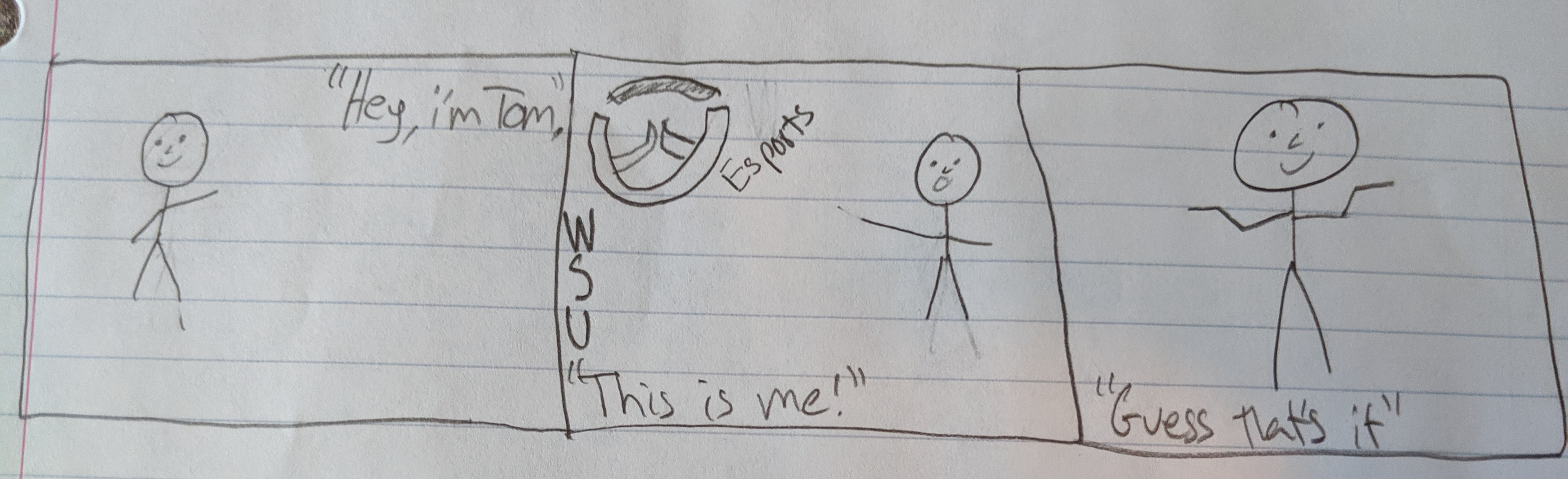
My hand-drawn comic August 29, 2019

With the argument for hand drawn comics or digital comics, personally I side with creating comics digitally. I feel like having the ability to easily correct your mistakes and improve upon them is important in the creative process in comic creation. Hand-written comics can sometimes be hard to read or understand if the author’s handwriting is not the best and that can really take away from the goal of that comic. With digital comics, you are given the chance to format everything down to the pixel so that your comic can be interpreted by many more people. The other thing with hand written comics is that they can sometimes limit someone in the tools that they can use. With software, you can update it to the standard of the present day and can be a easier space to get into rather than a physical one.

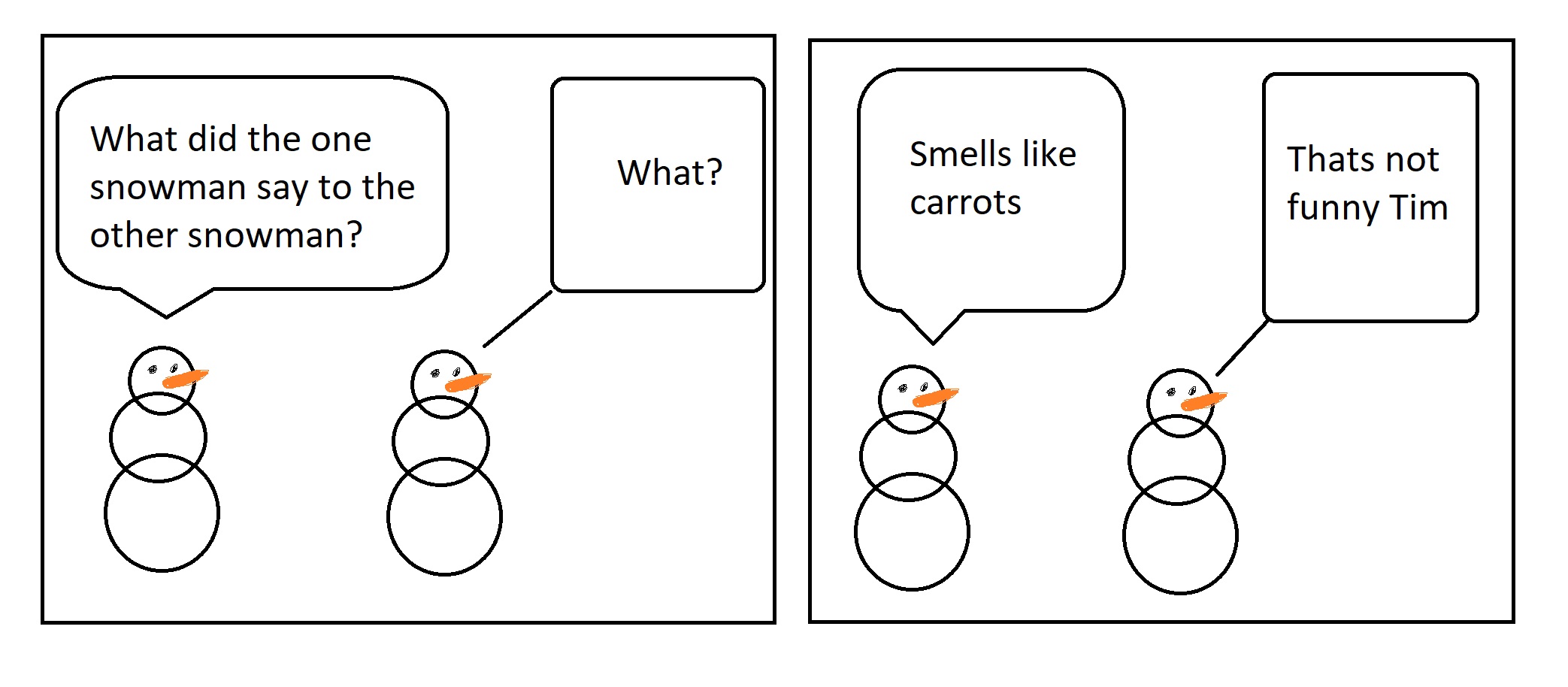
The major benefits of using digital comics to me is the fact that it can be heavily modified to fit the authors creative ideas. Just having the ability to get your ideas down wherever you are and to have the ability to modify your work past the point of doing it in a physical sense, it is the absolute best way at expressing yourself creatively. After reading the first chapter of “Understanding Comics” the main takeaway that I thought of the chapter was that you can be creative in many ways of creating comics. If you follow some basic guidelines then you can create something that is significant to you and your target audience. Comics come in many shapes and sizes, comics can be anything an they are a community that thrives on new people experiencing these things for the first time. So I firmly believe that you should be creative in whatever space is most comfortable to you, either being on print or digital.

My digital comic August 29, 2019

Posted in Fall 2019 Archive (201 Blog) | Leave a comment

Print Versus Digital Comic: Helena Matheson

I created this comic during the first week of school and finished it on 8/22/19.

I had a fun time creating these comics. I have always been very into art and this helped me dive back into it. Making each of these comics was a very different process. For my paper comic, I had to go back to the basics with pen and paper and freehand it all. Since I no longer own any colored pencils, crayons, or markers, I had to borrow a friends markers. These colors were quite basic so I felt limited in how I could make my comic visually appealing. I still enjoyed the simplicity and the ease of drawing by hand.

I finished this digital comic on 9/27/19 and enjoyed being able to use Illustrator again.

When I was working on the digital comic, I felt like I had a lot more freedom and opportunities to make my comic pop. I started out with just a single square comic, but I felt like it lacked movement and much narrative that McCloud emphasized. I decided to add two more squares onto it, based off the second two squares in my original comic. I actually enjoyed creating these two squares most because they had the most detail and I was able to make it look just the way I had envisioned. One drawback I found were being limited to drawing through my touchpad. I didn’t feel that my hand was very steady and I didn’t have much room to design so it became a little frustrating. I also found it taking far longer to digitally create my comic, and I hope that through this class I can become quicker and more adept with Illustrator.

I personally think paper and digital comics read the same. I haven’t found there to be much of a difference yet, other than the design options, but I also am not an avid comic reader, so I have little experience with either medium.

Posted in Uncategorized | Leave a comment

Print Versus Digital Comic: Grace Kannberg

A lot can be said about a comic by the demographic the comic is created on. A printed comic, compared to a digital one, allows for a different spectrum of benefits and drawbacks. Textures, tools available, and spectrum of space all come together in creating the desired comic wanted by the creator.

Kannberg-Grace.pdf

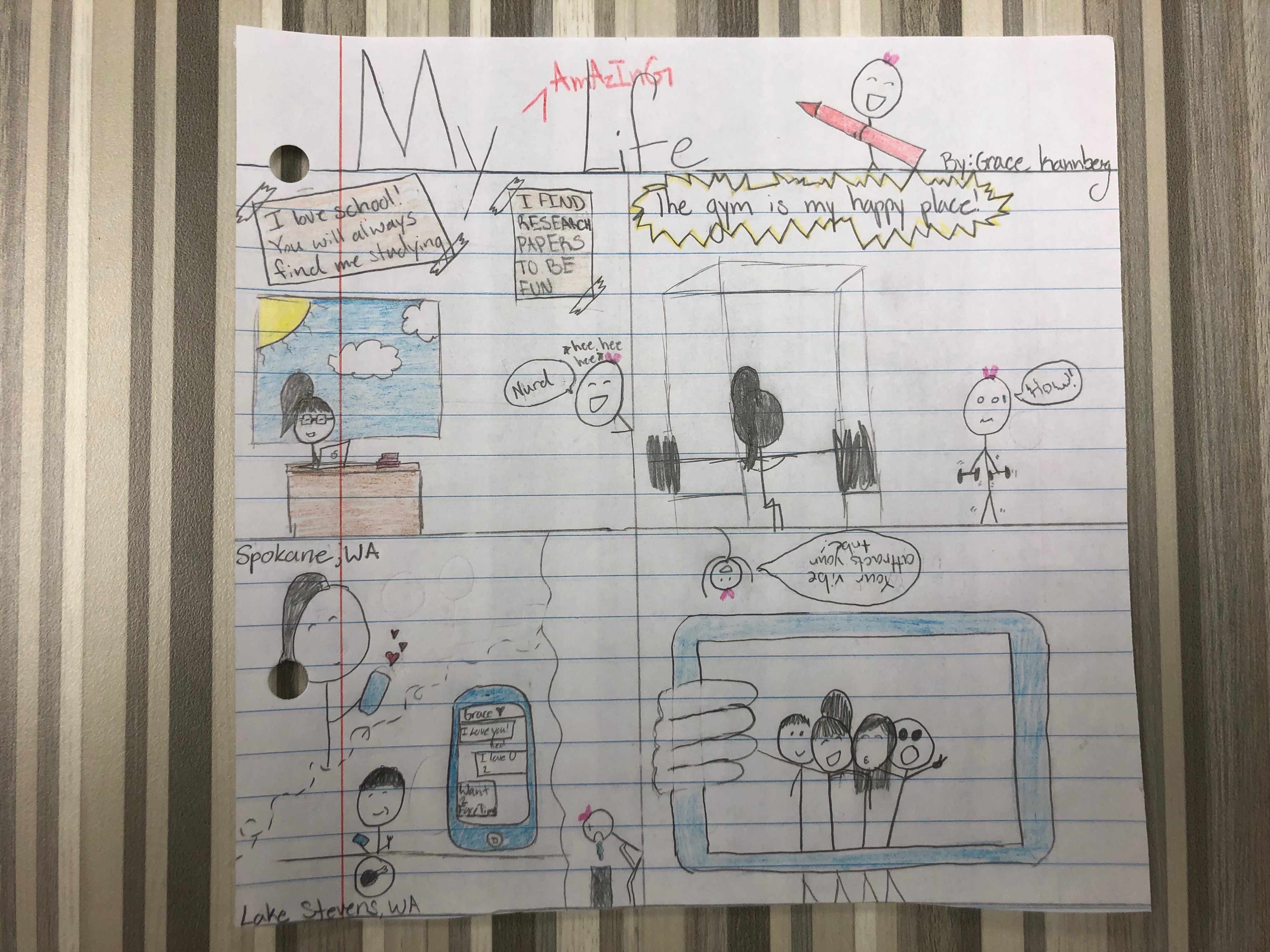
My Amazing Life By: Grace Kannberg, August 2019

My printed comic, My Amazing Life, was the first-hand drawn comic I have ever created. When crafting this comic on paper I felt as though I was doodling and the gestural mode’s I was able to create turned out better than in my digital comic. I found it to be easy to add texture, smaller details, and creative text bubbles that conveyed the message I was trying to get across in each box. Although, I found that the resources I had available to me were limited. I had a mechanical pencil and six broken colored pencils I had found lying around the house (I am a broke college student). When creating my digital comic, The Kannberg Family,I found this to be the least of my problems. 

Kannberg-Grace

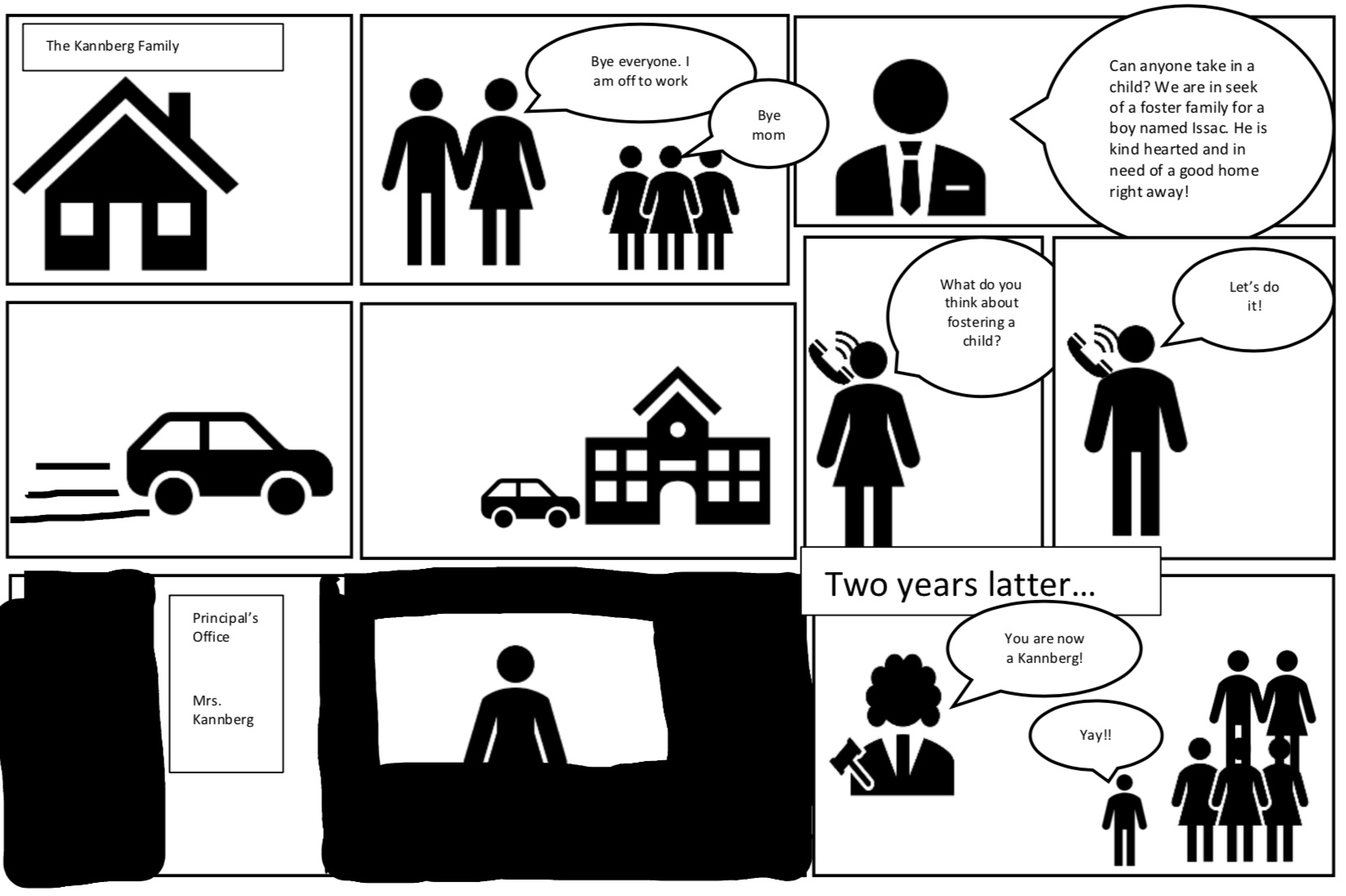
The Kannberg Family By: Grace Kannberg, August 2019

The digital comic I created had a completely different feel when compared to my printed comic. I was introduced to endless possibilities of digital tools and space needed to tell my story. The only problem is, I am not as informed on how to use these tools and space, so the creation of this comic was three times as slow compared to my hand-printed comic. In return though, my digital comic’s visual mode looking a lot more professional than my hand-drawn comic. 

During this experience I found it to be a lot easier to work with Print over Digital, I could add a lot of smaller details and texters to my drawings that I couldn’t (or I just didn’t know how to) with the digital comic. In practicality though, a digital comic offers more possibilities with the almost unlimited tools available through the digital platform. 

When reading a printed-out comic, compared to a digital comic, the difference between the two seems to be in how I retain the information. I retain information more when reading something in print form and find it hard to track material on a digital platform. Wither this is because of my dyslexia or not, I just find that there is something concrete about print. This is why I find comic theorist Scott McCloud’s Understanding Comics easy to follow and apply. 

Before working on my digital comic, I read the first chapter from his book. This gave me a better understanding of what a comic is and how to use space in sequential art to show that time is passed. I applied this to The Kannberg Family by telling more of a story in comparted to my hand-drawn comic. This was done by using sequential art that showed time passing by a car moving and then arriving at a school.

This slideshow requires JavaScript.

Posted in Fall 2019 Archive (201 Blog) | Leave a comment

Print Versus Digital Comic – Libby Fletcher

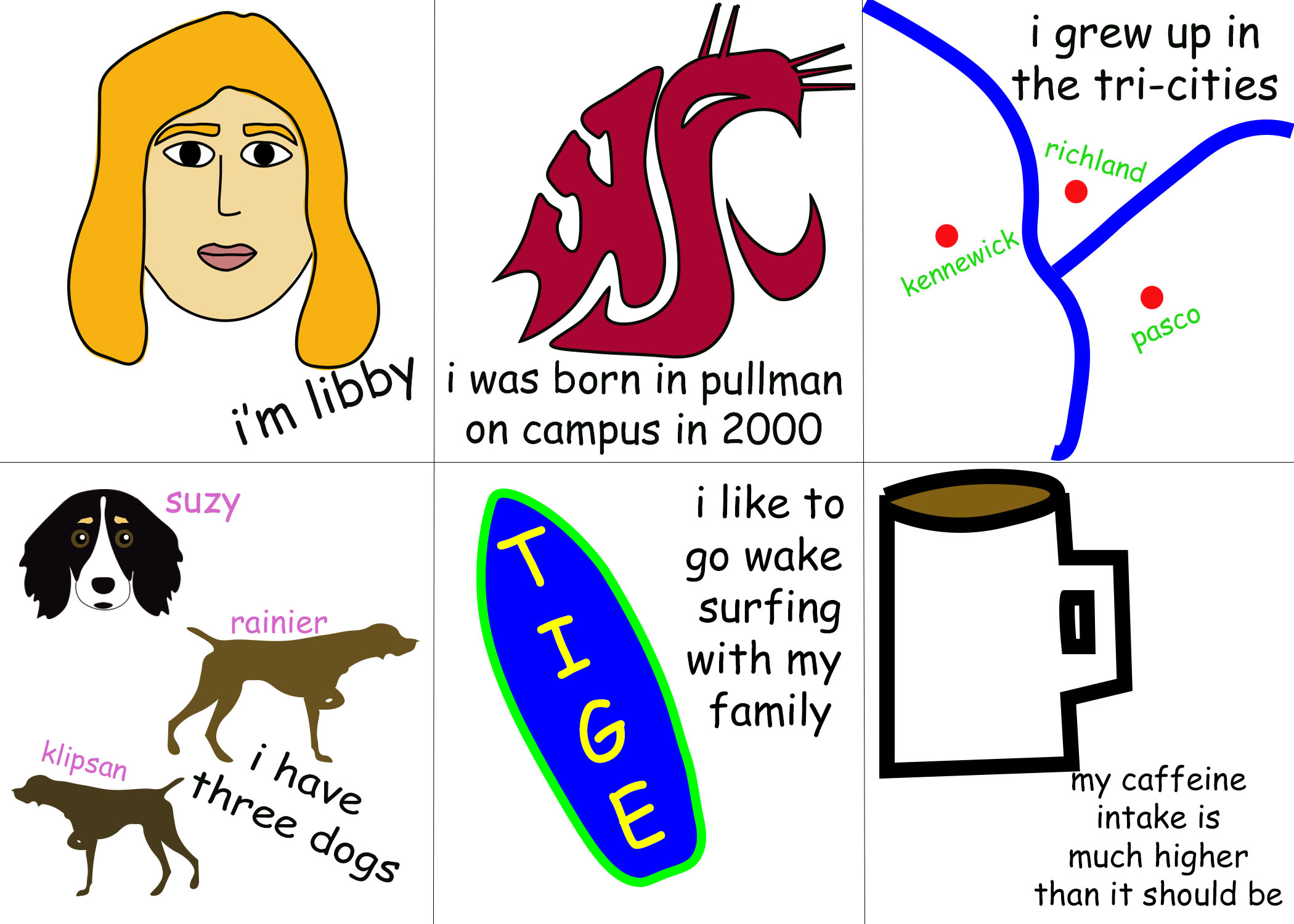
I created this comic digitally on Photoshop.

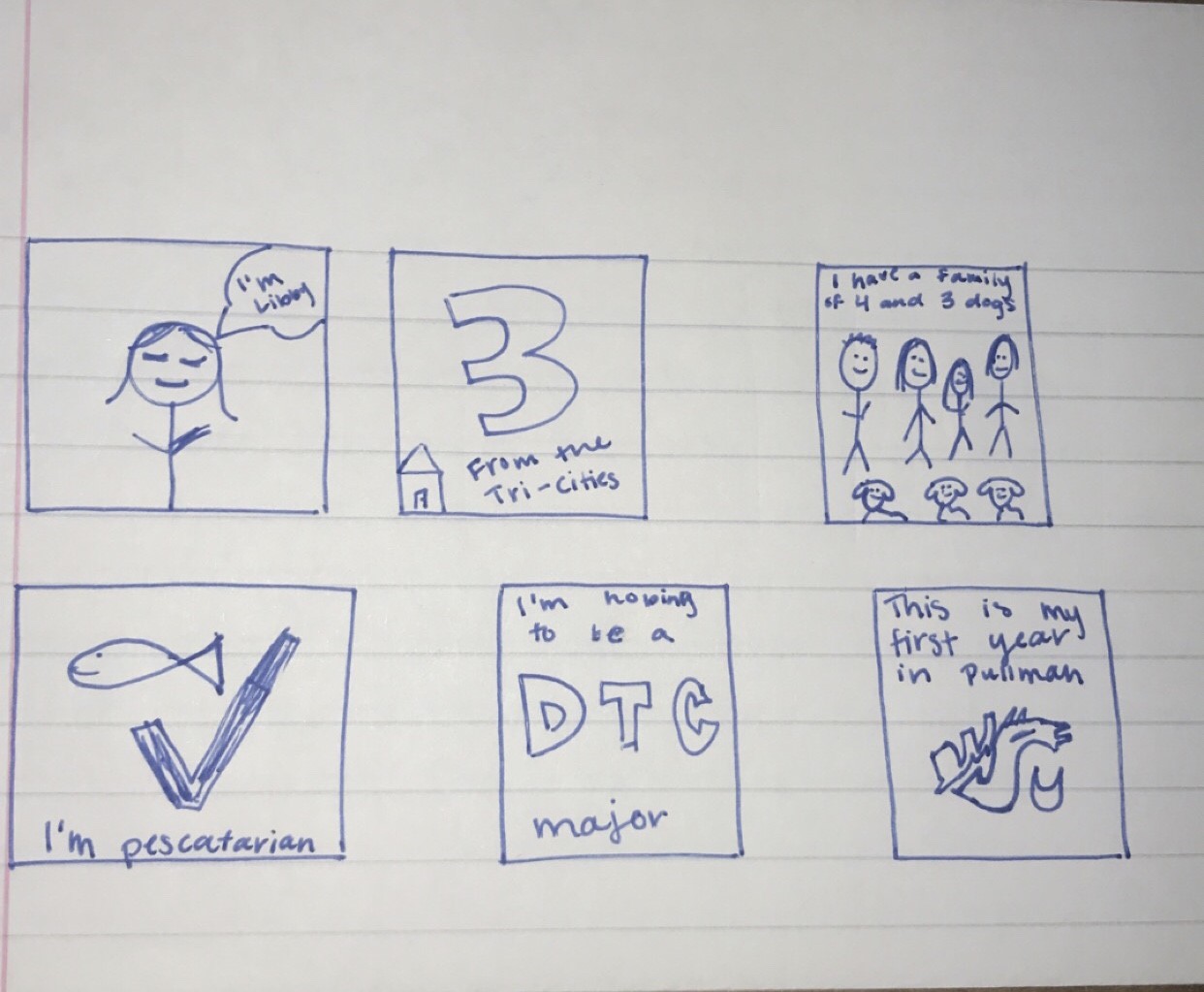
This week, I discovered that creating comics digitally versus by hand both have their bonuses and drawbacks.  For example, when I drew my comic originally, it was much easier.  This makes sense because I’ve used my hand to draw, write, doodle, etc. every day.  However, when I was creating my comic in Photoshop, I had many more resources in one place.  Because of this I was able to use an assortment of different digital tools, rather than only being able to use the pen that I created my hand drawn comic with. 

I drew this comic by hand.

Similarly, the way in which someone consumes a comic, digitally or on paper, changes the experience for the reader.  On paper, I feel like the reader gets a more authentic, traditional experience.  When I think of on paper comics, I think of the Peanuts in the Sunday paper.  Although we have clearly went over the fact that comics are much more than the ones in the funny pages, I believe comics which are consumed on paper can give the reader a nostalgic and good feeling.  On screen however, I believe the reader has a much better chance at analyzing the comic more fully.  Someone is able to zoom in pixel by pixel if they really wanted to, which can’t be done while reading on paper.  Either way, the way in which someone reads a comic can change the way someone receives said comic.

Lastly, the first chapter of Scott McCloud’s book was helpful in defining comics as well as showing the history, but I do not think that it helped me to create my own personal comic.  What it did do however, was provide me with a strong understanding of what a comic truly is.  Whether there are six frames side by side that create a traditional comic, or an abstract set of pictures which provide a storyline, it is still considered a comic.

Posted in Fall 2019 Archive (201 Blog) | Leave a comment

Demo Post

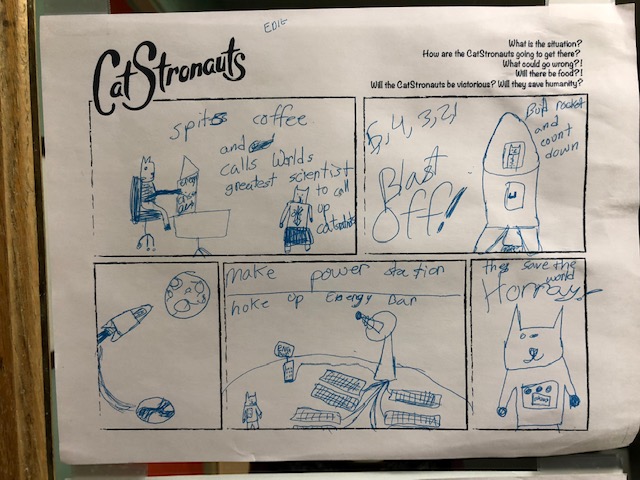
I found this taped on the bathroom wall at Bookpeople in Moscow, ID.

This is a demo post for your first DTC 201 Blog. Make sure that you insert your images at a smaller size so the text cap wrap around the image. You can click on the images to see a larger version. You should give your images captions to cite your source and explain why the image is relevant in a short statement. If you took or make an image yourself, you can explain that rather citing a source.

Posted in Fall 2019 Archive (201 Blog) | Leave a comment

WSU_Museum-Alex_Allen

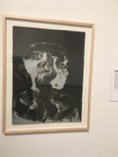
In writing and speech, a metaphor is used as an expression- a word or phrase; that refers to an unrelated idea, creating additional meaning. Images can be used in much the same way. For example in this painting of “Dark Matter”, the artist uses smoke rising (in the human figure) as a visual metaphor; making the audience curious about why the artist choose to incorporate smoke and the meaning behind the smoke. What does the smoke have represent? Is there a greater meaning to this painting that the artist is trying to convey? By using “smoke” as a visual metaphor, the artist is trying to make the audience think “Am I just looking at the shape of a human with smoke filled in? or is there a bigger picture I am missing??”. For this assignment I originally planned on comparing my typeface/ poster design idea to the “Wendy Red Star” (painting seen below on the left) because I liked how the artist used the colors to make a sunset on the beach, but after rereading all the pictures I took from the WSU Museum and their summaries; I decided that the “Dark Matter” Painting was much more relevant to the typeface design I decided to go with. The reason I choose to go with the painting by Samantha Wall  (Dark Matter artist) was because the creativity she had in substituting smoke as the filler for the human figure, instead of just plain old skin. This paintings uniqueness, to think outside the realm of the social norm; helped me in shaping my organic shape that I used in the creation of all my letters in my typeface design (except the letter “C”). For my poster design on the other hand, I was actually inspired not only by the wave like shape I made but by also the colors presented in the “Wendy Red Star” painting of a couple at the beach watching a sunset.

Dark Matter 2016 Samantha Wall 1977

Wendy Red Star Enit 2010 Image courtesy of Crow’s Shadow Institute of the Arts


Posted in Fall 2018 Archive (336), Spring 2018 Archive (336) | Leave a comment

Final Reflection: Ryan Ferrell

For my final reflection for DTC 201, I chose to listen to the oral history projects from Emily Bruckner, Christian Solovey, and Jenna Walker.

Emily Bruckner –  She interviewed her father, Brian Bruckner, about the comparison of traditional lecture classes back in the 90s, compared to educational technology in the present day. Some themes I found were lectures, online classes, and e-books. I believe that the most interesting and relevant (to me) part of the interview is when he talks about the lack of interaction in lectures online compared to traditional in-person lectures. This usage of technology makes it simple to get lecture recordings of your professors explaining the topic, but there is no chance for immediate interaction to ask questions or anything. Although, office hours are comparable and similar, while e-books have made reading textbooks so much more accessible, allowing you to read in many settings. This is a great oral history, talking about the change in learning styles between generations as technology advances.

Christian Solovey – He interviewed DJ Tommy Gunz about the change of musical DJ equipment from the 90s to present day. Some themes I found were mixing boards, music selection, and music storage. What I found most interesting and relevant to the context of the interview was how in the 90s, they were limited to two records and mixing off those, the instrumentals and lyrics; while today, we have computers that store all the music, instrumentals, beats, lyrics, etc. that can be used to mix music. So, the combination of music is boundless. This is a great oral history, going back and forth, comparing modern music technology to that of the past.

Jenna Walker – She interviewed her grandma about the evolution of literary technology. from the 50s and 60s to the present day. Some themes I recognized were hand writing, typewriters, and computers. What I found most interesting relevant was the change from having to review your writing, spellcheck it, and hand change something to being able to have instant spellcheck, grammar check, and you can just highlight it and either select a change or quickly make the change yourself. This is a good oral history, representing the change of how typing and the process of creating literary art had changed and become more sufficient.

Posted in Fall 2018 Archive (201), Uncategorized | Leave a comment