Print Versus Digital Comic: Ana Maria Alaniz Mendoza


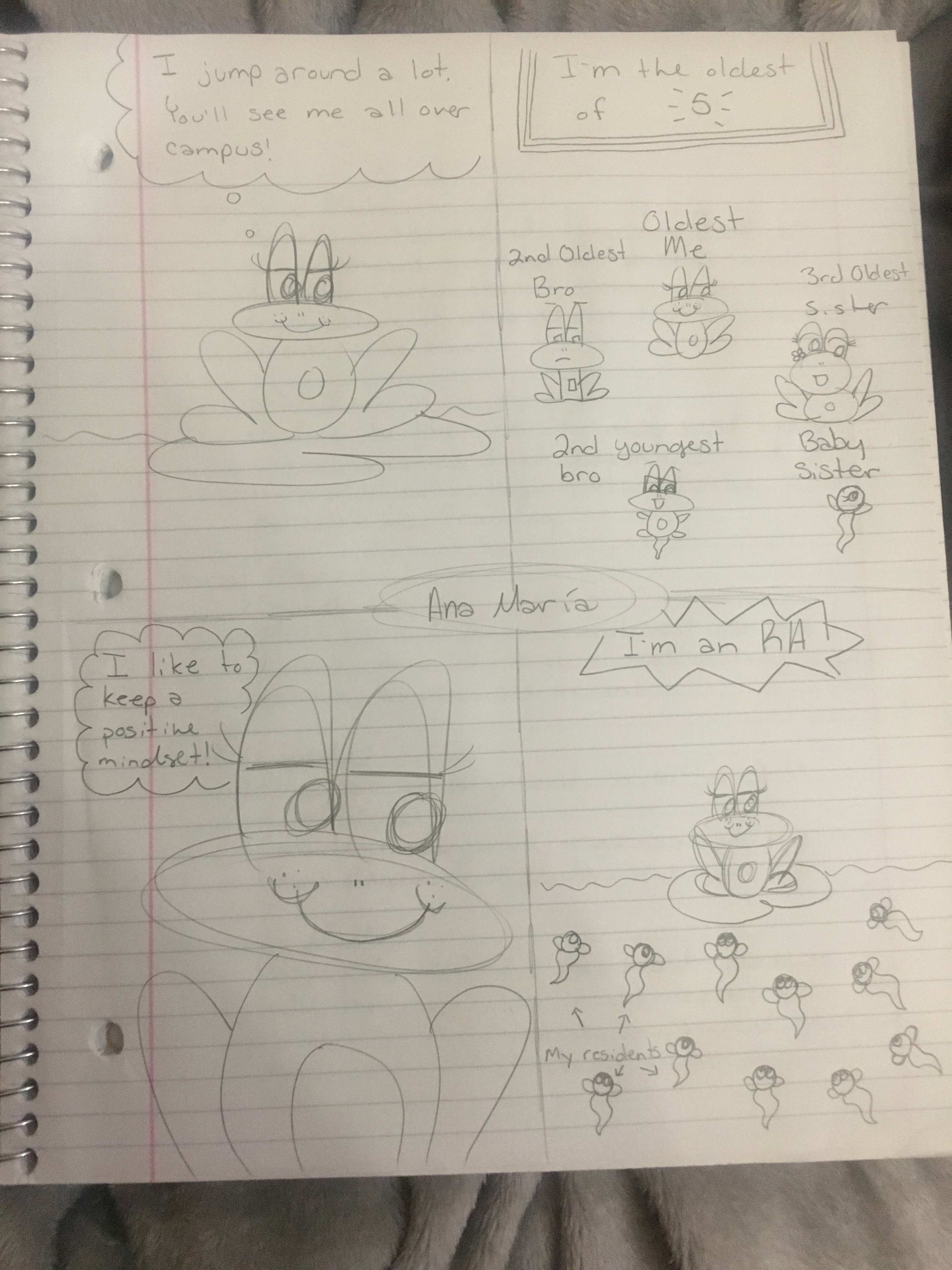
AlanizMendoza_AnaMaria_Handdrawn

Photo By: Ana Maria Alaniz Mendoza, Fall 2019

As I began to sketch out the very first shape on my lined notebook paper, I realized that I needed to have a better plan about placement and spacing for my comic. This resulted in me turning the page to start over because I didn’t want eraser marks on my final sketch. Immediately, I thought about how much easier it is to reverse mistakes within Adobe Illustrator. A simple command Z keyboard shortcut is a real game-changer. However, as I continued to draw out my first comic, my old gentle sketch technique began to make a comeback and I found drawing to be very therapeutic like the good old doodling days in high school. In my hand-drawn comic, I used a cartoon frog to represent my high-energy personality.

In my digital comic, I found it more appealing to make cartoon people characters instead of frogs because I wanted to create figures that looked like my parents back in college. Overall, this approach helped to make the storyline in my comic more obvious. After reading the first chapter of Scott McCloud’s “Understanding Comics”, I wanted to be a little more intentional about the visual hints that my comic suggested. I also was inspired to create my comic in a left to right strip. In the first scene, my parents are in college and in the last scene, I am in college. You can tell I am the daughter of the two love birds in the first scene because I combined some of the details from both the girl and guy character to make a “mini-me” version of the two.
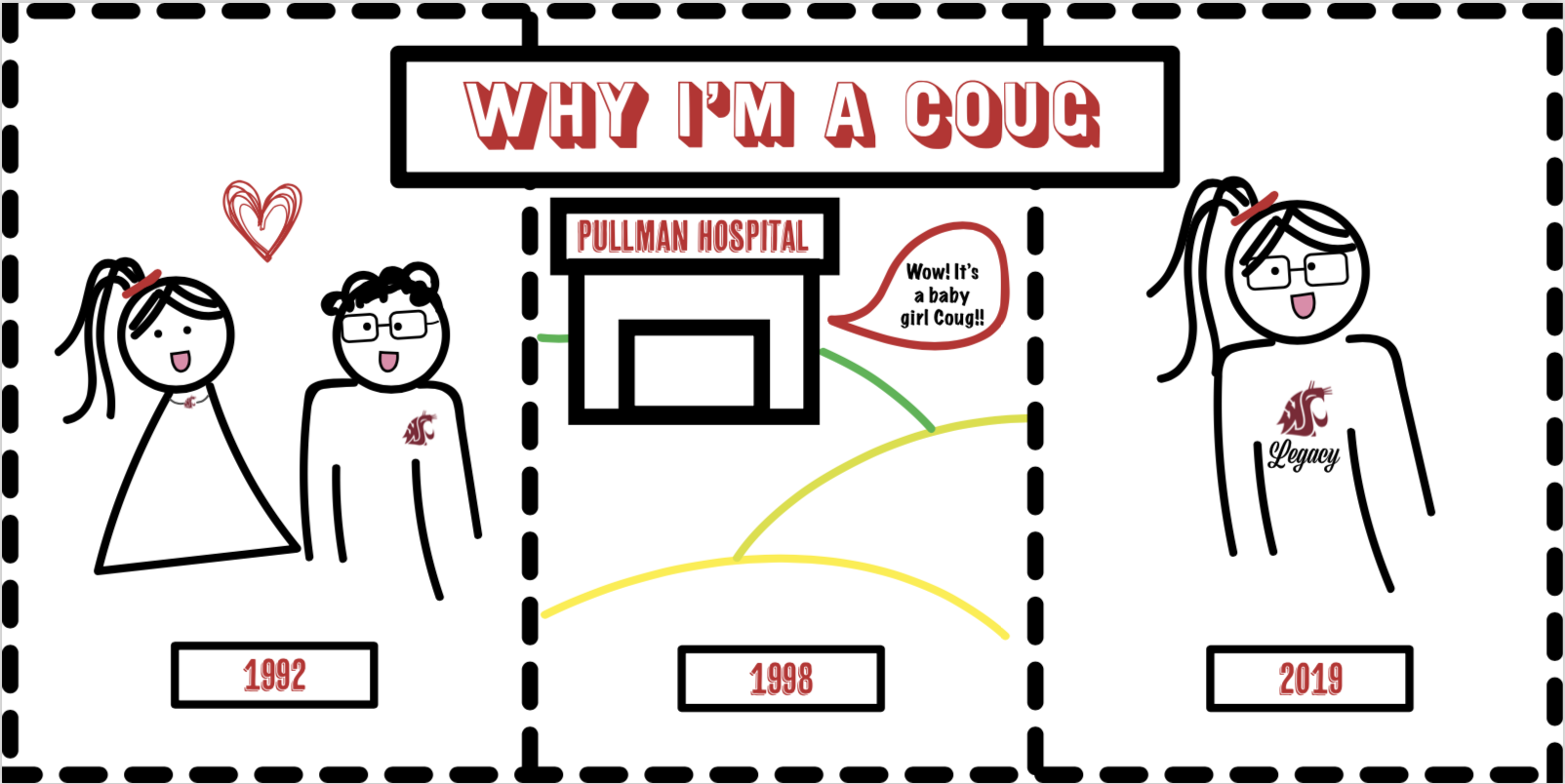
AlanizMendoza_AnaMaria_DigitalComic

Photo By: Ana Maria Alaniz Mendoza, Fall 2019


Now that I’ve been using Adobe Illustrator more, I think I felt less pressure about making the digital comic. However, overall I think both represent me well in different ways and I enjoyed making both.
 

Posted in Fall 2019 Archive (201 Blog), Uncategorized | Leave a comment

Print Versus Digital Comic: Bruno Signorelli

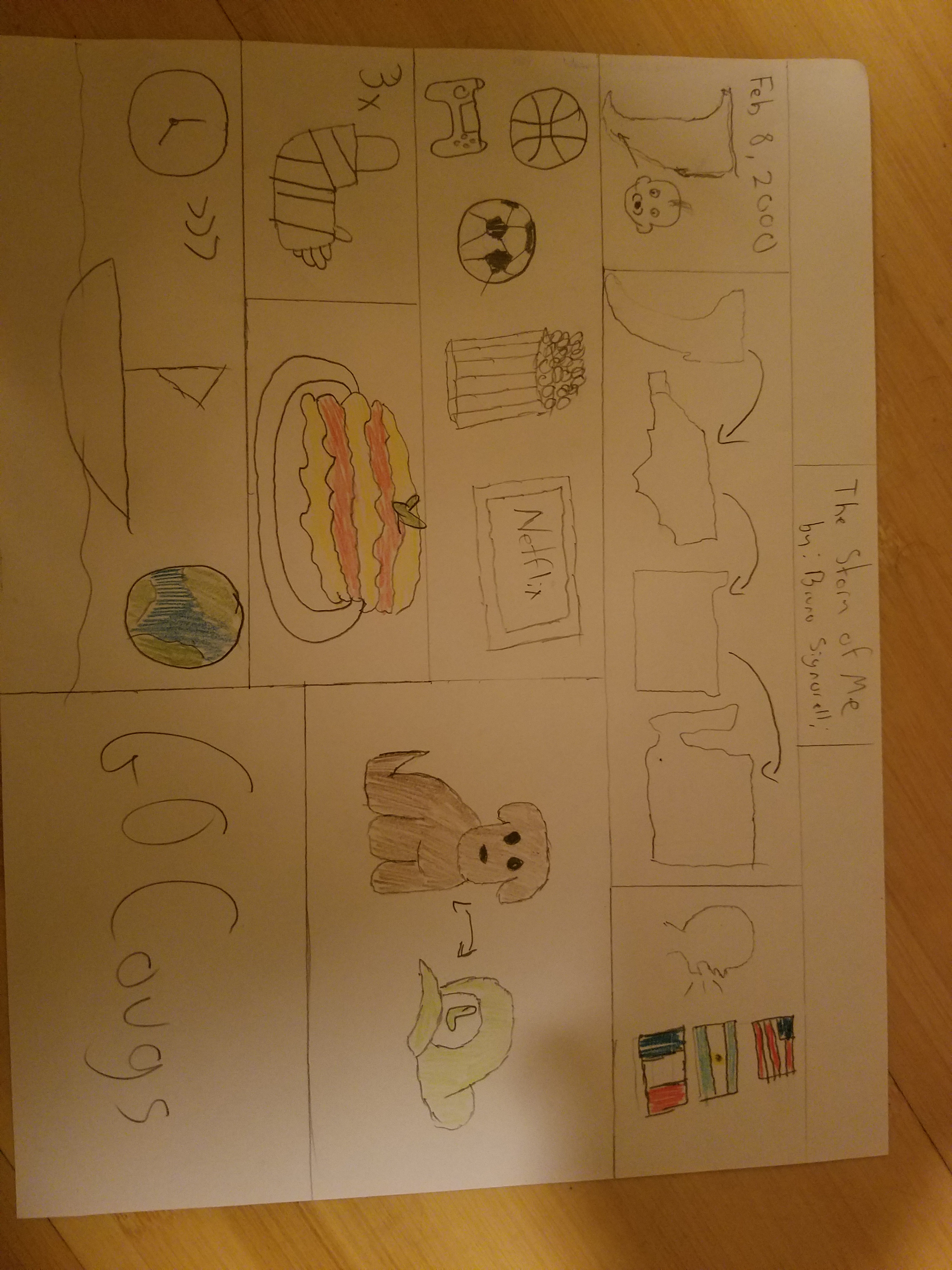
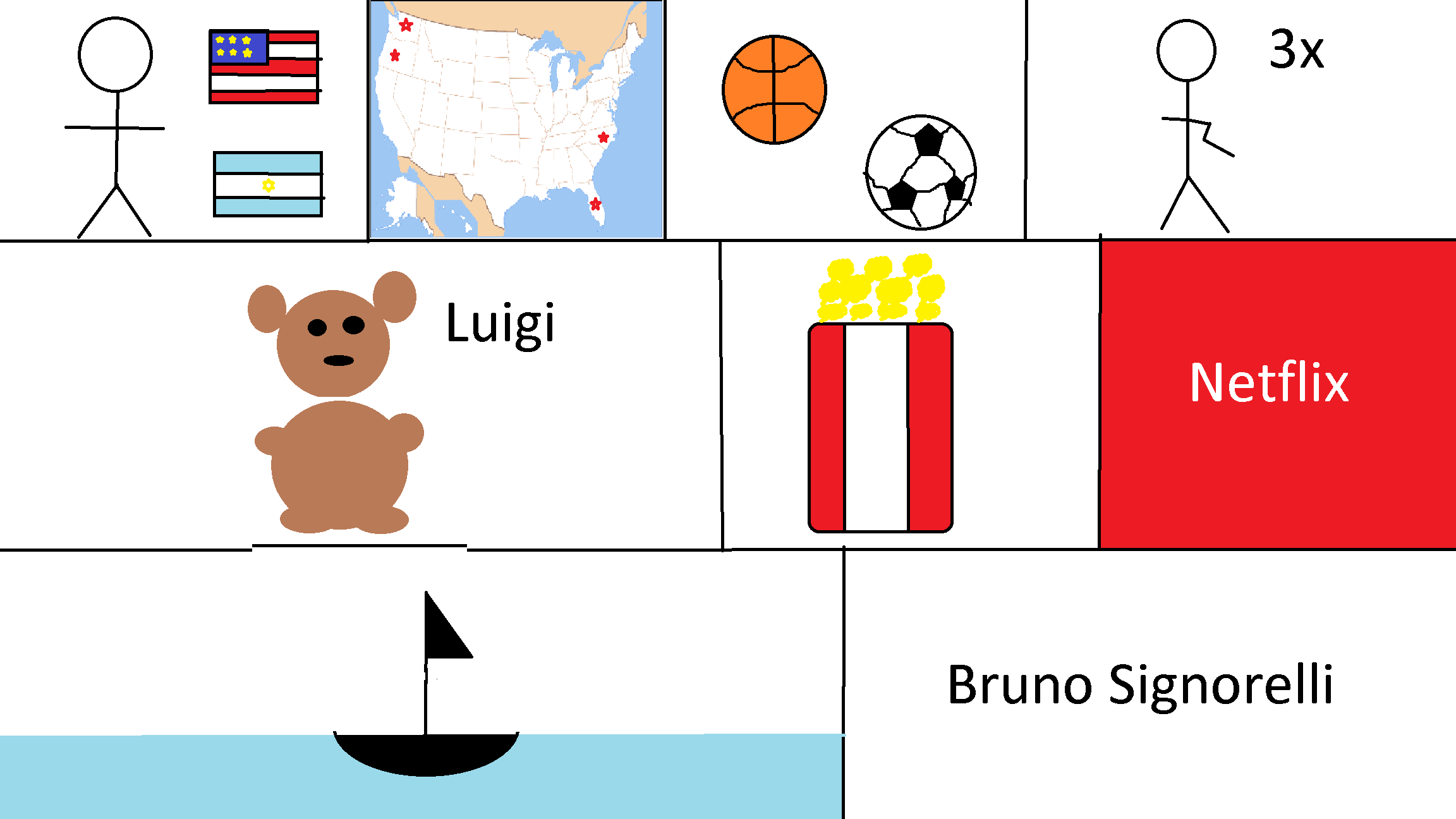
Making the hand drawn comic was a more comfortable and easier experience for me. I believe this was the case because with a pencil and paper even though I am not that good at drawing I feel more comfortable and in control. With the digital comic I felt more restricted by the software I was using, and this is most likely because of my lack of experience and knowledge with the software I used. I did feel like I was able to create a cleaner version of a comic when I did it digitally, just because I feel like there’ s less space for human error. But I also feel like that takes away some of the character, that a hand drawn comic has plenty of because it allows for a more unique style. In my experience of reading comics, when I read a comic on Digital Comicpaper, I feel like I have a more personal connection with what I am reading and usually retain more of what I read. When I read comics online, I tend to go through it a lot faster and tend to look over a lot of the detail in the images themselves. I read chapter 1 of “Understanding Comics” after I finished my digital comic, but it did reinforce my thoughts on comics which is mainly that a comic book is not just one thing and it can really be anything that the creator makes of it, and even anything that the reader makes of it.

Posted in Fall 2019 Archive (201 Blog) | Leave a comment

Print vs. Digital Comic: Ruby Pitts-Cranston

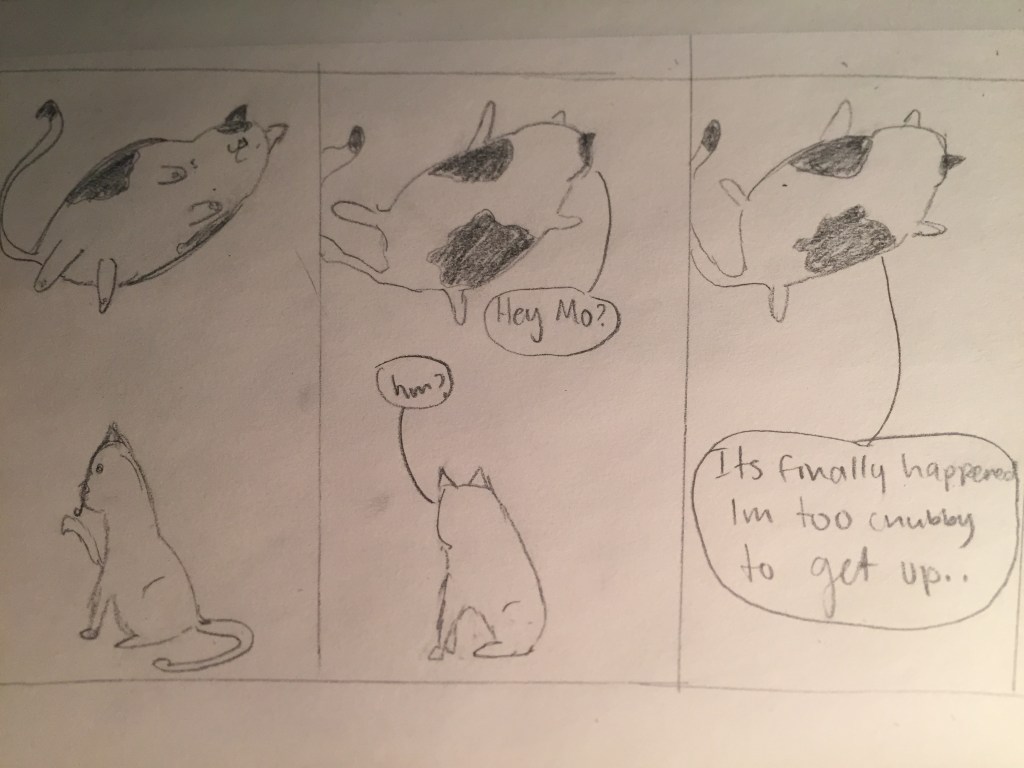
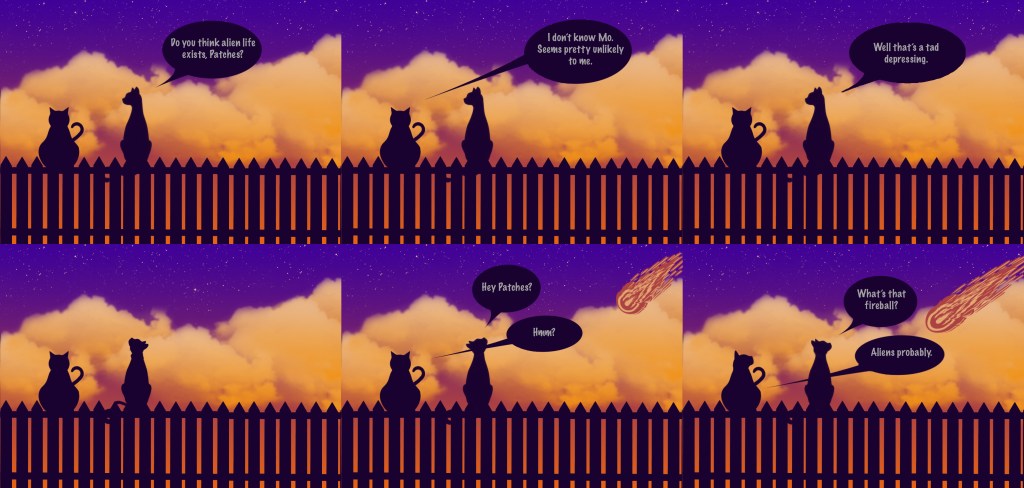
When making my hand drawn comic I had no idea what type of story or message I wanted to tell. I ended up doodling cats and decided to create a dynamic between two cats that live in the same house. They are roughly based off of my own cats, one of them is very overweight which is where I got the idea from. In my hand drawn comic I started out very simple with little dialogue or story, but in my second digital comic I decided to give them much more of a personality and dynamic between the two. I used the same characters both times because I felt that with hand drawn media I couldn’t really be as creative as I wanted to be. Im not the best at drawing so it was really hard for me to make them appear the way I wanted them to and I ended up making the comic as simple as I could because of this. In the digital comic I let myself run with the idea because graphic design such as this is something I really enjoy doing and have a bit more experience with than hand drawn. I used photoshop. For me it was much easier to tell the story that I wanted to tell, and make the characters look the way I wanted them to (even though they’re silhouettes). The only thing from hand drawn that I would say I prefer is the text bubbles. Handwriting for me has much more personality than typed text does, and I feel like the words fit into the comic more, especially with how dark my digital comic was. As far as paper as opposed to a screen I still prefer to read off of paper, it seems much more interactive and visually appealing.

Posted in Fall 2019 Archive (201 Blog) | Leave a comment

Print Versus Digital Comic: Nicholas Kawaguchi

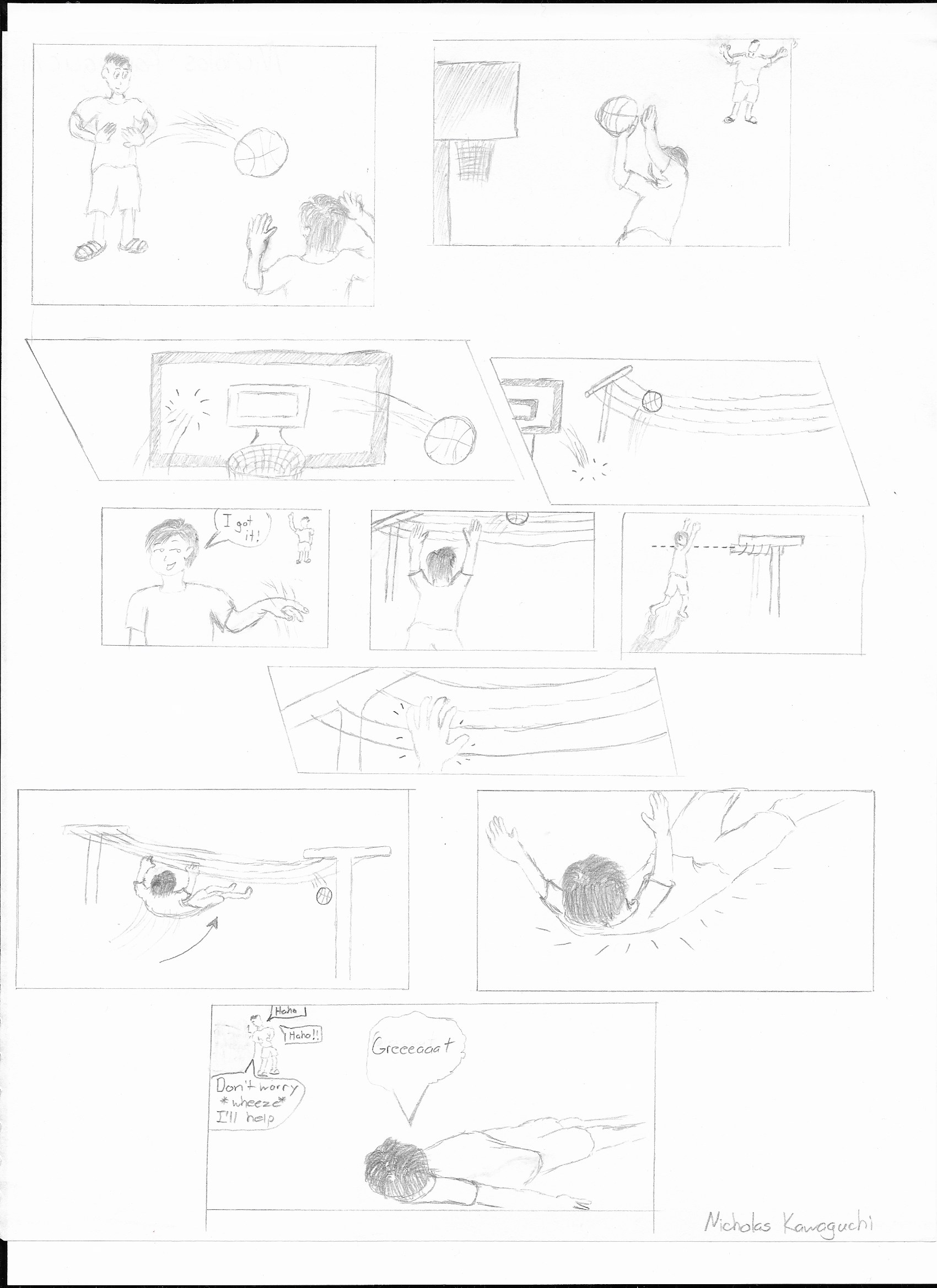
Although conceptually similar, utilizing a digital device versus a pencil and paper to physically layout a comic differs immensely. Each of them is tailored towards different styles with their unique palettes that artists can choose from. When talking about the

Short comic displaying an event when I was younger and symbolizing the epitome of clumsiness

handwritten style of composing a comic, I would say that this method was more precise for me. This style allows the artist to sketch out designs and change them if necessary as it comes together. Attempting to figure out the correct proportions and other elements, I usually sketch very lightly and once figured out, the lines are drawn thicker and darker. I realize that this may be possible digitally as well, but doing that requires specific equipment and programs that not everyone may have access to. Which leads to another benefit of printed works: the availability of equipment. Working digitally mat require to have equipment that is not readily at the artist’s disposal while working with simply a pencil and paper is all the materials that are required, besides coloring material if the images need color.

However, to that point, there also definitely benefits to working digitally as well, particularly for those who don’t have much faith in their artistic drawing abilities. Not everyone feels confident drawing as they may feel that their skills may be inadequate in comparison to others. With digital programs, these people can choose other methods of

digital comic dtc 201 (3)

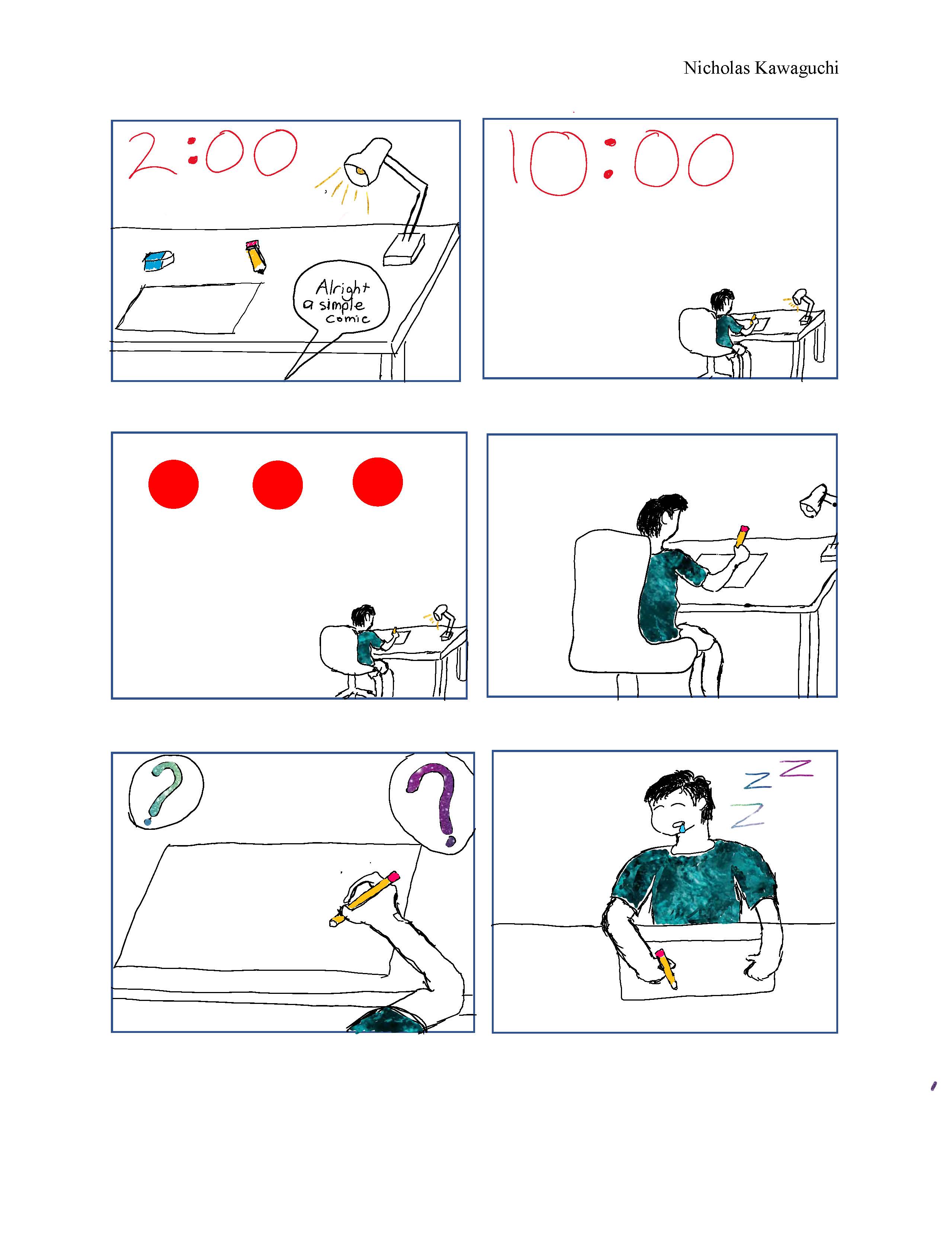
Digital Comic of what could have happened when drawing the print comic (Nicholas Kawaguchi, 2019)

creating their comics such as taking already made images and putting them together in a deliberate sequence to portray some kind of plot. In creating my digital comic, I made use of my laptop’s touch screen and stylus to create a rough sketch of my comic. Although my digital comic is similar to my printed one, reading through the first chapter of the book made my view of comics much less skewed to typical comic layouts. The limitations for comics in either form of presentation are boundless, like in Scott McCloud’s book, “Understanding Comics,” a comic can be anything that is a “juxtaposed pictorial and other images in deliberate sequence.”

As for perceiving a difference between reading a comic digitally versus on paper, I would say that viewing it digitally gives more of a sense of formality as edges, lines and other minute details all seem to be very precise with no afterimages of previous sketches. As for being viewed on paper, this seems to be more informal and casual since some sketch lines can be seen and eraser marks of erased drawings can be seen.


Posted in Fall 2019 Archive (201 Blog) | Leave a comment

Print Versus Digital Comic: Isaiah Wilkerson

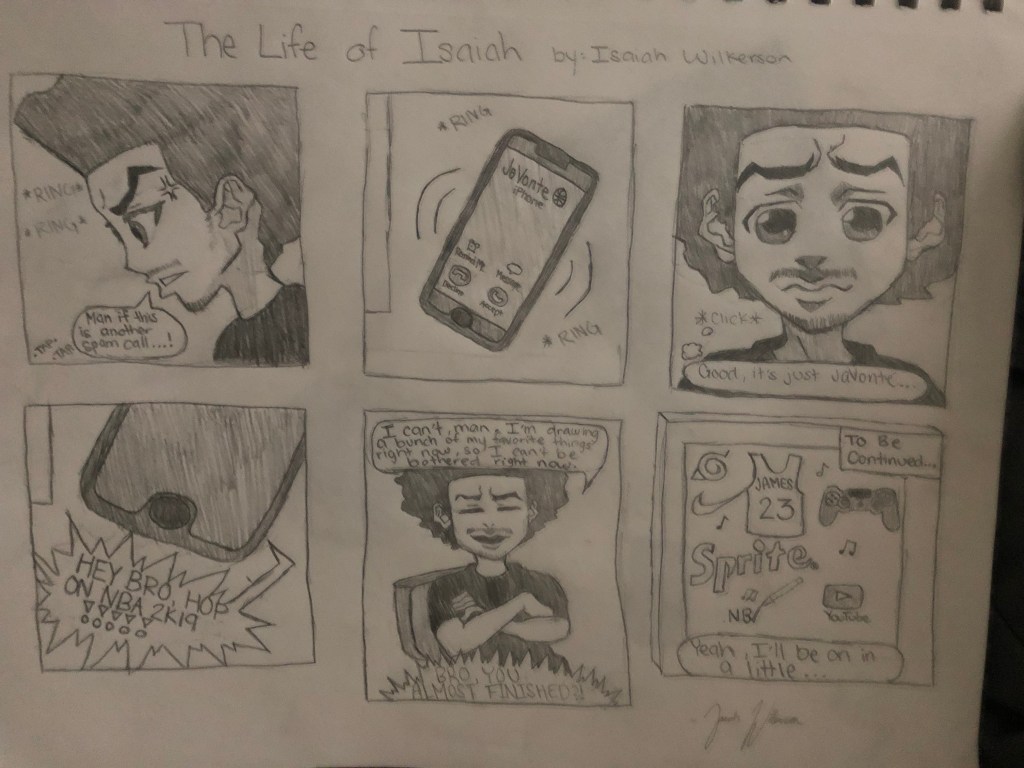
(Designed by Isaiah Wilkerson, September 2019)
(Photo by Isaiah Wilkerson, September 2019)

Out of the two comic strips, I prefer doing print comic strips because I feel limited whenever I make comics on my PC due to not having the correct resources I need to make them how I truly want them to look like. I completed my digital comic on Word Document, so I had little editing tools to make my comic as creative as my print comic. Whenever I draw, whether it’s for a grade or not, it never feels like “work” because of how much I enjoy drawing. The only drawback I have with a print comic is that it takes longer to do than the digital comic. I personally like reading comics on print rather than digital because it doesn’t strain my eyes and I can read it without dealing with technical difficulties. After reading chapter 1, I didn’t really have any new ideas for my digital comic. I hope to get the resouces I need to create better digital content in the future!

Posted in Fall 2019 Archive (201 Blog) | Leave a comment

Print Versus Digital Comic: Maria Alvarez

hand drawn

Making a comic digitally and making one by hand has been such a challenge for someone who doesn’t know much about adobe photoshop. The hand drawn comic was faster to make because I had the freedom to erase and add whatever I wanted without having to google a tutorial of how to do something. However, making the digital copy was a challenge. I did not know how to do anything, even after looking up tutorials I felt like my work was not good. It took a very long time to complete the digital comic even though it may look like it was a quick sketch. The drawback from a digital copy is that It can take a long time to complete one and vise versa because if you understand adobe photoshop, a digital comic could end up being faster to create than hand drawn. The difference between reading on paper and digitally is that it looks more personal on paper and I feel more connected to the art. I got inspiration with the alarm clock coming to life in the 3rd clip from the textbook because I saw that some objects need movement.

first time comic

The alarm clock feels frustrated because it keeps getting snoozed but as humans, we get annoyed at the alarm clock waking us up every morning. It is meant to see a silly point of a view of an alarm clock.

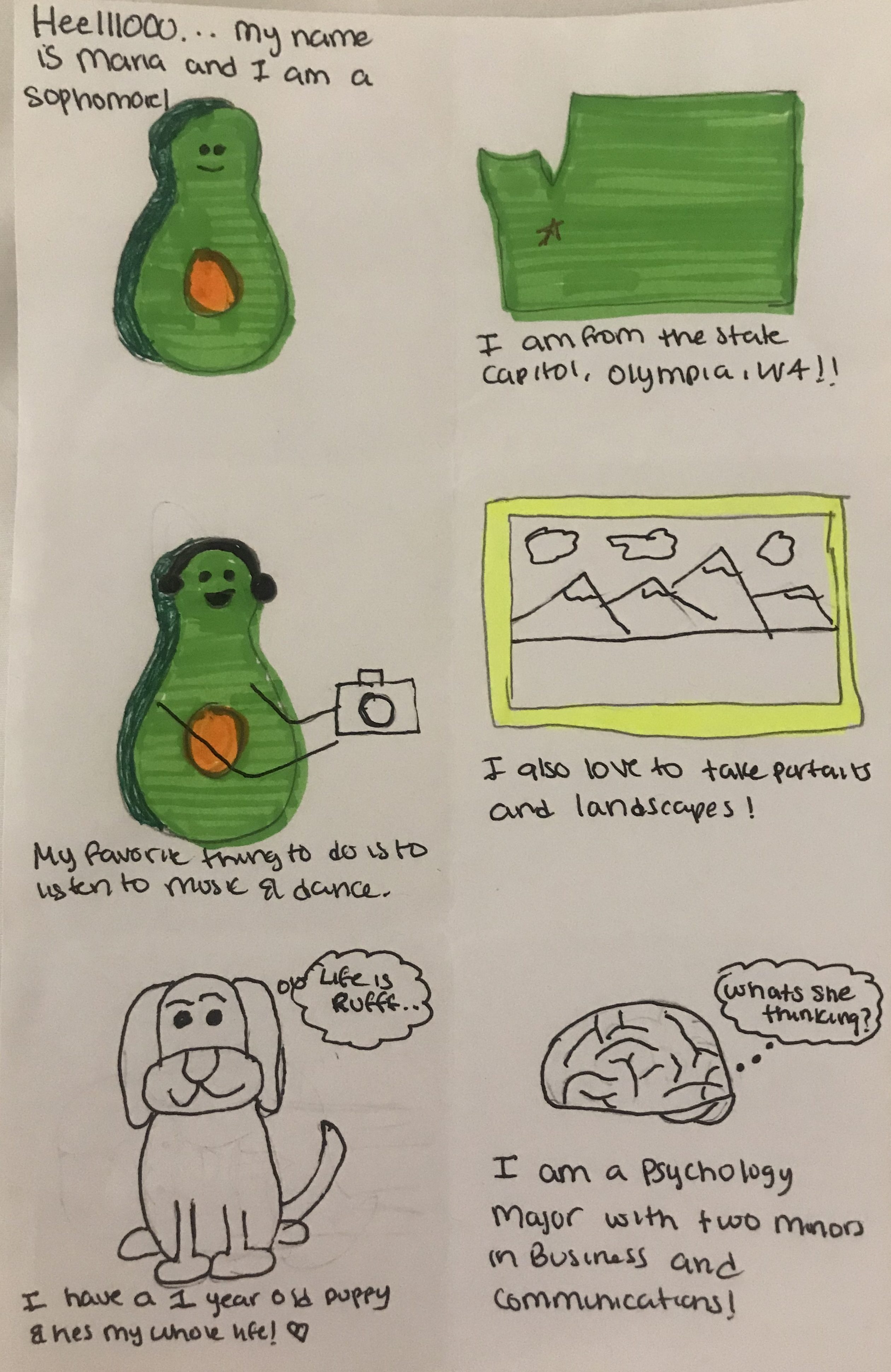
The hand drawn comic is just a basic comic about some fun facts about me. I am from Olympia, WA and I am a Psychology Major. I do not know how to draw humans so I decided to draw myself as an avocado since its easy to draw. Hopefully I get to learn how to animate humans for some of my comics.

Posted in Uncategorized | Leave a comment

Print comic versus Digital comic: Janet Okeago

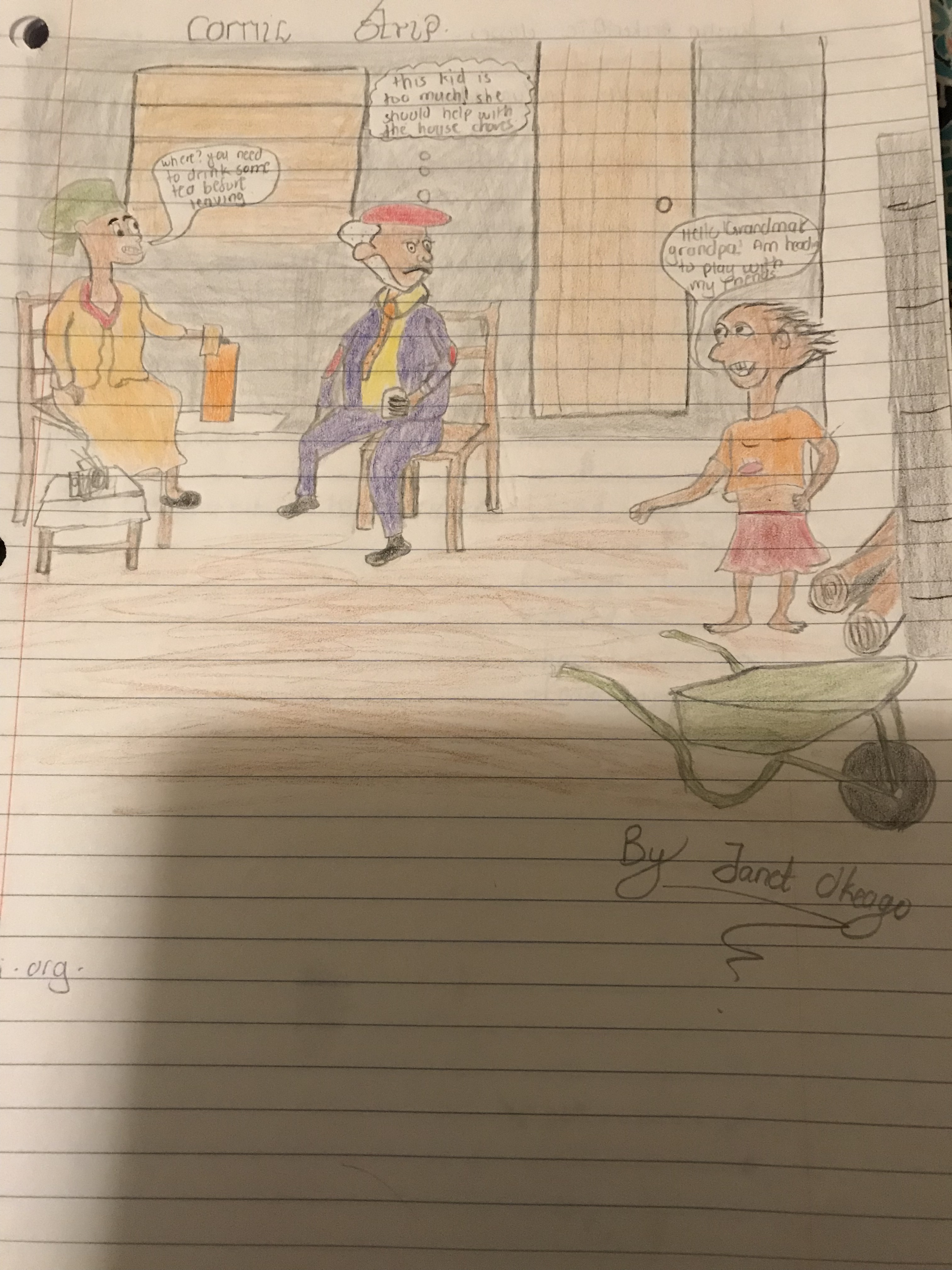
This image is designed by Janet Okeago from Washington University,Pullman Fall 2019

Making a comic by use of hand was somehow time consuming and it isn’t easy for the reader to understand it clearly because of the handwriting and tiny letters on the other hand, i think the reader would be able to tell the tone use in the conversation since the written words spoken have some signs describing the tone variation and some else thoughts. If someone was to read my work, it would be difficult to understand where to begin the conversation due to the arrangement of the diagram and who starts conversing. Drawing a comic by hand doesn’t look neat at all compared to the digital comic. The lines plus the margin on the paper are clearly showing that these type of comic was hand drawn plus the shading itself . This image shows a little girls telling her grandmother that she is going to play. we can also see the grandfather conversing with the grandmother as they drink tea while listening to the news on the radio.

Digital Comic

This image has an empty alt attribute; its file name is digital-comics.png

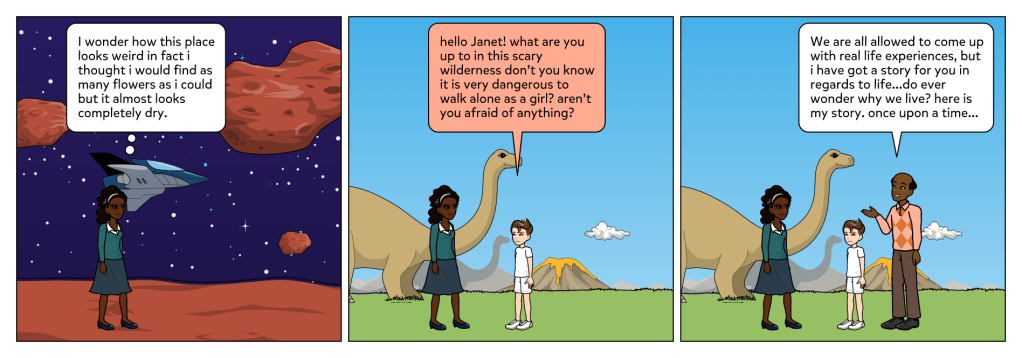
This is Janet okeago digital comic from WSU, Pullman.WA 2019

This is a digital comic i made and its neatly shown on the screen whereby one is able to read and understand what the conversation is all about. We can also see the background is kind of real and its something happening now. The coloring of the digital comic is appealing to the reader and most people would want to read this unlike for the hand drawn, i could strain my eyes the whole day trying to gather what the reader was trying to justify. The image tells the time and location where we are different experiences happening, the characters and the background as well is a great indicator how the events occur in every part.

Posted in Fall 2019 Archive (201 Blog) | Leave a comment

Print Versus Digital Comic: Justin Pardini

Hand Drawn

Being someone who isn’t experienced in making digital drawings or creations in general, this assignment was much easier for me on physical paper. I had just learned how to use Adobe Illustrator a week prior to this assignment, but have been drawing and doodling all my life. I have enjoyed, however, learning about digital creations and can see the benefits behind them. I think the digital comic was more challenging for me in that I am not experienced and have little to know knowledge in that area. It was difficult for me to complete straight lines and include detail in the digital comic, compared to the hand drawn, which allowed me to include more close detail. Although I’m not an artist by any means, I had fun with this assignment and will continue to experiment in both mediums.

Reading a comic on paper, compared to digitally, seems more personal and almost as if more detail was included because of the fact it was hand made. Even if the comic is digitally made, being on paper gives it a personal and physical feel, rather than simply looking on a screen. The first chapter of Understanding Comics definitely gave me a better feel to what digital comics, and comics in general, are like. I’ve never been a fanatic of comics in general, but after reading the chapter, I felt that I had a lot more knowledge in that area than before, which helped me in my creation of the digital comic.

Posted in Fall 2019 Archive (201 Blog), Uncategorized | Leave a comment

Print versus Digital Comic: Sydney Seay

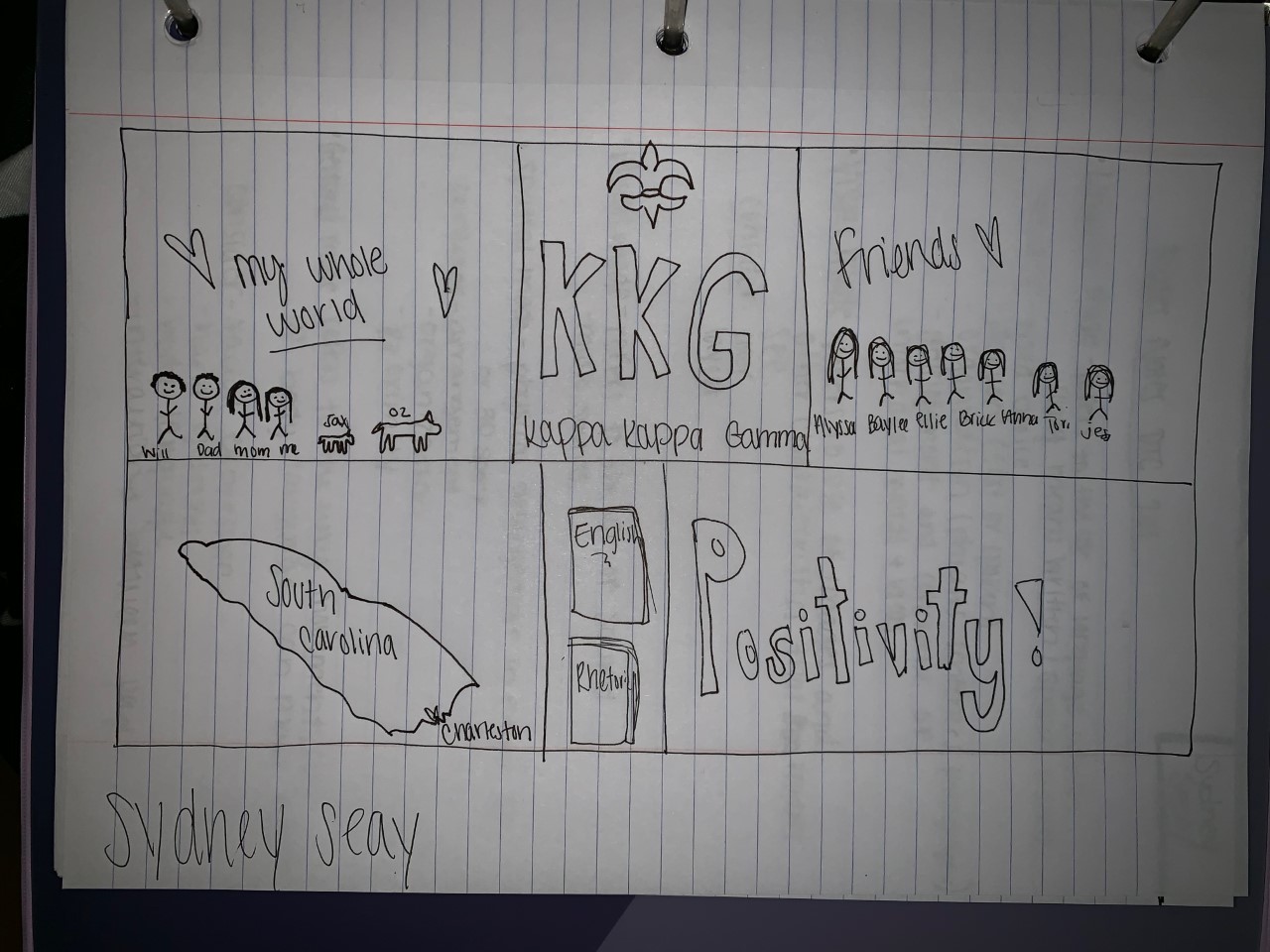
My hand-drawn “About Me” Comic drawn in Fall 2019 semester.

Hand-drawing a comic was not high on my list of things I was excited to do due to my poor artistic abilities, but through creating it I learned the impact a print comic has. When creating a hand-drawn comic, I was able to add any detail I wanted, and create it with the best of my ability. There is a sense of freedom in drawing a comic by hand that comes with the specialness of a blank page sitting in front of you. I feel that being able to touch the same paper the author worked on allows the reader a sense of connectivity. I feel there is a more profound impact on the reader when the physical touch is included in holding the comic.

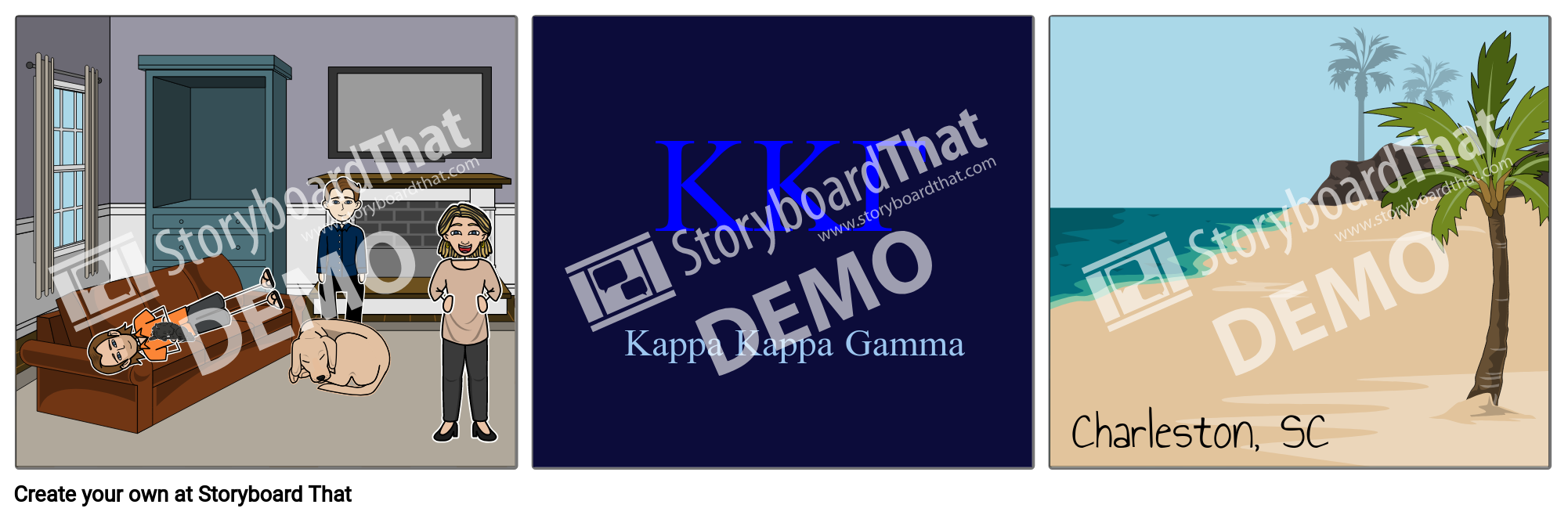
The digital remake of my “About Me” Comic in Fall semester of 2019.

Digital comics favor those with technology skills and patience. When making my own digital comic, I realized patience is key because my technology skills are very beginner. I was unable to convey the same ideas in my digital comic due to the limited options of figures, shapes and space I was given online. The software limited the things I was able to create through using it in a free capacity instead of a subscription. Reading the digital comic lacks the authors touch in my opinion. They feel all similar to me although they are obviously very different. They feel less like a word of art and more like a project in my perspective.

As someone who was not familiar with comics hardly at all prior to this course, I have learned a great deal about comics in general, including making them myself. Creating both a digital and a hand-drawn comic demonstrated the positives and negatives about each type of comic in many aspects. Holding a comic in your hands and looking at one on a screen are vastly different experiences. These two types are very different to create and favor different skillsets.

Posted in Fall 2019 Archive (201 Blog) | Leave a comment

Print Versus Digital Comic: Madison Roby

For this blog, compare and contrast your experience of making a comic by hand versus using a digital tool. What were the benefits and drawbacks of each way of working? Likewise, what seems to be the difference between reading a comic on screen as opposed to paper? Finally, did reading the first chapter of Scott McCloud’s “Understanding Comics” give you any ideas as you created your digital comic?

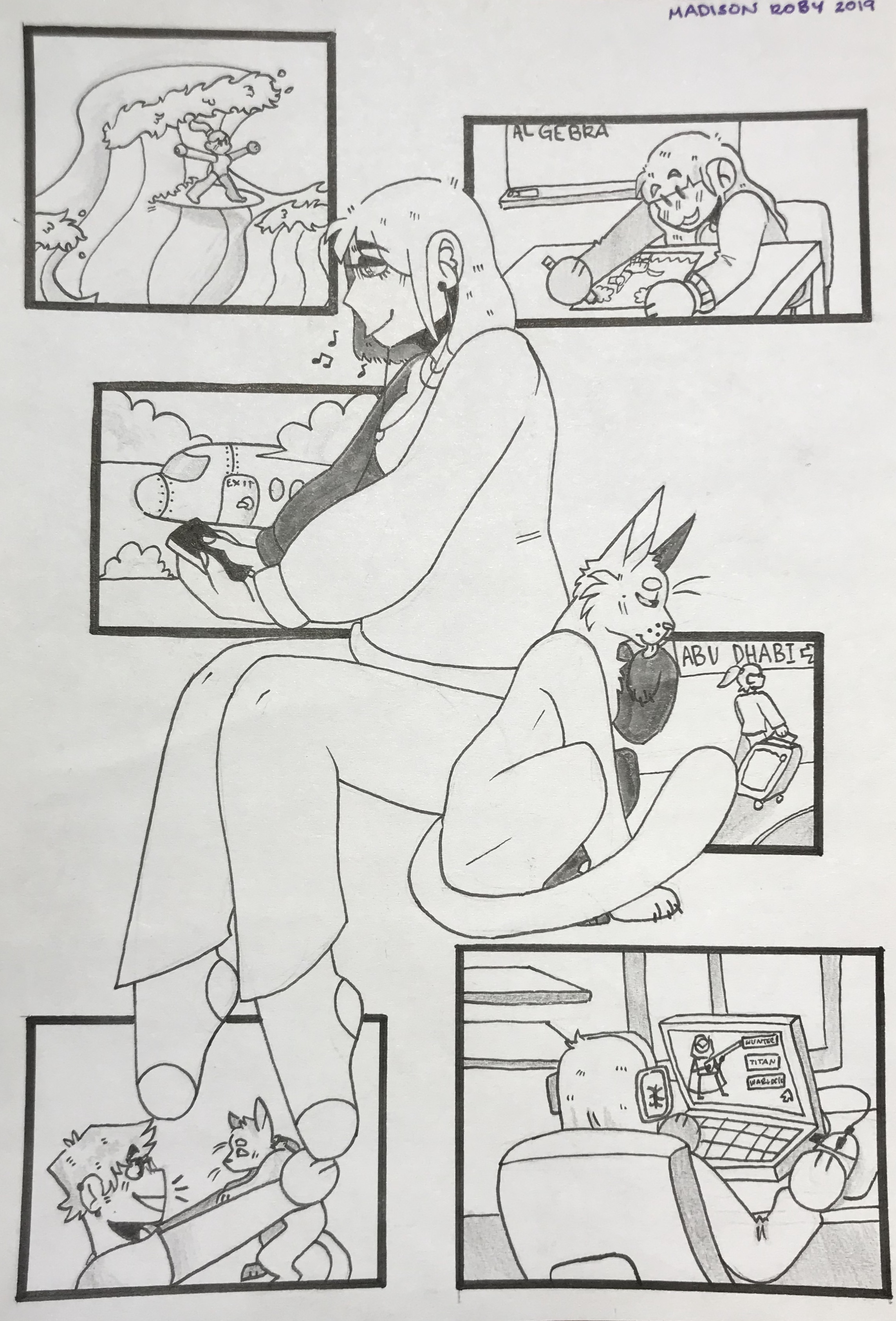
A hand drawn comic about major events in my life.

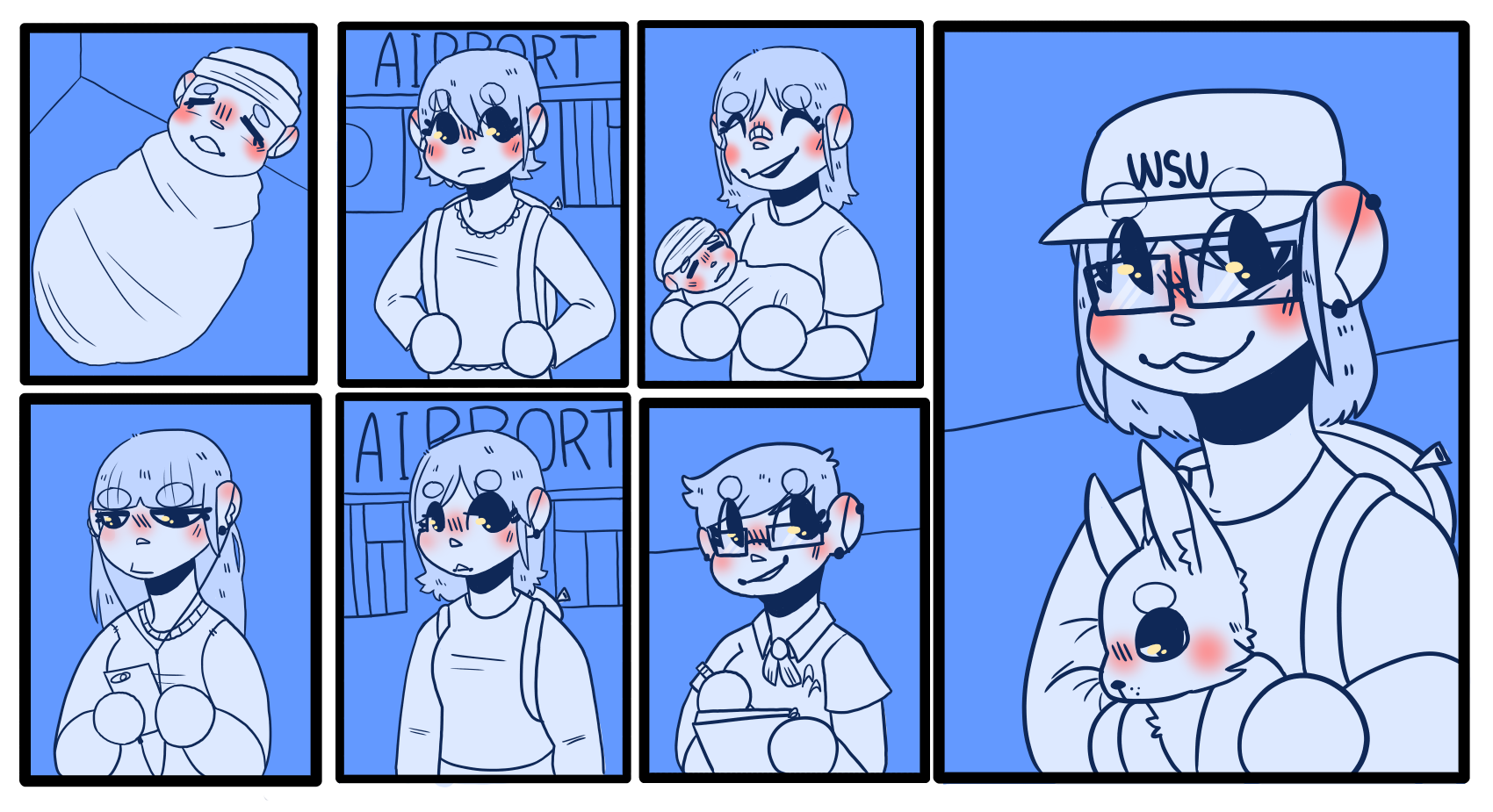
In making a comic by hand with pencil, pen, and paper, I felt as though I had much less control. When I sketched something out, the proportions had to be perfect and everything needed to be the correct size and in the correct position, as it could not be moved or resized without having to erase and start over. Using a digital tool to make a comic, however, allowed me to better move and change things as I created the comic, allowing cleaner lines, easily erasable sketches, and the ability to move and resize drawings as I liked. One thing I did prefer about a traditionally made comic was my ability to better create texture in the shading and lines, but getting vibrant colors with the tools I had was impossible traditionally. Using digital techniques meant that I could correct my work, have brighter colors, and create a full comic faster.

A digitally made comic about important events in my life.

In terms of reading comics, traditional comics allow for the full picture to be in view at all times, as you can’t zoom in to each panel individually. This means that, usually, the text must be larger, the images bolder, and overall there may be less panels on a page in order to allow for ease of reading. Digital comics, on the other hand, allow readers to zoom in as they please, perhaps having each panel take up an entire page, meaning that the panels can be more detailed and/or word heavy. It all depends on reader preference, however, which is better.

Finally, after reading McCloud’s “Understanding Comics.” I got a better idea for what the word meant. Prior to the reading, I had a general idea of what a comic was and I knew that the genre was not taken seriously (other than mainstream comics that have been made into blockbusters). McCloud creating a book that could be taken seriously in a professional/teaching setting opened my eyes to the possibilities and the flexibility of comics and how underappreciated they are as a form of expression.

Posted in Uncategorized | Leave a comment