Invisible Emotion: Madison Roby

“The Amazing Spider-Man” Issue 98, Marvel Comics 1973.

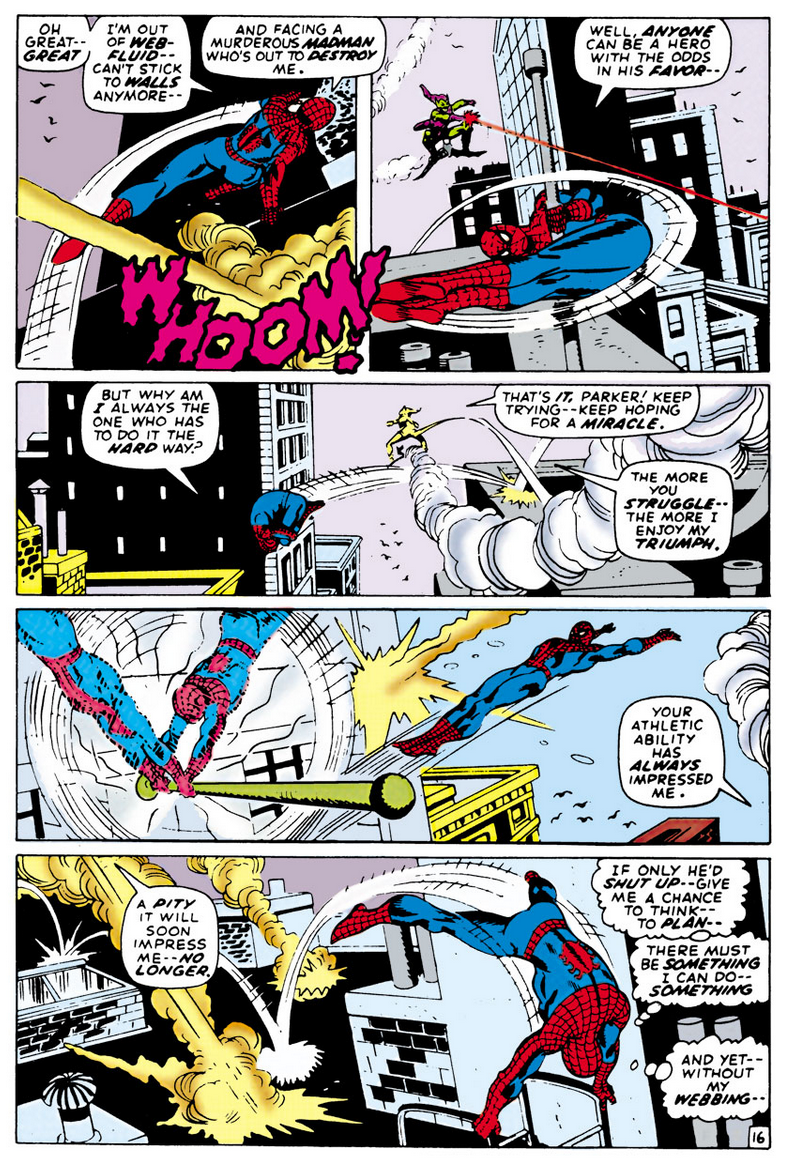
Included in the MASC was one particular comic that I know my father has read, “The Amazing Spider-Man” issue 98 (1973) from Marvel comics. In this particular issue, one use of lines in order to convey senses and emotions occurs on page 16 of the comic; this particular page has a lot of action, for instance, Spider-Man swinging from building to building. The artist uses lines to create tension and suspense in the reader, for instance, in the last panel, the protagonist barely escapes an attack from the antagonist. The artist uses a variety of line thicknesses, for example, Spider-Man swinging around a pole. The artist uses much thinner lines to convey that there is not, in fact, two Spider-Men, but that Spider-Man is mid-action, the thinner lines and outlines of the character showing us, the reader, that he is spinning around the pole. Another instance of line conveying emotion or “sense” is the artist’s employment of a colored line. In the second panel of the comic, the antagonist shoots a red line from his hand, implying some sort of lazer or danger.
“The Amazing Spider-Man” Issue 98, Marvel Comics 1973.

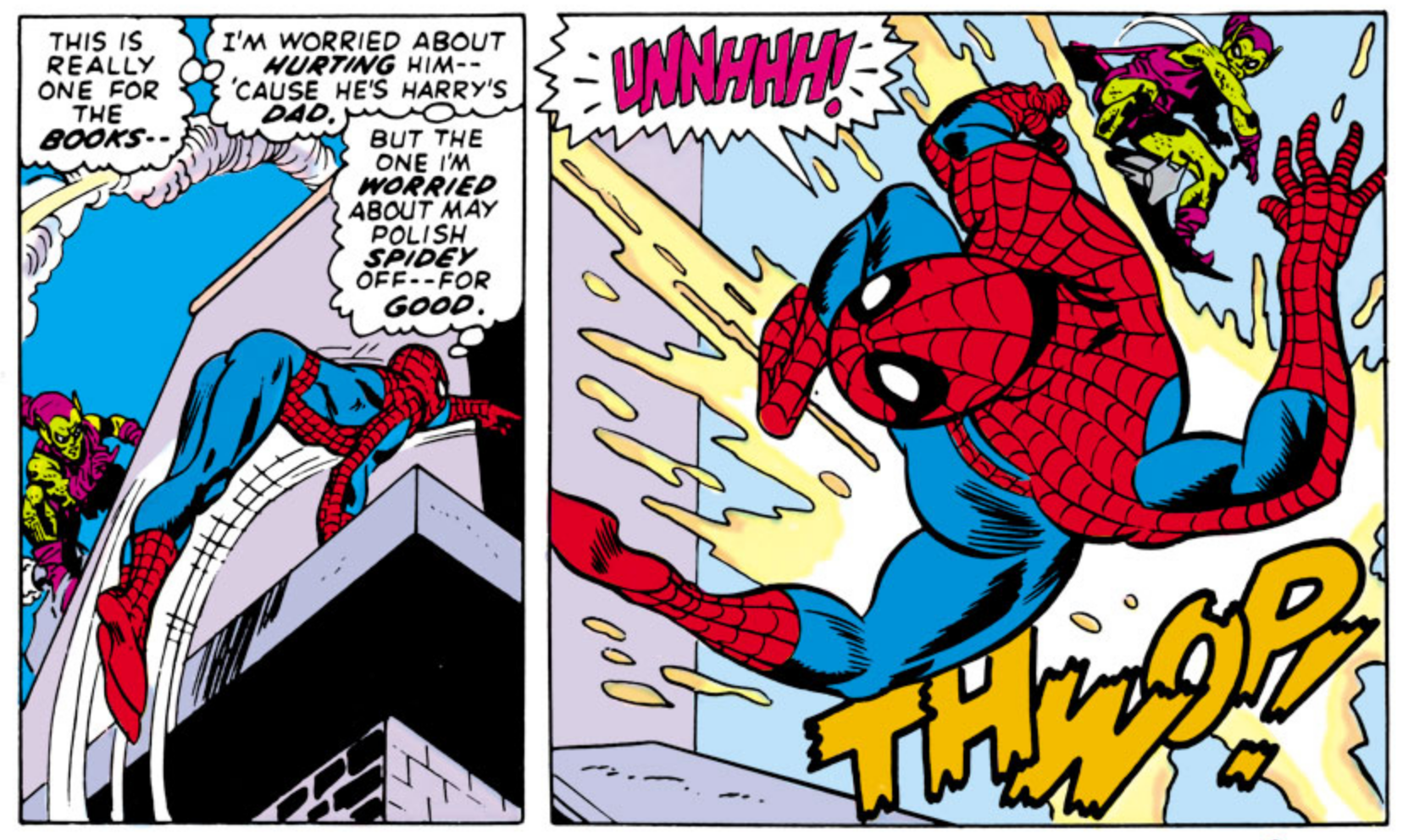
Alongside line, there is also the idea of words and pictures working together to tell a story. One instance of this in this comic is a particular section of page 14. In the second panel, there is an instance of a picture-specific combination, as the wording (“THWOP” and “UNNHHH!”) simply add a sound track to the image displayed. In this instance, the image could stand alone and make sense to the reader, however, the wording adds a “soundtrack” that better allows the reader to understand the peril and pain that the protagonist is going through. The words themselves, though, could not stand alone without the image, as there would be too much left up for interpretation.
Posted in Fall 2019 Archive (201 Blog) | Leave a comment

Invisible Emotion: Dane Graves

I had a hard time finding what I wanted to use as an example of how lines affect viewer

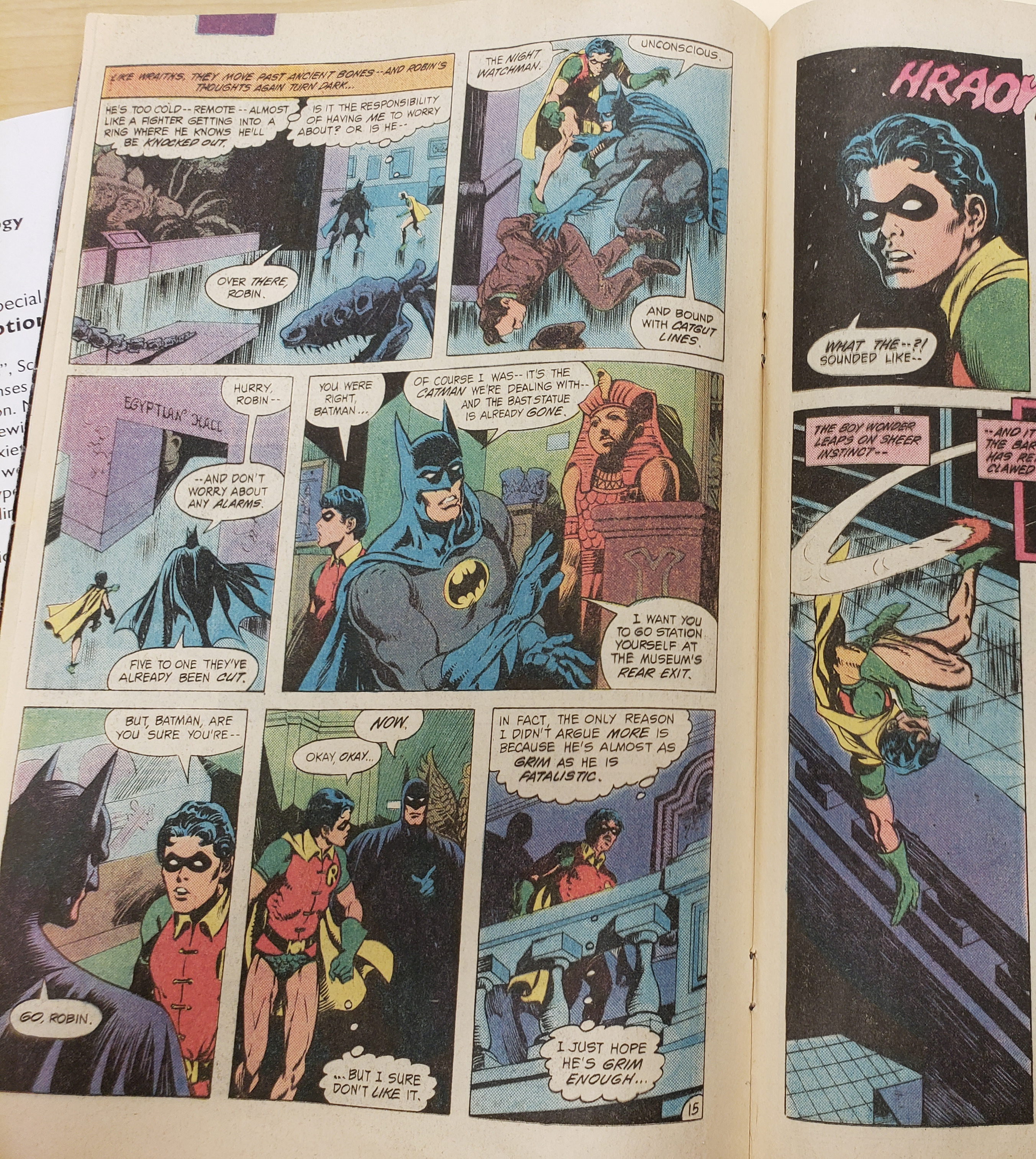
Batman Vs. Catman Page 15

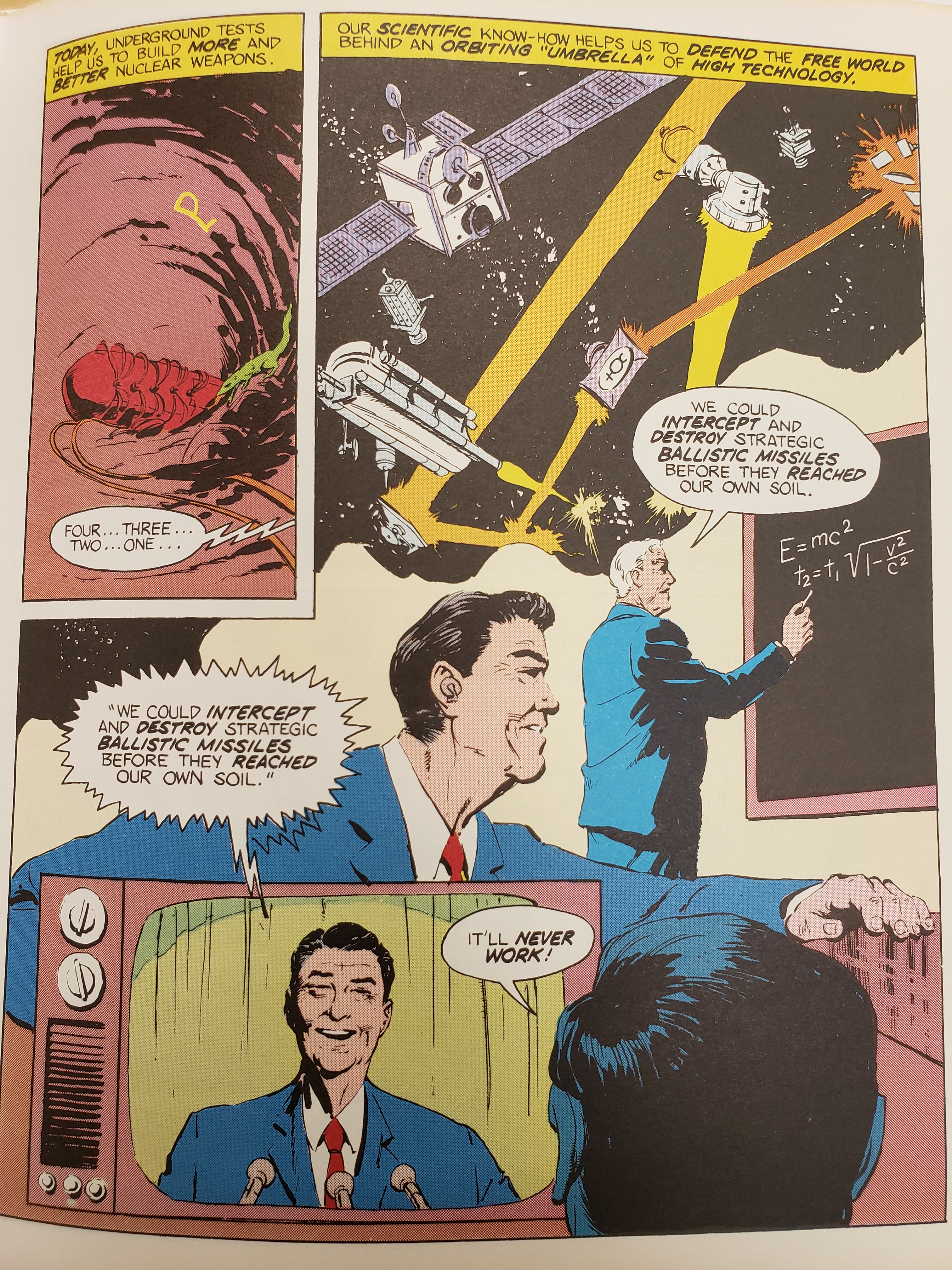
perception of senses and emotion. I finally settled on a scene from the Batman vs Catman book. The scene takes place in a museum at night where Batman and Robin are investigating and about to encounter the villain. The lines used in this scene are portraying a creepy and dark ambiance through their jagged repetitive, almost chaotic nature. This is commonly shown in how the lines are being used for the characters shadows and lighting around the scenes. Batman is often cloaked in these scenes by these lines, perhaps demonstrating his seriousness, especially in the bottom two left panels. These dark jagged lines are used everywhere on this page for the shadows and lighting and on characters to show the darkness/seriousness the author wants to portray. For an example of words and pictures together I decided on this image from a comic that described the nuclear bomb and technological innovations that followed during the cold war. Unfortunately, I don’t remember the comics name. On this page the words go hand in hand with the imagery, I believe it qualifies as an Interdependent word/picture combination. More than that certain words are bold in the text to amplify their effect, but the full idea cant be conveyed without any of the text or just the text. Especially when it comes to the character dialogue in the speech bubbles, without the imagery it would not make any sense for what kind of message was trying to be portrayed to the reader on this page. You wouldn’t be aware that the repeat of the message from the scientist was coming from the president over the television to a viewer proclaiming his disbelief. More than that, even with the description in yellow up above the reader wouldn’t understand what it meant by an “‘Umbrella’ of New Technology” without the visual.


Posted in Fall 2019 Archive (201 Blog) | Leave a comment

Invisible Emotion: Brayden Jacobs

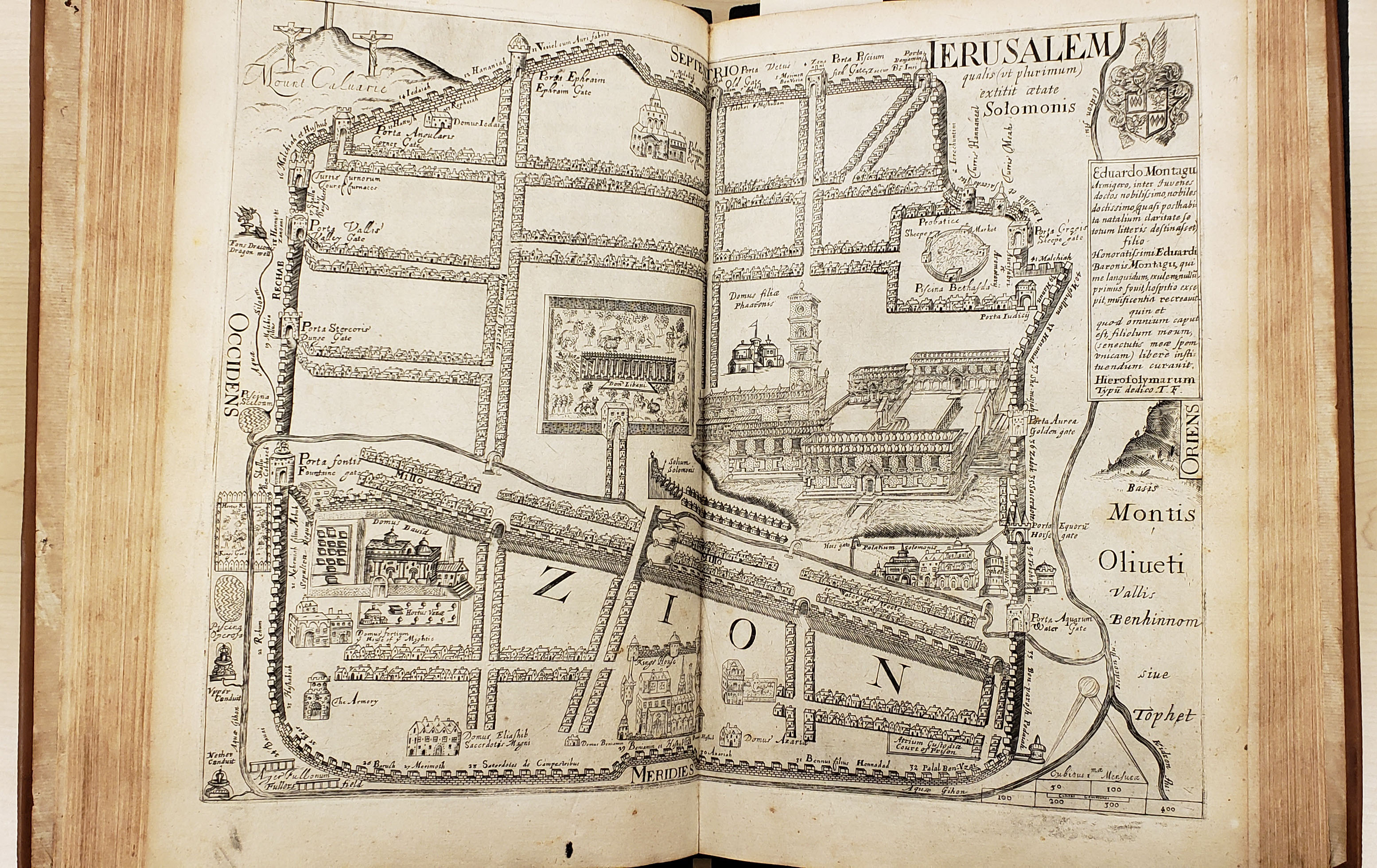
Map of Jerusalem, 1500 AD

This map of Jerusalem from a 1500 AD book shows a city of history and the troubles its been through. The map on its own would be uninformative without context and, while not in English, the simple basis of labeling the map “Jerusalem” brings so much more information and knowledge to the reader. The roads and exits are labeled, there’s a descriptive paragraph on the right and important landmarks and temples are scribed within the map. The combination of language and imagery brings the piece together into a complex and informative image. The one reading it doesn’t need to be a master cartographer or a scholarly author; it was meant to be read and understood by anyone willing to learn it. Not only do the map and language speak to one another, but the use of imagery, such as the three crosses atop a hill, the few descriptive houses likely larger in scale than the map, and the temple looking larger than the outside walls, all bring the image together in a user friendly fashion.

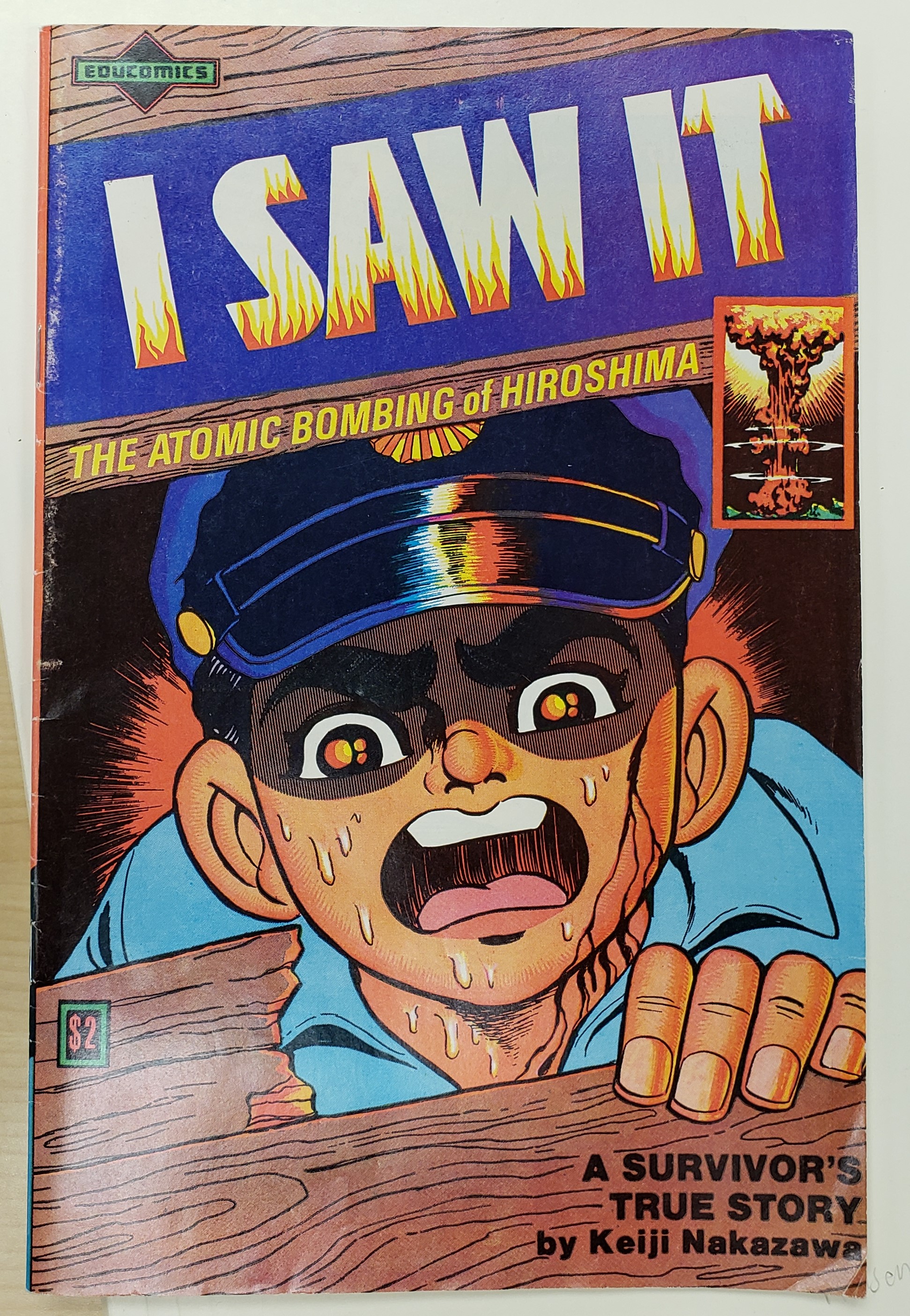
“I Saw It: The Atomic Bombing of Hiroshima” A survivor’s true story by Keiji Nakazawa

One of the strongest uses of line to convey emotion that I came across in the MASC was the cover page for “I Saw It: The Atomic Bombing of Hiroshima” A survivor’s true story by Kelji Nakazawa. The book itself is a horrifying recollection of the author’s experiences when the US dropped an atomic bomb on the Japanese city of Hiroshima. The cover tells the story of panic, destruction, fear, confusion and heat through the sweat droplets on the policeman’s face, the dark outlines of his face and shirt and the lines coming out from behind him as if a fire or explosion were coming. It might not be too hard to convey one expression within a picture, but the complexity of all these emotions summed up between the man’s expression and the red lines behind him is baffling. Even attempting to imagine what these events may have been like gruesome and unholy.

Posted in Fall 2019 Archive (201 Blog) | Leave a comment

Invisible Emotion: Kristine Zorn

A frame from the comic “Crazy Men go Wild!” depicting line quality

I picked out several frames from one of the “Crazy Men” comics. There are actually a lot of different types of line quality in this comic. However, the example of line quality that stood out to me most was all of the squiggly or wavy lines that were used. I found that the main way the wavy lines were used was for drawing the characters in the comic but there are some cases where they were used in the background or for inanimate objects.


A page from the comic “Crazy Men Deluxe” depicting line quality

As the title of the comic implies many of the characters are extremely crazy looking. I think the squiggly lines help to achieve such an impression. The waves in the lines feel unstable compared to straight vertical or horizontal lines. The lines also almost seem like they are in motion. They have this feeling like they wobbling due to the waves.


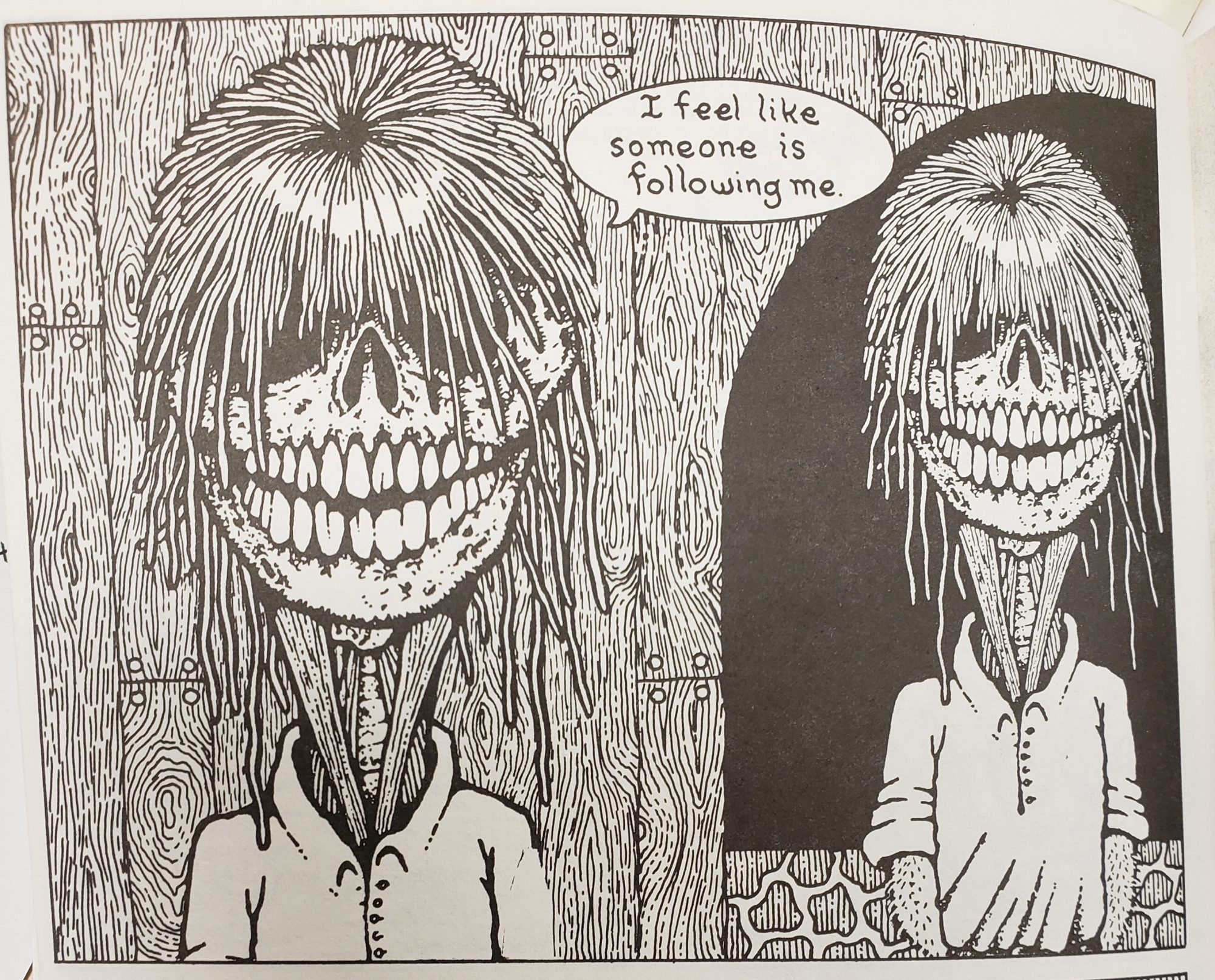
A frame from “Crazy Men go Wild!” showing an interdependent relationship between text and picture.

I also found several examples of interdependent frames. I pulled the first example from another “Crazy Men” comic. In the picture, you see a character drawn twice where one version of the character is slightly behind the other. The picture on its own doesn’t convey as much as when it is paired with the text. The text says “I feel like someone is following me.” The text on its own isn’t as impactful either. While the text clearly tells you the character is being followed, the text and the picture have to be combined to understand that the character is actually being followed by himself.

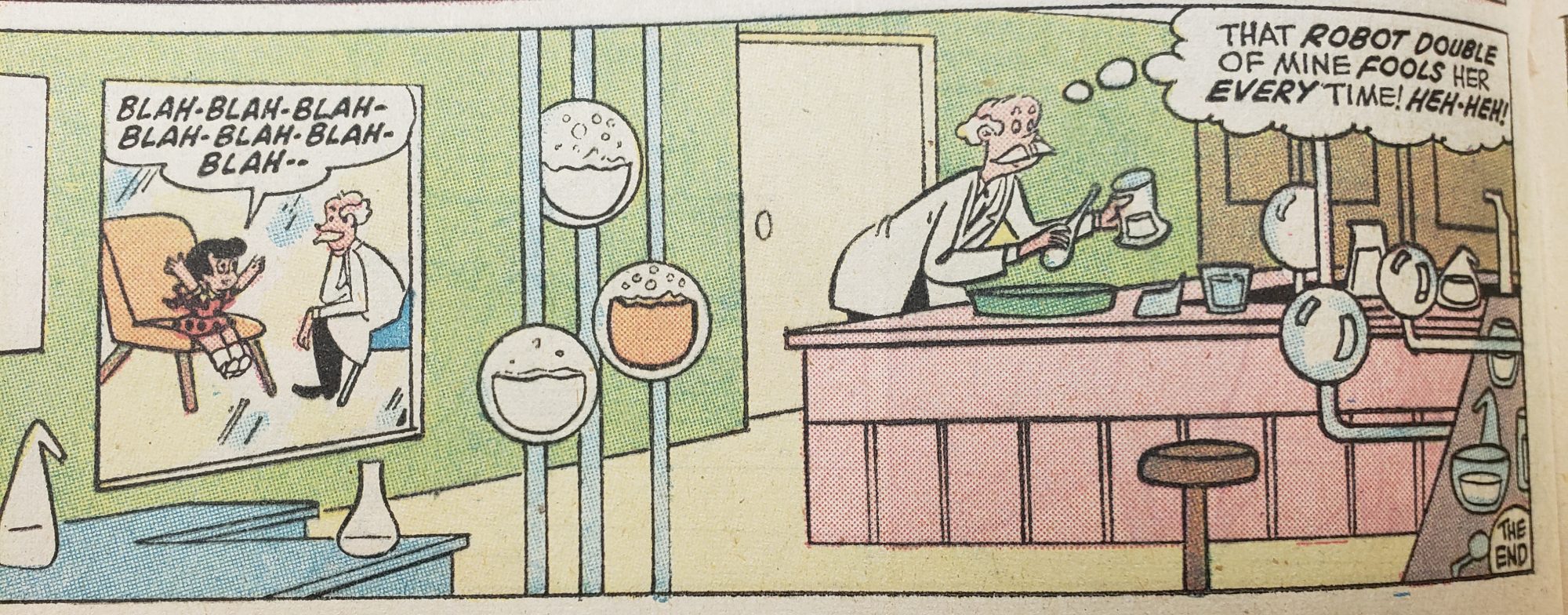
An example of interdependence from the comic “Richie Rich Millions”

I got another example of interdependence from “Richie Rich Millions”. In this frame you see a little girl talking to a scientist in a separate room but then the scientist is seen again in the lab. The only explanation for this comes from the text where the scientist mentions that he has a robot double that is fooling the little girl. Without the picture, the reader wouldn’t be able to know how the robot is fooling her or who she even is.

Posted in Fall 2019 Archive (201 Blog), Uncategorized | Leave a comment

Invisible Emotion: Justin Pardini

Zapp #8

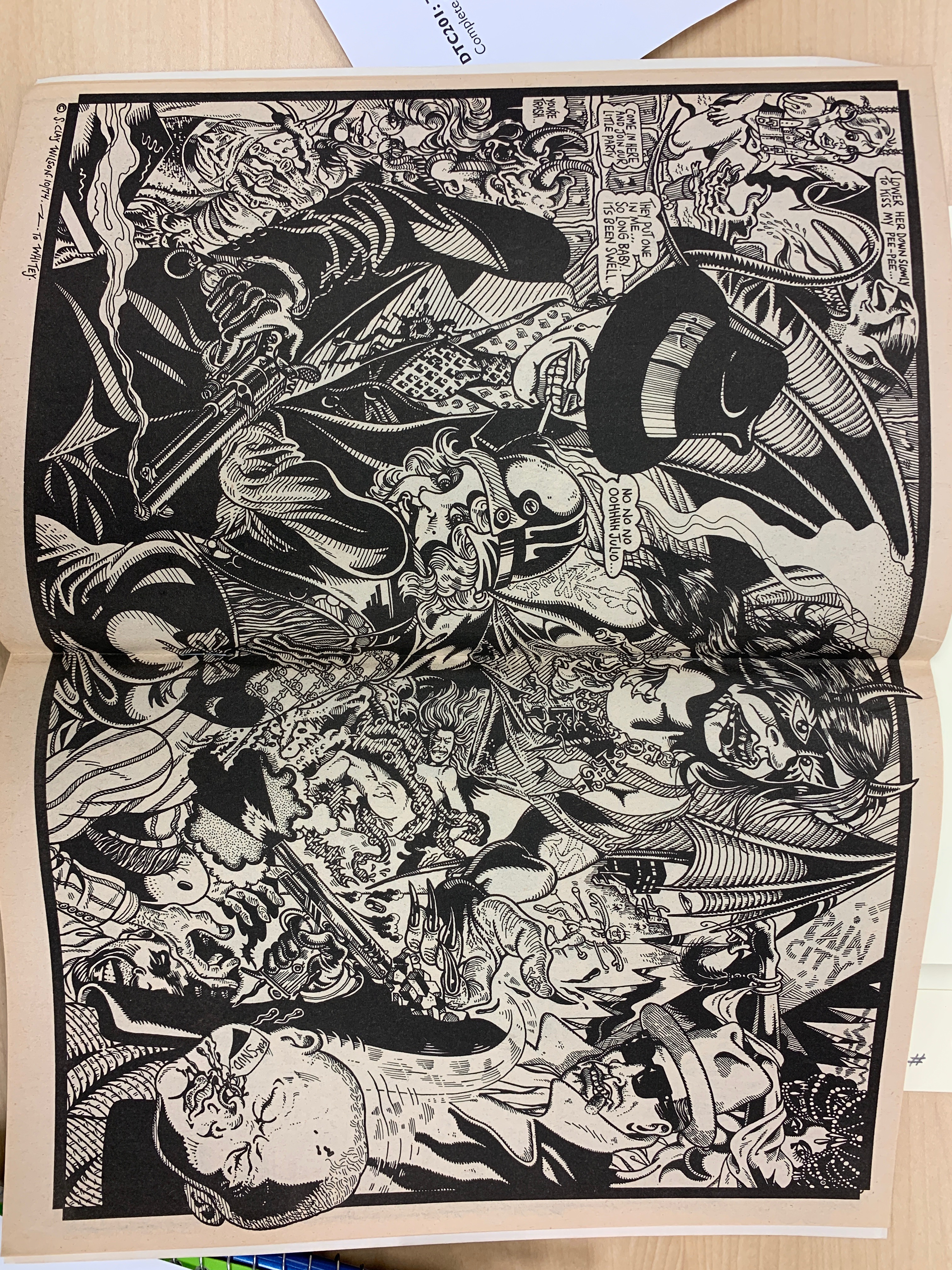
For my time spent in the MASC, I chose to look for interesting comics that had a lot going on, yet still had sequence and understanding within it. The first image I chose came from Zapp, and it shows a collage-like image. I thought this image showcases the fact that images themselves can tell a story, and be interdependent. This falls into Scott McCloud’s definition well, and gives the reader a cool viewing.


Kaz

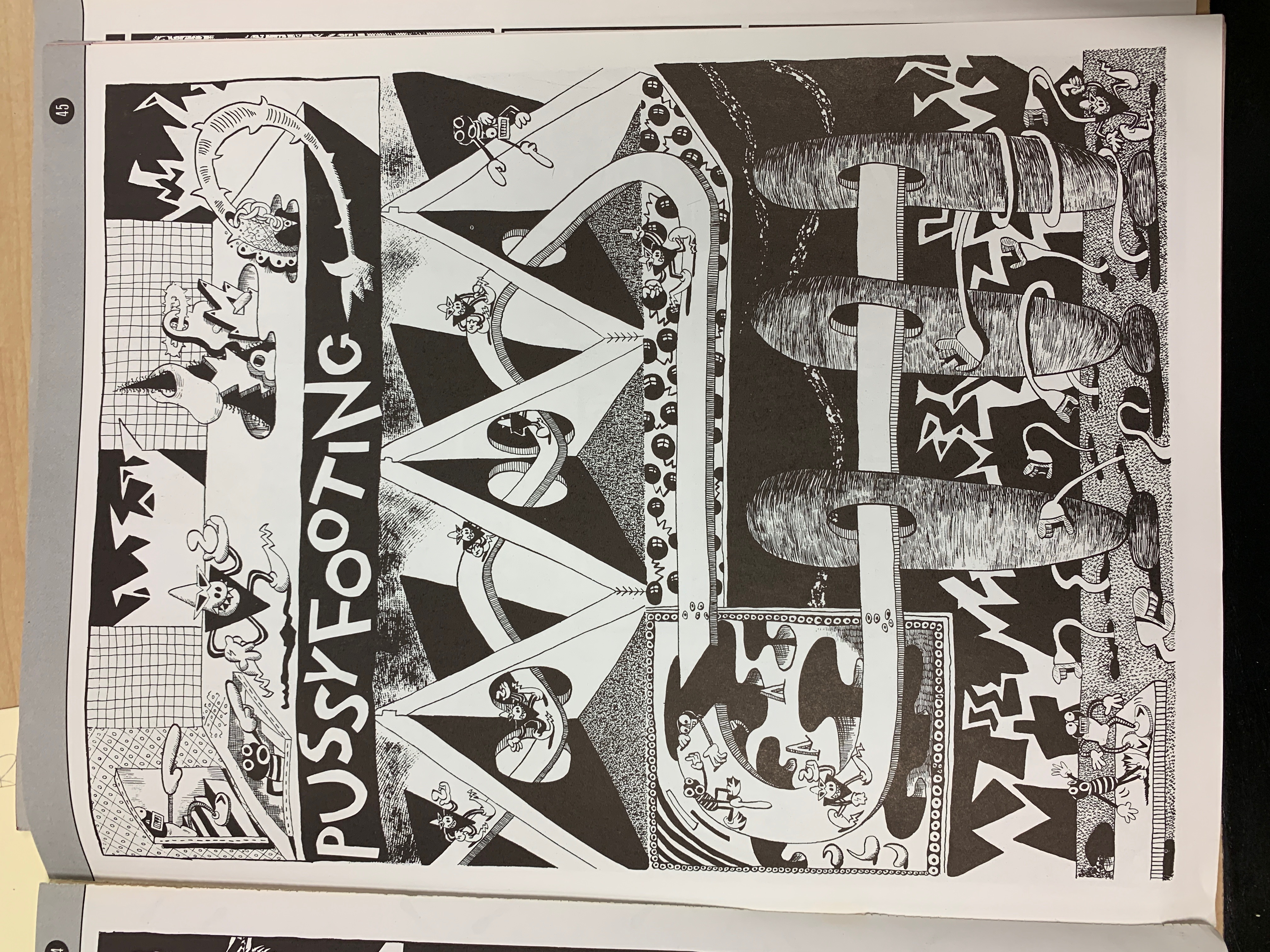
The second image that I chose the include comes from Kaz. Although I don’t know much of this comic, it shows the addition of lines and the importance that they have in comics. This imsage has lines that border scenes and even transcend into other scenes without collapsing the total scene. I thought this was very cool and is something that is of great importance when thinking of what to do for my project. Each frame is connected through the picture, almost as if there are no frames.

Posted in Fall 2019 Archive (201 Blog) | Leave a comment

Invisible Emotion: Jon Klaveano

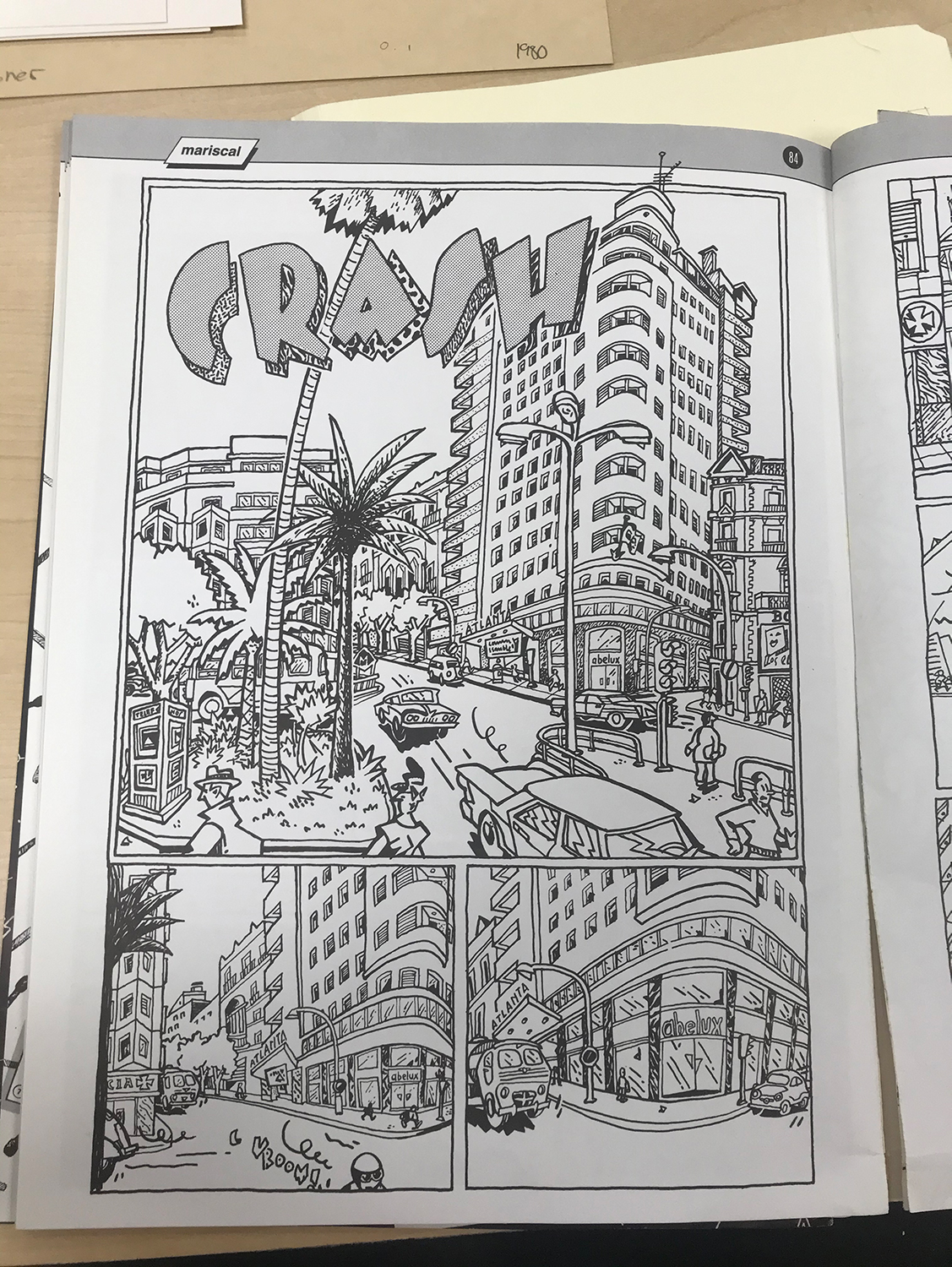
The comic that I choose to focus on in the Manuscripts, Archives, and Special Collections was the comic “Crash.” I found this comic inside a collection of comics that one of the staff members at the Manuscripts, Archives, and Special Collections choose to lay out for the class. I liked how this story is only four pages long. That being said the story gets to the point very quickly. I also really enjoyed the art style featured in this comic. It feels very chaotic yet at the same time structured. I think this has to do with where each item is placed amongst each other.

This comic is called “Crash” it came from a collection of comics.

I personally am a firm believer that a line can express emotion, and I think all comics are great examples of this. Out of the comic “Crash” I choose the first page to represent this. I think this picture does the best job of describing emotion. When I look at this photo I immediately think of “Chaos.” I think the fact that buildings and other objects traditionally thought as of square are curved in this comic give it a chaotic feeling. Paired with the fact that everything looks very close together makes the  picture feel very claustrophobic. I think the author intentionally did this because it sets the mood for a car crash.


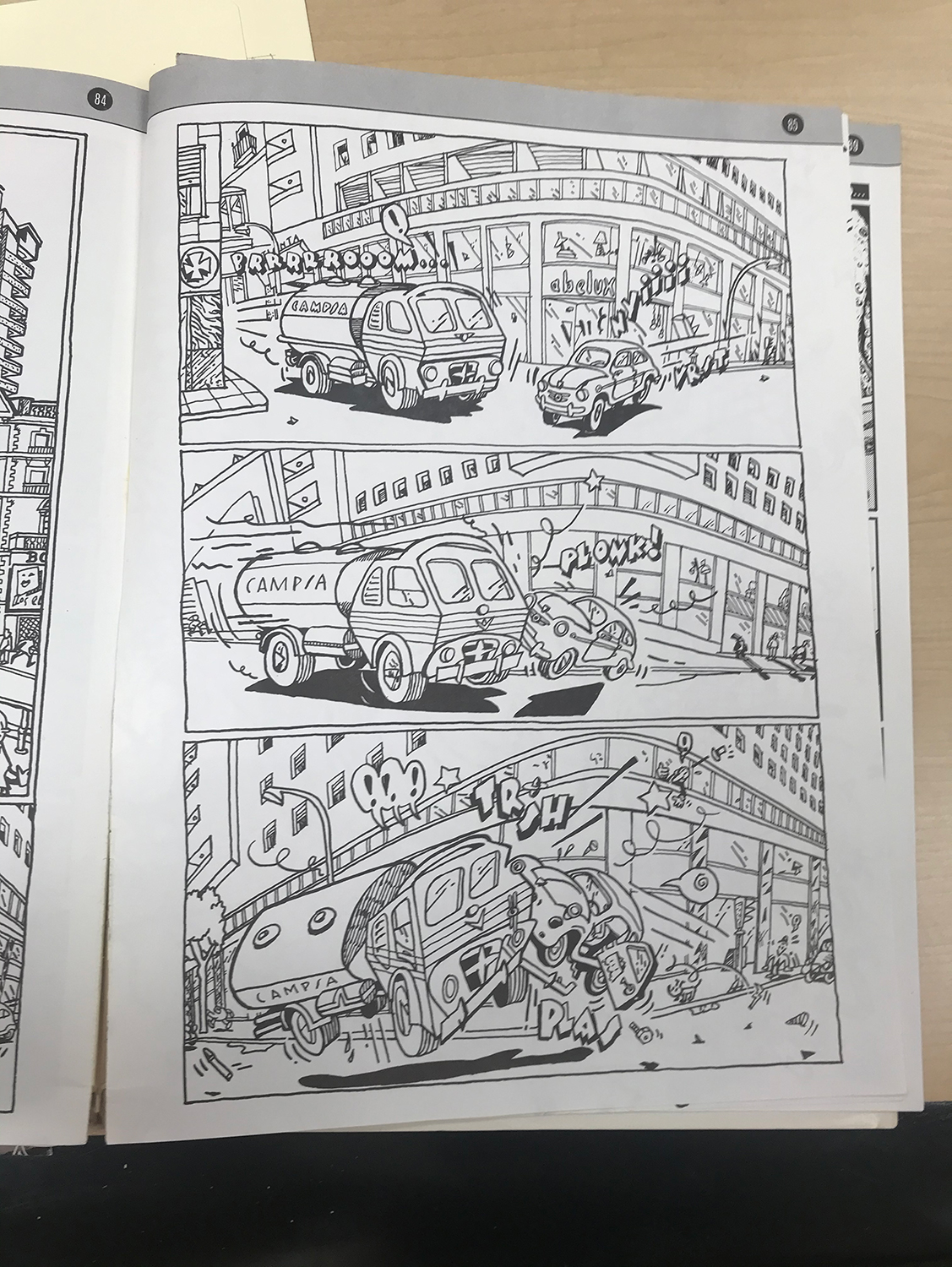
This comic is called “Crash” it came from a collection of comics.

This is the second photo from the comic book “Crash,” and I believe it perfectly represents the word/photo combination “Picture Specific.” As you can see in the photo the words serve no purpose other than to add sound to the photos. The words are really secondary and it seems like the photos themselves could have just stood alone.

Posted in Fall 2019 Archive (201 Blog) | Leave a comment

Invisible Emotion: Jack Kay

Emotion can be sent to the reader’s mind just by adjusting the line quality. Scott McCloud discusses how the artists can convey information simply by the line quality. In the comic book, Raw, by Art Spiegelman and Francoise Mouly, there is a page featuring a big crash. In order to conv

Crash Scene From RAW Comic retrieved from MASC

ey just how intense this crash is the panel takes up two pages. The crash features many lines of all sorts of quality. There are parts flying, stars flying, as well as items flying outside the borders of the panel. The crash includes a lot of different types of lines creating chaos. With so many lines being used, there is no true starting point of the comic. The very thin lines allows for tiny bits to be included very close to each other. The spatial room between each item also contributes in creating the chaos in the panel.

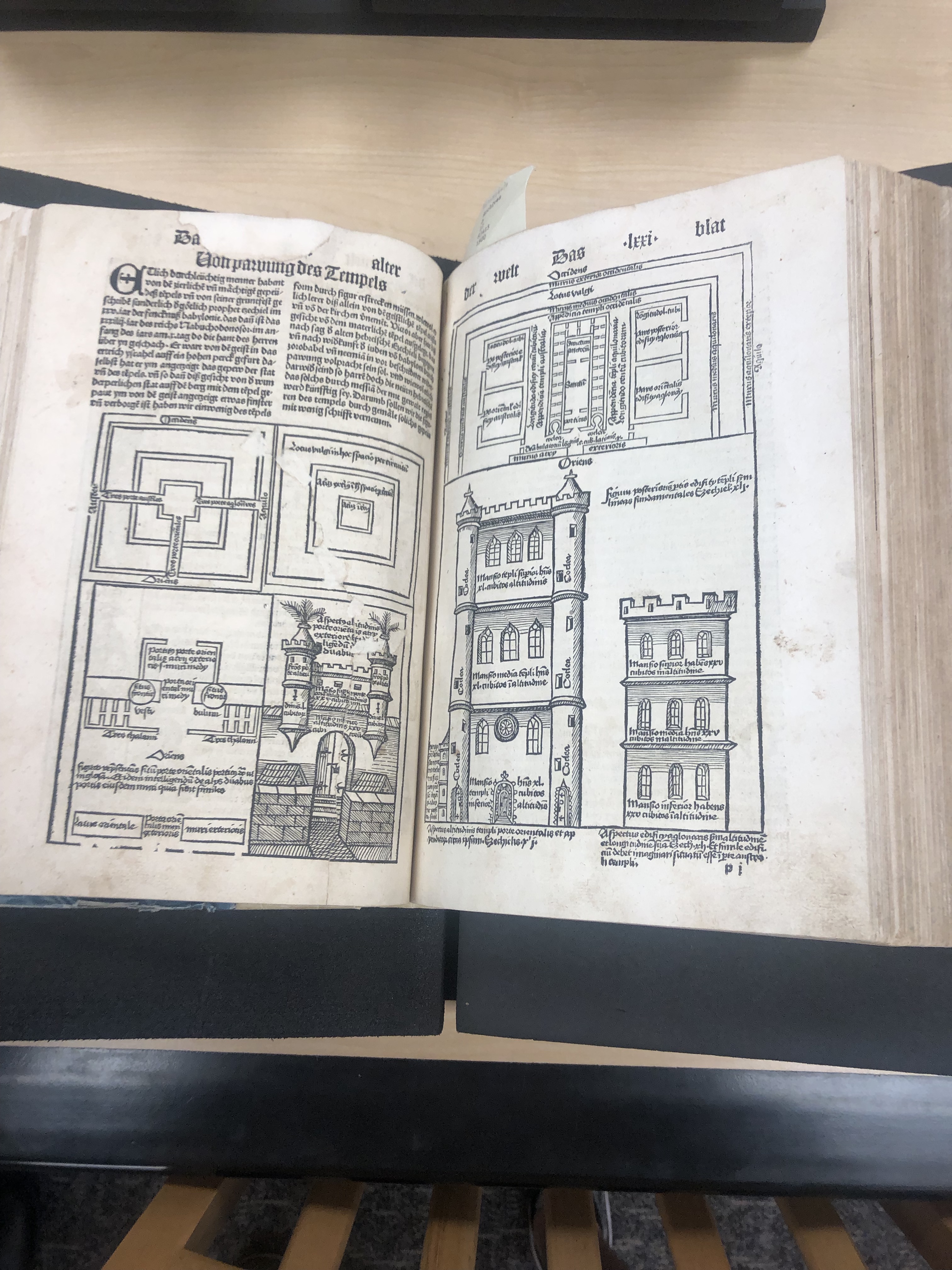
Chronicon Nurimbergce (1493) Retrieved from MASC

Although being presented in an old German language, the “Chronicon Norimberge” book displayed what seemed like a Duo-specific word/picture combo. The panel displayed a bird’s eye-view as well as side profiles of the castle In which the story was about. There is writing in the panels and describe each part of the drawing. The example shown to the left is from over 400 years ago and still is in tune with the information described by McCloud.

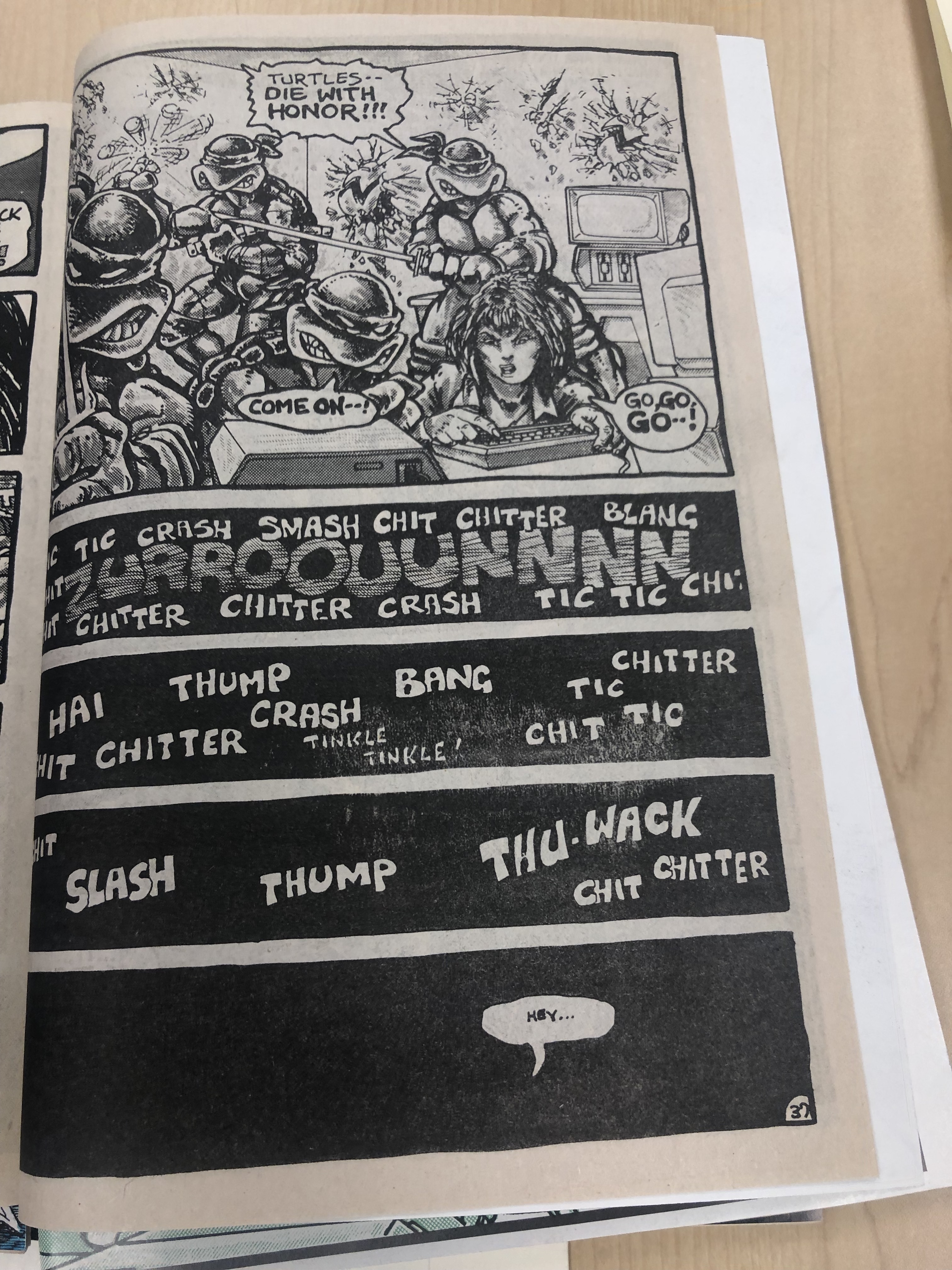
The one interdependent word/picture I could find

Teenage Mutant Ninja Turtles Volume 2 Retrieved from MASC

was located in volume #2 of Teenage Mutant Ninja Turtles. The picture depicts the turtles fighting in the dark. If the words were left out it would make no sense and If the words were just shown then there would be no sneak attack planned by the turtles. The words and pictures go hand in hand with each other to describe the fight scene in the dark. The combination displays to the reader the sound effects going on in a scene that would otherwise be total darkness.

Posted in Fall 2019 Archive (201 Blog) | Leave a comment

Invisible Emotion: Eddie Abellar

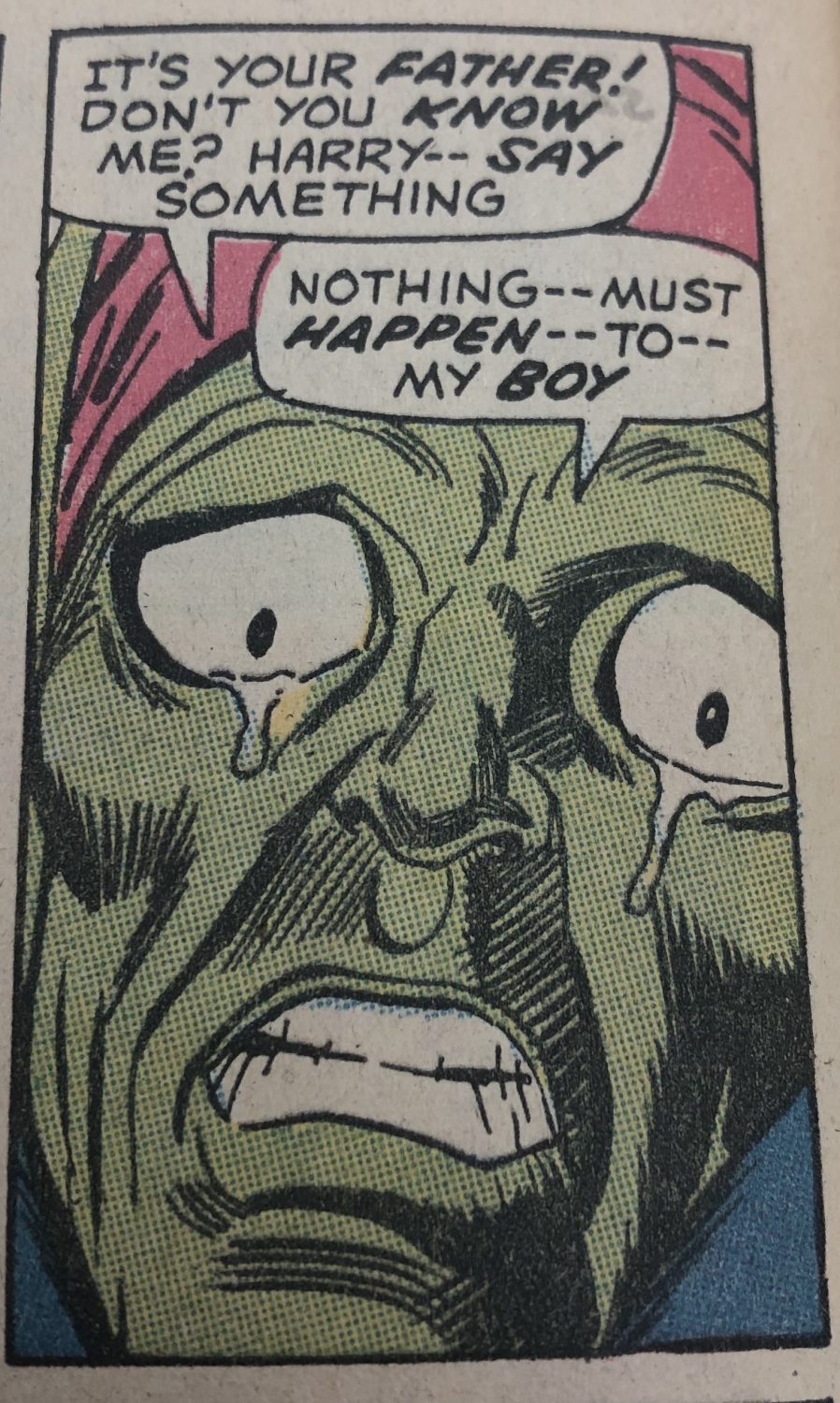
“The Amazing Spider-Man” #98, MASC Fall 2019.

The image I chose that conveyed the most emotion through lines was an image out of “The Amazing Spider-Man” found in MASC in the Holland and Terrell library. The image is of Harry Osborne, aka, the Green Goblin. The lines in the image create a close up of the Green Goblin’s face and show exactly what kind of emotion the Green Goblin is conveying to the reader. The lines on the Green Goblin’s face make it seem as though he is in shock, or worried about something or someone. The lines on his forehead create the visual of wrinkles or what some would call, worry lines. The lines that make up the eyes are angled up in a way that reinforces the worried feeling the Green Goblin is expressing in this image. The lines below his bottom lip show a quivering movement that also matches the emotion he is experiencing.


“The Spirit” by Will Eisner, MASC Fall 2019.

The second image I chose is from a comic called “The Spirit” and it accurately represents the picture-specific combination. In the panel, the superhero known as “The Spirit” is shown being shot by someone holding a pistol. The Spirit takes up most of the panel space but there is a hand with a pistol and a cloud of smoke representing the gunshot in the middle of the panel as well. In the cloud of smoke, written in capitalized and bolded letters is the word “BANG!“. This image represents the picture-specific combination because the word in this image is doing little more than adding a soundtrack to a visually told sequence. The “BANG!” informs the reader that the gun has been shot, and the visual of capitalized and bolded letters followed by an exclamation point gives the reader a sense of how loud the gunshot was.

Posted in Fall 2019 Archive (201 Blog) | Leave a comment

Invisible Emotion: Peter Dowell

The example that I chose for line quality is seen in the Zap Comics #8 where there is a

Zap Comics #8, 1975

Zap Comics #8, 1975

skinny strange alien with no eyes that is talking to a bunch of military admirals about war that is going to end the world that the military is involved with. He gets enraged when they refuse to stop building nuclear weapons. This rage is shown very spastic with the line art that is in the comic. The one panel where he says “STOP!” multiple times and it is his character stacked up multiple times shows how erratic and jumpy he is with the rage and angry he is bursting with. The next panel shows him in comparison to the character that is more calm with him kind of buzzing with rage with all of the lines looking like needles coming out of him. This shows how enraged he is still after the initial burst on the previous panel and how somebody more calm doesn’t have that crazy lines coming out of him.

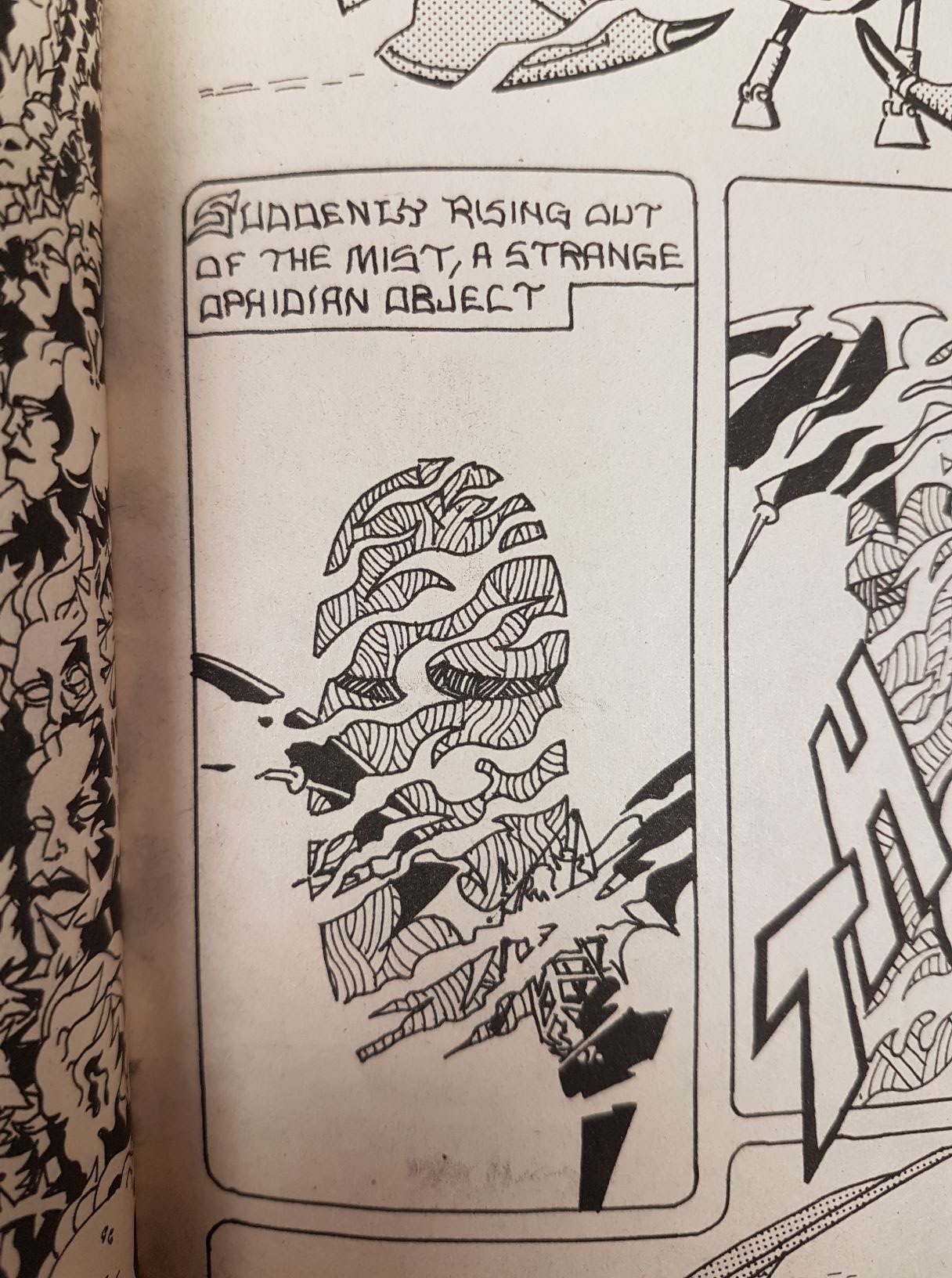
The next thing that I looked at was a interdependent relationship. I found an example of this in Zap Comics #7, where there is some sort of object that looks like it is broken up and shredded and the text saying that something is coming out of the mist. The reason that this panel is interdependent is that by itself the text only describes something coming out of the mist, but we don’t know really what is happening. By itself the text only describes something coming out of the mist, so we know that there is mist but the object

Zap Comics #7, 1974

Zap Comics #7, 1974

coming out of the mist, how is it doing that? This can be seen in the picture where there is the chopped up shredded image of the guy and somewhat of an object in the background. The picture by itself looks like a shredded, strange picture and the reader would not know what is happening without the context of the text and the text can’t explain how something is rising from the mist without the picture to reference that there is mist and something rising. That is why this image is interdependent.

Posted in Fall 2019 Archive (201 Blog) | Leave a comment

Invisible Emotion: Joseph Gardner

IMG_20191015_154430944

An image from Eastman and Laird’s Teenage Mutant Ninja Turtles #2.

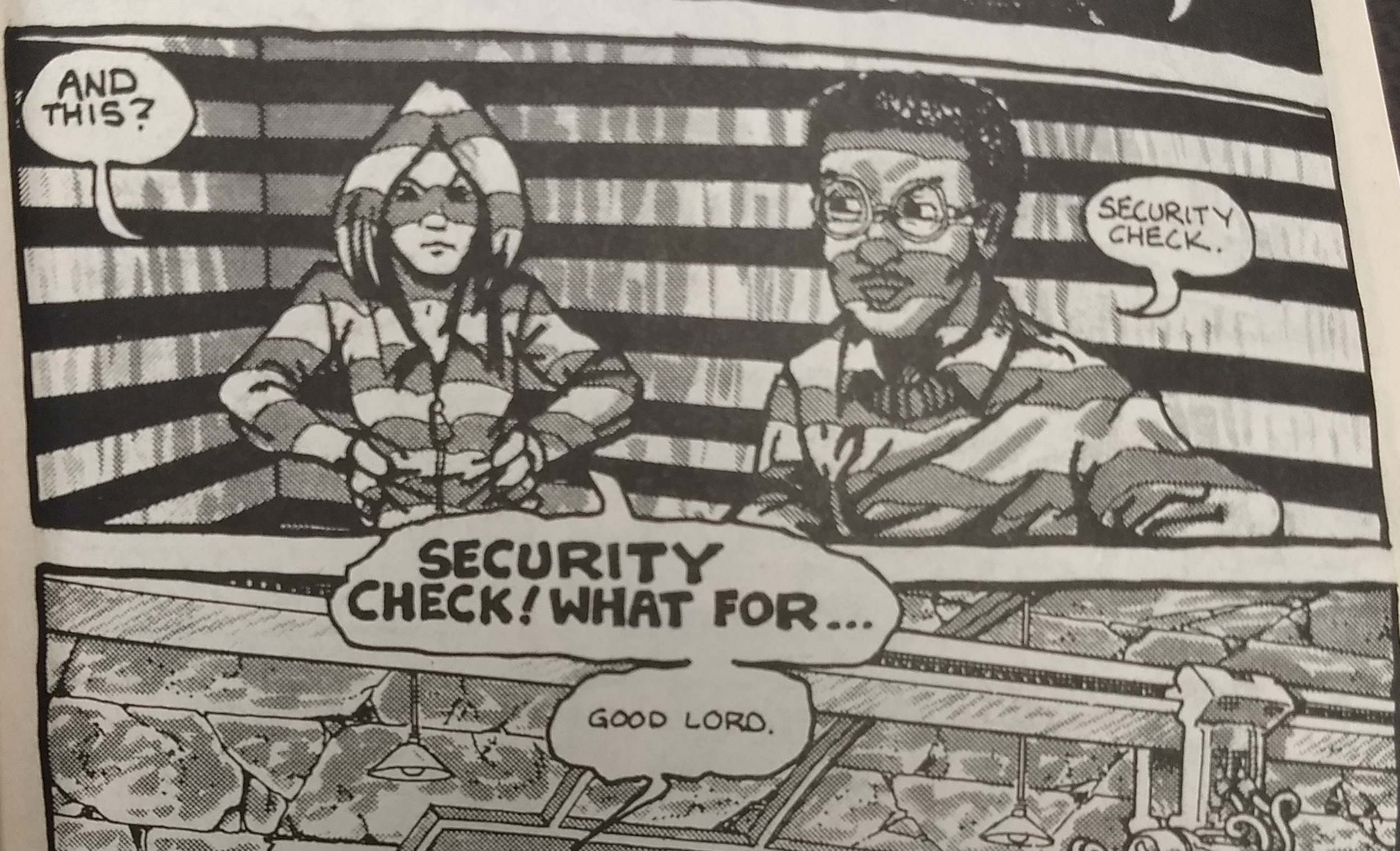
This is an image from Eastman and Laird’s Teenage Mutant Ninja Turtles. The line quality in this scene conveys a sense of unease, tension, and shows that there is something sinister about it. In the next scene, it is revealed that there is a group of robots.

The starkly contrasting lines make it look like a black and white prisoner’s uniform. This could make the reader feel a sense of isolation and entrapment. The strong lines help to further these negative emotions.

Straight, strong lines usually feel cold and more serious than malleable squiggly lines.

This makes sense, because from what I have gathered, the two characters are the bad guys. The shadows from the lines also cover parts of the characters faces. This makes them more mysterious and dark, and the reader doesn’t trust the characters. 

IMG_20191015_153719516

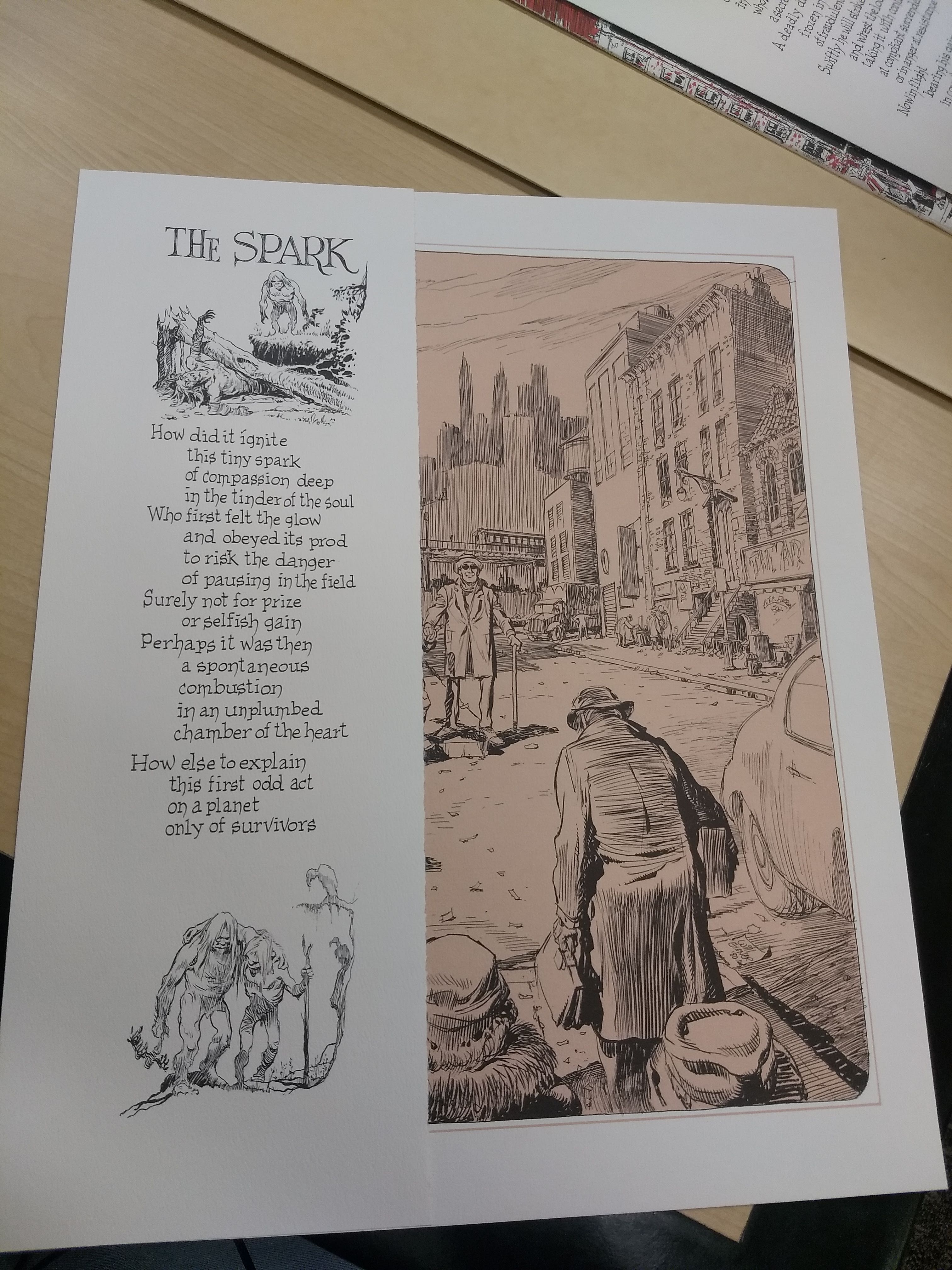
This is an image entitled “The Spark”

This is an interdependent image with text and a drawing. Without the drawing, the image would have little impact. It’s still beautiful artwork, but it would not be as meaningful.

Without the image, the poem would also have less impact. With an image and the poem, they complement and juxtapose each other. They both show the survival of the fittest, but they show different time periods.

As a whole, it makes the point that the idea of survival of the fittest is a selfish thing, and always has been. Instead of helping others grow and “sharing the wealth”, people compete against each other. This could include killing each other, as in the left side images, or creating a society where the rich and the poor are separated by a large margin, because the rich want to keep their money for personal gain.

It shows that this is a universal idea that has always been around.

The other works in this series are extremely similar, juxtaposing modern-day and the first humans with each other.

Posted in Fall 2019 Archive (201 Blog) | Leave a comment