Individual Voices: Bruno Signorelli

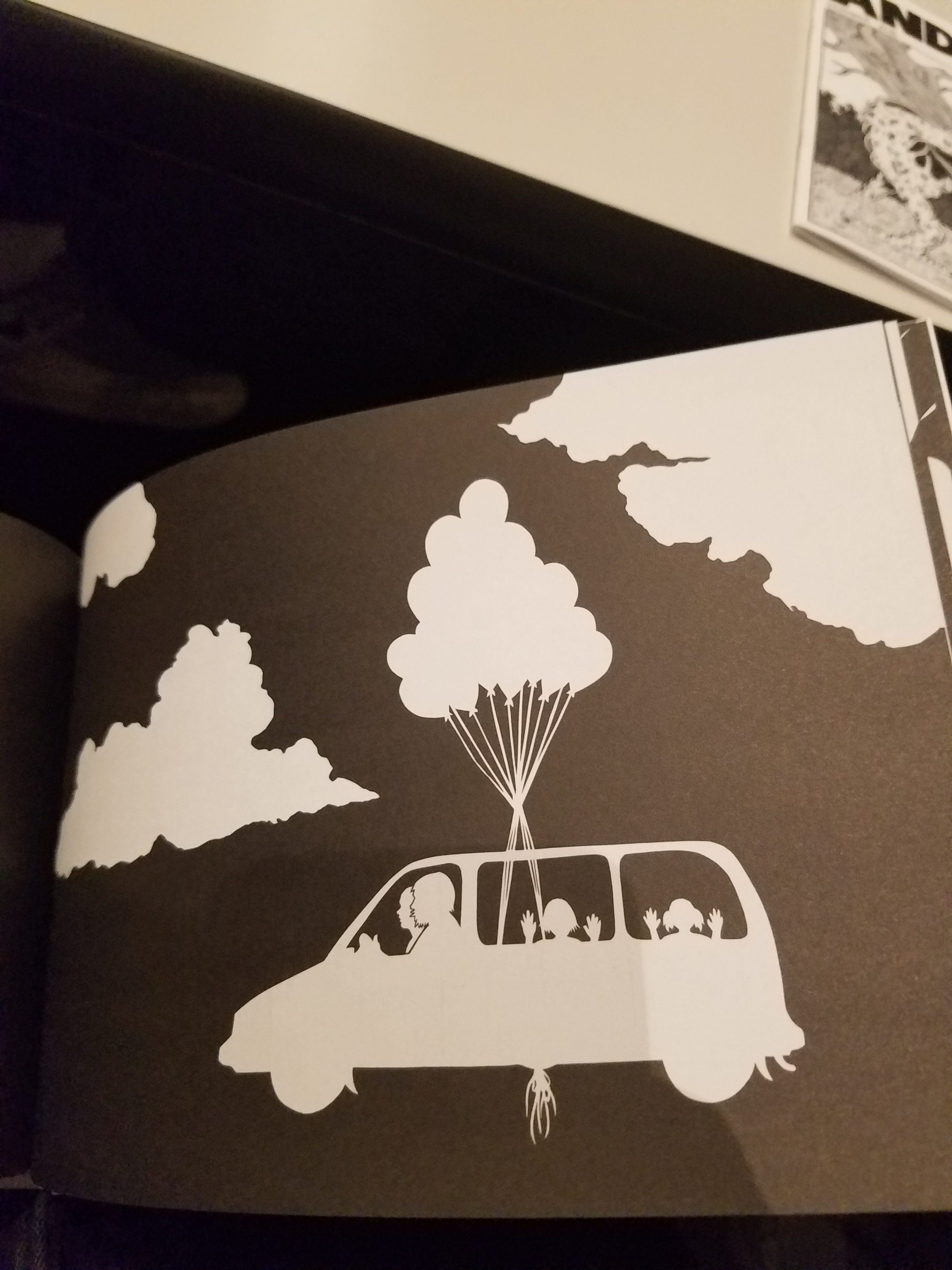
I chose this because I really enjoyed the style of the work and drawing. I also liked the concept of the entire book. Each 2 pages contained there own story in a way with the first page containing text that would be a quote and the right page would be a visual representation of that quote. I like this quote specifically because it reminded me of myself when I was a kid and how entertained I would be by simply looking out the window of my car, and just looking at the sky and clouds. By having the entire background of the pages black it gives it the sense that everything is happening in the same space and time. I’ve always been a fan of the contrast of black and white images and every image is just in black and white so that is another reason why this specifically caught my eye. Overall I really liked the entire book and found many of the pages and quotes very fascinating, and this was just one of many that really caught my eye.

“Another Glorious Day at the Nothing Factory” Eroyn Franklin

Posted in Fall 2019 Archive (201 Blog) | Leave a comment

Individual Voices: Madison Roby

Find an artist’s work that speaks to you on our visit to the WSU Art Museum Collection Study Center, where we will see works from the Northwest Alternative Comics exhibition (Fall 2016). Use your blog post to explain how you feel the artist makes his or her individual voice heard to you.

Max Clotfelter’s “Hybrid Moment.”

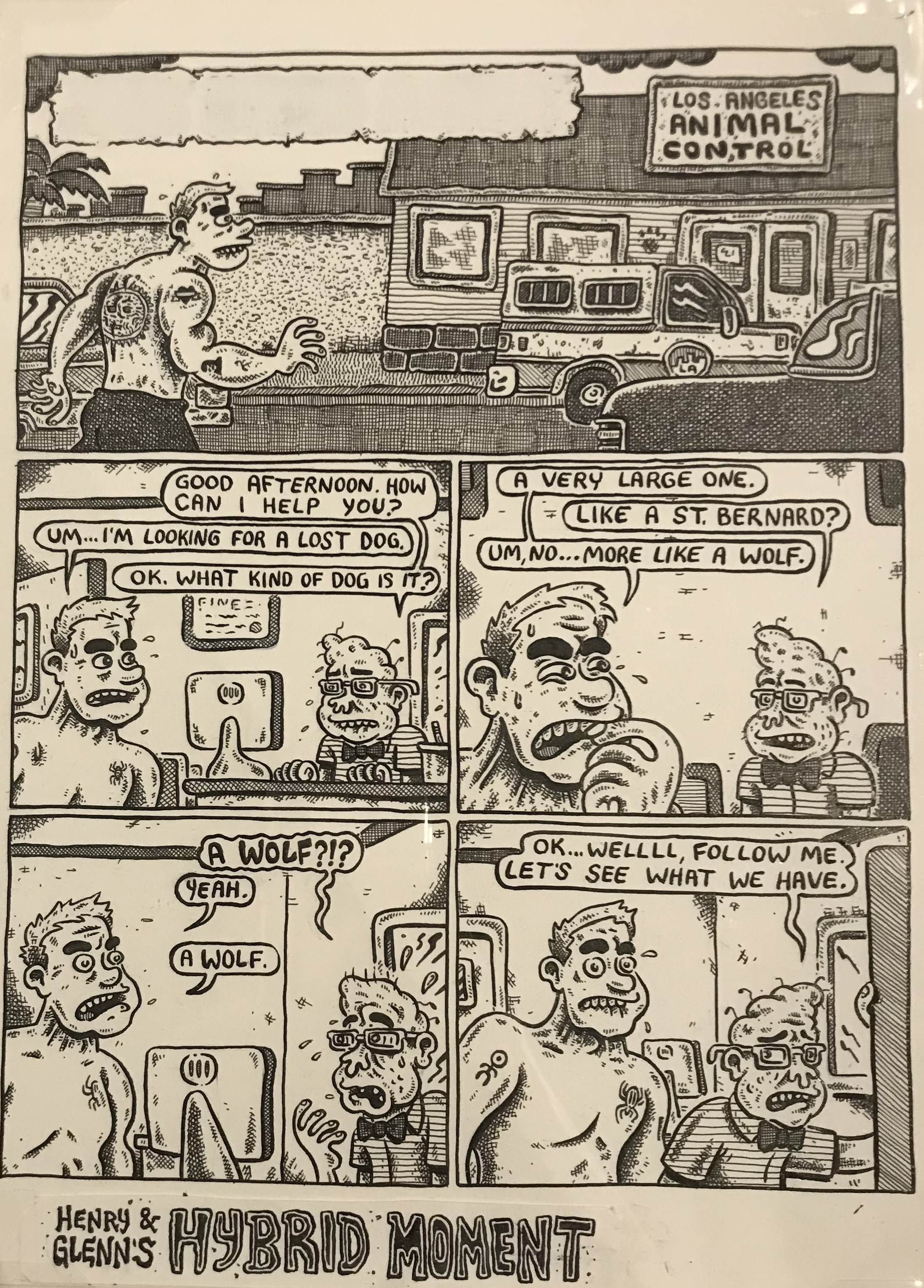
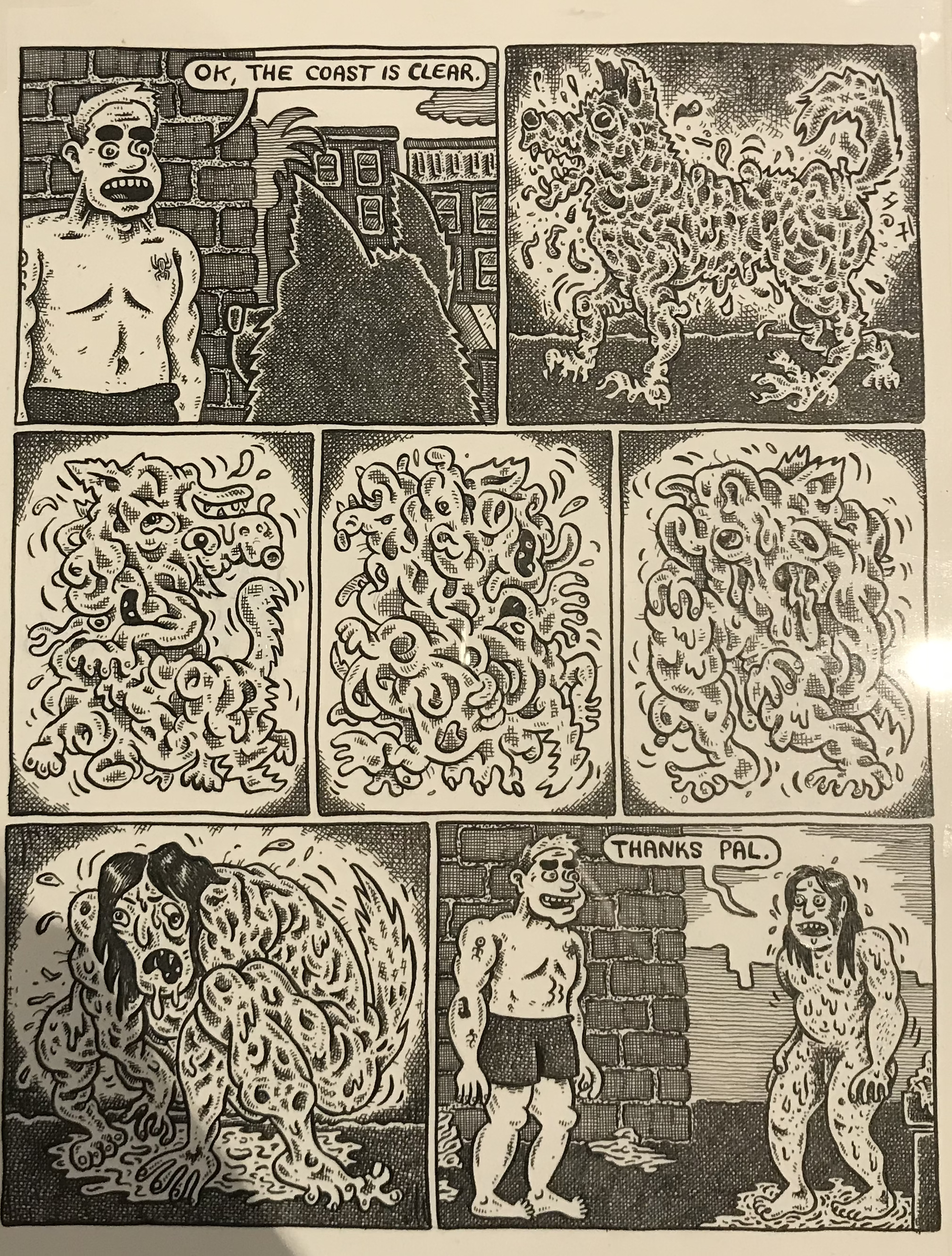
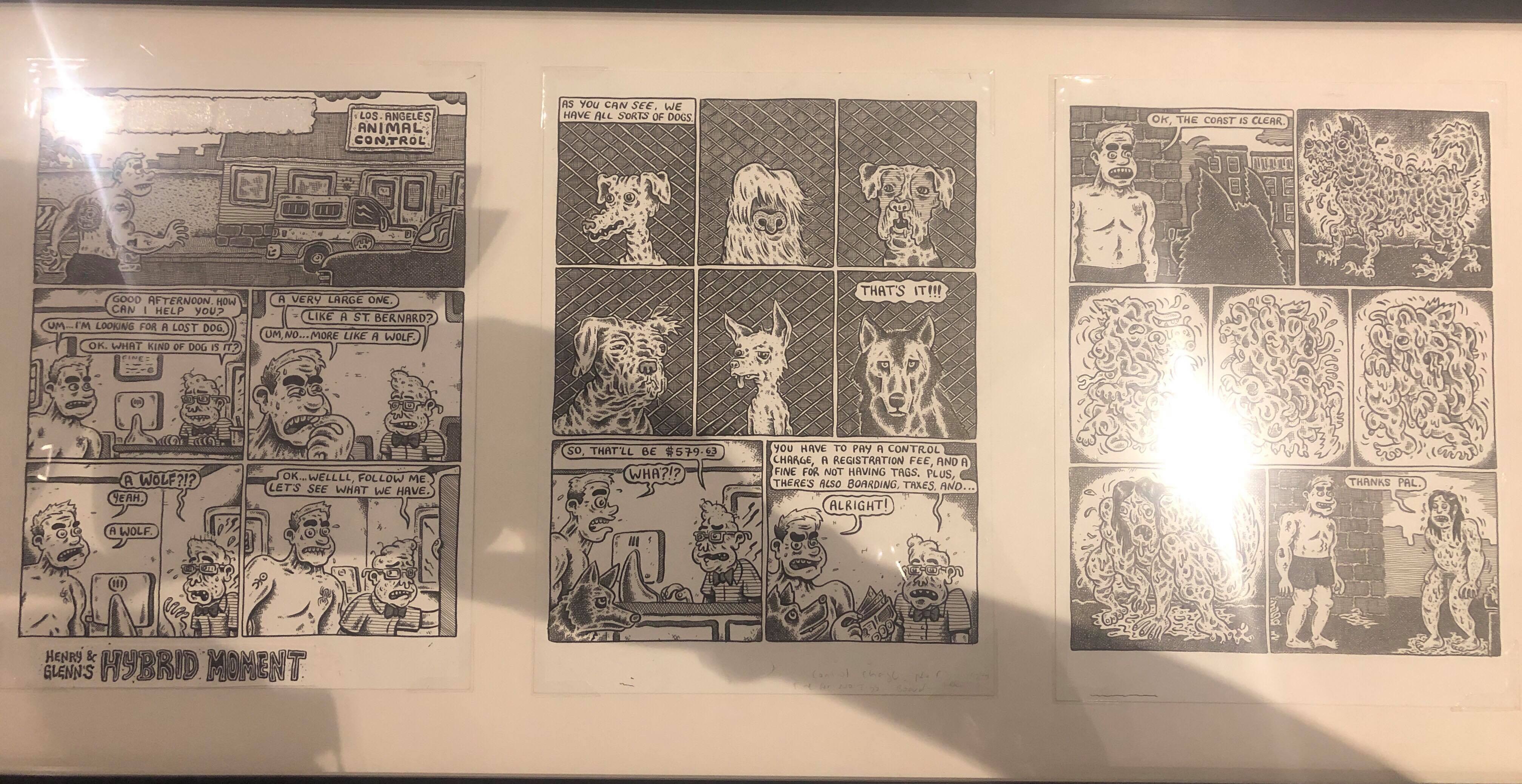
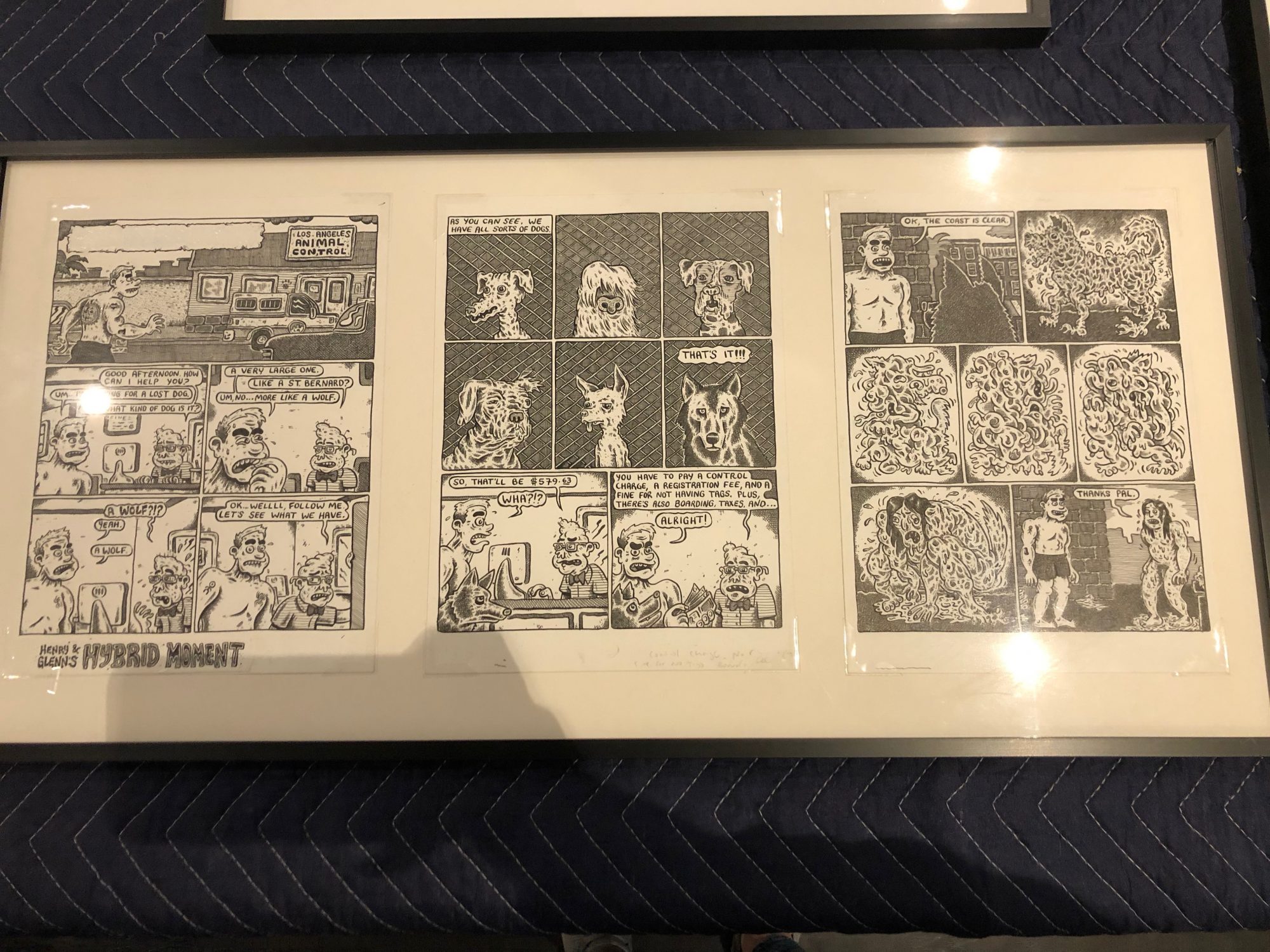
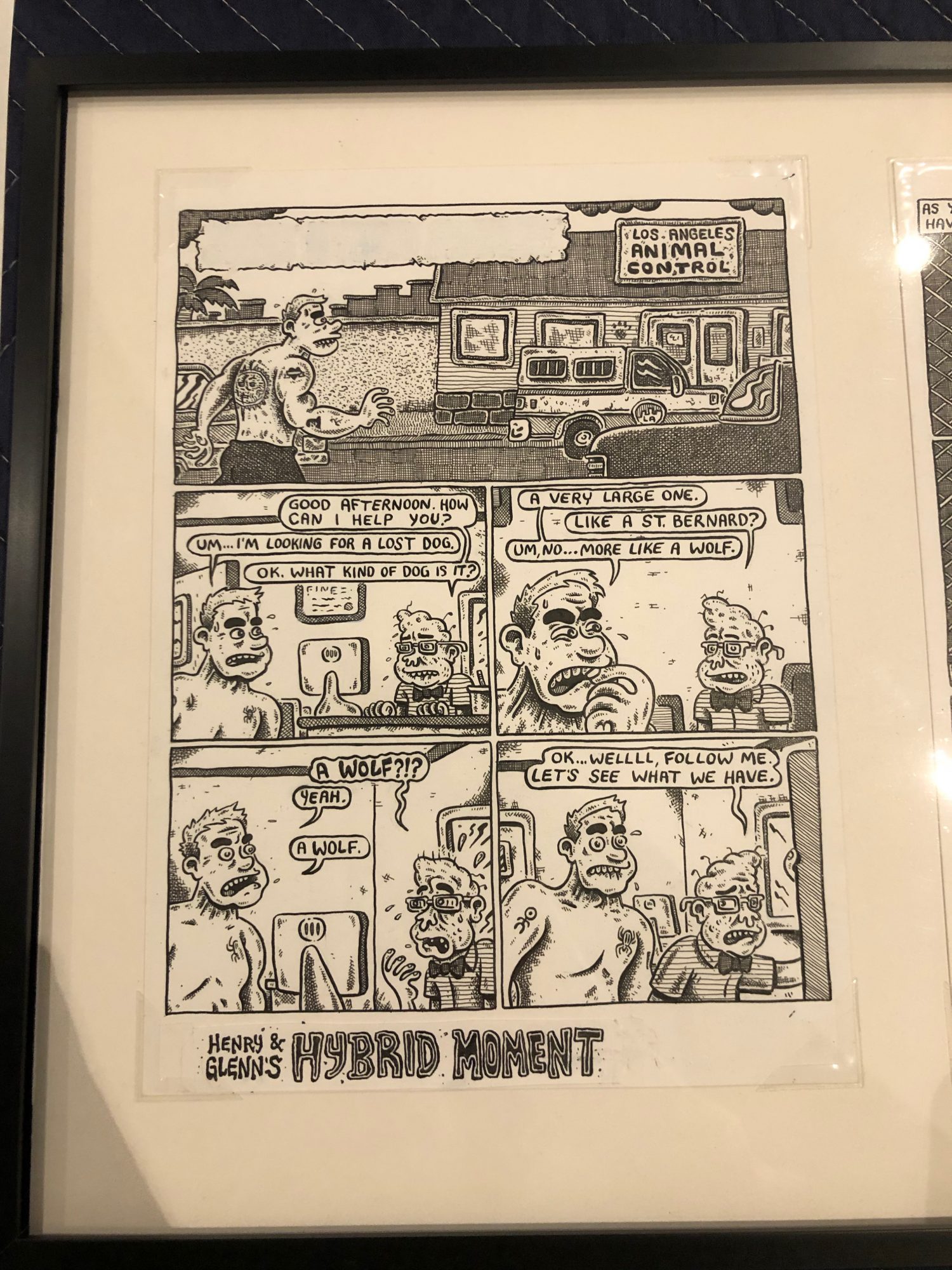
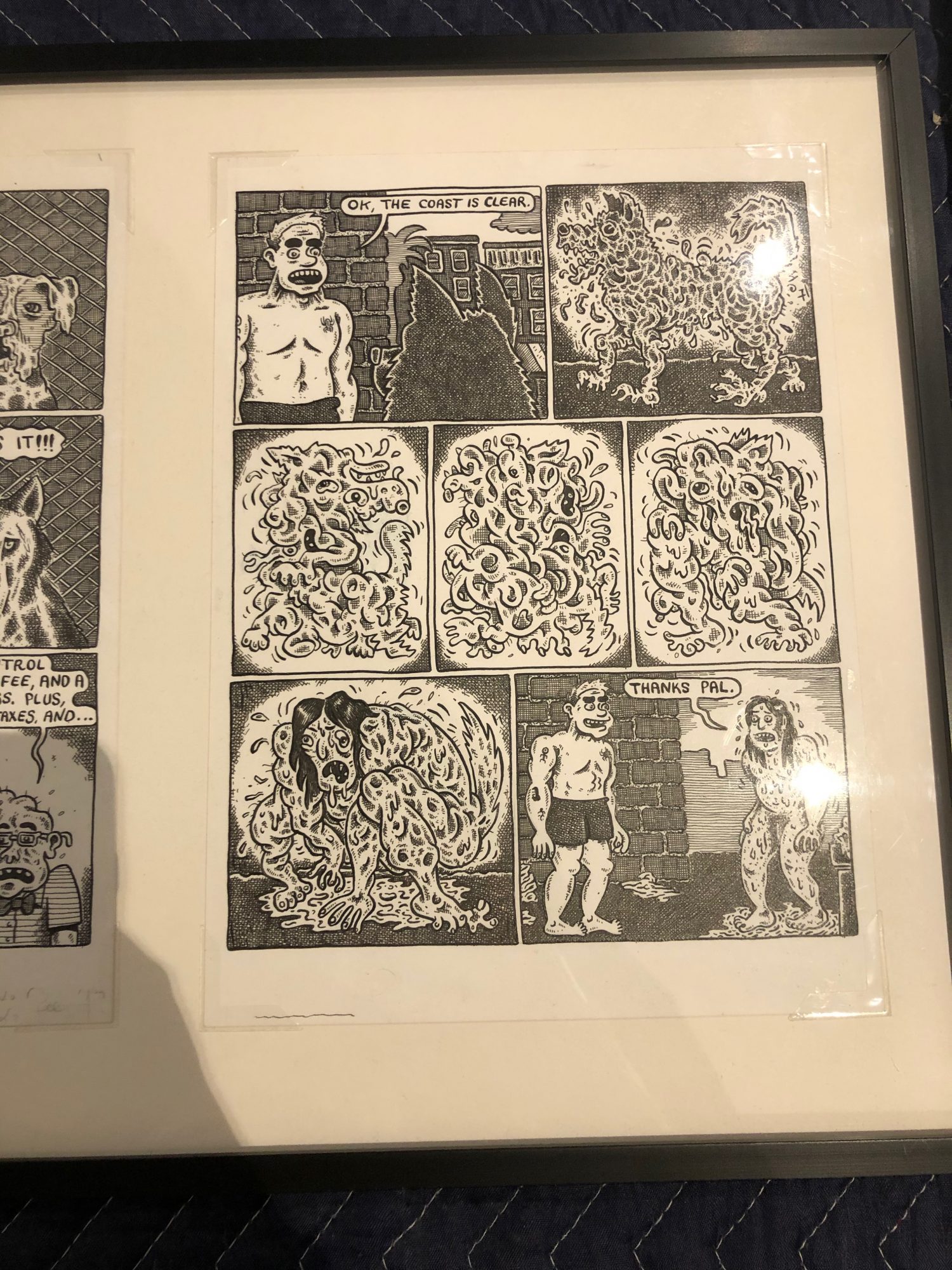
While visiting the Art Museum Collection Study Center, I found one particular artist, Max Clotfelter, who makes semi-surreal comics that tend to be on the “weird” side. One particular example that was available to me was called, “Hybrid Moment,” a comic in which someone goes to the Animal Shelter to find a “lost dog” who ends up being a human being (potentially a werewolf of some kind). Through reading about the artist’s biography, I felt as though some of these traits were really obvious in his work, for instance, his biography states that he is an outsider and that he couldn’t show anyone his work besides the owners of a comic book store he frequented, them telling him “the weirder the better.” This sentiment is quite obvious in his style of art, for instance, one of the final panels of this three page comic in which the

WSU’s Art Museum Collection Study Center. Max Clotfelter’s “Hybrid Moment.”

dog is transformed back into a woman. The artist quite obviously took the “weirdness” idea to heart in this particular sequence, changing the dog into a liquefied, writhing mass before it took the shape of a woman, sweating from, presumably, the pain. This comic really does feel like something that one would not be too eager to show others, due to its strangeness. It also follows his idea of childhood bewilderment, depicting a scenario that feels like it comes directly from a novel for adolescents, however, with a more adult twist.

Posted in Fall 2019 Archive (201 Blog) | Leave a comment

Individual Voices: Sydney Seay

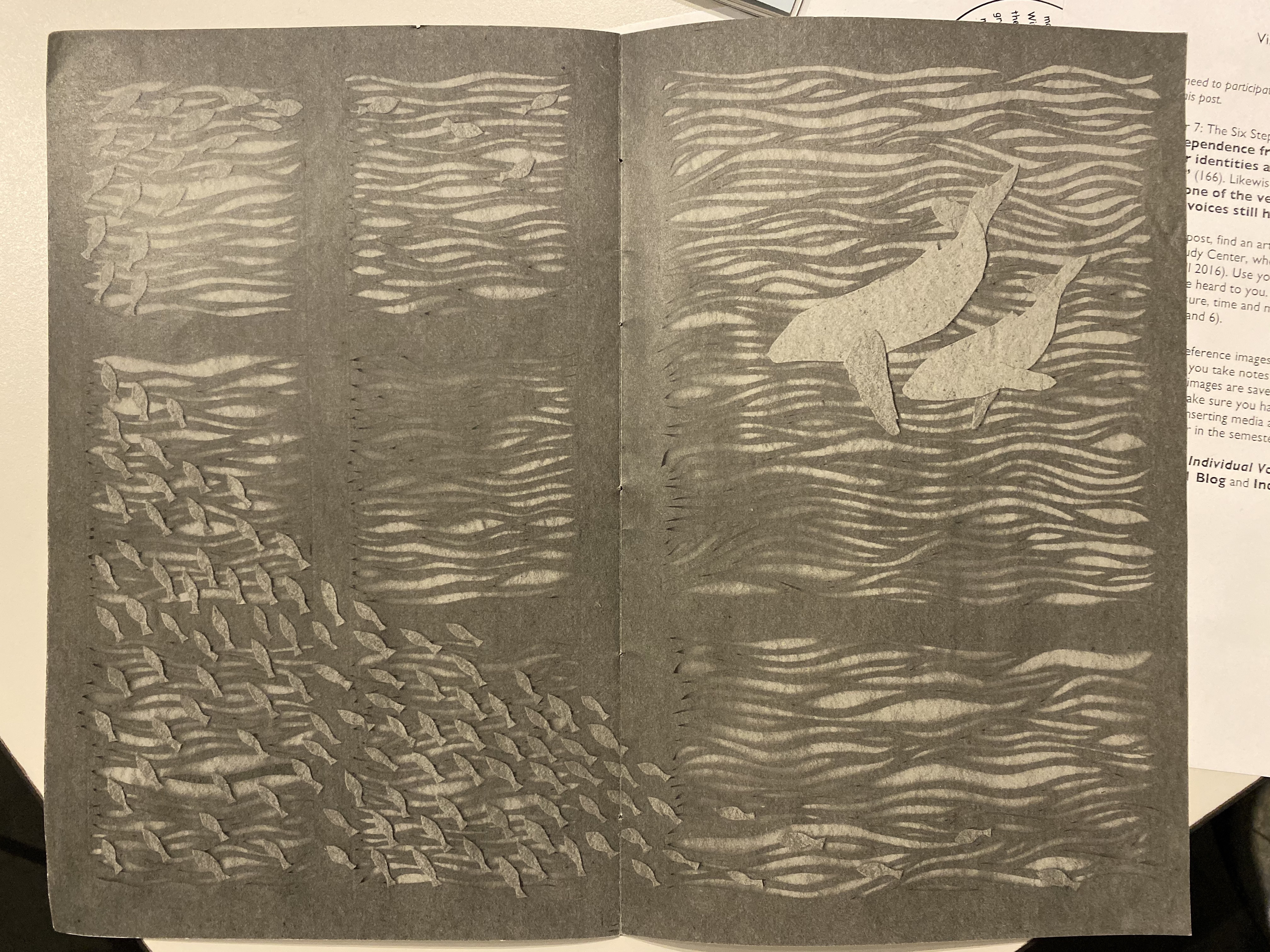
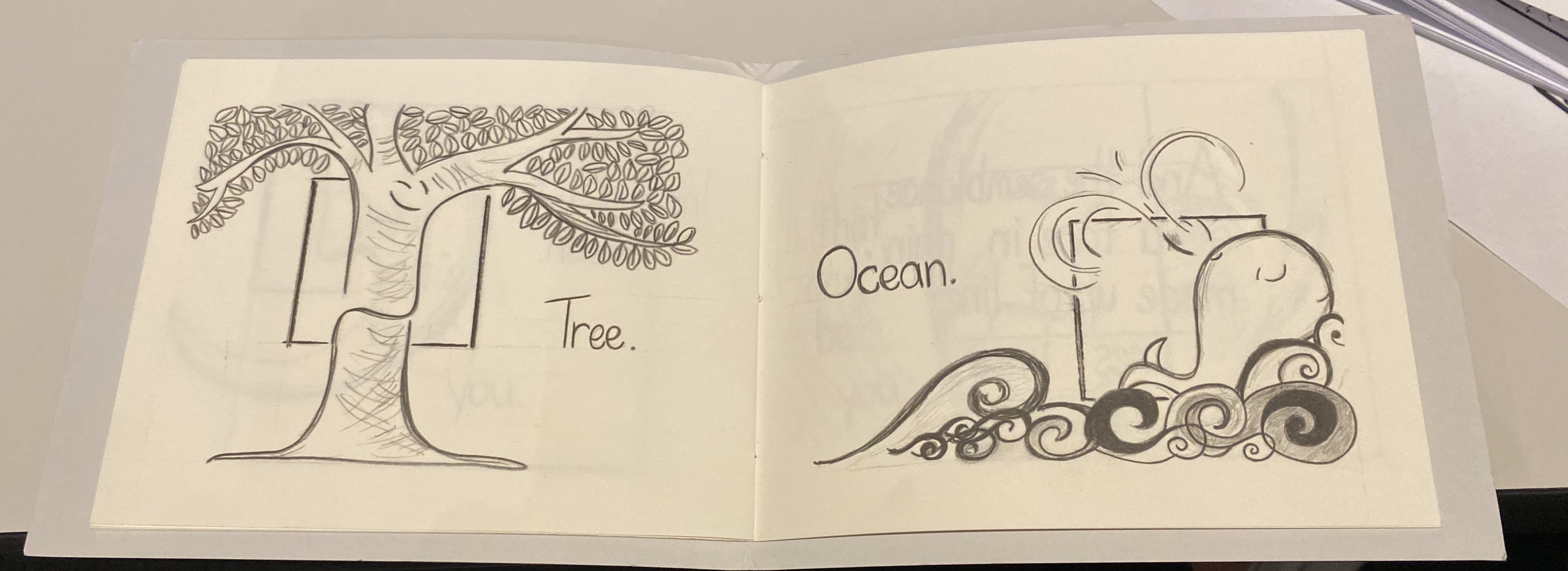
This spread is by Mita Mahato’s zine ‘Sea’ that was accessed in the WSU Fine Arts Museum in Fall of 2019.

I chose two different two-page spreads by Mita Mahato. Her works are each very different across the board, and I connected with two pieces before even knowing they were both her work. I. found it very fascinating that one artist was creating pieces that were so different and unique, while still being so effective in evoking responses in the reader. I love this piece because it brings in more modes than just a page and ink on it. The paper is hand cut into intricate details to create the feeling of the ocean. I was able to interact with a copy, so the physical cuts of the paper were not able to be felt, however the reader still can feel the cuts through their own experiences. Using the two colors of paper allows for contrast that shows the depth and waves of the ocean and puts the animals in focus. This spread uses mostly lines, but not hand-drawn lines, instead cut lines.


This spread is from a zine by Mita Mahato that was accessed in the WSU Fine Arts Museum in Fall of 2019.

I loved this spread because it was very simple, but very intricate. The page is not filled to the edges with the shapes, and the lines are incorporated as the main storyline but in the background. These images is not confined to the lines of the box, but are on top of the box. The images appear to have been drawn in pencil and shaded, but the copy does not highlight that feature as much. The simplicity of the linework within the image shows simple creativity, which is something I was really drawn to within the work.

Posted in Fall 2019 Archive (201 Blog) | Leave a comment

Individual Voices: Dahlia Xie

For this blog post, we got to visit the WSU Art Museum Collection Study Center in the Fine Arts Building. I had never gone inside the Fine Arts Building before and visiting the Art Museum Collection Study Center was a really enjoyable experience. I liked looking at all the different zines that were set on the tables, it was cool to see the contrast between art styles and seriousness of each zine.

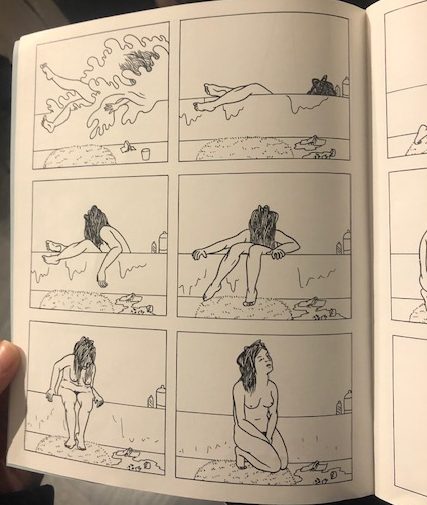
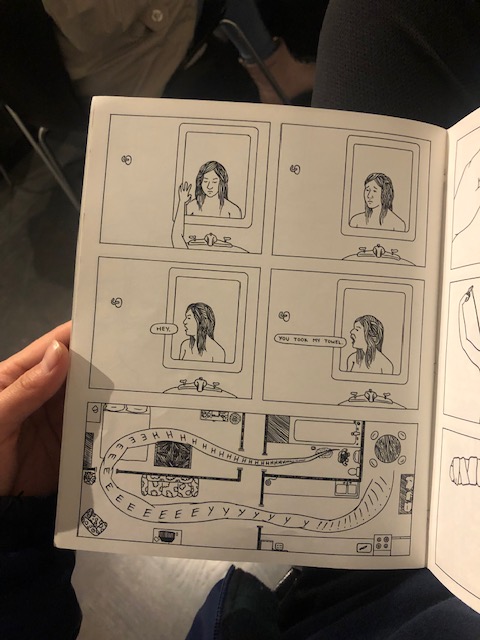
I chose these pages from Sorry Sheets by Eroyn Franklin. This zine caught my attention because of its simple art style and minimal use of words. The relationship between the frames and time gives the zine a slow feeling, each frame is sequential and the character moves slightly. In the pages I included, Franklin showed a really strong feeling of helplessness. Since Franklin uses little text in this zine, the text that is used has a greater significance. In the second picture, the character says: “Hey.”, “You took my towel.”, followed by a long “heeeeeyyy!”. There isn’t any other character or any response, and it makes the character seem alone and invisible. The last frame on this page makes it seem like no matter how far her voice reaches, no one will hear her.


Posted in Fall 2019 Archive (201 Blog) | Leave a comment

Individual Voices: Isaiah Wilkerson

For this blog prompt, we visited the art museum and looked at many different examples of comics portraying their individual point of views and their different unique strategies of having their voices be heard. I found the art museum to be similar to the MASC but more delicate and organized. I believe my art musem experience was different from my MASC experience because I had more time to observe the artists comics and I believe the examples given were more personal and ground breaking than the historic/popular comics in the MASC.

contentcom.microsoft.office.outlook.fileprovideroutlookfiledatadatacom.microsoft.office.outlookcachefile-downloadfile--1068454411IMG_0082

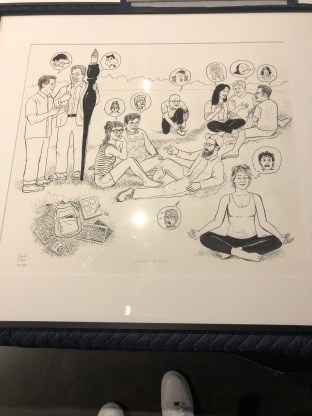
WSU’s Art Museum Collection Study Center of David Lasky’s “Cartoonists Sur. L’Herbe, picture by: Isaiah Wilkerson, 10/21/19

With that being said, I really could relate to David Lasky’s “Cartoonists Sur. L’Herbe”. The concept of this art is showing many different cartoonists versions of characters who are depicted as flawed or imperfect to relate to their audiences to let them know that they’re not alone, stating that, “I was taking in as much as I could and I just got a sense of people expressing their own dysfunctions for the reader, saying, ‘You’re not alone’” (qtd in WSU’s Art Museum Collection Study Center Northwest Alternative Comics exhibition 2016).I liked this concept because I really like visual art, or any type of art, that has a message beind the art that speaks to the viewer/listener. The art shows many different cartoonists doing different activities at the same time. Each cartoonist has a speech bubble by them that have a their most famous fictional character insider each bubble that makes this art so special. This is an example of interdependent because without the speech bubbles, you most likely couldn’t depict the significance of the cartoonist, same vise versa with their art. I could relate to this as an artist because I did something very similar to this in my 2D art & design class.

Posted in Fall 2019 Archive (201 Blog) | Leave a comment

Individual Voices: Zach Morgan

One comic from David Lasky’s “Manifesto Items #4”

In class, we got to see exhibits from the Northwest Alternative Comics exhibition. One of the comics that stood out to me was one by David Lasky, called “If You Were a Superhero…” in the larger book titled Manifesto Items #4. In this alternative comic, Lasky asks his viewer to consider what they would be like if they were a superhero. One of the reasons why this work stood out to me is that I think many people have wondered what it would be like to be a superhero. I think that Lasky is intentionally using these specific questions like “What would you call yourself?” and “Would you reveal your secret identity to me?” paired with images in additive combinations to make the reader critically think about kind of superhero they would wish to be. . Interestingly though, this is one comic where almost no closure is required from the reader. This is because there is no consistent characters or story lines from the images. Instead, what replaces closure in the reader’s mind is the answers that they have from each question. With each subsequent panel, the question posed to the reader becomes more and more serious. In the final panel, Lasky asks his reader, “Would you use your powers to make a better world?” This is done intentionally to get the reader thinking about the most basic level of being a superhero, to a much more serious level. Given that this is a part of an alternative comics collection, Lasky is using his voice to suggest that superheroes have more substance to them than what they wear and what their name is. If this is what Lasky is choosing to make his readers feel, then I think this work is mostly a defense of the comics medium. I believe that this is meant to show people that all comics can focus on difficult subject matter, just as much as light-hearted humor.

Posted in Fall 2019 Archive (201 Blog), Uncategorized | Leave a comment

Individual Voices: Nicholas Kawaguchi

A picture taken in WSU’s Art Museum Collection Study Center of David Lasky’s “Cartoonist Sur L’Herbe”

Visiting the art museum and getting the chance to view the exhibit was certainly interesting as it was comprised of, not only comics that were similar to those in the MASC, but also getting to see certain sections of pieces that stood as accurate statements for the artist. Many of those pieces were very intriguing, especially after reading the description, but one in particular was David Lasky and his piece entitled “Cartoonist Sur L’Herbe.” What really stood out to me by simply observing the picture is that the subjects each have their comic character close to them. Lasky tries to bring out the fact that many comic artists were “expressing their own dysfunctions for the reader … [stating,] ‘you’re not alone’” (qtd in WSU’s Art Museum Collection Study Center Northwest Alternative Comics exhibition 2016). I like that fact that artists were creating characters that represented the complexity and flawed personality of humans rather than a perfect, flawless figure; everyone has their flaws. Depicting this type of concept through a comic of his own fellow artists enunciates his own belief that his work does and intends to do the same.   

Having drawn all the subject with a more realistic approach, they all resemble their real life counterparts rather than being blank slates. However within each bubble they have above them is, what seems to be, one of their characters from an iconic piece they have created is associated with them, seemingly to show that that character is the one that stands as their comical representation. By incorporating each of these artists with their character within a single frame, Lasky captures a moment in time where several events are occurring, with each subject possibly discussing their own created character. Also, by his image more picture-specific, leaves some ambiguity to the image as far as the specific relations for each subject and the characters in the bubble. The only words present on the image or those in the bottom left corner where a pile of comics lie which could possibly hint towards the characters’ talks over comics.

Posted in Fall 2019 Archive (201 Blog) | Leave a comment

Individual Voices: Phuc Tran

73072378_979731982364335_3716488020736606208_n

Henry and Glenn’s Hybric moment by Max Clotfelter- Grace Kannberg

I believe that comics is a very innovative and creative type of art form. Beside the literal meaning of comics always amuse the readers. it sometimes can be interpreted for a deeper meaning that the artist try to convey and speak through their pieces. The comic appeared in WSU Art Museum Collection Study Center that caught attention is ” Henry and  Glenn’s Hybric Moment” by Max Clotfelter and Grace Kannberg

For the Layout of framing, the part where the main character searching for the right dog by each frame is one dog is very good use of closure of object to object. It guide our eyes as we are the character. He stops at the right dog with the text bubble: ” That’s it” is also a good example of interdependent word/picture combo. This is because only with the image and the text that we knew the dog that he looking for is the dog in the picture and it makes sense that there are no more dog after this frame. In addition, I also think the very last frames where the dog transform little by little and he became human eventually are interesting, this is a closure kind of moment by moment when they demonstrate the transformation as it became very alive.

I believe the artist has something of his voice that he kept very carefully in this comic. For me, what is he trying to say is in the world, there are some people that are very special. And sometimes, they have to become something they are not to blend in the society. In the comic, only the friend can recognize which dog is his friend, this can also mean that only the people in the minority group can tell right away if others are the special ones as all of them live in the same world and resonate with each other.


Posted in Fall 2019 Archive (201 Blog), Uncategorized | Leave a comment

Individual Voices: Grace Kannberg

When visiting the WSU Art Museum Study Collection, I found that I was inspired by many of the artists. One artist In particular stuck out to me the most because of their drawing style and the story that they were trying to get across to the viewer. Max Clotfelter’s work with Henry and Glenn’s Hybrid Moment follows the story of a man going to an Animal Shelter.
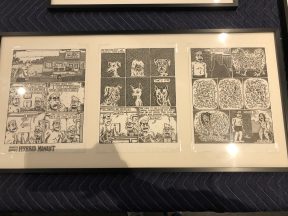
Henry & Glenn’s Hybrid Moment By: Max Clotfelter- Grace Kannberg October, 23 2019

He is looking for a lost dog, but not just any dog, a wolf. The man helping him is first taken aback by this but goes in to show him the dogs that they had to see if he can find the one, he is looking for. The man spots the wolf, but when he does, he is hit with a flat fee of $579.63 for all the charges it took to take the wolf in. The man is mad when he goes to pay the bill and then take the wolf out of the Animal Center. When no is looking, the wolf turns into a man.

Where the voice of the artist comes out is where I am drawn to his work. At first glance, this just seems like a silly story. But when you look at it, the moral of the story comes from the charging fee and the wolf turning into a man. The voice of the artist tells us that the fee represents two things. One is the attack on individuals who go looking for things that are theirs and how we live in a money-hungry society. This is combated by the wolf turning into a man because it goes to show how someone would spend money to help out a friend when they are in a weird situation. Overall, I feel that the artist’s voice reflects society and is used to point out what is wrong with it.

Henry & Glenn’s Hybrid Moment By: Max Clotfelter- This example is used to show line-Grace Kannberg October, 23 2019

I also feel that Clotfelter’s uses concepts we have read from Scott McCleod’s Understanding Comics for the viewer to better understand his individual voice. He does this by using lines, speech bubbles, and closure. The use of visual lines is shown in panel three to represent the sweat bead coming off of the man’s face. It shows how the man is nervous as it drifts between the invisible world of a symbol.
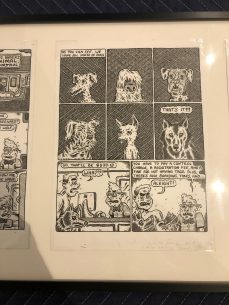
Henry & Glenn’s Hybrid Moment By: Max Clotfelter- This example is used to show speech bubbles-Grace Kannberg October, 23 2019

Clotfelter uses his speech bubbles as a way to convey how words are spoken, the sound. An example of this comes from the seventh panel where the man is shocked by how much he is needing to pay. The bumpy speech bubble suggests that he is appalled. Lastly, closure is used between transitioning from the pound to behind an alleyway. As views, we putt the missing pieces together that they left the store and found a space where no one would see them.
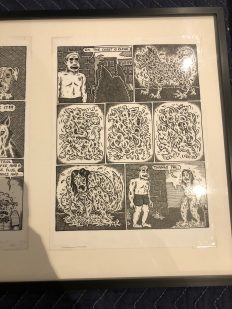
Henry & Glenn’s Hybrid Moment By: Max Clotfelter- This example is used to show closure-Grace Kannberg October, 23 2019

Posted in Uncategorized | Leave a comment

Individual Voices: Libby Fletcher

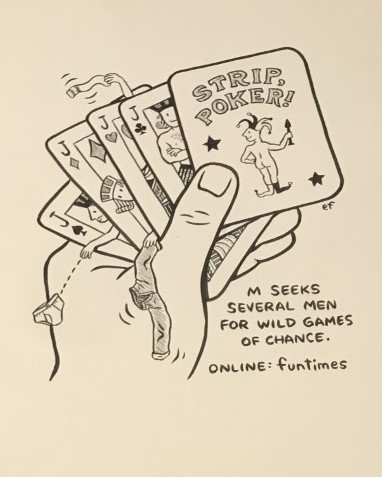
“Strip Poker” by Ellen Forney

I decided to look at the works by Ellen Forney.  I was initially attracted to the simplicity of her work.  The iconography that she uses is very easy to read and the viewer doesn’t have to think too hard about what she’s trying to convey.  I think the use of Sharpie (I believe) as her main medium is probably my favorite part of the comic.  Her voice is displayed through the 2-dimensionality of her work.  The art is flirty and fun and I would argue that it should be taken at face value.  The comic is so visually appealing in the way that the reader doesn’t have to think deeply about what Forney is trying to convey, her artwork speaks for itself.

I was originally intrigued by “Strip Poker.”  After talking so much about comics this semester, I began to look at the cards in the hand as the panels of a comic.  The Jacks in the last two cards are challenging the panel which kind of plays with the idea of closure and time frames.  In my opinion, this would be a really good example of a poster comic like the one we are creating for project two.  Ellen Forney uses line really effectively in this comic to show motion.  The lines around the pants and sock and underwear all clearly display a sense of movement.  However, the way that the lines are portrayed categorizes the movements as different.  The wavy lines surrounding the pants and socks make it seem like they’re wiggling and waving around.  The dotted lines behind the underwear create a much sharper movement.

I believe that this comic has a picture-specific word/picture combination.  The viewer would know what the comic was about without the caption, but without the picture, I think it would be much harder to fully understand what the artist’s comic is about.


Posted in Fall 2019 Archive (201 Blog) | Leave a comment