Individual Voices: Cierra Haken

David Lansky’s “Manifesto Items 4”

During my time at WSU Art Museum Collection Study Center, we got to look at the Northwest Alternative Comics exhibition from fall 2016. This collection consisted of comics at the poster size, as well as in zines. When reading through a variety of zines, I found that I really enjoyed the works of David Lasky. In his comic book “Manifesto Items 4” I looked at this page with 3 simple panels that really made me think and hear the authors voice. The Author of this comic is very straight forward about the three ways you can look at the human race. In his first view (panel 1) it reads, “Human beings, What a strange plague…on planet Earth.” This quote, paired with a drawing of a skinny arm and chest, as an additive combination of words and images, it brings to the views attention that human beings are weak yet plague the earth with our actions.

In the next panel, it continues to state, “Yet lovable.” This is the second view of human beings that the author describes. This quote is said by a person illustrated who is fairly abstracted to make the reader be able to connect with this panel more, based off of Scott McCloud’s abstracted universal cartoon theory. Also, because the reader of this comic is in fact a human, I think that this panel is the easiest to agree with, because we are impartial and want to be lovable.

The last panel states “Less than a spec of dust in the cosmos,” paired with a small dot in the center of an otherwise blank panel. This puts you into perspective of possibly the author saying that it doesn’t matter if you, as a human are a plague to the earth or if you are lovable, compared to the cosmos, it doesn’t really matter. The way in which the author uses only a small dot on the page as an illustration provided a unique sense of closure in this comic. Seeing only a ‘spec of dust” it makes the viewer think that it is zoomed out showing Earth from a distance. This transition between the second and third panel would be aspect to aspect because although they do connect and relate because of the human race, it leaves the imagination to the reader as to what they picture between the panels. This could be as simple as looking at the person on panel 2, then zooming all the way out until you only see a spec of dust, or the reader could imagine what might be going on earth, and what everyone is doing, whether they are being a plague, or are being good and lovable.

I chose this page because although it is very simple, there is a lot packed into it, and makes the reader really think about our world and what we might be affecting, or not affecting, depending on the which of the three views of the human race they see us as.
Posted in Uncategorized | Leave a comment

Individual Voices: Peter Dowell

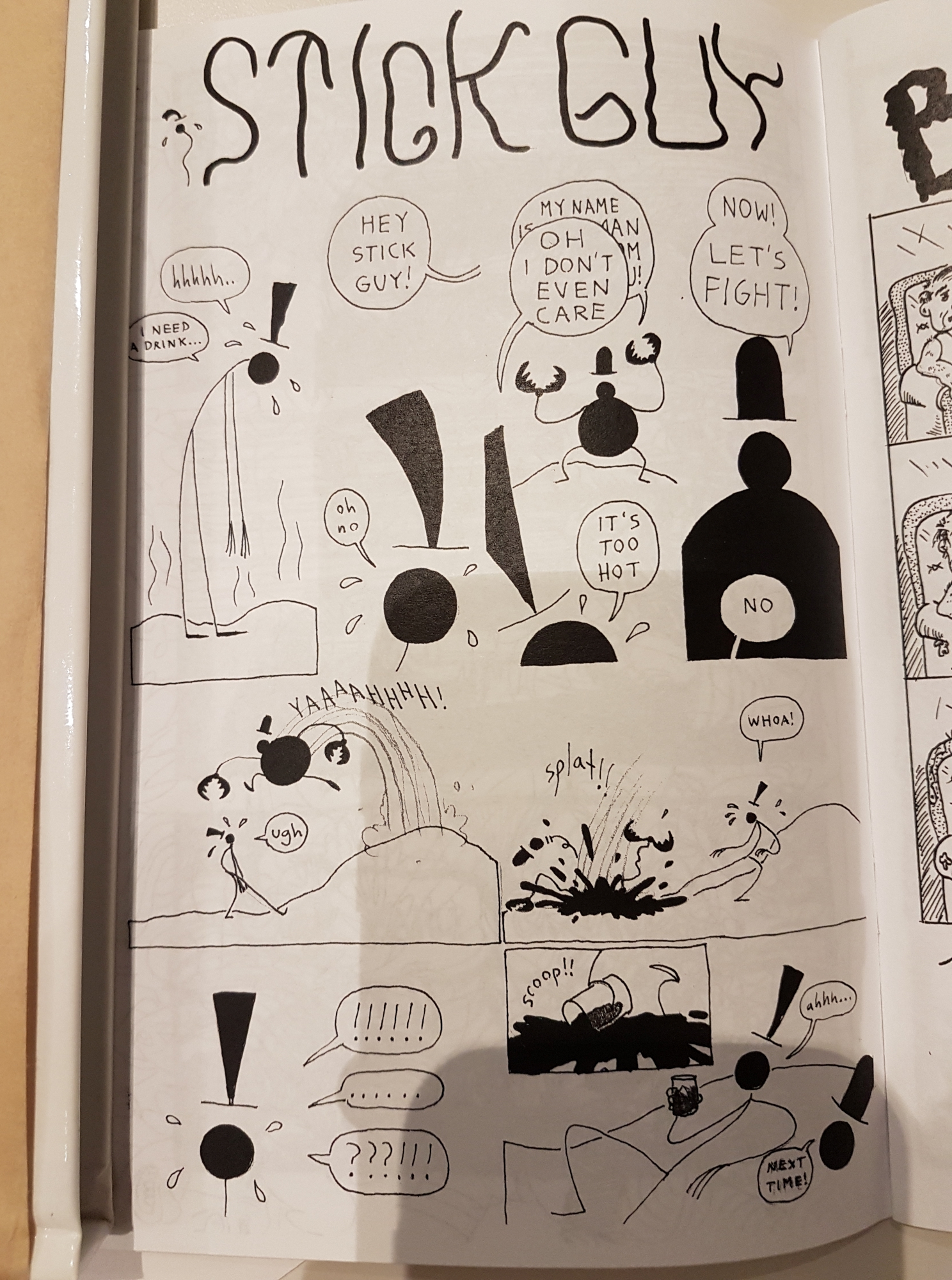
STICK GUY comic

STICK GUY comic from zines

The comic that I decided to do was STICK GUY. I chose this particular comic because it did a lot of interesting things with a simple character. The simple character is only a stick figure with a top hat which is a very simple design, but I liked what the artist did with that simple design to make the comic more unique. First thing that I noticed was that the speech bubbles on the crab villain were being blocked out by the main character saying “oh I don’t even care” when it blocks out the rest of the villains speech bubble where he introduces himself. This simple design choice makes it seem like the main character doesn’t care about this villain who wants to fight so the reader shouldn’t care about him either. Another interesting thing is when the villain turns into goop after missing his jump there is a frame that there are three different speech bubbles. One is “!!!!!!!!” then, “…….” then, “???!!!”. I think that this is an interesting example of time because the author is showing that the character is first realizing what has happened, then thinks about it, then questions his decision as he comes up with the final conclusion. The main character finally gets water and the villain’s head says “next time” which makes me think that there will be more hi-jinx in the future between these two.

Posted in Uncategorized | Leave a comment

Individual Voices: Bobby Brown

During our visit to the WSU Art Museum Collection Study Center, we were exposed to a small handful of different artists from the pacific north-west region. I enjoyed looking all of the work of all of these artist’s, but one artist that stood out to me in particular, was Mita Mahato. I was most drawn to her work because of her choices when it comes to laying out ideas onto a page.

Panels 6-13 of Unidentified Fluid Object by Mita Mahato.

The first example that initially got me interested in her work, was from a story told across 19 different pages, yet only half of the page is used on most of them. Her artistic flare as an artist is rather than drawing these ideas and pictures out onto paper, she chooses to actually cut and paste in this ideas using other smaller pieces of paper. I found this extremely interesting to look at because of how you can see the different layers underneath each panel. This take on creating a comic/story was probably rather challenging for her, not only because of the amount of extra time that had to be spent on cutting, but making sure her “cut-out” materials had smooth edges and that the different materials of the paper work well together with each other.

Page 3 from Sea, a zine created by Mita Mahato.

Moving over to the other table with all the smaller Zines on them, I continued looking for Mahato’s work. I found two Zines that were created by her, and one of them was very interesting to me. Different than the materials on the large table in the center of the museum, the Zine’s were not the original artwork, but reprints of what artists had created. When I was flipping through Mahato’s Zines, the strategy of cutting and pasting objects onto a blank medium still worked very well, even when scanned, reprinted, and flattened. Considering Mahato uses images and illustrations to portray her stories instead of words, I found it fun to read through her Zines because it leaves a small amount of the interpretation up to the reader. Overall I really enjoyed this visit to the old Art Museum Collection, and I found all of the artists to have varying and interesting methods for telling a story.

Posted in Fall 2019 Archive (201 Blog) | Leave a comment

Individual Voices: Matthew Mollet

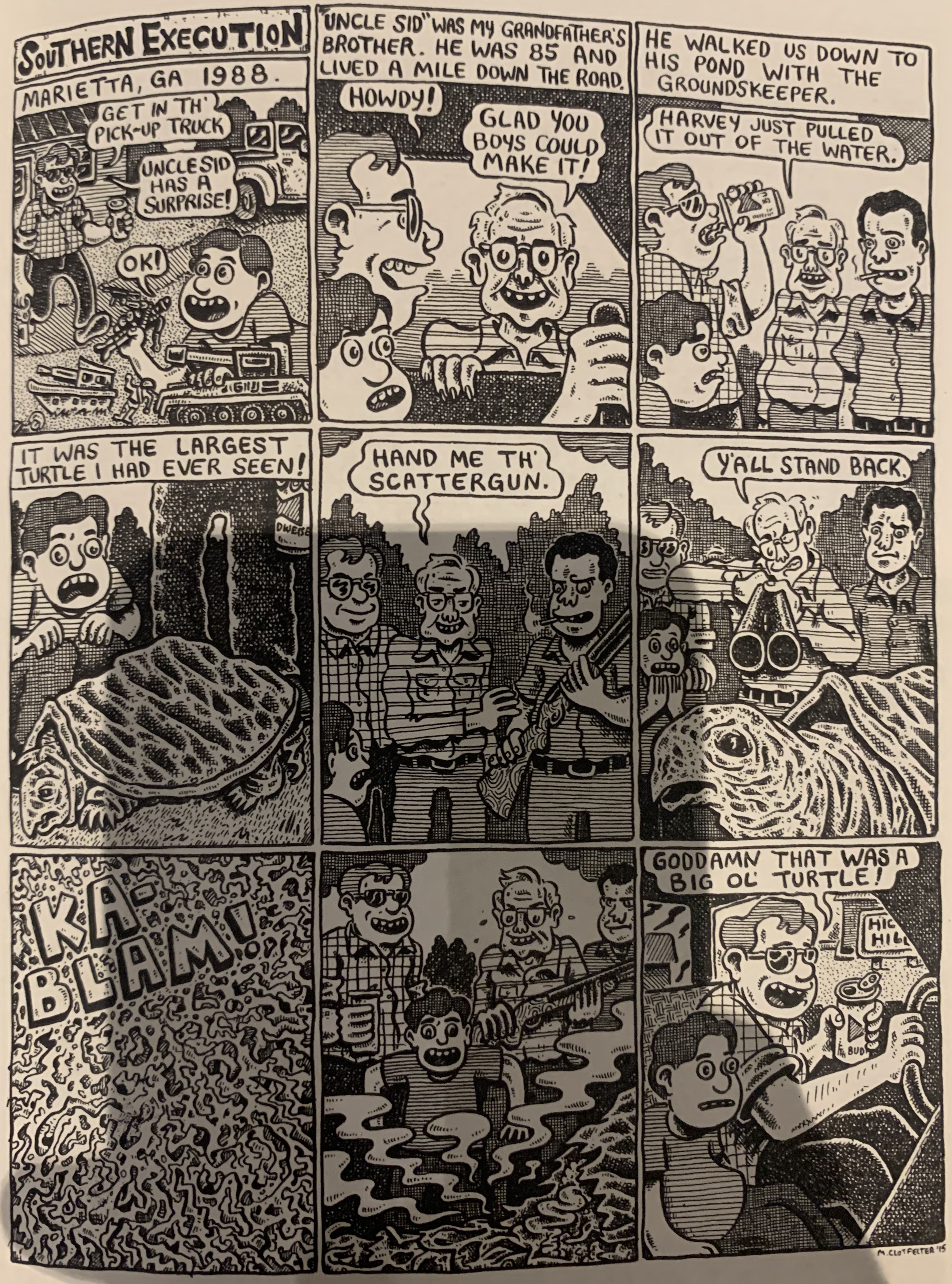
From “Andros Number 7”

I chose this comic because I thought it was funny and I related to the humor. My uncles are hunters and it reminded me of when I would visit them and watch them prepare their kills, something I was not use to as a kid. I also liked the art on this comic and the style of the characters. The word and image combinations are very funny to me: the look on the kids face at the end while the dad praises the size of the turtle especially. Likewise, how the time jumps in the last scene to the father and son in the car after the turtle meets its demise is funny. The depiction of emotions and the design of the characters were my favorite part of this comic and the scene of very funny to me even though it was somewhat dark.

Posted in Uncategorized | Leave a comment

Individual Voices: Jake Bailey

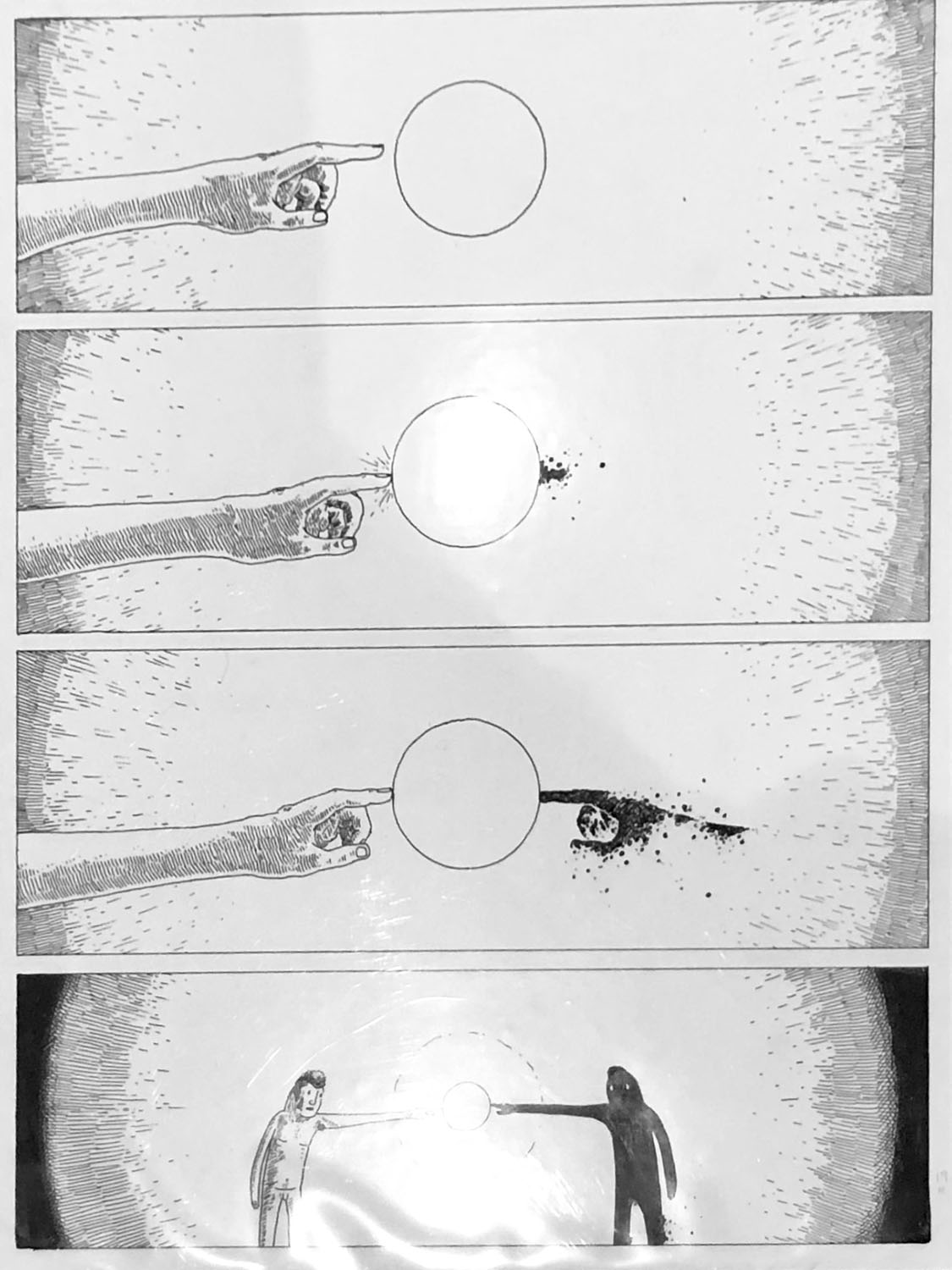
Page from “Abruption” by Taylor Dow

When visiting the WSU art gallery, the comic I am detailing as an example of the comics voice is a page from Taylor Dow’s “Abruption”. In this comic you can see what seems to be a dark shadow copy of the character stealing what seems to be an orb of light. The voice to me is heard through the representation of what these pictures mean. You can see them as a personal struggle of light vs dark, or representation of how dark emotions seem to steal all light but either way when I look at this, to me, I feel what the artist is feeling. If not what the personal artist is feeling you can see the representation of everything and understand what the artist was thinking when they made this. The use of shading and shapes gives the portrayal of the darkness every where and that orb being the only form of light. Also, the 3 frames in the middle give a good sense of time as it physically shows the orb being swallowed and ending up in this shadows stomach and while there are no words on this page you can still understand the emotion of the character in the last panel showing him almost shocked and sad that he is losing his light.

Posted in Uncategorized | Leave a comment

Individual voices: Janet Okeago

Unidentified Feeling Object by Miya Mahato at WSU Art Museum Study Collection-picture taken on 22/10/2019

During my visit to WSU Art Museum Study Collection we were able to see different comics exhibitions put together by different authors displayed on the table. We were able to identify different experiences on how these artist came up with some ideas in comics where the individual voices can still have a chance to be heard. Some of these comics are about the experience of life where by just looking without having words in them to explain what is happening we are able to figure out what the artists were trying to portray through the experiences we face in life, how nature can be important to the world and how the planet get to evolve each and everyday where we get the feeling that we are all identified as the world that we exist and are living and one way or another as time goes by we move every single day and there is a time will be no more and the planet still exists.

One of the comics that capture my heart was the one that shows more of the planet. the artist uses some unique artwork were she uses both cuts from a magazine with that gives the viewer an idea of having the planet and we have some line motion showing it is moving round and we have the feeling that somehow it is rotating to different directions. We can also see the sky is clear and the beauty of the stars makes it more amazing. The artist does not show a lot of wording but he or she does show the sound it produces and with the love picture I could express these feeling of love of human being being able to go and have different experiences on a different planet which could be more of our life experiences. In life we move to different places where we begin to experience different things in life and we fall in love with places we move to. As a viewer that would be my narration to this comic.

Posted in Uncategorized | Leave a comment

Individual Voices: Keanna Maki

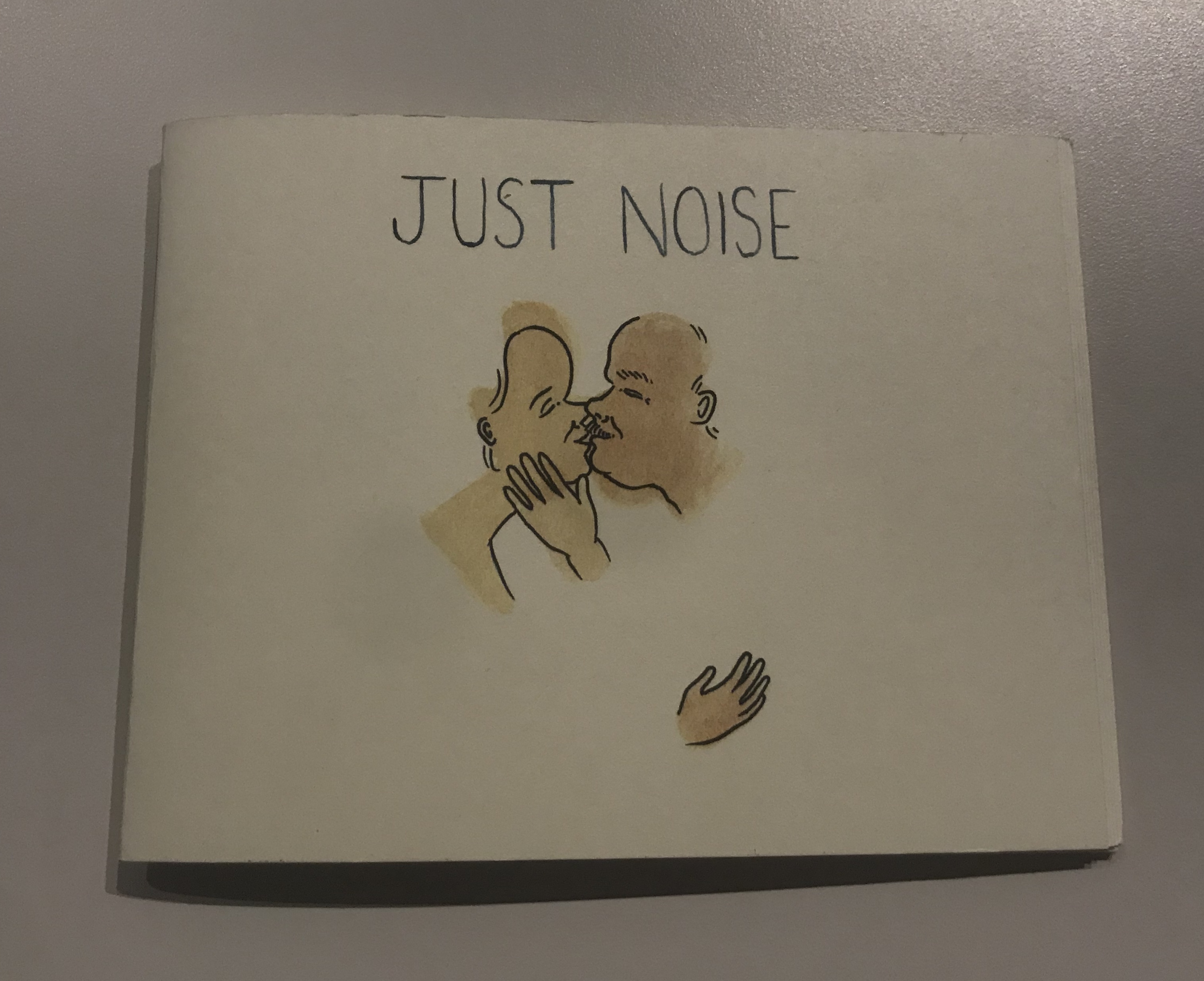
Just Noise by Eroyn Franklin

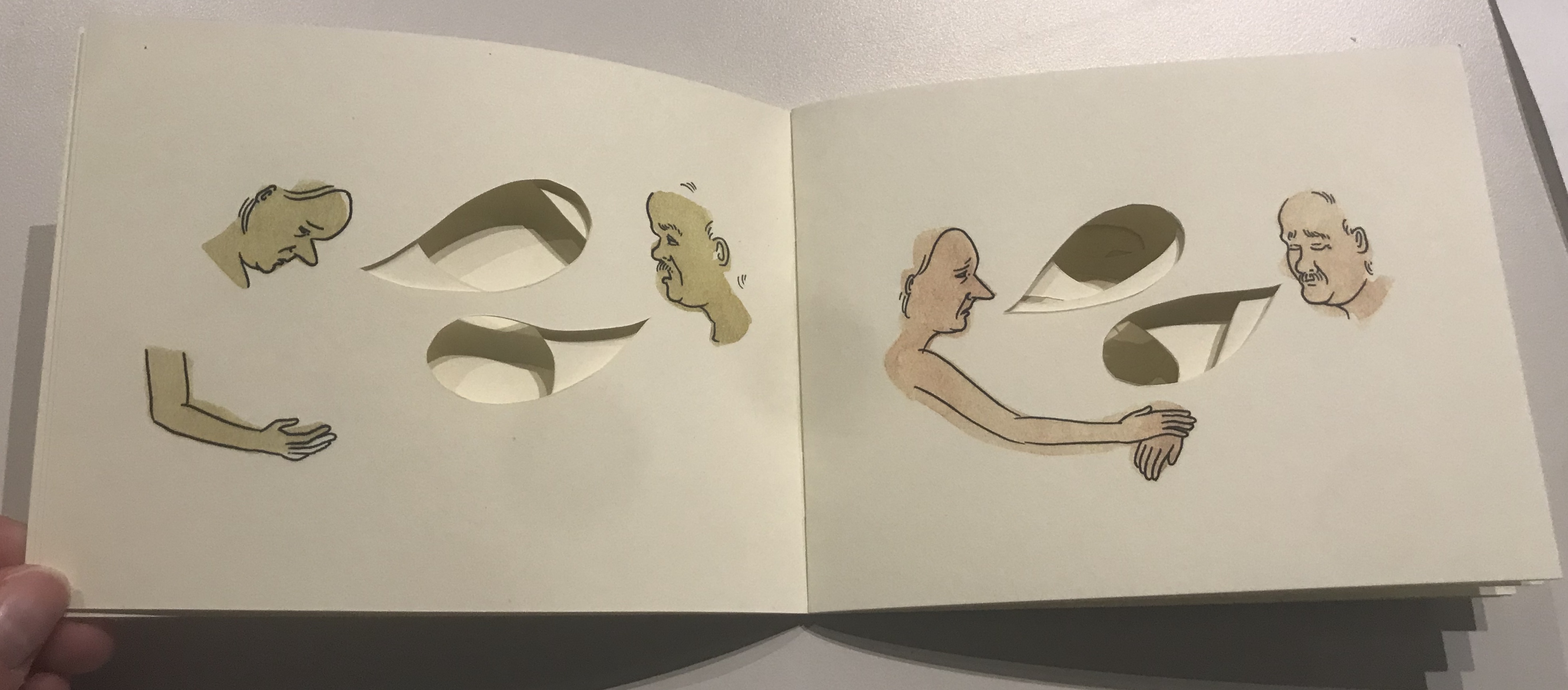
Just Noise by Eroyn Franklin

From visiting the WSU Art Museum Collection Study Center, I found a piece of work that really spoked to me. This piece is by the artist Eroyn Franklin. The description of Eroyn Franklin states that they are a “Seattle-based artist who works across many mediums, pushing at the boundaries of traditional approaches to comic and narrative art.” When I read that she lives in Seattle, all her work that was shown at the exhibit felt more at home because she is here in our Washington. I wasn’t seeing her perspective from unknown places, only familiar places.

Within the piece that spoke to me which is called “Just Noise”, I feel that the artist makes her voice heard to me by the contents she included that made her work stand out. One of the obvious indicators was the speech bubbles that were cut out. It really adds individuality and uniqueness to the piece overall. Also, we see that the huge parts of this comic are the two characters involved. These two characters involved look like a couple who seem to be holding a conversation with each other. If it weren’t for the facial expressions and the empty cut out speech bubbles, you wouldn’t really know that the characters were interacting in any way.

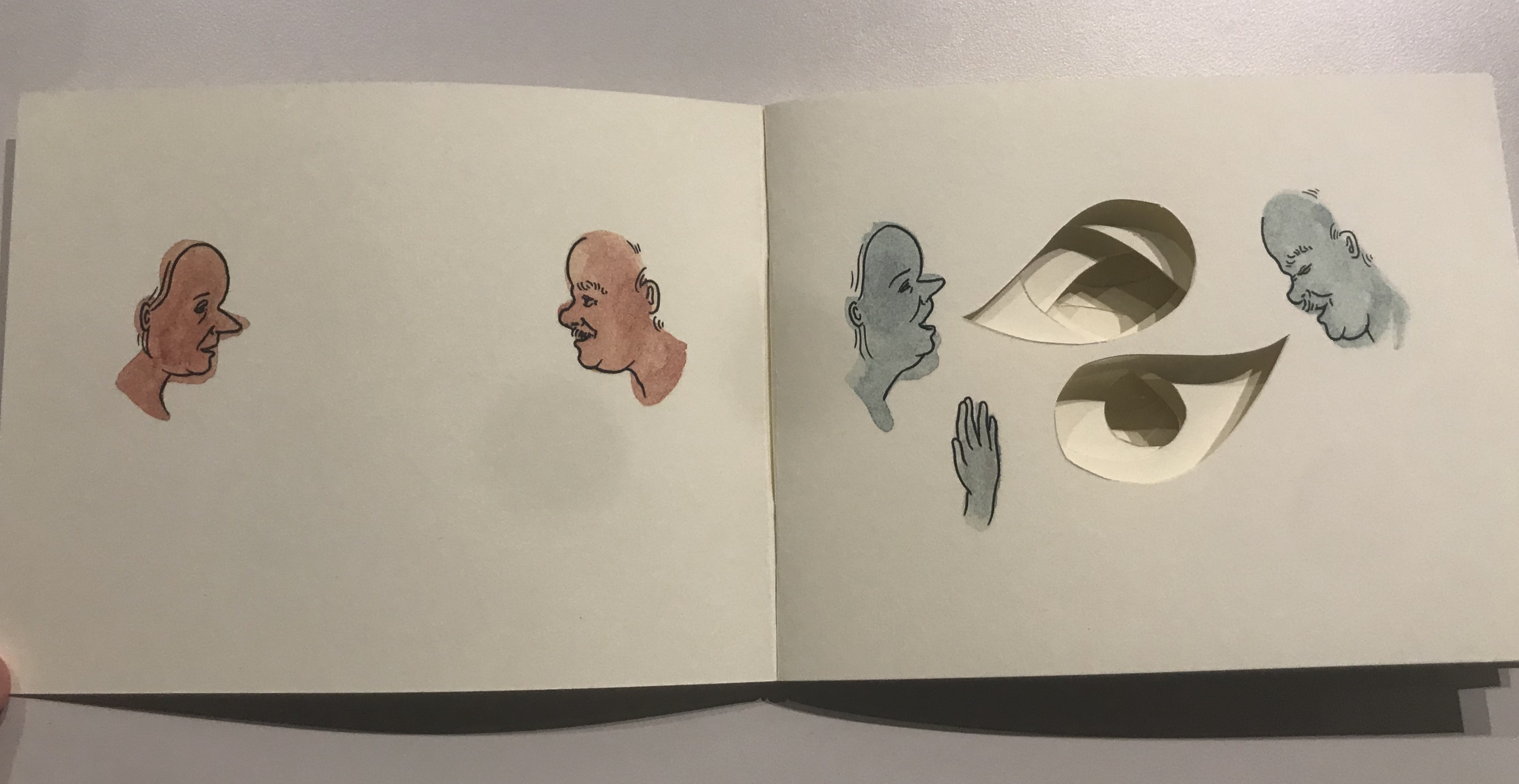
Just Noise by Eroyn Franklin

Other things I noticed that made me hear Franklin’s voice is how she made this art. I feel that she gives off aesthetic visuals within the way she created this graphic. For instance, throughout the comic, we see that the couple starts off talking in a calm and happy mood. Then throughout the comic, we see the transitions of moods from happy to angry to sad. We see all this through the way Franklin added different emotional expressions throughout the characters to show a story through art. The art was consistently in motion as we see a story from beginning to end. In addition, we see Franklin adds even more content with the use of watercolors in the art. We almost see the watercolor matching the emotions the characters are going through. Eroyn Franklin made her individual voice heard without saying anything.

Posted in Uncategorized | Leave a comment

Individual Voices: Ana Maria Alaniz Mendoza


Life_Lines

Life Lines by Mita Mahato, copyright 2012. More of Mita’s work can be found at: https://theseframesarehidingplaces.com Photo was taken by Ana Maria Alaniz Mendoza at WSU Art Museum Collection Study Center

On our visit to the WSU Art Museum Collection Study Center on Tuesday, I read and analyzed a large variety of comics and I took many photos of them. However, this particular comic by Mita Mahato was the one that I kept thinking about after I left the museum and throughout the last couple of days.

For starters, I really appreciate how Scott McCloud stated that “today, comics is one of the very few forms of mass communication in which individual voices still have a chance to be heard” (Ch. 9/Pg.197). When I read Mahato’s comic, Life Lines, I could not help but feel as if a part of me understood Mahato in a way that I simply had not before. A part of her voice was heard by me and anyone else who may have come across Life Lines.

McCloud explains that “some forms of closure are deliberate invitations of storytellers to produce suspense or to challenge audiences” (Ch.3/Pg.63). On the very first page/spread of Life Lines, there is a single vertical line in a box. As a reader, I saw the simplicity of this spread and I immediately grew curious. What did this line represent? What was the significance behind it? The line was challenging me.

On the second spread, the number 4 was revealed. On the third spread, the message suddenly becomes duo-specific and additive. The words on the page and the number 4 combined sends the same message together, however, I could also argue that the words amplify and elaborate on the number 4. Four years ago someone died.

Throughout the next six spreads, the imagery and words lean more towards an additive combination. The drawings help the reader to see how important the role of a line can play and the words explain the internal conflict the narrator of this comic is facing.

In the last two spreads, another deliberate invitation is drawn out for the readers. There are no words; just lines. With the very last line being a horizontal line, closure is produced again because the visuals of the comic came full circle, starting with a vertical like and ending with horizontal.


Posted in Uncategorized | Leave a comment

Individual Voices: Min Kim

What seems to be a dark self image created through the connection of a ball of light. (Taylor Dow, Abruption, 2016, pg 2)

During the visit to the WSU Art Museum Collection Study Center, there were an array of comics by many different artists. Looking around the the diverse works, I stumbled upon Taylor Dow’s short strip called, “Abruption.” It was a short comic and equally as simplistic being only three pages and completely black and white. This art piece resonated with me personally because as the title suggests, I interpreted abruption as one’s reaction to change in life. When we are faced with new experiences or things, a new part of us forms and though we are unsure or confused, we continue to move on as it takes us somewhere and changes who we are whether we like it or not. In the later pages, the dark figure departs and leaves the original figure which leaves the readers with no resolution which is a prime example of closure.

In addition, this comic relies completely on illustrations and contains no words making it more picture-specific. Although there isn’t a distinct message or meaning, it is constructed to be open to the readers to interpret and just as I felt, able to make an individual interpretation of the comic to their own personal feelings and experiences. The detailing in the lines not only portrays the brightness of light throughout the comic but also, it adds detail into the rather simplistic drawings of the figures making for a more interesting composition along with the art style.

Posted in Fall 2019 Archive (201 Blog), Uncategorized | Leave a comment

Individual Voices: Mareenah Galang

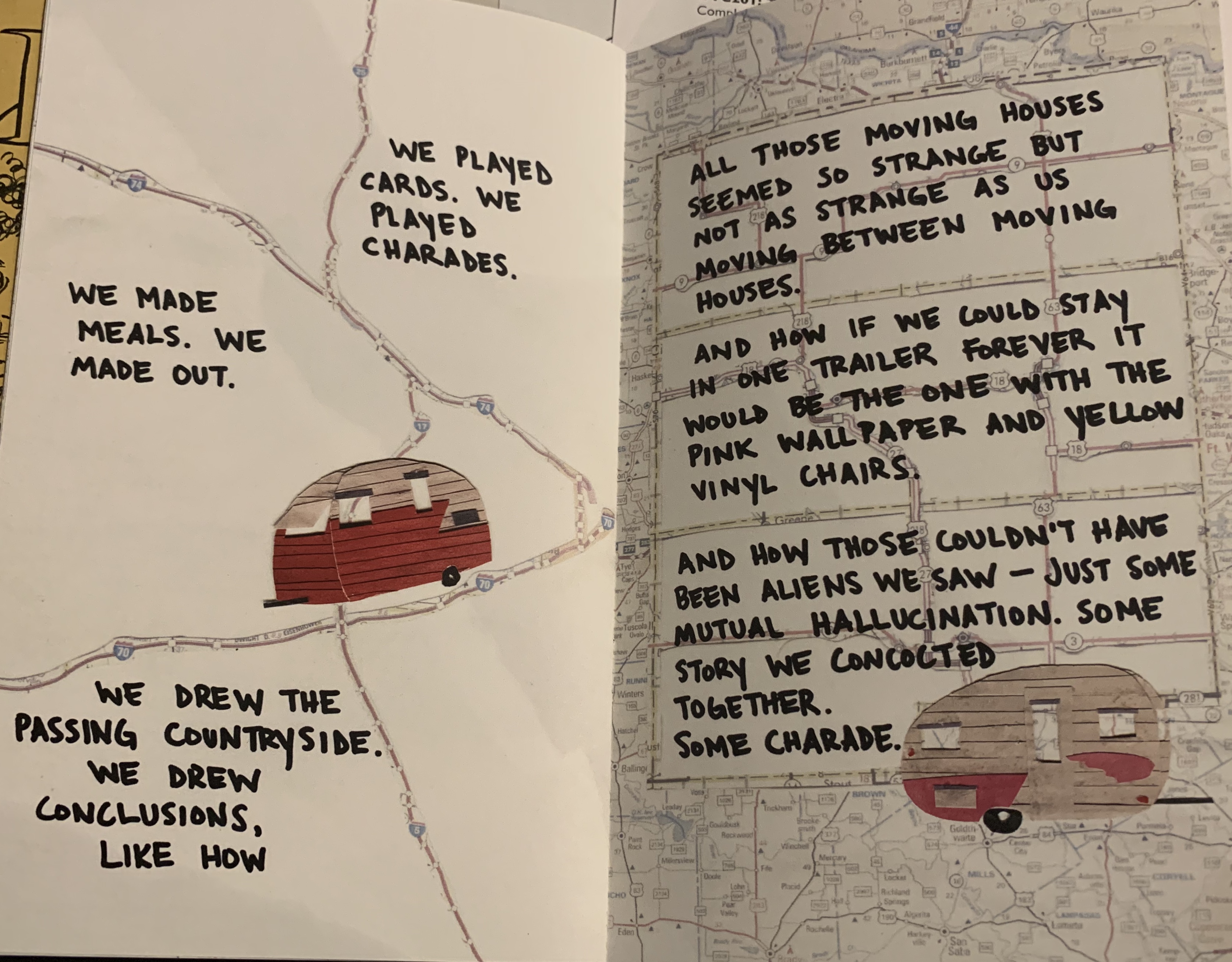
During our class visit to the WSU Art Museum Collection Study Center, we looked at many different comics and art prints from the Northwest Alternative Comics exhibition. There were so many interesting pieces that I analyzed and looked at. One of the booklets in particular really caught my eye. Hitched, by Mita Mahato, tells the story of a road trip. 

Pages from Hitched, a booklet/zine by Mita Mahato

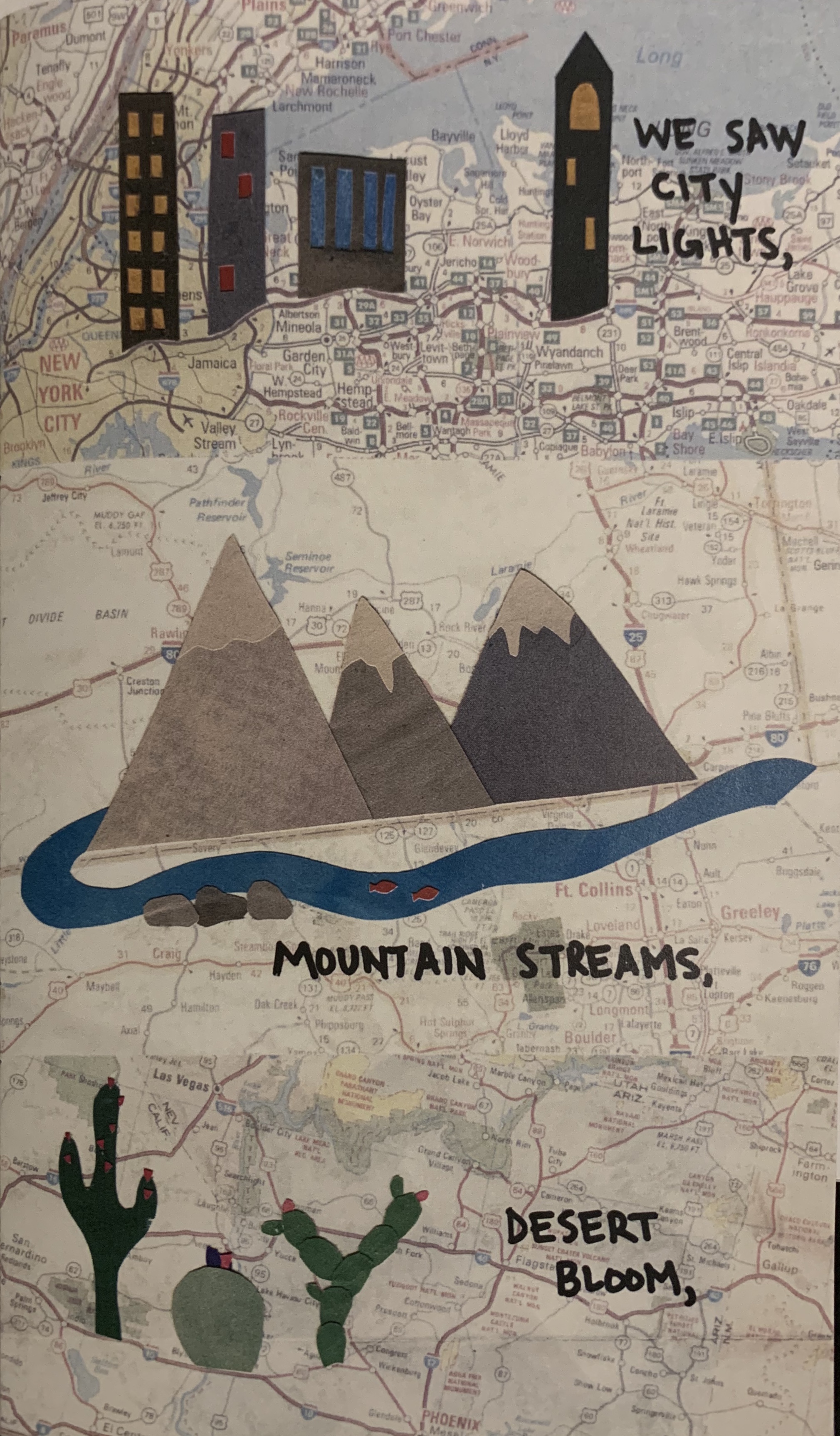
The design in Hitched really spoke to me and drew me in. The whole booklet is comprised of a variety of maps. The book also has a collage-style design to it, with what looks like different paper cutouts placed on top of the maps to create a collage that is similar to the one we did in Project One. The trailer being driven in the story is actually a paper cut out that is placed on map to look like it is heading somewhere. Every page has the trailer traveling along a road, so there is little closure that the reader has to do. 

This page is from Hitched, a booklet/zine Mita Mahato

In Chapter 7 of Understanding Comics, Scott McCloud states, “because of its independence from our evolution-bred instincts, art is the way we assert our identities as individuals and break out of the narrow roles nature cast us in” (166). In my opinion, Mita Mahato’s Hitched really depicts the experience of feeling lost and wandering. Mahato writes about the experiences one has during a road trip, but also how you’re just passing through. The maps are all jumbled up, and the different cut out pieces are thrown about the maps in a chaotic way, which just adds to the feeling/effect of being lost. 

It also reminds me of the road trips I went on growing up. One page in particular talked about the things they saw on their drive, such as city lights, mountains, and desert bloom. I feel like I can picture the author looking out the window of her car, in awe, and taking in the different sights that she passes by.

Posted in Uncategorized | Leave a comment