Blog Post #5 – Helvetica [Emilee Shimazu]

skype-logo

I chose to use the skype logo as an example for the helvetica blog post largely due to the fact that skype, like helvetica, has the intention of being universal. Helvetica is a typeface created with the purpose of being simple, ultimately using the white (and in this case, blue) spaces around the letters to create the logos atmosphere, and being accessible to anyone anywhere in the world. The skype logo is in all lowercase letters, but the lettering is evenly spaced and extremely clean, showing up really well against the blue background that holds the letters in place. Even though skype is a relatively new brand with a logo that has been around for less than a decade, more and more people use it every year around the world and can recognize and identify the iconic blue and white logo, due in part to the great use of helvetica for the lettering of the logo itself to act accessible to anyone, no matter their location. Much like helvetica, skype is a program intended to connect people from different places around the world, and the logo offers a crisp, clear message that helps emphasize the programs intention.

Posted in Fall 2014 Archive (336) | Tagged | Leave a comment

Helvetica – Rashaad Siddick

FedEx logo

Fedex shipping company

The Fedex logo is a great example of showcasing Helvetica text face. The scale is consistent between the “F” and the “E” while the rest of the word is matched to scale with one another. The legibility of the text is also a great attribute as the bold and symmetrical lines make it stand out easy. The “EX” creates a figure ground relationship with the negative space in the background creating an arrow within the letters. The figure ground relationship creates an allusion of this arrow being there. The cross bar of the F and E are equal in height and thickness and so is the cross bar on the d. this creates a even uniform feeling between all the letters. Another attribute that stuck out to me was how the logo’s letters did not have a single space or negative space between them to separate them. This creates a all connecting type face. This helps create a simple yet modern sans-serif typeface. The letters all seem to work upon a vertical axis without any skewing of uniformly forming of the bowls with in the letters. Everything seems to be geometric and proportionally to scale. The x-height on the d seems to be stretched longer to match the x- height of the F and E as they are capitalized. This helps keep the uniform plane that the text then creates when written out. It also appears that only one type of typeface was used and there was no mixing of typefaces.

Posted in Fall 2014 Archive (336) | Tagged , , , , , , , , , | Leave a comment

Helvetica – DJ Marriott

I decided to choose the Target sign because from what I have seen it utilizes the Helvetica font the best. The size (height and width) is as large as the Target icon and I personally think it looks more symmetrical because of that. Also the word “Target” is in all capital letters and I think that is used to keep it symmetrical, but it is also used because it is larger and it catches your attention, much like a normal target would do. Now the size of the text relative to the actual Target icon or the scale of it is much larger than the icon, but the icon is about as large as one singular letter. Like I said about I think this is because they wanted to keep it somewhat symmetrical, but they also didn’t want one element of the design overpowering another. The legibility of the text is about as legible as it gets, in all capital letters it says “Target”, nothing special added. The spacing between letters is also very standard which adds to its overall legibility. The thickness is also very important because it makes the overall sign look much larger opposed to it being tiny and unreadable. The sign is meant to be recognized and I believe that is why they chose Helvetica because it is (like mentioned above) very legible, simple and to the point. I think that Target uses Helvetica the way it is supposed to be use and it is clearly very effective. Target_store-Springfield-2005-10-15 Picture by Jay Reed via wikimedia.org

Posted in Fall 2014 Archive (336) | Tagged , , , , , , , | Leave a comment

Helvetica – Eileen Lim-Hing

postitThis logo is for Post-it brand. The logo uses the Helvetica font which gives the logo a clean look. Since the background of the logo is colored sticky notes, the neautral text gives the logo a simple look. This makes it easier on the eyes for people to look at and immediately see the “Post-it” portion. Even though the text Helvetica was created in 1957 it still shows that the text is efficient because the Post-it brand is a very popular brand for sticky notes and everyone knows it. The width of a letter is very wide which gives a more eye popping look. The legibility of this typeface gives it an easy read and its simple and straight to the point. The scale of the letters are very large, if compared to the word “brand” in the logo. This helps the “Post-it” part seem more accessible to read. The “P” in “Post-it” seems larger in scale than the rest of the letters and it also seems bolded. Using Helvetica makes this logo appear very appealing to the eye because it’s large and clear. The type of classification of the lettering looks like humanist sans serif. Helvetica is very universal and many logos and companies use this text because of the simplicity and clean look it gives.
Posted in Fall 2014 Archive (336) | Tagged | Leave a comment

Stefan Lindeman – Blog 5 – Helvetica

Mad-Men-TV-Series

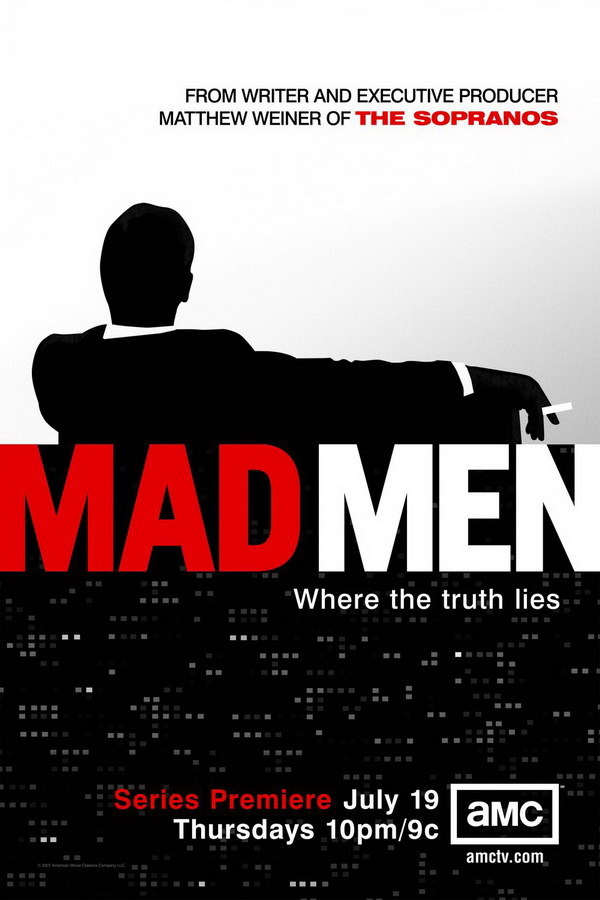
The example of something in my life that uses the Helvetica font is the cover for a TV show that I watch called Mad Men. Looking at this poster, one can immediately see the resemblance of a form of Helvetica font, after researching further I found that the specific type is called Helvetica Neue Heavy. I believe the designer used this font for this cover to provide something that is very clear and legible. As the point of the show isn’t some fantasy wild imaginative thing but rather a realistic calculating story of something that could happen in real life. Therefore, choosing a font that we see every day symbolizes this aspect of the show and it’s resemblance to our everyday lives and the ordinary. The type classification in this poster is Traditional Serif, I was able to figure this out by looking at the capital A in “MAD”. It has no feet on the bottoms, the top part is flat, not pointed and it is skinny not fat. In addition, as seen in the title of the font (Neue Heavy) one can understand that the type of Helvetica in this poster is rather bolded and thicker than normal. There is a combination of large sizes in the main title and something less large and less bold perhaps a traditional Helvetica in the text below that reads “Where the truth lies”.

Posted in Fall 2014 Archive (336) | Tagged | Leave a comment

Blog #5: Helvetica- Stephanie Jones

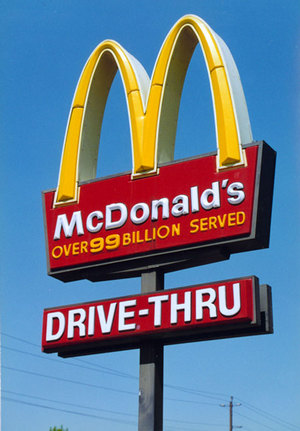
This sign is for the McDonald’s drive-thru. “McDonald’s” and “Drive-Thru” both use the type face Helvetica. Helvetica is the typography that focuses on the white space in between. After the war in 1950, typography designers changed their styles to more modern, which introduced Helvetica in 1957. Designers wanted to do away with details and wanted a more neutral typo-graph. Helvetica is a clean, legible, and universal font. McDonald’s uses Helvetica because it is a universal brand. They want a legible, efficient font so everyone can read it. McDonald’s already stands out with its golden arches so it doesn’t need a destracting font, instead it uses a simple, clean font. Since, everyone knows the golden arches, “McDonald’s” doesn’t have to be big, instead the “Drive-Thru” is on a bigger scale so people can see that it has a convenient drive-thru. McDonald’s is all about being convenient and fast, so this simple font helps promote that.

McDonald's Drive-Thru sign

McDonald’s Drive-Thru sign

Posted in Fall 2014 Archive (336) | Tagged , , | Leave a comment

Joseph Varnadore: Blog Post 5-Helvetica

Media Analysis Techniques. Cover by  Candice Harman

Media Analysis Techniques. Cover by
Candice Harman

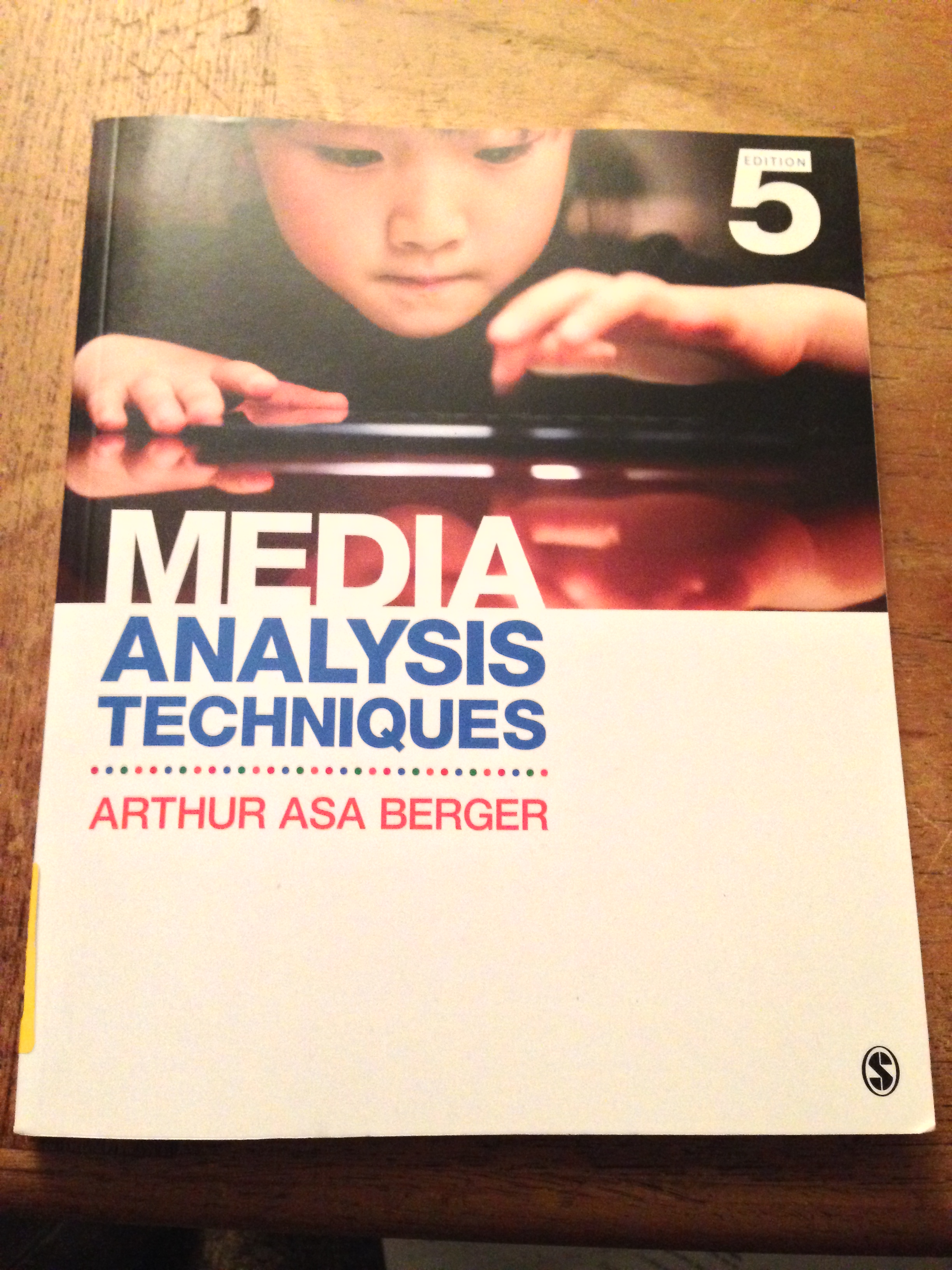
This is the cover of the book for my Media Criticism class. The cover features a title and byline in Helvetica. Helvetica serves as a very good neutral font for various uses, so it honestly isn’t very surprising that it is being used here (in fact, I have two other text books with Helvetica on the cover). Here, I think that the designer was trying to use Helvetica’s natural block style to make an even and balanced element for the cover. They use scale well, as the font size begins to decrease as the title reaches the bottom of the page, scale the importance of the title for the viewer.

The large scaled letters have much bolder lines than the rest of the font  of the page. This serves to create a hierarchy and an impact to the design, telling the viewer what is important to the design and what isn’t. I think that the designer purposefully avoided using other type faces to instead help make a cleaner looking page design. The fact that the font is already stylized at the  top makes me think that throwing in other type faces would just make the cover look to schizophrenic. The fact that Helvetica capitals don’t have very large serifs helps make the page remain clean, and avoids clutter.

Posted in Uncategorized | Leave a comment

Helvetica – Lacey Kido

WAL*MART, ALWAYS LOW PRICES, Always. Link. 20 October 2014. Web.

WAL*MART, ALWAYS LOW PRICES, Always. Link. 20 October 2014. Web.

While this is not the image personally taken (iPhone camera failure created a blurry image and a clear image was needed) it is of the same things I’d noticed thanks to Walmart and my excessive time spent there since my move to Pullman.

Only the middle line in this example uses Helvetica typeface which I find easier to compare in terms of how the font interacts with others in a cohesive manner (I really hope this is actually Helvetica and my eyes are not failing me). In this case the message is deemed more important in terms of visibility than the title, though that does not fail to be seen from a great distance either. Thanks to the film we’ve been watching, I can say that this use of Helvetica with two other fonts allows for a sort of awareness that the message should be clear but is also acting in a way that works all three fonts together without one out-shining the other. This sense of “invisibility” allows the message to be more important than the words themselves. The Helvetica in this example has a lesser scale than the other two fonts which promoted the message more than the font being important and it was the /O/ that confirmed this was in fact Helvetica typeface which has equal distance on all sides of the /O/ – and is a member of the transitional sans serif family, same as the others in this ad piece.

Posted in Uncategorized | Tagged , , | Leave a comment

Helvetica – Jesse Pearson

Apple iPhone 5C screenshot (self-taken)

Apple iPhone 5C screenshot (self-taken)

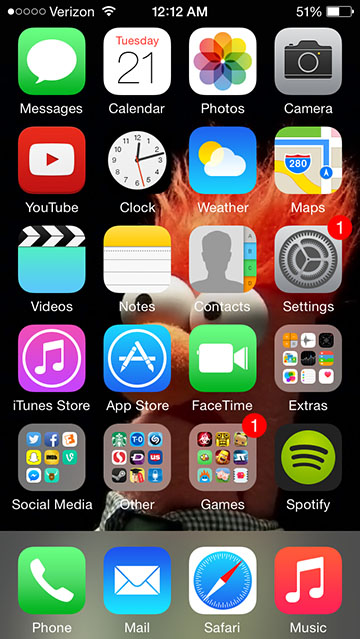
For my use of Helvetica in a design, I chose iOS 8, the operating system run on iPhones and iPads. In using Helvetica, I think the designers at Apple wanted to convey readability and stability. iOS has long been lauded for being a stable operating system, and I think that they chose this typeface to typographically communicate this. The geometric shape of the letters, combined with the balance of the letterforms make the typeface feel like it does not have a lot of motion, and really conveys the stability that comes to mind when customers think of iOS.

The designers of iOS also wanted a typeface that would be highly legible on screens. Sans serif fonts tend to be more legible onscreen than serif typefaces, and the size of the letterforms in iOS 8 enable the text to be read at multiple sizes.

The visual overhaul from iOS 6 to iOS 7 (and 8 by extent) was intended to show that iOS was a modern operating system. Helvetica, especially in its thinner styles is a very modernistic typeface, and the choice to use a thinner form of the font was a very deliberate one.

Helvetica is a transitional sans serif font, which puts it somewhere between a geometric sans serif and a humanist sans serif font. Its letters are very uniform, and it tends to be legible at a smaller size, thanks to the relatively large letterforms.

Posted in Fall 2014 Archive (336) | Tagged | Leave a comment

Helvetica – Ashley Davis

Danger sign at the bear cage. Sam D'Amico. Link

Danger sign at the WSU bear cage. Sam D’Amico. Link

The above sign is used on the fence surrounding the bear cages on campus. Although the body of the sign doesn’t use Helvetica as a font, the bolded danger part does; and that’s a reason why I chose to use it. Because I think the usage of the Helvetica for only the top part of the sign is telling. Helvetica, as mentioned many times in the movie, is a very traditional looking font that’s not only modern, but easy to read. Its legibility is one of the main reasons for people choosing to use it as a font. I think in this case, it was especially chosen because of the need for the sign to be recognized and read. It also makes use of color interaction; with the font being in white on a vibrant red background, it makes it pop even more so that way people are aware of the potential danger in the cage. With the color interaction, you can also see how well Helvetica makes use of a figure ground relationship. There’s just enough of the positive space, with the text slightly bolded, that the word “danger” remains legible from a far distance away and you know that what’s written is extremely important to make note of. It’s also a larger scale than the text below it, which makes it stand out as the most important part of the sign.

Overall the use of Helvetica on the sign is for people to be aware of the danger in the pen, and to make it easy to read from far away. The text over a red foreground also highlights the importance of what’s written.

Posted in Fall 2014 Archive (336) | Tagged , , , , | Leave a comment