Helvetica – Alden Paguada

Canadian Airline logo

Air Canada logo

I have chosen to use the Air Canada logo as an example to illustrate how helvetica font can easily be read, and how can maintain a very modern and contemporary look at the same time. Helvetica birth place is Munchenstein, switzerland. It was created post war world II, to in some sense reconstruct graphic design. Air Canada chose this type of font because it is legible, clean and maintains a sense of order. Air Canada being a world class airline wanted to have neutral feel to appeal not just the local Canadian market but also international market. when we look at the anatomy of the letters, there are no serif present, no descender as well. There is no scale contrast in the letters since they are all upper case, and since there is no difference in type size; the design look more tentative and arbitrary. Air Canada has a modern typeface, it feels more abstract and less organic. I forgot to mention that from the baseline to the x height and cap height are all the same since the letters are all in capital. As far as the family type, I believe this type of letters belongs to the Roman form. They are plain and is the standard version of a type face. Big companies want to achieve global recognition without compromising for what they stand for, and what better way to use a typeface that feels neutral. Besides, Helvetica is the most commonly used font.

Posted in Fall 2014 Archive (336) | Tagged , , , , , , , | Leave a comment

Helvetica-Chidi Odoh

Toyota Automobile Company Official Logo

For my example of the use of the type face Helvetica I chose the Toyota automobile brand logo. Helvetica was a typeface that was created during the World War II times to be more precise in 1957 and the creator Max Miedinger designed a clean cut and legible type face for people to use. The scale of the of the letters is consistent throughout the whole thing and with the use of all capital letter it helps keep the unity between the whole text. From the base line of the letters to the x-height and the cap height are all the same because the letters are capitalized. With the letters being all capitalized it does just what Hlevetica is supposed to be used for, it makes the text legible, clean but also with a modern and efficient design and look to it. When looking at this logo it has a sense of its own atmosphere because the space between the letters is theonly thing that takes up space within this white background. Helvetica is a Universal type face that most logos that we know to day use but the way that Toyota has decided to use it by making it all capital letters makes it even more legible when trying to read it. It catches your eye because the siz would be different from most other logos because it would be larger than most with the use of the capital letters. Helvetica does not use serifs so it helps the type face look a bit more simple but still clean and legible at the same time.

Posted in Fall 2014 Archive (336) | Tagged | Leave a comment

Helvetica – Katie Malberg

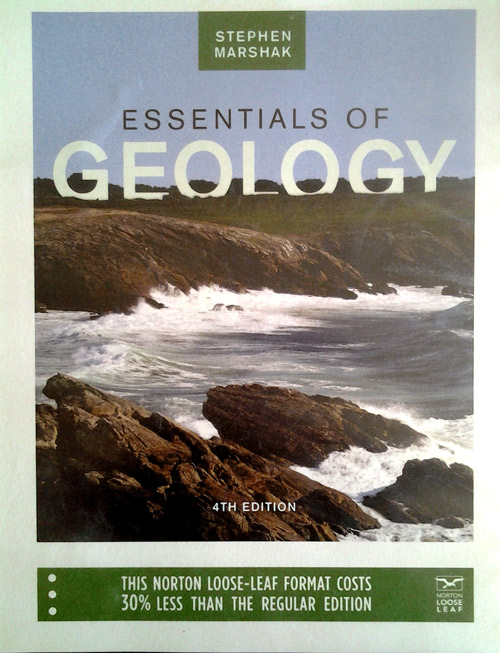
Out of the many examples of the Helvetica typeface to choose from, I chose the cover of my Geology textbook as an example.  The title, Essentials of Geology, rests along the rocks  in capital letters with a high x-height. “Geology” looks as if it is a sign sitting directly on the land, the baseline hiding among the rocks. Observing the history and purpose of Helvetica, I believe the designer of the cover used the typeface in capitals to create a very strong, grounded message that relates to the field of geology, while also creating a sense of accessibility to students.

Geology textbook Essentials of Geology by Stephen Marshak

Geology textbook Essentials of Geology by Stephen Marshak

Helvetica was created during WWII by Max Miedinger in 1957. He wanted to create a fresh typeface that would represent a new era and standard. The type classification is transitional sans serif, meaning it is more sharp and vertical than other typefaces. This creates a modern look, yet it succeeds in acting very neutral. This is why it is seen everywhere. Typographer Erik Spiekermann says that “you have to breathe, so you have to use Helvetica.”

The scale that Helvetica is in seems to be larger than average since all the text is in capital letters. This also helps present the grounded message I believe the designer was trying to achieve. The smaller text at the bottom seems more informative in the capital form as well. The scale of the word “Geology” is larger than the rest overall, looking like an actual landmark on the ground. The type family also adds to its superiority. “Geology” is bolded while “essentials of” is in roman form. It creates a sense of time and space, which are important factors in geology.

Helvetica also suggests accessibility. Media writer Leslie Savan says that “Using Helvetica can seem more accessible, transparent, and accountable.” Since it is a college textbook, these attributes are very important when observing the typeface. By using Helvetica, the textbook seems to be more accessible to everyone, rather than to just a certain group of people, such as geologists.

Posted in Fall 2014 Archive (336) | Tagged , , , , , , , , , | Leave a comment

Blog Post #5 – Helvetica – Tim White

The example of Helvetica that I chose to use is a picture I took of an emergency exit sign located in the Museum of Fine Arts building. I believe the reason behind the designer’s decision of using Helvetica was to bluntly catch the reader’s attention. This is an “EMERGENCY EXIT” sign, which illustrates a caution. The letters need to be big and legible so that anyone can read and understand that this door should not be opened. The documentary mentions that businesses and corporations use the Helvetica typeface so they will look clean, efficient and professional. Although an emergency sign is not literally a corporation, its purpose needs to be prominent in some way to the reader. If any sign’s purpose is to warn people, the text needs to be smooth and not messy. There is no change in typeface as it would be distracting and force the reader to disregard the sign altogether. The text reading “EMERGENCY EXIT ONLY” is a little bigger than the text on the bottom, but it does not overpower the text at the same time. As far as the scale of the typeface, it is pretty consistent throughout. The letters in this typeface seem almost numerical; child-like if you will. The contrast of the red and white bring the reader’s attention to the top of the sign first, which has the important text. Overall, it is a simple illustrated example of the Helvetica typeface. There are no serifs, which makes this example clear cut and bold.

TimWhitePhotography Museum of Fine Art Washington State University Pullman, WA

TimWhitePhotography
Museum of Fine Art
Washington State University
Pullman, WA

Posted in Fall 2014 Archive (336) | Tagged , , , , | Leave a comment

Helvetica-Meli Barajas

In this cover of InTouch magazine, the author used the transitional typeface Helvetica as the main font. One of the main reasons why I believe the author chose this font is because it is a font that has become known for its cleanliness, readability and straightforwardness. In order to catch an individual’s attention, magazines use many different elements of design, including emphasis, color, alignment, etc. In this case, I think that the author chose Helvetica to keep the text from blending in or negativley contrasting with all of the other elements that are on the page. As stated in the documentary by Wim Crouwel, the font is readable and straightforward; therefore, there is no confusion to the reader about what the text means. The author also put the heading to the main (Ellen and Prortia) at a larger scale then the other stories. This again emphasizes the importance of text; but at the same time it makes it more visually appealing because the size of the text fits with the size of the image.

Also stated in the documentary is that the typeface sets the mood/atmosphere. In this case I think that the bold, capital lettered font is like the magazine is screaming the text to the reader. The capital letters emphasize the importance of the information portrayed. Furthermore, in the documentary, Erik Speikerman mentioned that one of the reasons why he is not a big fan of Helvetica is because he feels as though the font has no rhythm or attitude because it has just become a default font to use. Nevertheless, I feel as though the author of this cover used the many colors, not only to grab the attention of the reader, but to also give the words/letters attitude.

The cover also has other families of typefaces that are more modern. The titles as well as some of the subtitles/ smaller text are not Helvetica. The ascender on the “l” in the word Bombshell, is slanted at the top. In addition, the title has a lower case “I” the size of a capital letter making it unique to the magazine.Scan0001

Posted in Fall 2014 Archive (336) | Tagged , , | Leave a comment

Helvetica – Becka Prater

Lufthansa Logo

Lufthansa – A German airline that uses the font Helvetica.

The brand I have chosen to use is the Lufthansa, a German airline. The font Helvetica is already a universally used font because of how simple and sophisticated it looks. It is easily legible and captures modernism. The typeface itself is uniform which is another reason why it is easier to read. Since Lufthansa is an international airline, it’s important for the typeface to be legible and uniform so that people of all over the world and in every airport is able to read and recognize the brand immediately. The lack of ligatures and the uniformity of the ascenders in the font contribute to the recognizability of the font itself. The bowl of the “a” and the spine of the “s” are other examples of how uniform this font is. Lufthansa is a company who’s intent is to transport people all over the world and as such, they need a universal font that will connect everyone together in some way. Helvetica itself seems like a very down-to-earth, serious font and the company expresses that. According to the documentary that we watched in class on Thursday, graphic designers have a social responsibility and as such, choosing Helvetica as their font of choice was a good idea. Helvetica clean, neutral, and democratic and expresses efficiency within the brand of Lufthansa. Since Lufthansa is a globally known airline, this is a favorable thing for this company.

Posted in Fall 2014 Archive (336) | Tagged | Leave a comment

Helvetica – Nathan Taylor

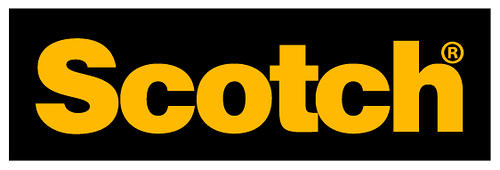
Scotch brand tape logo. http://www.scotchbrand.com/

Scotch brand tape logo.
http://www.scotchbrand.com/

For my example of a common use of Helvetica, I have chosen the Scotch brand logo. This logo is simple, clean, and utilizes many of Helvetica’s strengths very well. The text and logo are not disrupted by any other texts or images. It simply says “Scotch” in yellow on a black background, written in Helvetica. This gives off a very clean feel that Helvetica seems to always have, because Helvetica is classified as a transitional sans serif font.

Although the image I am using is just a picture of the logo, it is very easy to picture where the logo would appear in the real world. Most commonly, the logo is found in small print on the side of rolls Scotch brand of tape. Because it is usually found in small print, I believe the choice to use a ticker version of Helvetica was a wise one. The font is much thicker and wider than many other uses of Helvetica, making it easier to read when it is smaller.

In this example, the font is not mixed with any other fonts. This would probably never happen due to the fact that it is a logo. The only way it would really be mixed with another font would be if the entire logo itself were to be changed. I believe this would be an unnecessary change, as the current simplicity of the logo really fits the idea of the company. They strive to keep things together, and this good use of Helvetica in their logo shows they can do it.

Posted in Fall 2014 Archive (336) | Tagged , , , , , | Leave a comment

Helvetica- Megan Thompson

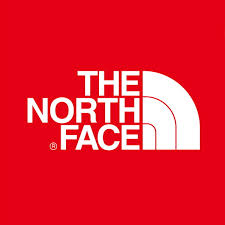
David Alcorn designed this Logo in 1971.

David Alcorn designed this Logo in 1971.

“The North Face” logo is a prime example of the use of Helvetica font. The equal space between the letters allows for a simple but rather catchy look to the clothing brand. I believe the author used this type of type face so that this brand would be recognizable. The Helvetica typeface is the most  modernized script text, which would give this author reason to use it. The North Face brand has recently become more popular, so a more modernized font would seem most appropriate. The Helvetica font in general has a great figure ground relationship and is well shown off in this example. Helvetica is actually the most popular figure ground relationship. The text is used as the negative space within the bright red background that acts as a positive. This is because the text acts as showing through the colored background. This is key for The North Face so that for any color combination that they are to chose it can easily be changed. David Alcorn choose to use a more straight type of of Helvetica instead of the more rounded sub types of font. This would have to do with the different height and width of the font. The skinnier width and equal cap height keeps these letters consistent. Alcorn chose to not use any italic lettering and stick to roman as it is more transparent among our society. In conclusion, Helvetica has many different type families that could have been used. The North Face logo is categorized  in the roman garamond pro reglar type face and creates a simple but very recognizable logo for this popular outdoor brand.

Posted in Fall 2014 Archive (336), Uncategorized | Tagged , , , , , , , , | Leave a comment

Helvetica – Brian Martinez

Cards Against Humanity LLC

Cards Against Humanity LLC

I had not realized that the typeface used for Cards Against Humanity was Helvetica. I think this font is appropriate for hiding the dark comedic nature of the card game. Helvetica is clear and easy to read. This makes delivering the dark humor used in the game simple and effective. They could have picked a more decorative typeface that would convey the card game’s dark humor. But the company may have simply wanted a corporate feel to make the card game appear like an officially licensed product.

The scale of the title remains consistent throughout. This does not include the sub text which is slightly smaller than the title itself. Only the first letter of each word is capitalized in the title. All of the text seem to be aligned to the right side with no indent. The type classification for Helvetica is Transitional Sans Serif. The Type Family used looks to be Bold Helvetica. I do not think they mixed type families in the title as it carries the same weight throughout. The white text on black makes the title of the game immediately recognizable. Also, while there is little punctuation used on the box cover, periods are consistently used on the white cards.

Posted in Fall 2014 Archive (336) | Tagged | Leave a comment

Helvetica – Colin Weickmann

The Microsoft logo exhibits an effective use of Helvetica. Helvetica itself is a tremendously legible typeface, thus making it a commonly used font style in many forms of visual media. As such, Helvetica is recognizable and often used by designers to draw in viewers. Microsoft is one of the leading electronics/technical companies in the world, so it is only fitting that their logo would utilize the iconic font style. In the Microsoft logo, Microsoft is spelt out in bold black block letters using the Helvetica font, however the font seems to be slightly italicized. Helvetica was surely used in this logo because of its legibility and its universal recognition. The font is written in bold lettering so the widths of the letters are very wide, to the point where the letters almost touch each other. This serves to make the letters “pop out” and ultimately makes Microsoft more legible in the logo. Overall, the heights of the letters are scaled in a traditional fashion, which ultimately operates to generate recognition in consumers from all around the world – some who may not necessarily speak the English language but can recognize the Microsoft logo through their traditional design. Generally, the Microsoft logo is quite simple and straight to the point. The design utilizes Helvetica very effectively and in the way it was supposed to be used, thus allowing the company to reach consumers of their product from all around the world.

Designed by Scott Baker Designed by Scott Baker
]\

Posted in Fall 2014 Archive (336) | Tagged | Leave a comment