Point, Line, Plane: Joshua Yi

The jack point of my earphones 

The reading says the point marks the position in space and multiple points make up a line.  It says that a point is a period, the end of a line.  In a case of my earphones, all the focus and the source of the line (the earphone itself), the center is the jack point.  The point is also very geometric.  The point itself is flat, but uniformed.  It is symmetrical and provides a hard surface.

Tiles on a bathroom floor

In a case of a line, it is made up by series of points.  It appears at the edges of planes, tiles in this case.  The tiles are separated by many lines, creating a pattern.  The lines in these tiles are solid, not implied, meaning they are in the positive space.  These lines are very geometric, straight lines.  They are uniformed, hard, and provides as the edge of the plane.  Lines can be curved, creating more organic look but these tiles are designed to be straight.  It is easy in this pattern to see the two points that connect the line together.

My mousepad

My mousepad is made up of lines and points, creating height and width.  The lines make up the edges, but it is a soft plane.  The points are not sharp and hard, but more curved, creating more of an organic shape.  It is a solid, filled, plane.  No negative space is apparent and it is very flat.  The edges are worn out, creating a tattered irregular look to it.
 

Posted in Fall 2017 Archive (336) | Leave a comment

Point, Line, Plane: Steven McCracken

For my three photos I looked around my house for some items that represented the various aspects best. The first photo I chose to take was of a thumbtack stuck in my wall, which I believe represents the idea of a point well. If the entire wall was a plane in this situation then the thumbtack would be a single point on the wall, with only x,y coordinates and nothing else.

IMG_6433.jpg

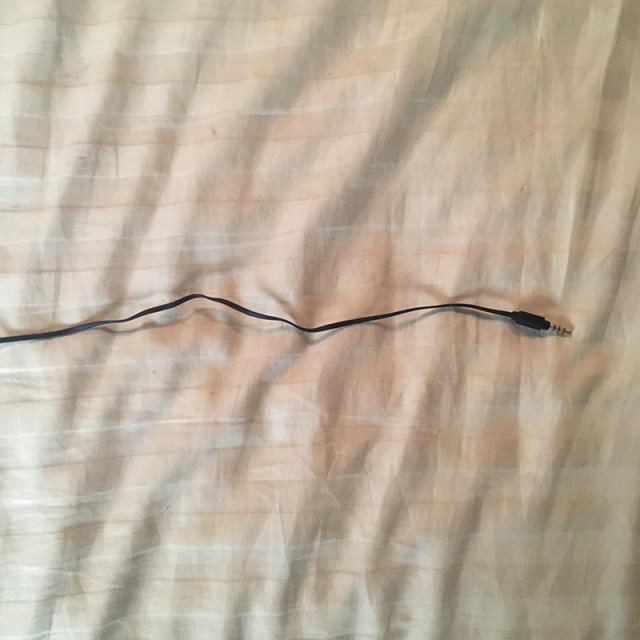
For the next photo I chose my headphones laying on my bed, which I think represents the idea of a line well. Although its not a perfect straight line, and the plug on the end doesn’t really work, the cord itself could definitely be considered a line in my opinion. It goes from one point to another, and has length, but doesn’t have any breadth.

IMG_6435

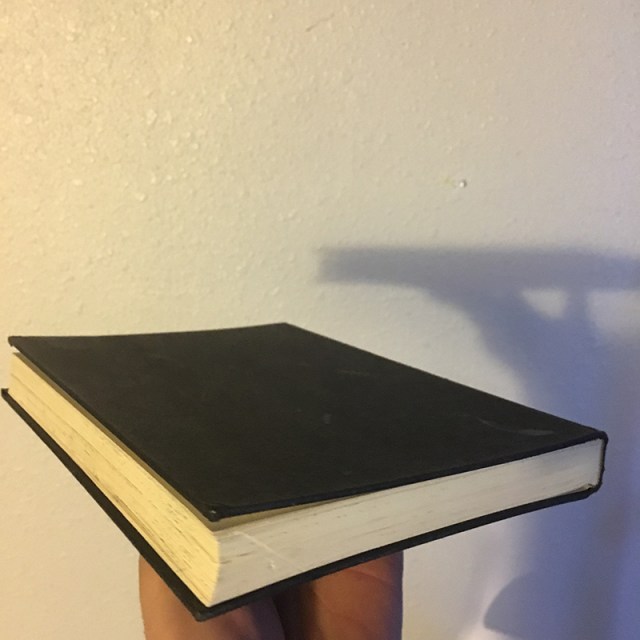
For my final item I chose a book that I had on my shelf. In this case the whole book wouldn’t be considered a plane obviously since it’s three dimensional, but the front and back covers I would definitely consider planes, since they’re flat and extend over a distance having both width and length.

IMG_6436

Posted in Fall 2017 Archive (336) | Leave a comment

Point, Line, Plane: Joshua An

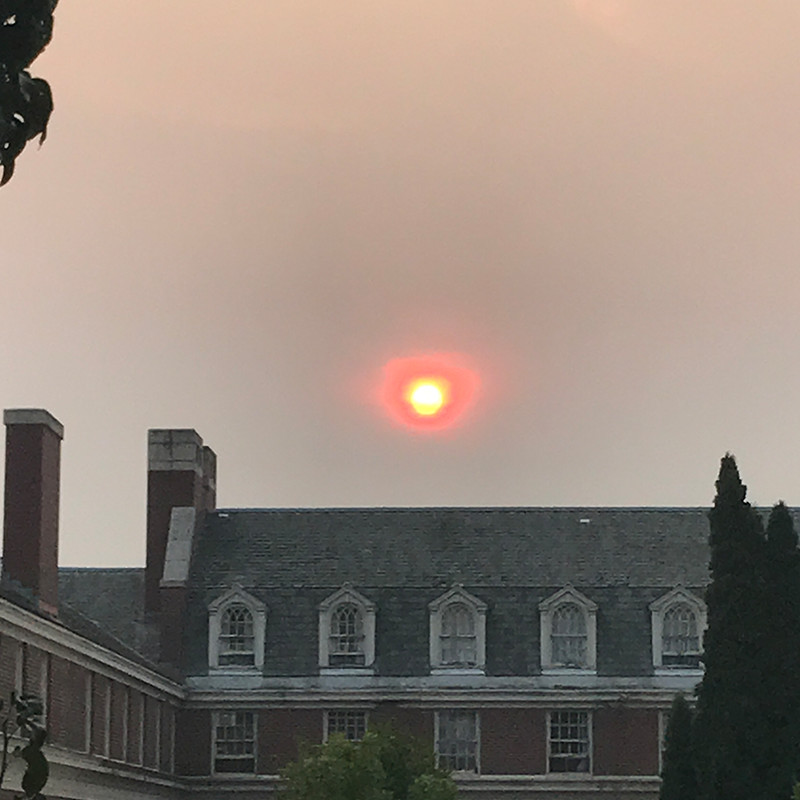
The first picture of took was of the sun. I did not take this picture with this assignment in mind. I saw how red the sun was and wanted to take a picture. I then realized that the sun acts as a point in the sky. The function of a point is to mark a position in space. I believe the sun marks its position in the sky or space. Another reason why the sun is the point in the sky is because of how much it contrasts from its surroundings. Its colors and brightness both differ from its surroundings.

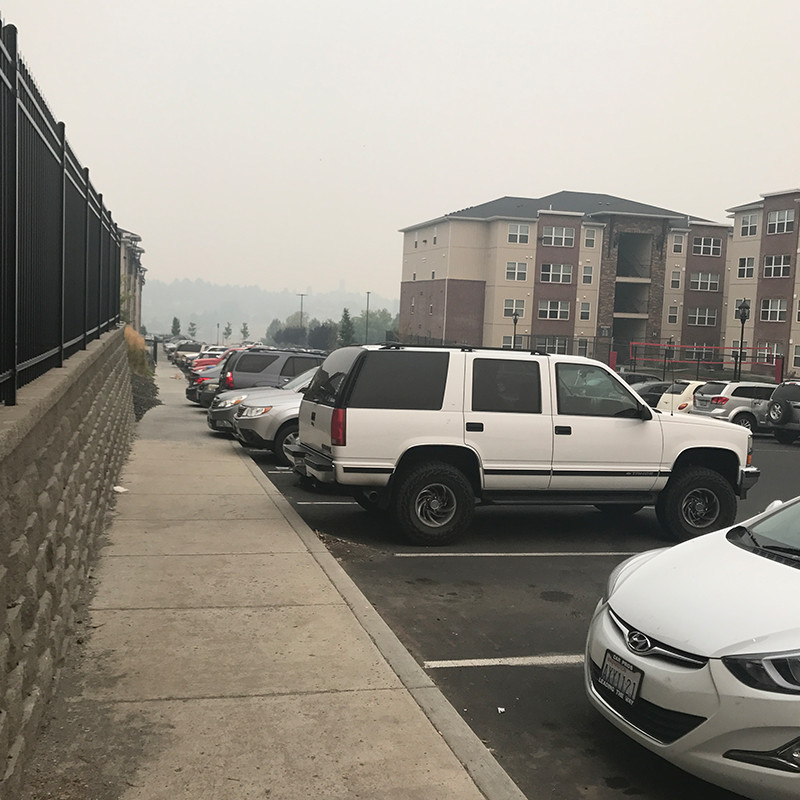
The second picture is of the parking lot at my apartment complex. I never thought of any parking lot as a line, but it is a series of points (cars). A viewer will easily be able to indicate each individual point. The line in this photo is broken because not every parking space is filled, but that will not always be the case.

The third picture is of the outside wall of the Chinook. This picture is a representation of plane because it extends in both height and width, but has a flat surface. Walls are considered physical planes. This wall is a collection of shapes on this flat plane.

The final picture is of one I took on the Terrell Mall. This photo is similar to one in the reading called, Parallel Lines Converge: Summer Underwood. This photo is able to enclose three-dimensional space and has volume. This photo’s most highlighted feature is its depth.


The sun shining through the smokey sky.

A line of cars in the parking lot at my apartment complex.

The outside wall of the Chinook on campus.

The middle of the Terrell Mall.

Posted in Fall 2017 Archive (336) | Leave a comment

Point, Line, Plane: Allison Cissna


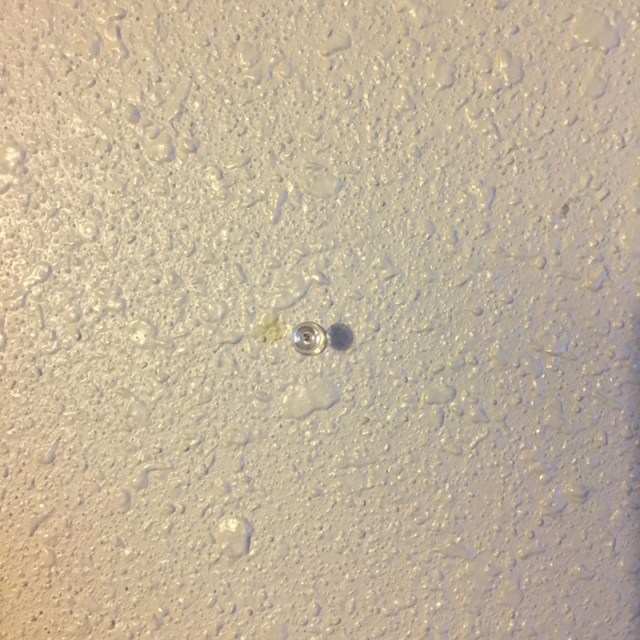
In my first image, I found a screw in the wall at my work that represented functions as point, marking a position in space. The screw stands out from the background because of the light and dark contrast. I really liked the texture of the wall with it as well, it made the screw stand out from the rest.

In the second image, I found a plant that functions as a line because the bold line that it creates through each leaf. The thick green lines spread out through the picture and the viewer can still see that the line is made up of the plant itself but the overall form is a bunch of lines. The texture and color of the plant brings out the bold lines. Before I took this picture I didn’t use flash and in this one I did use flash, I noticed that had a huge effect as well.

In the third image, I found a planters box outside of my work that functions primarily as a plane and in some ways volumes. In this picture the planter box has a large flat surface with specific outlines and shapes. The straight edge of the box draws attention as well as the texture and color in comparison to the flowers. You can also see that the back wall of the building is actually a 3-dimensional object. It has volume, including height, width, and depth. I would say that the planter box does just that as well being that you can see the edges and texture along with the height of the box in comparison to the wall and ground.

Posted in Fall 2017 Archive (336) | Leave a comment

Point, Line, Plane: Katrina Bittner


As a previous art student, I have studied and created points, lines, and planes frequently. All three can be found together and separately, and are easily found in everyday life. We often used them to draw three dimensional figures such as cubes and pyramids. The first image on the left is the image I selected for line. The image features many lines which overlap one another in a linear fashion. The railing lines are more obvious since they are bold and contrast against the light background of the horizon. The horizon is also a less obvious line, but a line nonetheless that is almost parallel to the railing. The horizon featuring a slightly different color from the sky and water, clearly define where the two planes (Sky and water) meet. The crisp and sharp edges of the railings overlapping suggest even more planes between them where there is negative space.

The next photo features several brightly colored geodes that I found breathtaking in a gem shop. Each geode is an individual plane, defined by the sharp curve around them. There are several planes within the geode which makes it more interesting and adds depth and dimension. The smooth surface of the geode is what I decided to focus on, as it has a solid color that is defined by a contrasting colored edge.

The third image on the far right defines a point. The eye is drawn to the upper right of the photo, where my sister is riding her bike close to where the horizon ends and comes to a point. Her bright red shirt contrasts against the earthy colors around her making her the single focus of the photo. A series of curved parallel lines draw the viewer’s focus towards the point.


Posted in Uncategorized | Leave a comment

Point, Line, Plane: Mary Gerber

Ellen Lupton explains the artistic value among elements using points, lines, and planes to map and connect data. Each of these elements are prominent in our every day lives, and present unique features that can often be overlooked. I appreciated the chance to take a greater look at what Lupton calls the “building blocks of design,” as point, line, and plane design attributes are visible virtually everywhere.

Point

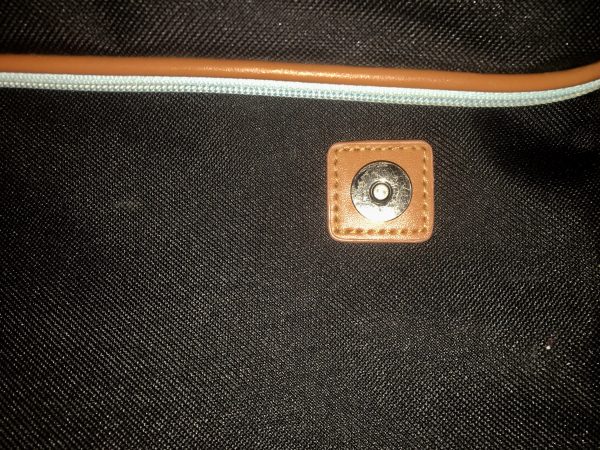
backpack-point

A button on the backpack of one of my peers.

Lupton describes points graphically, as a mark in a position in space in the form of a dot (or visible mark). The relationship between the point and its surroundings make for its own identity instead of blending in. This is particularly from the contrast of the button on the backpack, against the black fabric and the brown leather patch it is attached to.

Line

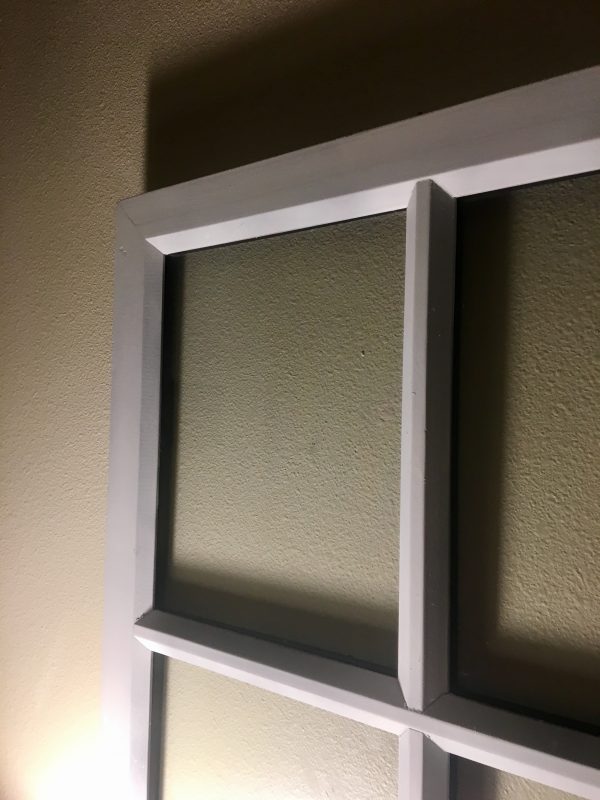
window-pane-line

A window pane hanging on my bedroom wall.

The lines are straight, uniform, and align perfectly. Especially with light reflected on the window pane, the lines represent an infinite series of points. The pane depicts edges amongst planes that meet.


Plane

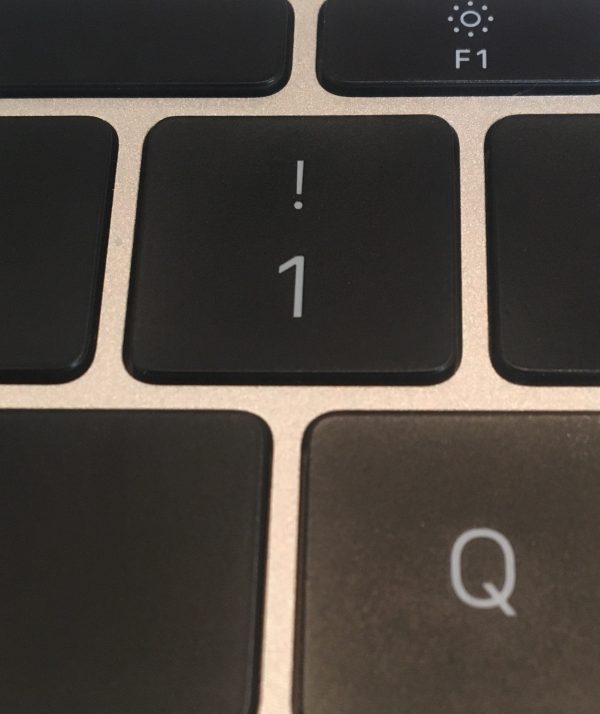
keyboard-plane

A photo I took of my keyboard.

The lines of silver between the keys on my laptop keyboard are actually not lines at all – they just appear that way as they act as a barrier between each key. They are symmetrical and the contrast of color makes for more definition in this barrier. The 3D nature of the keys also enables plane dimensions. The solid, flat surface and spacing make for an example of a plane.


Posted in Fall 2017 Archive (336) | Leave a comment

Point, Line, Plane: Rachel Bigler

For my first picture I chose a WSU blanket that I own, which I felt showed a nice example of point. What I liked about it was how it showed a gradient of far spaced out points to a rapid repeat of points that form a solid. Which is something that is talked about in the point, line, and plane chapter, how point can be dots just on their own or form a mass of points.

My second photo is of the curtain in my bedroom which shows line in many way. The curtain itself has a pattern on it that uses lines through long vertical strips, but also uses line diagonally within those strips that are so close together that it gives the illusion that the strips are a solid line. There is also implied line through the curve of the curtains and the light that shines through the background creating shadows and highlights.

For my last photo I chose to take a picture of some things hanging on my wall to show plane. I did this because everything is hung on my wall which acts as the plane for these decorations. Which is something brought up in the ready, how walls act as a physical plane. This plane, since it is physical, also has a texture that is bumpy. Which you can kind of see from the picture because it is made up dots that give it that bumpy look. In the corner of the picture you can also see the lines of the plane, which are more apparent in the photo because of the shadows casted by the light.

Posted in Fall 2017 Archive (336), Uncategorized | Leave a comment

Point, Line, Plane: Zach Prybell

Picture by: Zach Prybell

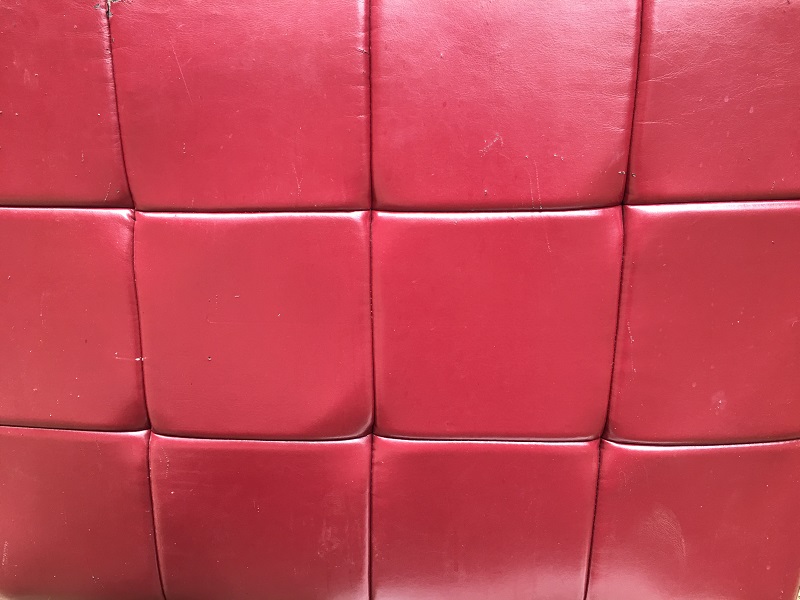
The first photo it a picture of a couch that is at my house, I think that it shows points, lines, and a plane very well. I’ll start with the plane, if you look at the picture as a whole, all the lines come together to form squares which are planes with boundaries. Then looking at all the squares, they come together to form one bigger square which again is just a plane with edges as described by “Graphic Design the New Basics” by Ellen Lupton and Jennifer Phillips. The lines in this are also important since they come together to from the planes, the lines stretch from top to bottom, and side to side. The lines cross at times which create points at the intersections. Points are really the base of this photo, since they are what lines are made of.

Picture by: Zach Prybell

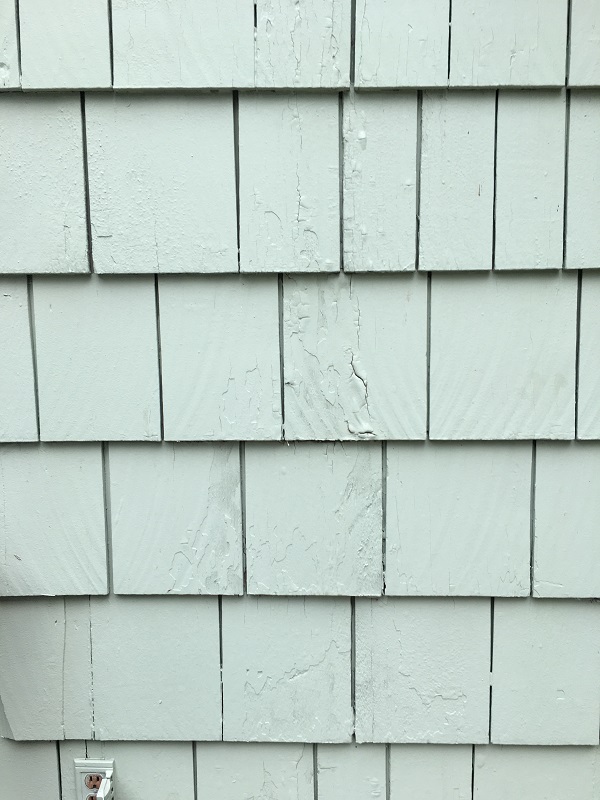
The next picture I have is of the siding of my house, this one takes a different perspective on the interaction between points, lines, and planes. The vertical lines in this picture aren’t continuous, they are offset by a bit. This to me gives the picture a more jumbled look compared to the other one which was so uniform. But that being said it still obviously has points, lines, and planes. The points are easiest to see where the horizontal lines and the vertical lines meet. The lines are more of the negative space in between the pieces of wood rather than printed or stitched on something. Finally the planes are the individual pieces of wood that form squares.


Picture by: Zach Prybell

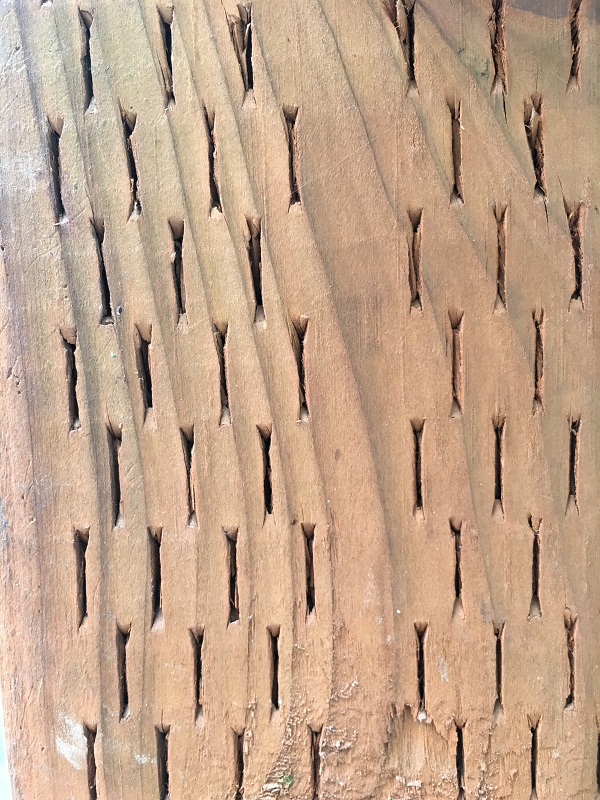
The last picture is of a pole outside my house that holds up an awning. I find this one interesting because the smaller lines are like points to the bigger line and then those lines come together to form a thinker line. Overall I think this picture is really good at looking at lies and ok of points, but it’s hard to tell if there is really a plane that is formed here. The argument could be made that the combination of the each separate line that forms a thicker line could be defined as a plane but I think the argument could be made against it too.

Posted in Fall 2017 Archive (336) | Leave a comment

Point, Line, Plane: Patricio Orozco

blog_2_img_1

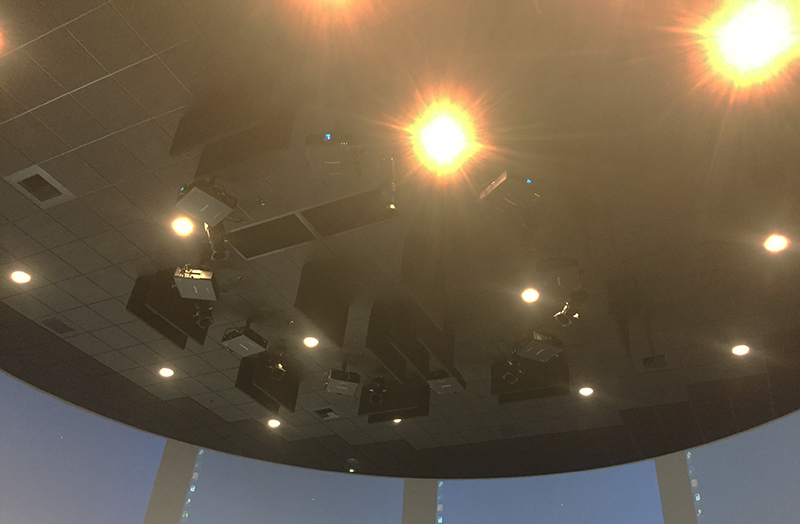
Inside The Spark G45 room with the round screen.

Inside The Spark G45 room with the round screen.

Points, lines, and planes are the fundamentals of every design, image, shape. My first image a many various ways that shows lines, points and planes. You could easily see a line that divides the screen panels from the ceiling. The way is shown on the photograph you get the sense that the screen is going down in the 3D dimensional field. it very hard to see many of the lines and planes of the projectors and barriers that are hanging from the ceiling because of the same color compared to the ceiling. But you could see their own image planes based on the shadows it creates from the provided light source. The light themselves gives a point in which to reference to, giving it a grid of the ceiling. The ceiling consists of lines and planes, the tiles are the planes while in between each plane there is a line. Most of the lines, planes and dots are geometric, they all consist of basic shapes while the glare that the light is giving of is more organic because its self produce making a unique shape.


blog_2_img_2

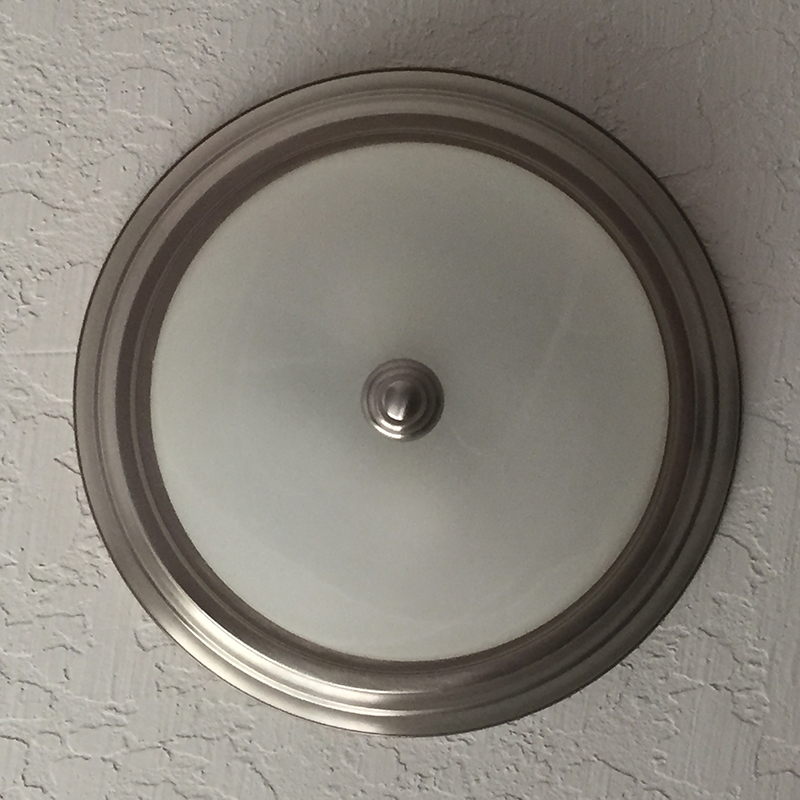
The unlighted light in my room.

The second image is a picture of my light. from what you can tell its is more based on circles. The reason for being a circle is that when it illuminates light, it needs to illuminate in all ways possible making everything possible in its radius to receive light. the middle is the middle point or at least where your eyes will focus on first, for being in the center and isolated from other shape surrounded by a clear white plane. Then your eyes start moving outwards exploring what is left in the image.


blog_2_img_3

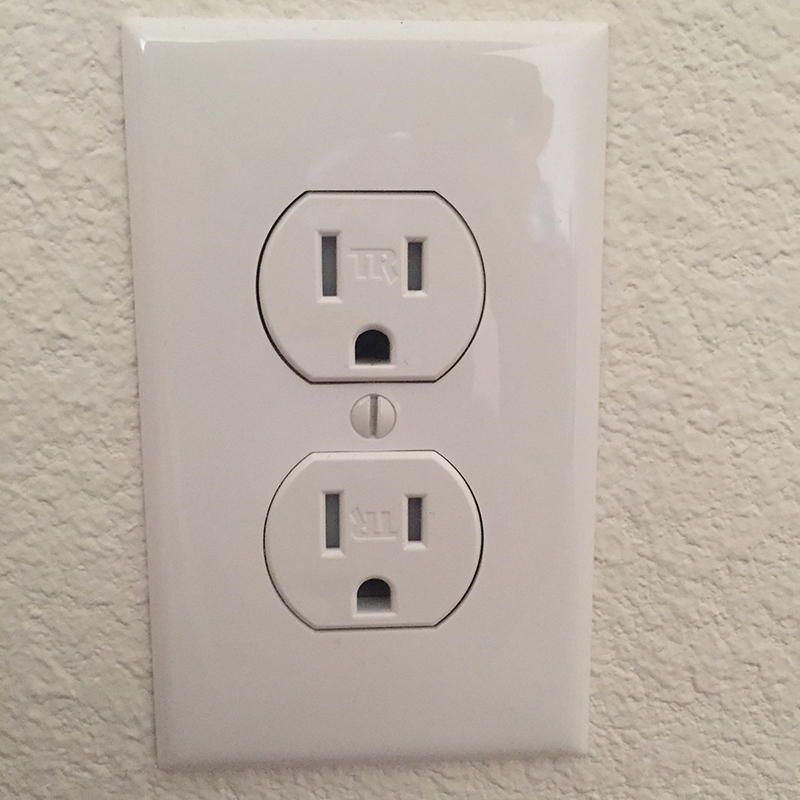
One of the power switches in my room.

The third image is an image of a power switch and its cover. It’s nice and simple because you could see the lines that separate the cover and the wall. In this example its easier to see because the cover has a more smooth texture, while the wall has a rougher texture. Just like my second image there is a middle point which is the screw that hold the cover together to the wall. The shadows it illuminates gives the cover an 3D feel.


Posted in Fall 2017 Archive (336) | Leave a comment

Point, Line, Plane: Lloyd Proctor


Its interesting how a multitude of different elements can all be points and functions the same. A point marks a position in space, but that space isn’t limited to just one specific location within that space. This image displays the point concept but there are several points, all of which are equal and some take priority over others depending on the viewer’s perspective.


The tailings and their parallel position that is continues throughout the image depicts what most would consider to be a line. Lines depending on the type can be easy to see or quite difficult. In this images case, its is easy and there are several types of lines. However, my implied focus is on the train track railings. The lines are think but stand out, there are straight and continuous. The lines draw the eye and force you to follow them from the bottom of the image to the top. The lines is solid and it is easily digestible for the viewer to not only see the line, but know what it is.


When I took the photo of the gallery, I wanted the focus to be on the space itself and not the pieces within it. The space almost frames the framed images and creates its own image. There is a lot of negative space, but that is essential to shape the image. The image has a medium distance and a cropped like shape that supports the space quite well. The perspective of the cropped like image was to give the viewer the idea that the image was ongoing or limited and that weather it was or wasn’t was to be determined by who was looking at it. A plane is a line with breadth, but I also think that this image had depth which makes it so much more interesting to look at.

Posted in Fall 2017 Archive (336) | Leave a comment