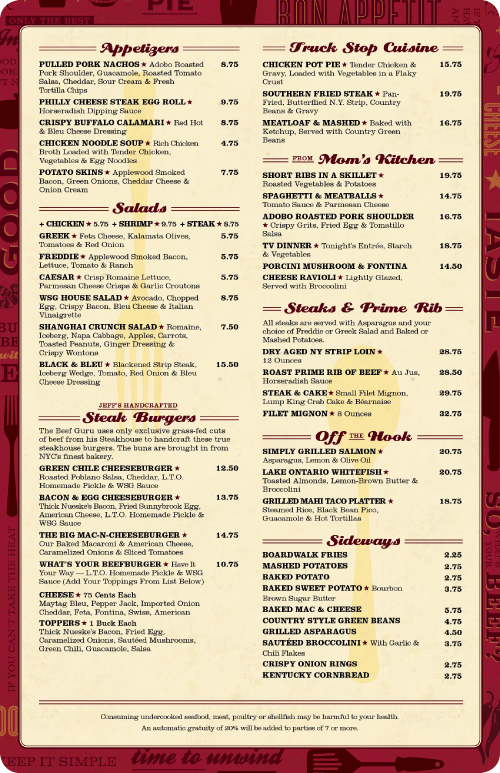
Menu Design: Steven McCracken

After looking through some of the menus on Art of the Menu I think I’ve found one that really caught my eye, Ruka. Their menu incorporates a nice hierarchy, with the categories separated by large squares with a unique font, and on top of that they feature a lot of incredible art throughout. When comparing this to the Paradise Creek menu it can make the old layout look a little bland, but this is also most likely a much nicer restaurant than any in Pullman.

ruka_PHOTO_10

The Paradise Creek menu has a great look to it, the fonts feel very classic and give it a great overall aesthetic. When it comes to actually navigating the menu however I think there could be a lot of improvement. Adding some uniformity to the fonts, as well as fixing the scaling to make categories more clear, could greatly improve the hierarchy of this piece in my opinion.


Posted in Fall 2017 Archive (336), Uncategorized | Leave a comment

Menu Design: Kira Norman

For my menu design, I chose to look at the Salionas design. It makes great use of typography and the spacing of the menu is minimal within each individual section, but any vertical breaks between columns is large and defined. The type used in the menu also resembles that of a classic newspaper.  The hierarchy of the menu takes time to section off the menu based on the type of cocktail drink they want to try. They are also separated using a numbered system as well. You can also see that some of the sections are separated by images as well, all having to do with the section below them. Since the menu is entirely composed of different kinds of drinks, I believe the hierarchy is appropriate for this kind of menu. The separation is based more on taste rather than ranking them based on what order the meals come in or by house favorites. The text is written in a rather small font but the menu titles are large and defined.

This differs from the Paradise Creek Brewery menu we looked at, which is definitely separated based on the order of the meals. We see this with the Appetizers section appearing first.  I do think that the hierarchy falls into a bit of a mess on the second page, with some of the menu options feeling more like sides than their own meal. Compared to the first menu design, I feel like it could have been a much stronger design if the sections didn’t have parts of it blocked off at the top or bottom for no reason. I do like that the sides menu is in between the other two, showing that it can be applied to either side of the menu. Overall, I think the men u is functional, but could be heavily improved on.

Posted in Fall 2017 Archive (336) | Leave a comment

Menu Design: Lloyd Proctor

The Tiller menu design that I chose exemplifies good hierarchy because there are clear priorities in the design starting with the the T logo on bold large text at the top and large text with the date following the logo. The menu as it continues gets a centered alignment and narrow position on the page. This continuous as you continue down the menu to the bottom with the most important information at the top and the least important and less likely to be ordered items like beverages and beers. These have less priority because they bring less profit and are not as popular.

The Paradise Creek menu design is very different and has a lot more text. This menus hierarchy is much more difficult to distinguish because the size of the text is not at its largest point at the top and smaller as you move down the menu page. The text size and spacing is a little random and if I were to read the menu based on traditional hierarchy methods, I would ready the menu in a choppy manor. The menu took up the space on the page well and had good alignment for the viewer to digest and grasp the information. The different font types helped divide the information so that each section seemed like it was specifically its own based on the different items. The two menus are very different, the Tiller menu prioritizes traditional hierarchy characteristics with the large bold text at the top and smaller text that is less important at the bottom, but the Paradise Creek menu disregards tradition and chooses to place different text sizes and fonts throughout while also determining which is important based on what the customer wants.

the_tiller_PHOTO_03

Tiller Menu

Posted in Uncategorized | Leave a comment

Menu Design: Evan Taylor

Kittyhawk Menu by Gemma Warriner

Kittyhawk Menu by Gemma WarrinerThe KITTYHAWK

Sydney, Australia

This Bar is inspired by a world war two fighter aircraft and is very apparent throughout the design of the menu. The font is similar to a typewriter of that time period. The menu is on a simple grid that resembles a diagram book or a parts manual used by the military. It includes diagrams on how the drinks are made, the price, and ingredients of each. The hierarchy is separated by each category of drinks and uses a large fancier bold font that labels each at the top of the page. A successful design the menu is pretty simple and easy to read while still resembling a 1940s world war two design.

http://www.underconsideration.com/artofthemenu/archives/kittyhawk_cocktail_bar.php

I Like the use of different fonts for this menu but at the same time, it doesn’t seem to follow a typical hierarchy design. The first thing I notice is “PUB PRETZEL” in bold black font followed by “Fried mozzarella” and just seems random. I’m drawn to look all over the menu because of the drastic different use of font types.  also, I could easily miss a menu item that has a smaller more subtle font. This could be more successful in my opinion if the bold fonts were used at the top and gradually changed as they go down the menu.


Posted in Fall 2017 Archive (336), Uncategorized | Leave a comment

Menu Design: Katrina Bittner

The menu that I chose to write about is for The Alembic in San Francisco, CA designed by nothing : something. I chose this menu because I like how it features various different fonts that draw attention to different parts of the menu. The bold, flourishing font that differs from the rest while it simotaniously draws the viewers eye to it as a header. Variations in size of this bolder text, suggests the hierarchal importance. The menu itself, is sealed within a heavy steel housing. Each page of the menu features different types of hierarchy and grids. The menus on the far left follow a continuous flow of text, with centered paragraphs and bold titles suggesting the order the menu should be read in. These two pages have one column, while others have two or more. The dessert page feels as though it should be a separate menu on its own, with a large title in the center and graphics below it almost looks like a cover. The menu is visually interesting because it is so random, and varies in font, font size, and color. The color palette is warm, lacking any cool or contrasting colors. The only similarities between the different pages is the padding at the top of the menu and the title of the restaurant.

The Paradise creek menu has quite a few similarities as far as design and how it can be distracting from the items the restaurant is selling. Both menus feature many different fonts, which does not offer unity and can feel chaotic. The paradise creek menu feels hard to look at because almost every item on the menu is designed with a different font, and the columns are all out of whack. It feels like a grid was not used properly, and even though the menu below seems a bit chaotic as well, it is clear that a grid was used. The Paradise creek menu is successful in the way that it is eccentric and seems to fit with the theme of the restaurant. It can be improved by changing the order of the items on the menu, and using one to three fonts to keep the menu unified in appearance.

Alembic Bar and Restaurant

Menu for Alembic bar and restaurant in San Francisco, CA. Designed by nothing : something. Source: http://www.underconsideration.com/artofthemenu/archives/the_alembic.php

Posted in Fall 2017 Archive (336) | Leave a comment

Menu Design: Zach Prybell

Print Brothers Menu

Pint Brothers Menu (Wood)

Pint Brothers Menu (Steel)

The menu I picked from the blog “Art of the Menu” is from a restaurant named Pint Brothers Alehouse in Denver Colorado, the Menu was designed by Melissa Wehrman. I think that this menu has a very well thought out and successful visual hierarchy. One thing that it successfully does is have the tittle of the different sections like Soup and Salad, Sandwiches, and Main Meals in a larger bolder different font that draws the eyes to make it easy to find the section wanted. Then off of that you can read the options that are in the sections below the title in a smaller more basic typeface which shows great visual hierarchy. Something else this menu does well is use a combination of vertical and horizontal lines to make a grid for each section of the menu. This makes it very easy to see what food items are in which categories and keeps all the text in the section cut off from other text so it is much easier to read. I also personally like the contrast of the wood and steel menus, I think they are the perfect color and style to go together.

The Paradise Creek menu is a very different style menu than the Pint Brothers’, Paradise Creek’s menu has much less order it seems, and the hierarchy isn’t really there. For example on the Appetizers page the boldest biggest text is the “pub pretzel” which is the third item down the list, this doesn’t make much sense to me because one I feel that the appetizers heading should be the most eye drawing text on the page and second I feel that if you want to single out the pub pretzel with a larger bolder text then it should also be the first thing listed. The second page has much of the same hierarchy issues that the first page does, but this page does make one thing really easy to see which is the sides that a meal comes with, they are in the box in the middle which makes it very easy to find and I think that works well with the rest of the menu. However overall I think this menu has a lot of disorder and lack of a visual hierarchy because of all the change in text size and boldness, to be a successful menu I think this needs a fair amount of redesigning.

All Photos Provided by: http://www.underconsideration.com/artofthemenu/archives/pint_brothers.php

Posted in Fall 2017 Archive (336) | Leave a comment

Menu Design: Rachel Bigler


this is the menu for “Gruner Micheel” in Leongerg, Germany found on “Art of The Menu” on undeconsideration.com

This is the inside of the menu for “Gruner Micheel” in Leongerg, Germany found on “Art of The Menu” on undeconsideration.com

The menu that I chose to analyze using the reading on hierarchy is the menu for “Gruner Michel” in Leonberg, Germany. I felt this was a good example of hierarchy because of the way the colors contrast. The dark black color of the text and decorative elements makes it stand out from the background giving it hierarchy over the rest of the image. It also makes those element seem to have the most importance, which they do and is why they have hierarchy.

This menus is also a good example of Typography being used in an organic manner and looks to be a custom typeface. The text itself shows hierarchy as well in the font sizes. The most important things are bigger and the less important things are smaller in size. This also shows the design element of emphasis because the titles on the menu are more emphasized then the actual names of the dishes that the restaurant serves. 

When looking at the the “Paradise Creek” menu first off is not very unified. Too many things seem to be trying to be emphasized and have dominance over the other so it comes off as very cluttered. There is no real hierarchy except for the black text being more forward then the white background, which is just like the “Gruner Micheel” menu. But the “Gruner Micheel” menu is more successful in it hierarchy because it is clear that there is an order of importance of information. And its elements are unified, and there is a hierarchy to the content and the way it is presented so that it is easier to understand. The “Paradise Creek” menu is to chaotic and needs the element that are similar to each other, like the prices, to all have similar fonts and sizes so that not everything is competing for the viewers attention. Like when you look at the “Guner Micheel” menu you know that the type of food (what category the food falls under) is the most important because it is bold and big and catches your eye first. with the “Paradise Creek” menu everything is trying to catch your eye first so you don’t know what their message is and its confusing. It also says something that I don’t even speak German and I can understand the “Guner Micheel” menu more than I can understand the “Paradise Creek” menu which is in English. I will say that the categories on the menu have the same font and size which helps when reading it but they do not stand out at all so you have to really search for them and all the sections kind of just mesh together.

Posted in Fall 2017 Archive (336) | Leave a comment

Menu Design: Sulaiman Ambusaidi

Walnut Street Grill Menu, Cincinnati, OH form http://www.underconsideration.com.

This is a good example of using hierarchy in a menu design. I noticed in this menu they used weight, color and different fonts to convey the hierarchy of the menu. This is a very good way to make the customers see different part of the menu and being comfortable with it. The hierarchy helps the customers finding their order in a fast way. Also, this menu is aligned very consistently. It kind of following a grid that splitting the page in a half and aligning all contents in this grid. The headers are very clear and they did a very good job on them. They emphasis them form other content and make them clear by using different font and color.


Menu design for Paradise Creek Brewery, Pullman, WA.

Comparing this menu with the first menu both did very good job of making the menu easy to read and easy to navigate thru. However, I think first example was more easier for me to navigate thru the menu because they used colors and two types of fonts. On the other hand, this menu has too many fonts makes it harder to know where are you at in the menu. I think if they used two fonts on this menu it will make it much clearer and more consistent. For example, they could use a font for the headers and another font for the contents. This will help the costumers choose their order faster. Also, in this menu, they used a center alignment to align the text. This alignment is enough for a menu with this much of contents.

Over all, the first menu has a better design and it is much cleaner than the second menu. The designer did a very good job of making that menu easily navigable with consistent alignment and hierarchy.

Posted in Fall 2017 Archive (336) | Leave a comment

Menu Design: Patricio Orozco

The menu I chose was Come Rico designed by Estudio Yeye. This menu has a pamphlet look to it where is composed of many pages. The cover is laid out in a grid with traditional images of foods. It’s nice and simple to look at. Every single tile is unique and interesting to look at. The colors are limited to at least four colors red, blue, brown, yellow. Each color blends so well with each other making its content visible. They try to grab the customer attention right away from the cover, telling them that there are many food selections to choose from. Then going inside the menu where the food is listed we see that the outline of the page is a bit basic with a standard hierarchy where the main branch food is bold and bigger in size then the rest, then goes off to the platter name with a dotted line that goes to the price, then in a different color the description of what the dish contains. But it’s not all white in the background it does contain some info in the bottom and images throughout the page. Then the text is all from one type face making it easy to read.

Come Rico Menu designed by Estudio Yeye.

Come Rico Menu Cover designed by Estudio Yeye.

Paradise Creek Brewery differs from the one I selected by using a different font for each heading. They did this because they wanted to emphasize that each selection is different and maybe wanted to show which item is better than the others. For example, Pub Pretzel is bigger and bolder than the rest to make it look like it will be something worth getting. The appetizers page is vertically aligned while their entries are horizontally aligned. Horizontally alignment give the menu to show more options than it would if was vertically aligned. What they could have done differently is to give it some colors. If they at least with some fonts a specific color, then it will make it more enjoyable to look at.

Posted in Fall 2017 Archive (336) | Leave a comment

Menu Design: Tavia Hall

osteria_leana_PHOTO_02

After reading through the Hierarchy and Grid chapters from Lupton/Phillips “Graphic Design: The New Basics”. Then looking at the different menu designs from the Art of The Menu Blog, I felt like Osteria Leana’s menu was a great example of how a successful hierarchy is employed. The menu overall has a clean professional look to it. The different typefaces are used to help distinguish each group in a way. I really love the fact that there’s only two colors being used and not just one or 5 million. Too many colors can distract the viewer and won’t be as straight forward. Unless you’ve been to a particular restaurant hundreds of times, then you would be able to familiarize yourself with the menu. When I look at this menu, I see it as getting straight to the point in regards to things like alignment, color, context and how everything works together collectively. You don’t have to scramble around to find the price of the product because it’s in red and located (always) on the right hand side of the product name. There’s also different sections that are being displayed throughout this menu. These sections “shows clear marks of separation to signal a change from one level to another” (Lupton/Phillips, 115). There’s an actual line that separates the company name, date, address and website from the rest of the menu. The middle section is made by the clear mark of the line located at the top and located at the bottom. The middle section has four main categories that uses space in order to separate the significance of each category. The category titles are in red font. Then under the category titles there’s the dish name and details of the dish that are in black font. Within one section, there’s 3 different typefaces (not including the font of the prices) being displayed. Even though these 3 typefaces are different, they still work together by emphasizing different aspects. If the dish name and the details of the dish were in the same typeface it would look like a spaced out paragraph. You wouldn’t be able distinguish and or realize there’s two categories unless you’re actually reading it. We automatically assume things go together if they match. The usage of various typefaces are acceptable when used correctly and helps guide the reader.

I forced myself to not look at the menu from Paradise Creek Brewery until I did the first portion of the prompt. Now that I’m looking at the menu, there’s so many things going on that I stop and question myself if this is an actual legit menu. First off, this is a bad example of using different typefaces. I can’t really match anything up so it’s really hard to distinguish between the different categories. To me it looks like pages filled with example fonts and not a menu. The sizes of the font aren’t even the same, nothing is consistent. Some numbers are bold, big, small, and or thin. This also relates to the period marks as well. There’s more periods in between the word and the number than others. Some periods are bold and some even have spaces in between. The menu overall looks cluttered, inconsistent, has no form of alignment and so on. There’s some words going horizontally and some words going vertically. It’s literally a scavenger hunt! The only part that I could say is almost close to being successful is the titles “Appetizers”, “Burgers and Sandwiches” and “Entrees” because it’s the only thing that’s really consistent in regards to font and size. It’s also the only guidance I would use to help navigate through the menu.

Posted in Fall 2017 Archive (336) | Leave a comment