Title – Your First and Last Name

Write your post….. Lorem Ipsum is simply dummy text of the printing and typesetting industry. Lorem Ipsum has been the industry’s standard dummy text ever since the 1500s, when an unknown printer took a galley of type and scrambled it to make a type specimen book. It has survived not only five centuries, but also the leap into electronic typesetting, remaining essentially unchanged. It was popularised in the 1960s with the release of Letraset sheets containing Lorem Ipsum passages, and more recently with desktop publishing software like Aldus PageMaker including versions of Lorem Ipsum.

This is my caption (this is my citation)

Posted in Uncategorized | Leave a comment

Point, Line, Plane: Sample Post by Kristin Becker

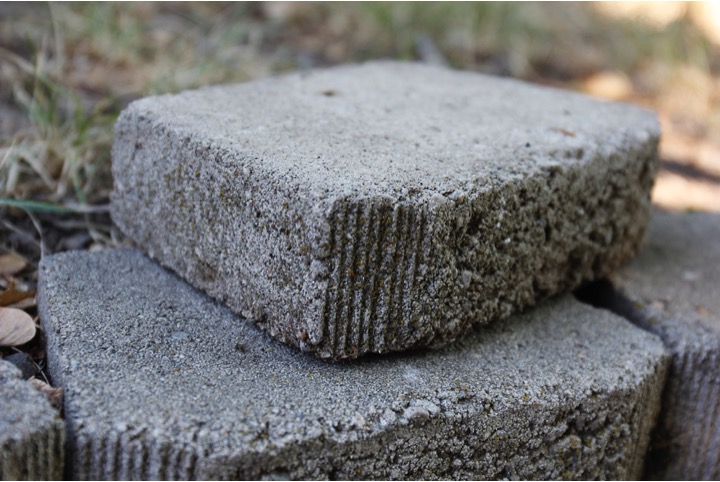
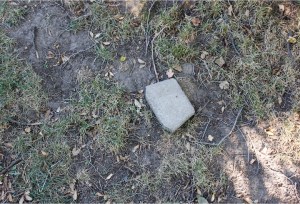
Here the same building block (a cement cinderblock from an outdoor patio) is used to illustrate point, line, plane, and volume.

I think it’s fascinating how the same component of a composition can function as point, line, or plane, depending on how it is pictured, including how it is framed by the camera and how it relates to other compositional elements. In my first photograph, the cinderblock, which I photographed in my backyard, functions as point, marking a position in space. In this case, it does seem at least somewhat significant because it looks different from—or stands in contrast to—its surroundings, a textured surface of dry grass, leaves, and dirt.
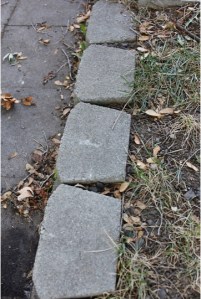
Here I primarily see a line.

In the second image, the positioning of the individual cinderblocks makes the viewer perceive them primarily as a line. Lines may be implied or obvious, and in this case the form is quite apparent because the line is bold and thick, as well as very straight. It draws the eye upward, toward the top of picture frame, because it tapers, becoming thinner, and also seems to recede in space as it moves upward, or backward. The viewer can still tell that the line is made of individual blocks, or points, but the dominant form is a line.
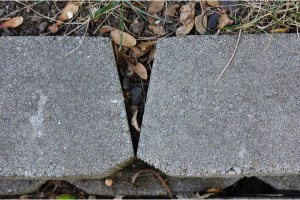


Here I see two planes that almost touch.

In the third image, my goal was to make the two cinderblocks appear primarily as planes, large flat surfaces with specific outlines and shapes. Attention is draw to angled edges of each shape, as well as their straight top and bottom edges. This view of the cinderblocks is encouraged by the tightly cropped camera frame: Only a small amount of negative space (grass and leaves and dirt) is visible around the blocks, and the left and right edges of the frame even crop out parts of the shapes. This encourages the viewer’s understanding that they extend into space. (There is also some interesting interplay between positive and negative space in this image, since the negative space between the cinderblocks may also be perceived as a positive shape: A long, skinny triangle.)
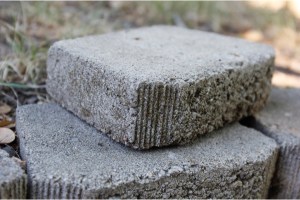
Here I see a 3-dimensional shape.

The last image draws attention to the fact that the cinderblock is actually a 3-dimensional object: it has volume, including height, width, and depth. In this case the camera angle allows the viewer to perceive linear perspective. The viewer can also finally see how the cinderblocks may be stacked to build a 3-D structure. The weight and texture of the cinderblock is also very visible in this photograph, since it takes up a great deal of the camera’s available frame.


Posted in Fall 2018 Archive (336), Sample Posts by Your Professor | Leave a comment

Point, Line, Plane – Sample Post by Kristin Becker

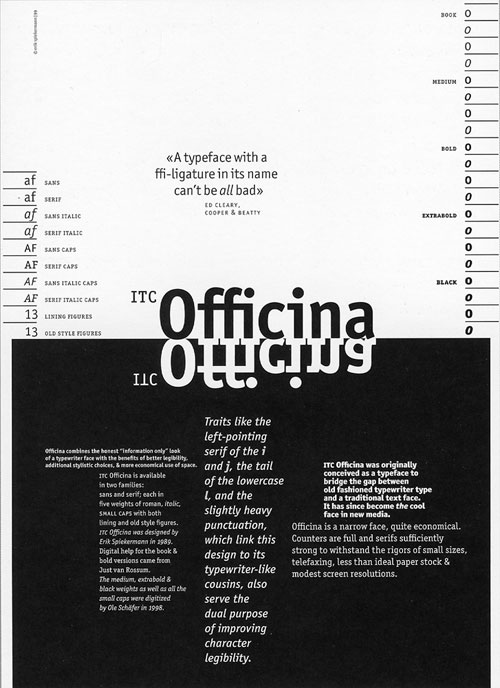
This poster showcases the typeface Officina, which was designed by German designer Erik Spiekermann in 1990. (de Jong, Creative Type, p.274)

This poster showcases the typeface Officina, which was designed by German designer Erik Spiekermann in 1990. (de Jong, Creative Type, p.274)

I feel this poster is balanced because my eye moves through the composition without getting stuck: The bold title of the poster at mid-line (ITC Officiana) functions as both a point and a line. It functions as a point because it is the focal point of the poster: This is where my eye looks first. It is also a line because it sits above and below the black/white division of the poster, separating the information at the top of the poster (white background) and the information at the bottom of the poster (black background). Note: This is also an example of a figure-ground reversal. The small block of text in italics directly above the “ITC Officina” text also functions as a point because it draws the eye and is surrounded by so much white space (negative space). The columns of text to the right and left that illustrate the different weights and styles available in this font read as lines, pointing the eye back down to the black section at the bottom. The blocks of text in this section (white text is now positive and black becomes negative) read as separate shapes, but also begin to group together and read as a plane, radiating outward. The ragged edges on the right sides of these columns also push my eye to the right as I look at the poster, pushing my eye back up into the white space of the top. The poster feels visually stable because of the overall symmetrical balance created by the equally-sized black and white sections and the central placement of the “ITC Officina” title, which has a larger scale and therefore seems the most important. The design is also active and dynamic, though, because the black section feels heavier than the white section, which makes the composition feel grounded, with asymmetrical balance achieved through contrast of dark and light values.

Posted in Sample Posts by Your Professor, Spring 2017 Archive (336) | Leave a comment

Technological Artifact: Kristin Becker (Sample Post)


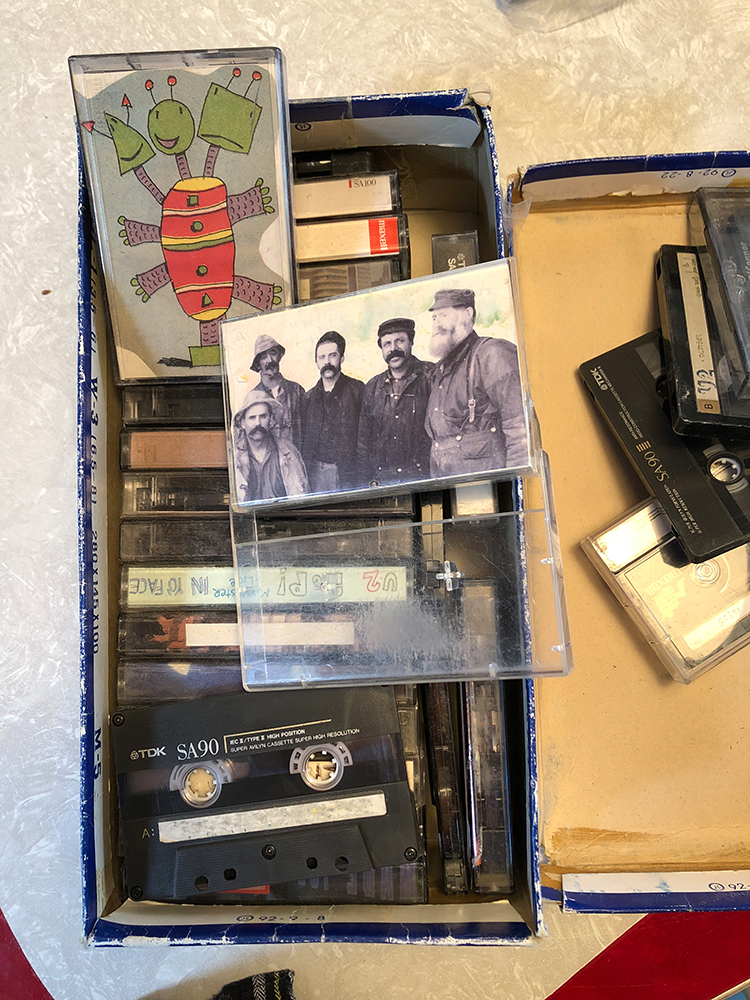
This is a box full of mixed tapes that my friends and my older brothers made for me when I was younger (Photo by Kristin Becker, 2018).

I still have an old shoebox full of the mixed tapes that I listened to in my car during high school and college. Any one of these tapes with hand-made, illustrated case covers would be an appropriate technological artifact to define both me personally, and my generation as a whole. High school and college is an important coming-of-age period in most people’s lives, and music is often an important part of that time, influencing musical and cultural preferences into adulthood. Most of us have more free time at this point in our lives–at least I did–before the demands of full adulthood take complete hold of our lives. Since entering my thirties, getting married, and have kids, I have much less time to consume and discover new music, so I still rely on many of the old standbys that are represented on these tapes, especially when I am feeling sad, lonely, or emotional. At the same time, I can see how my taste has changed over time and into adulthood: I still listen to Elliott Smith quite a lot, but They Might Be Giants haven’t earned a spot in my iTunes.

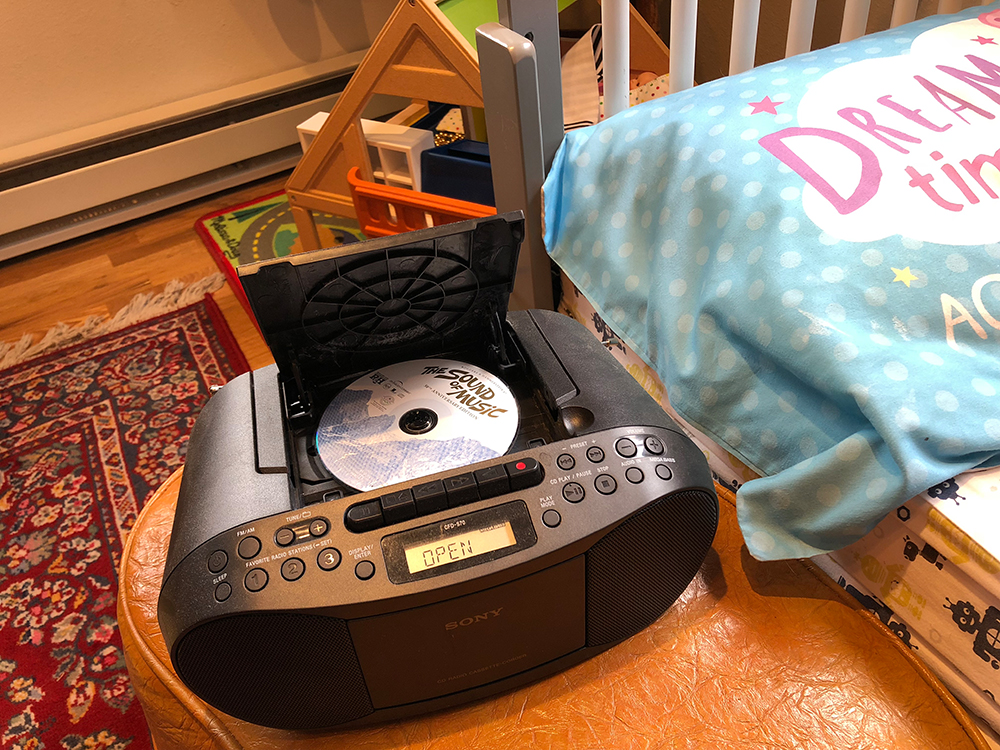
I recently bought this new Sony cassette and CD player for my 3-year-old daughter (Photo by Kristin Becker, 2018).

Reading about the mission of the Media Archaeology Lab made me think about how the limits of cassette- and CD-based technology has defined my listening habits.CDs were common when I was in high school and college, but we still made mixed tapes because most people didn’t have CD players in their cars, and you couldn’t easily burn/copy CDs on personal computers yet. One of the big reasons I have trouble listening to new music is because there is less of a physical, material component to the process of consuming music: Once we had to manually change records, tapes, and CDs, now we just have to click a button in a software application. Album art and band photos still exist, but only in digital form, which is arguably much less enticing and personalized than the handmade tape covers in my photo above, or on the custom screen-printed CD covers commonly made by small indie bands in the 1990s and early 2000s. This is part of the reason I recently bought my three-year-old daughter her own CD and cassette-player for her room: I want her early musical experiences to be reinforced through visual, verbal, and tactile modes of communication. I already see this working because she loves to pore over the books that came with the her CDs for The Sounds of Music and Mary Poppins.


Posted in Fall 2018 Archive (201) | Leave a comment

WSU Art Museum: Joshua Murphy

Hate, Vol. 2: Buddy the Dreamer. Image taken by me, Joshua Murphy. Capture date 3/22/18

The trip to the art museum helped me get a better idea of the overall product that I want to create. One of the texts that was show to us was “Buddy The Dreamer” and it shares the graffiti like font that I want. The font has rules that I may want to include in my own font, the X-height is very low and can be seen by how the top parts of the letters are heavier and the crossing of the A and the middle line of the E are very low in relation to the whole letter.

One thing that stands out the most to me is how the letters are angled in different directions even though they are the same letter, an example is the “DD” in buddy. Looking at this font I can tell that it would not look right if all the letters were to be straight up and down on the same plain. The angles in the letters help ad an effect to the font that i would like to implicate into my own font. My font is trying to look like it was graffiti but follows set rules that are followed throughout the font. I think it is a good idea for me to take my font and try writing out words with the letters angled to make them feel more jaunty. I have been working on words but manipulation the weight and curves to make it look right but when I make a new word it does not look right and now thinking about it, graffiti fonts never are straight across, they are angled and have feeling to them.


Posted in Spring 2018 Archive (336), Uncategorized | Leave a comment

WSU Art Museum: Jonathan Martinez

Going to the art museum and looking at various pieces there fairly eye-opening regarding my typeface however it was more interesting to look at all the different pieces of art and understand why we call them art. It was funny how early on I didn’t think half of the pieces would have been considered art but after looking more critically and taking a deeper look into what it took to create the pieces I became more appreciative of the work that was put in.

One piece that I liked especially was the white paper with “Love” printed also in white. The reason I liked this one so much was because it was an example of a work that made you look deeper than what was on the surface. If one merely looked at the surface of this particular artwork, they would miss the entirety of the product. There was also another piece we looked at that was similar to this one that said, ” I. C. U.” printed in white on a white background. Both of these were my favorite because they made the viewers really try to visually interact with what was going on in the piece of art.

Posted in Uncategorized | Leave a comment

WSU Art Museum: Jocelyn Urias Castro

Work done by Nancy Chunn in 1996. Photo taken at WSU Art Museum.

This newspaper was done by Nancy Chunn and it was interesting for me because it looks like a normal newspaper we use now on days but actually it is pretty old, and it is looking fresh and with color. I personally liked this piece because it shows a good representation of unique work, looking almost like the other normal newspapers but with Chinn’s inspiration and art. It shows typefaces on top of more writing and even though it is a little hard to read the typing on the back, the typing on top is giving a clearly explanation of what the article talks about. I like the drawings and the diversity of colors to identify even genders. This piece was made to show the content of The New York Times in a different and quick way so people can see all the work at once.

This work has a little bit of typefaces that inspired me to use in my project 2. The title “The New York Times” has a similar font that I am trying to use for my design of letters. That funky and round shape of the letters are the details I am going to use to create mine. I am going to add a little bit of more design around the letters so it looks more of a unique font.


Posted in Spring 2018 Archive (336), Uncategorized | Leave a comment

WSU Art Museum: Isabella Troiani

One of the most unique collections we saw during our visit to WSU was the artwork created by a nun named Corina Kempt. While the museum director himself was not fond of the pieces, I thought they were great examples of typography. She is famous for creating a LOVE stamp in the 1980s and her unique use of screen painting. She worked with a lot of words and vivid colors. I was struck by the thought that her designs were so simple, they

Corina Kent, unnamed. Depicts materials-based method. Paint on paper. 

almost looked like they were created by a child. Along with the simplistic artwork, every piece was complete with a quote, usually about love, that she imagined herself. Her work didn’t seem amazingly religious to me but more about peace and acceptance. The piece I chose to write about was unnamed but depicts a butterfly with rainbow wings and a scribbled purple quote that reads “there is no birth  of consciousness without pain.” The butterfly has obvious paint strokes, with different weights and densities. The colors are vivid and simple. All in all, the image resembles a child’s finger painting. The script is nearly illegible (I still do not know what the last words says), with fast-paced lettering and uneven density. It looks obviously very methods-based, seemingly done with the same paint from which she made the butterfly. I thought the script of this piece would be similar to mine, in the way that I also want my typography to seem materials-based and quick. A lot of the elements – the cursive inspiration, the unevenness, the messiness – are what I want to come across in my typography inspired by Sylvia Plath. While Sylvia Plath’s writing is somewhat more structured and legible than Kent’s, I want the typography to be more messy, like Kent’s. The “f” and “t” were very similar from both examples. Kent’s piece gave me inspiration to edit the neat script more.

Posted in Spring 2018 Archive (336) | Leave a comment

Design Blog #7: WSU Art Museum

Andy Warhol created this replication of a receipt he got from the liquor store.

The recreation of one of Andy Warhol receipts for the liquor store was interesting because he is such a famous artist and it seems so simple but his work usually has more meaning. I thought the various typefaces was interesting and I thought the way the red lettering stands out could possibly relate to my typeface. I cannot have multiple fonts in my poster, but I think that I want to have the colors in my font that contrast well with a white or black background.

I also enjoy the difference between the handwritten letters versus the printed letters because it gives the authentic feel to the receipt. The thing I most enjoy about this piece is that raises the questions of why he made this and why did he choose a liquor receipt? I would like to hope my typeface and poster can combine to raise questions like these when I am finished.

Posted in Spring 2018 Archive (336) | Leave a comment

WSU Art Museum: Hansen

During our trip to the WSU Art Museuem I was intrigued by a work that depicted Andy Warhol in a relatively sardonic, clinical fashion.

20180322_143002

The photo is stylized almost like an old school anatomy diagram, with arrows pointing to each part of his body and then a brief description or anecdote related to said body part. This inspired me to think more critically about the anatomy of my type design, and how each choice I make could be justified in the context of my overall vision. Using this “anatomy and loose description” model has helped me connect my abstract ideas of what I would like my design to embody to what it actually could look like. It also helped me when figuring out what method I was going to use to create my type.

This also helped me with figuring out whether my design was more modular or organic. I wanted to create a design that organically reflected this fictional world which it was inspired by, but the world itself has a heavy and historical focus on modular, technological design.  In order to attempt to compromise this I used a breadboard to develop the letters, which provided a good skeleton and structure for me to test out ideas upon.

Posted in Spring 2018 Archive (336) | Leave a comment