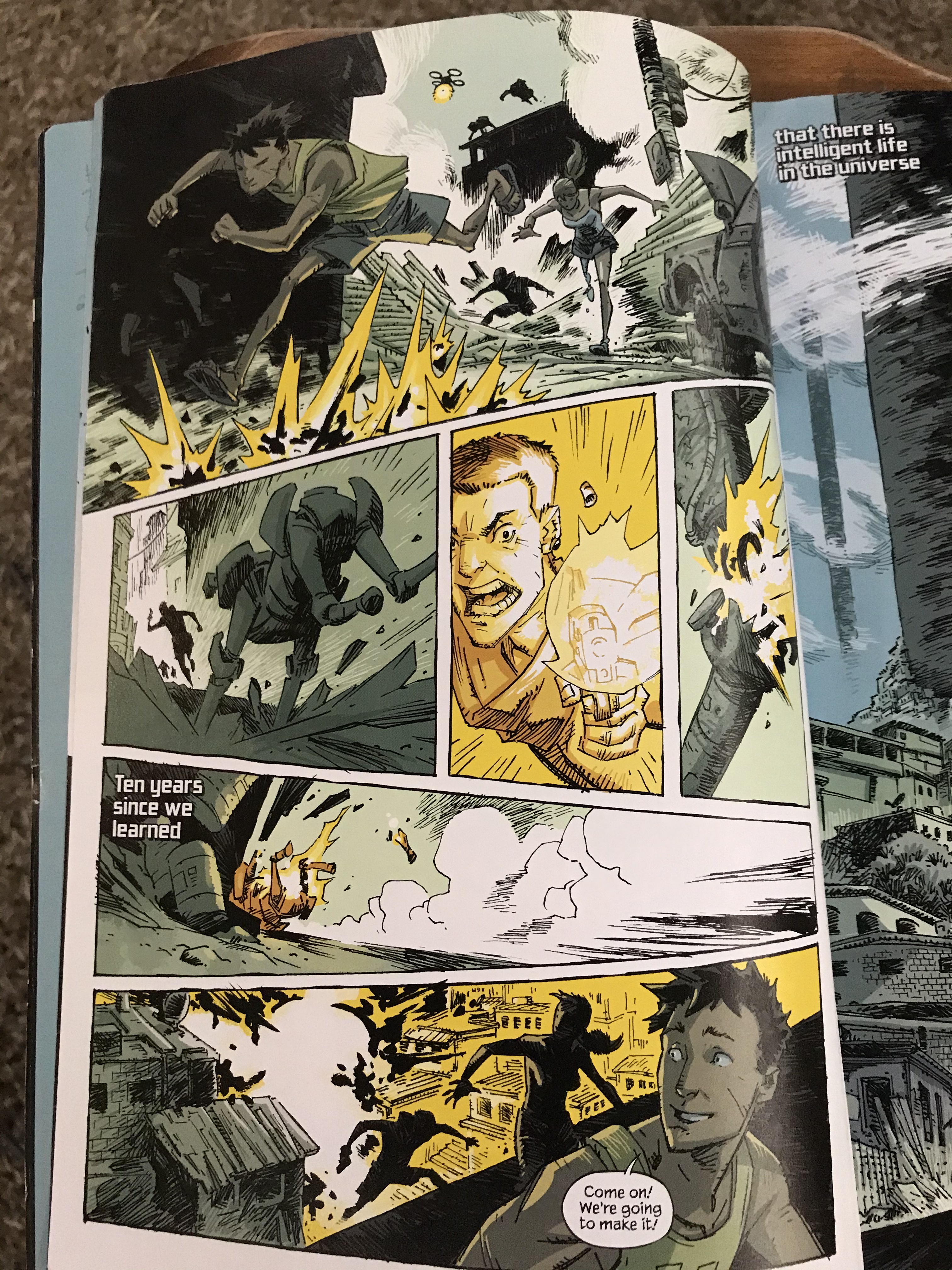
Closure and Time Frames: Ana Maria Alaniz Mendoza

ToDance1

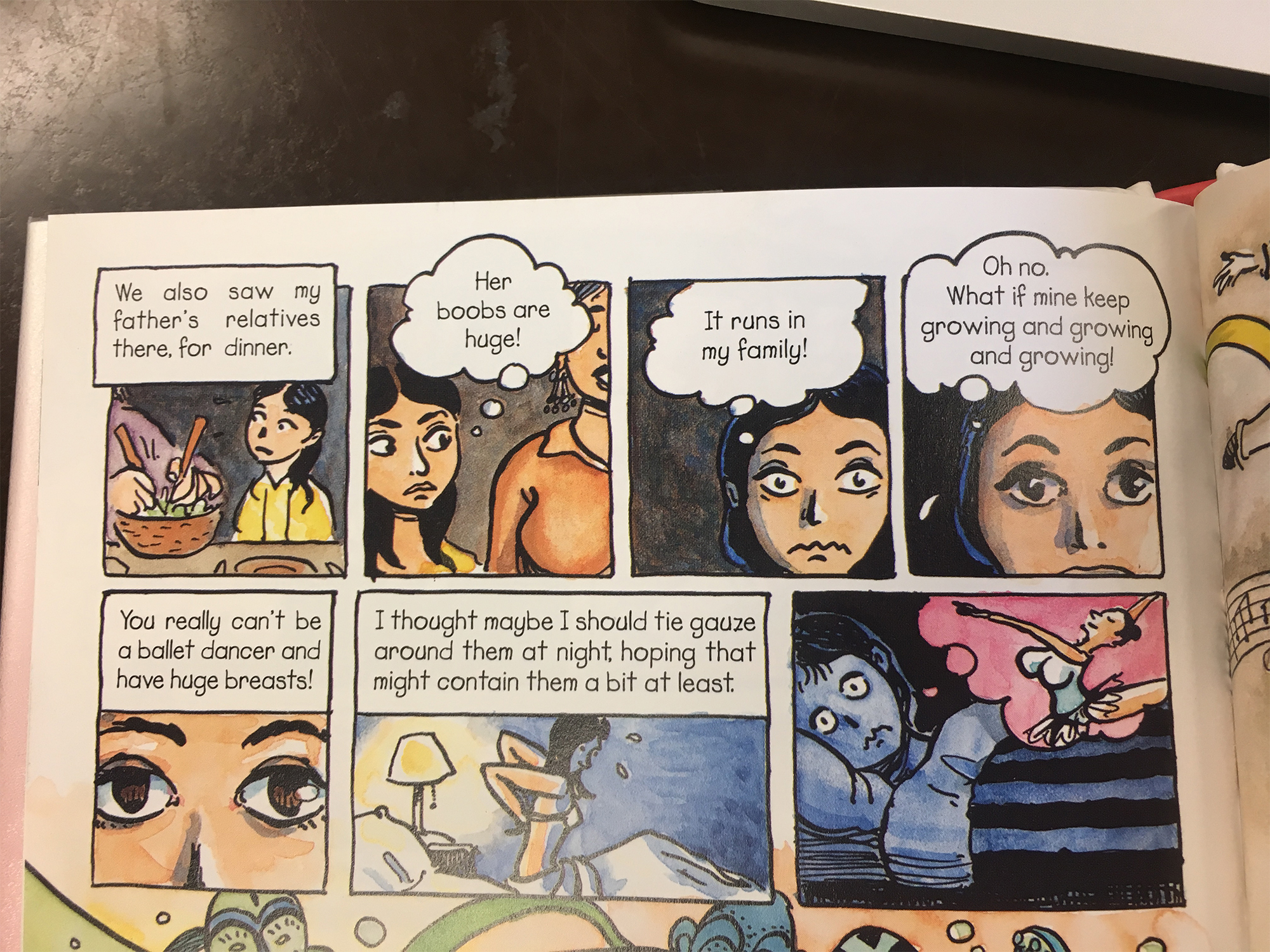
This photo was taken by Ana Maria and it is a page from the book, To Dance: A Ballerina’s Graphic Novel written by Siena Cherson Siegel and Illustrated by Mark Siegel.

Closure – This page does a fantastic job capturing different thoughts, emotions, and time frames from scene to scene. As a reader, I am able to follow along with the visuals and the linguistics seamlessly. In fact, each panel is laid out from left to right and is aligned with the one next to it with illustrations that stay inside of the panel lines so I don’t even have to read the words in order to gain an idea of what the particular comic strip is about. A part of the reason I chose this page, however, is also because I find this storyline so relatable. When I was younger, I was paranoid about the same thing! I would think about ways to prevent my boobs from being huge like all my grandmas, my aunts, and my mom. This would most commonly happen during family visits, at night, or when I was at sports practices just like in the book.
ToDance2

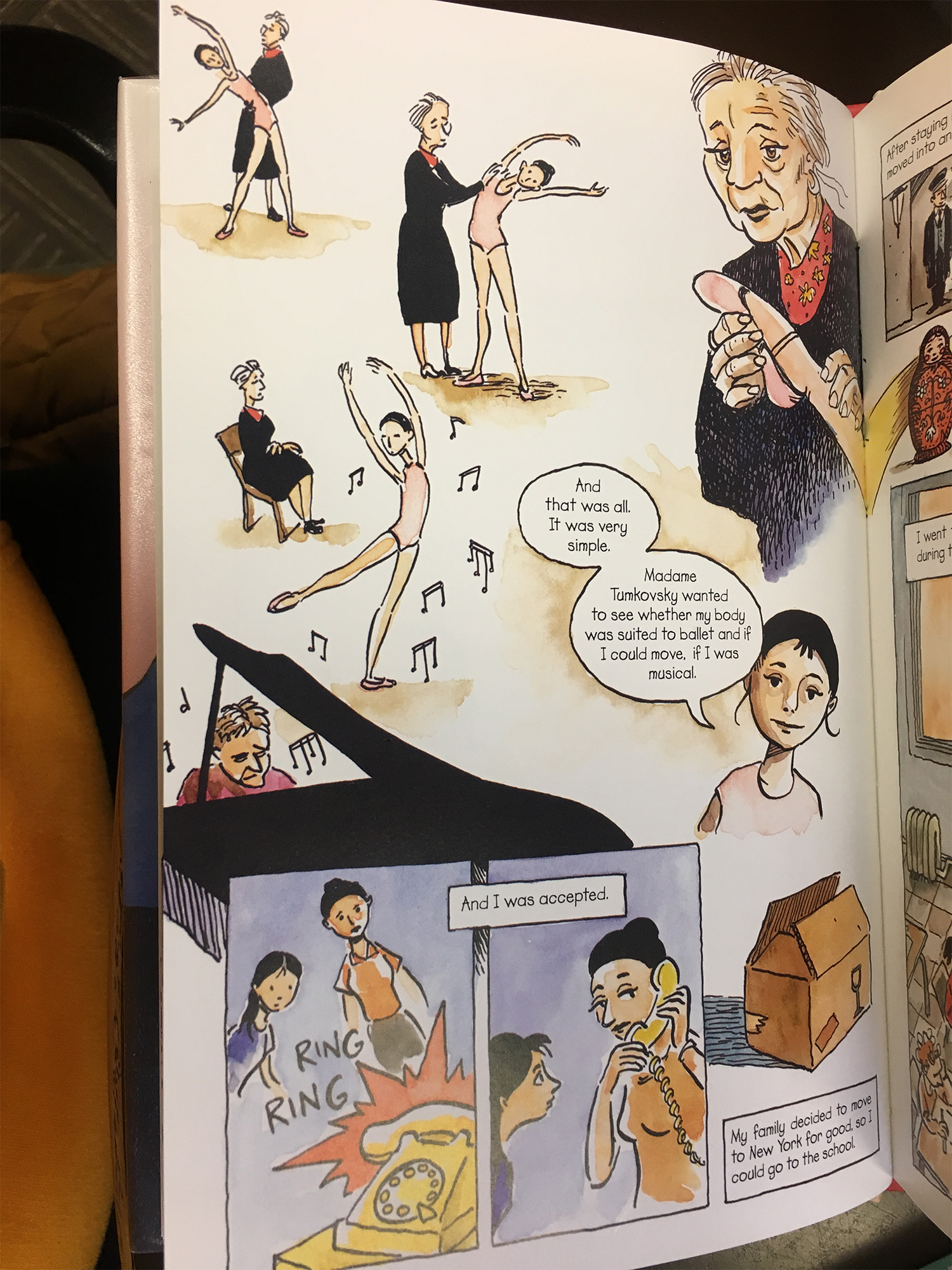
This photo was taken by Ana Maria and it is a page from the book, To Dance: A Ballerina’s Graphic Novel written by Siena Cherson Siegel and Illustrated by Mark Siegel.

Participation & Interpretation –
This page consists of three different major parts of the story. The top part illustrates several repetitive illustrations that allow the viewer to gain a sense of movement, but the viewer also must understand that the same dancer and instructor are being used over and over again. There are two characters in five scenes,  not ten different characters in a single scene. There are no panels used in the first part either, but there is a sense of direction from top to bottom and left to right.

The second part of the story on this page includes two closed panels that show how the dancer’s callback took place for a dance school.

The third part of the story takes up the least amount of space in the bottom right-hand corner of the page. The image is not in a panel, but the background is the whitest space on the page. The graphic is just a box and a closed text box below the graphic explains that the dancer’s family is moving to New York for dance school.
 

Posted in Fall 2019 Archive (201 Blog), Uncategorized | Leave a comment

Closure and Time Frames: Patrick Istvan

The graphic novel I chose is Marathon by Boaz Yakin and Joe Infurnari. It is a story about the messenger who in 490 BC, ran from Sparta to Athens asking for help. His deeds resulted in the defeat of the Persians and the preservation of ancient Greece. It is also the inspiration of the modern marathon run. I chose this graphic novel because I am a fan of Greek culture and especially ancient Greece. I also thought that the illustration style is interesting because it has an almost rough “sketch” like appearance in the lines, which I thought was interesting.

Marathon by Boaz Yakin and Joe Infurnari

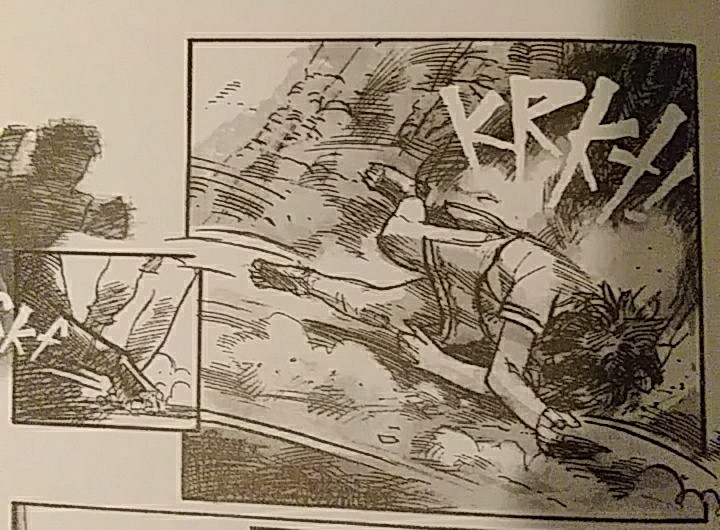
One example for closure that I found rather interesting is from page 8. Is where the young Eucles is tripped on his way to deliver a message. He must deliver the message but is sabotaged by friends of a runner he beat who was then executed by his Tyrant king father. I felt the “oh, no” moment when I was reading it and from what I gathered that trip is pretty momentous as it marks where Eucles life will change drastically. It is an action to action as Eucles is the subject which does not change even if you can only see his feet in the first frame. In the second you see him hitting the ground as he was tripped.

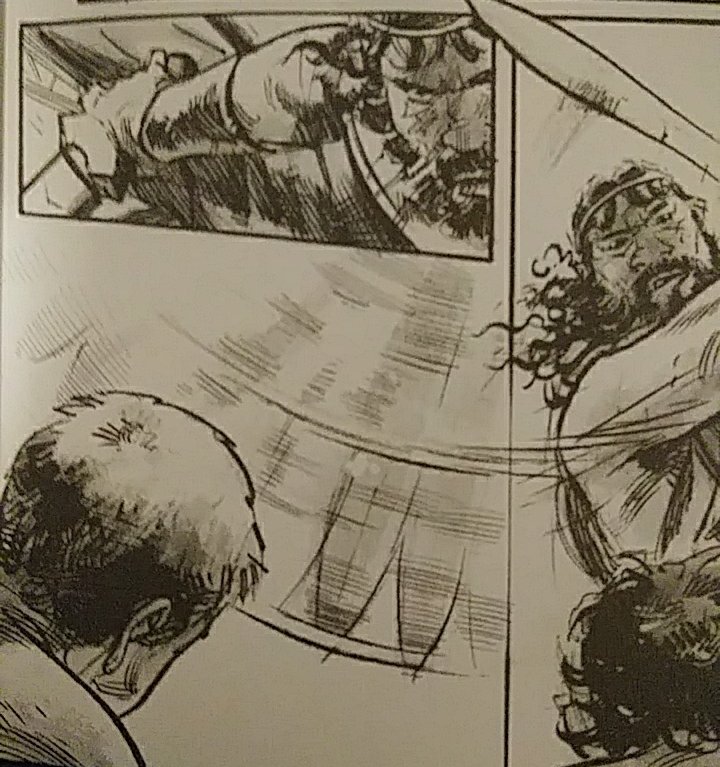
Marathon by Boaz Yakin and Joe Infurnari

As for time frames I chose one that shows something in motion within one frame. It is a sword being moved in front of a kneeling boys face before it is raised. It requires interpretation by the reader as if you where to look at it plainly and/or literally it would seem like it is a multi-bladed sword, which is not the case. It is actually being moved, indicated so by the lighter and incomplete outlines of where it would have been before and the darker more solid outlines of where it is in the more present time. This requires the readers interpretation as it would look very odd if the reader did not understand that it is an object in motion.


Posted in Fall 2019 Archive (201 Blog) | Leave a comment

Closure and Time Frames: Dahlia Xie


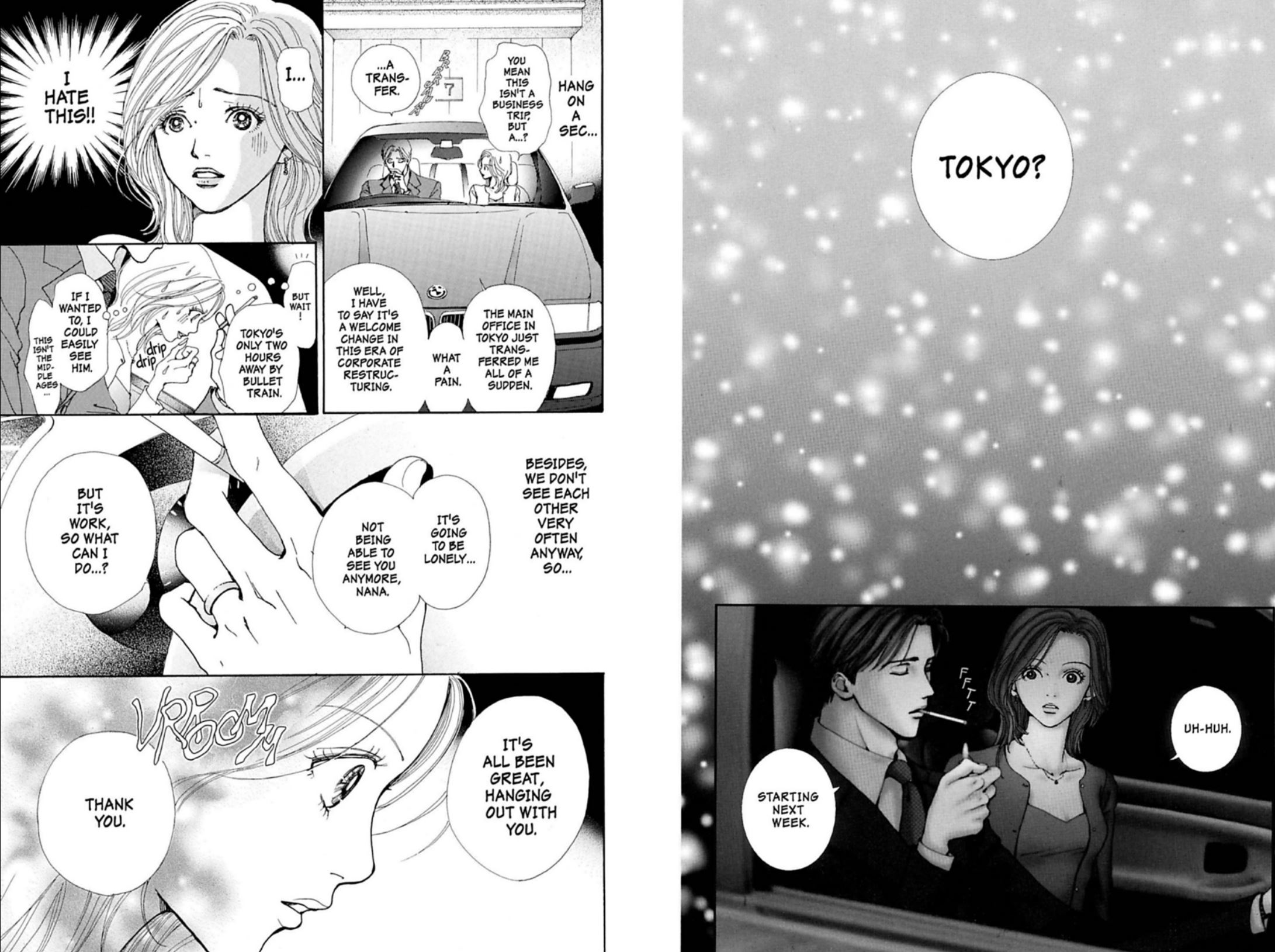
The graphic novel that I decided to pick was a Japanese manga called Nana. The main reason I chose it was because the author was a big fan of the jewelry designer, Vivienne Westwood, (whom I am also a fan of) so a lot of her characters later on in the novel wear a lot of Vivienne Westwood. I didn’t know anything about the premise of the manga going into it, but as a fan of Vivienne Westwood, I had an urge to check out this graphic novel.

Nana by Ai Yazawa

I chose this scene, the first page in the book, to show an example of closure. Initially, the two scenes on the separate pages confused me but after reading a couple more pages, I learned this man, who had to move to Tokyo, was having an affair on his wife and had to tell not only his wife that he was moving but also the younger girl. After getting more background on the situation, I realized that these two pages are examples of scene-to-scene. On the right side, it begins with the man talking to his wife about moving to Tokyo, and on the left, it is the man talking to the girl he is having an affair with.

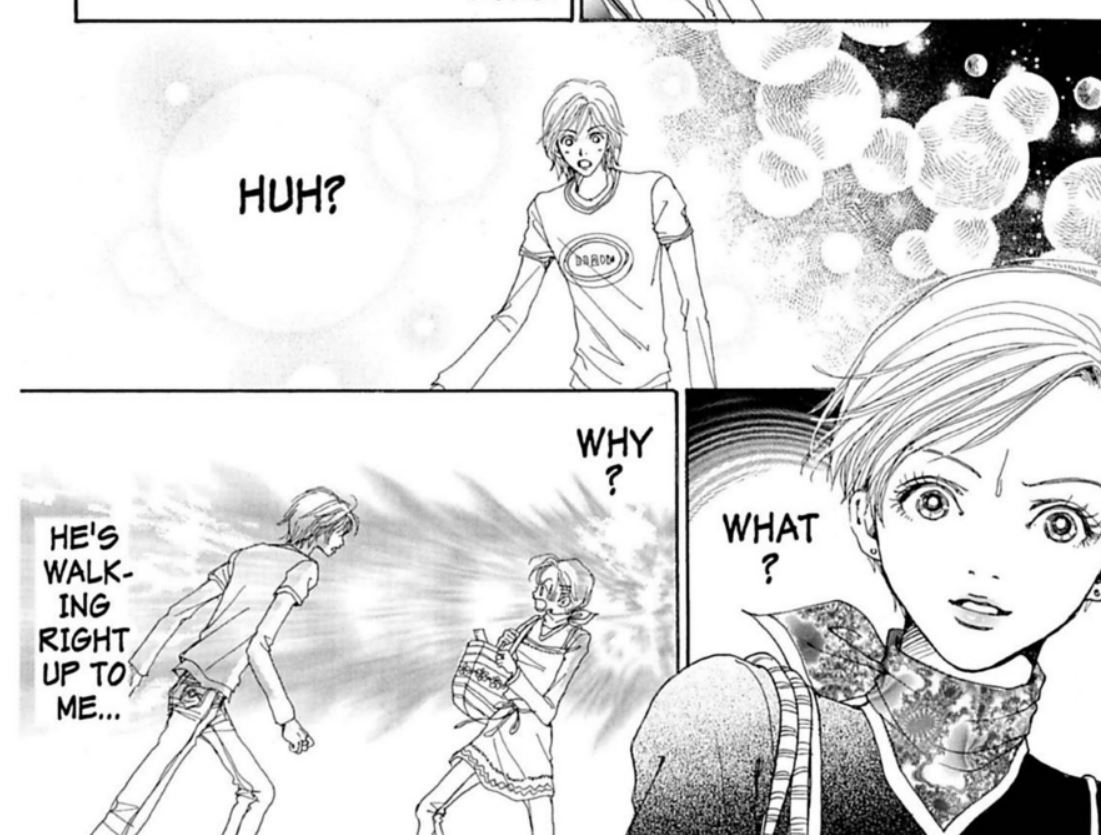
Nana by Ai Yazawa

I thought these panels show a good example of time frames. It doesn’t exactly show an image of the contrast in location to show time but in the bottom left frame, it shows a lot of movement in the grey, kind-of violent layer. That layer in the panel is definitely something I haven’t seen before to depict movement, but it shows how the man is moving quickly towards her in an aggressive manner.


Posted in Fall 2019 Archive (201 Blog) | Leave a comment

Closure and Time Frames: Cierra Haken

For my Graphic Novel, I chose to read V For Vendetta, written by Alan Moore and illustrated by David Lloyd (with additional art by Tony Weare). I chose this novel because I have actually seen the movie and I thoroughly enjoyed it. It’s a story about a dystopian, totalitarian future in Great Britain with a man who has an agenda involving an anarchic government . I am very intrigued by strange stories like this, and am excited to read the story in a print graphic novel.

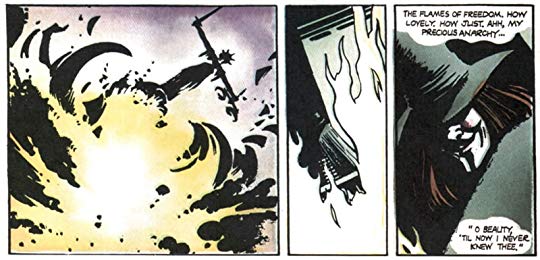
Moore, Alan, David Lloyd, Steve Whitaker, and Siobhan Dodds. V for Vendetta. New York: DC Comics, 2005.

One example of how Moore uses Closure in the novel is in this 3 panel sequence. In the first panel, an explosion is shown around some building and/or statue. As you look to the next panel, you see another view of the fire. Finally in the last panel, you see the main character, V who says something kind of strange and too positive for the context of the other two panels. Looking at these three panels in a row, you can use your imagination to put together that this character V is behind the reason for the explosion. He also has a smile on his face which shows he is happy about what has happened. This sequence makes the viewer interact with it because, from these three panels alone, you really don’t know how the explosion happens or what the setting is, so it creates a lot of imagination in the viewers mind of what might be happening in the gutters. This could be considered an ‘aspect-to-aspect’ sequence, as it goes from a panel of the fire to the next, showing the (most likely) cause of the fire.

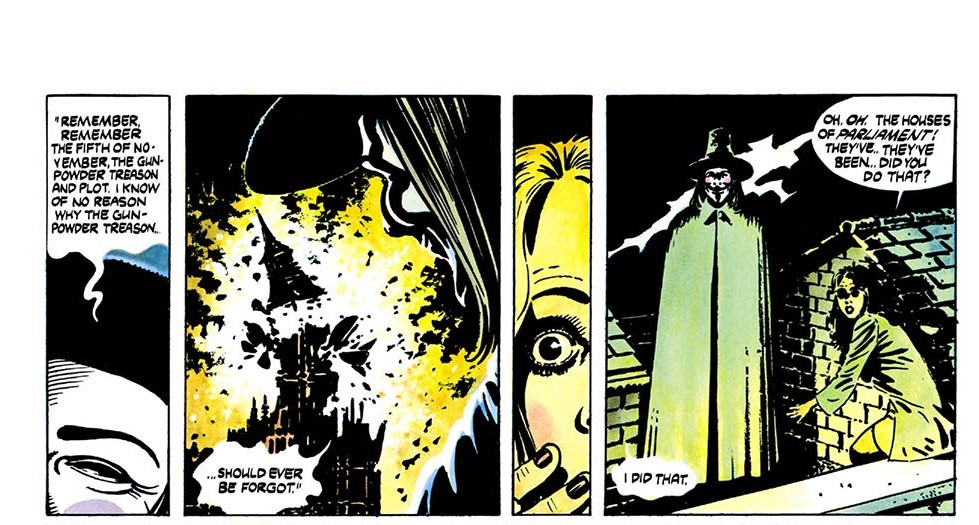
Moore, Alan, David Lloyd, Steve Whitaker, and Siobhan Dodds. V for Vendetta. New York: DC Comics, 2005.

Moore manipulates time in this sequence by contrasting long dialogue with a skinny, ‘fast,’ image. V begins a lengthy monologue in the first panel, which requires the reader to spend a lot of time on this panel. The monologue is paired with a glimpse of V allowing the reader to visualize him giving the speech, showing the sense that quite a bit of time has elapsed before they move onto the next panel. The second panel takes much less time to read and is also juxtaposed with a snapshot of an event that would happen in an instant, which signals to the reader that only a few seconds have passed over the course of this panel.

Posted in Fall 2019 Archive (201 Blog) | Leave a comment

Closure and Time Frames: Min Kim

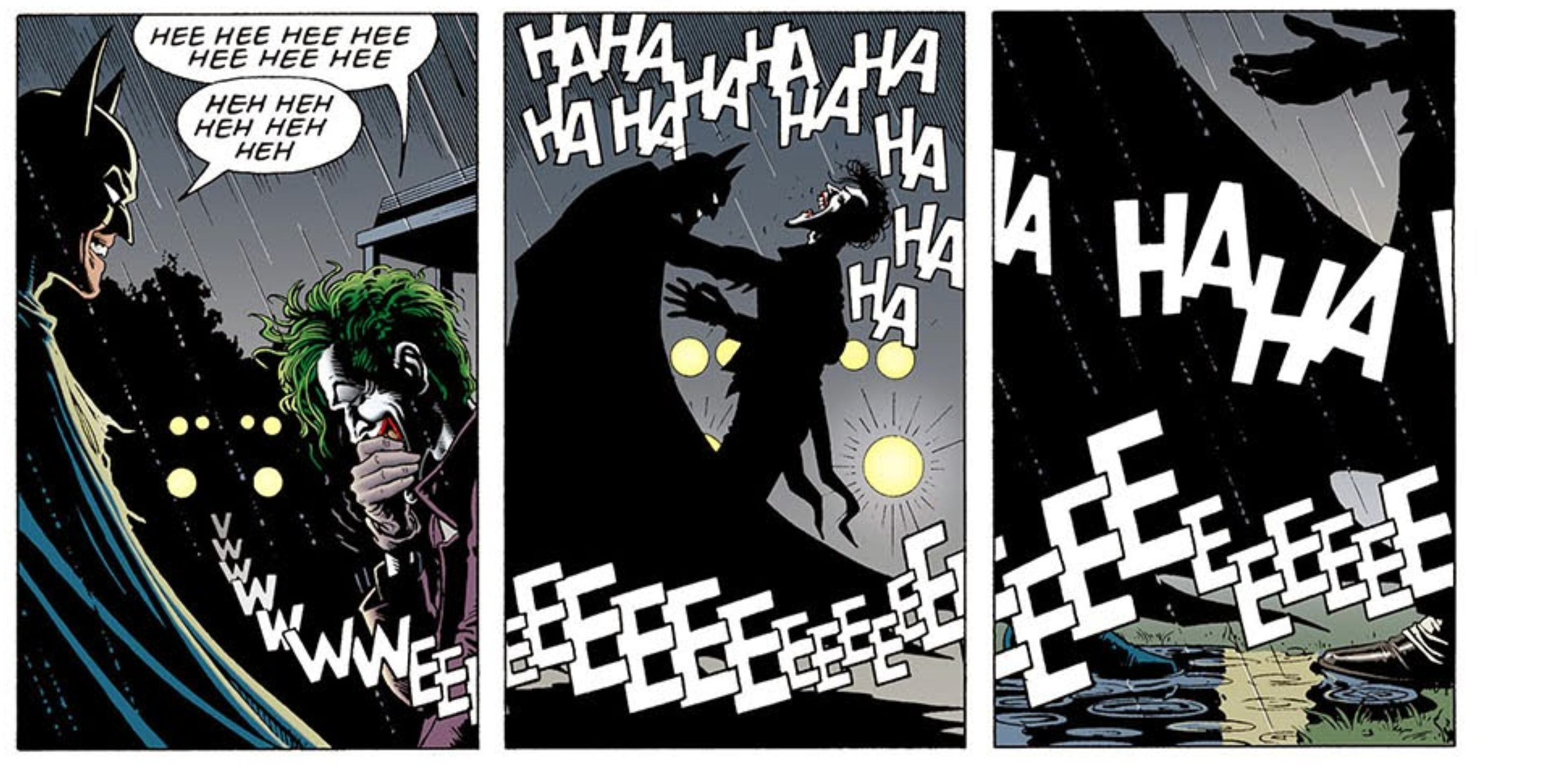
A page from “The Killing Joke” where batman and the joker share an uncanny laugh at the end of the novel.
(Alan Moore, Brian Bolland, Richard Starkings, Tim Sale, Batman : the killing joke, 2008, pg 49)

When thinking about closure and time frames, “The Killing Joke” offers and portrays many excellent instances of these techniques. “The Killing Joke” is an iconic graphic novel and one of its most notable scenes is the final page. As Batman and the Joker come face to face in the final moments of their seemingly perpetual struggle, a dejected and forlorn Joker tells Batman to perform the typical and redundant heroic ending; however, Batman wanting to cease the senseless fighting tries to help the Joker. Beyond from help, the Joker conveys it in a joke where Batman laughs along–completely out of character– leaving the viewer to decipher the last scene. This is a superb use of closure because we are left wondering what happened, whether the Joker was killed or if the cycle will repeat again.

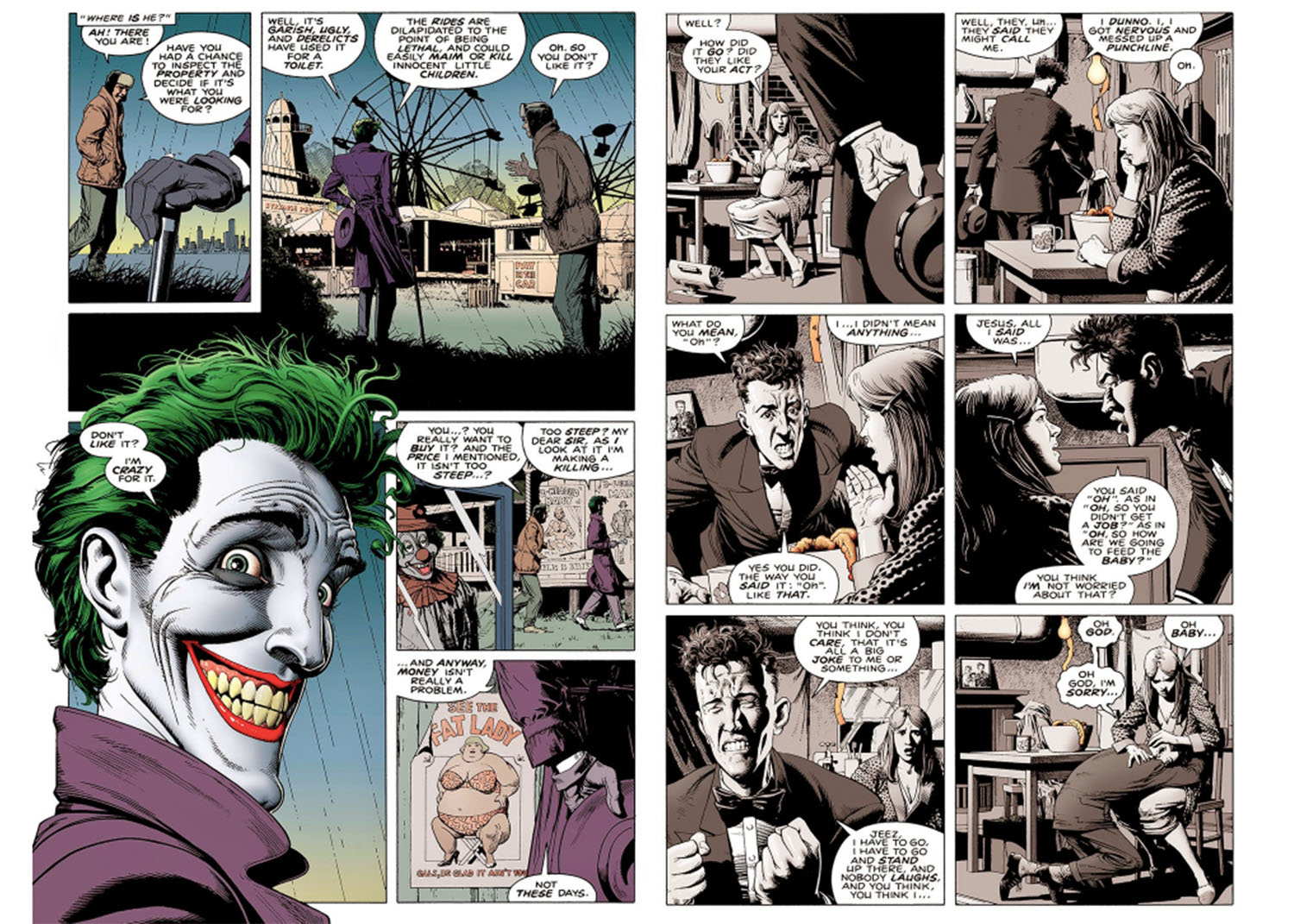
A section of “The Killing Joke” where the Joker finds a venue for his deeds as he then reminisces his former life.
(Alan Moore, Brian Bolland, Richard Starkings, Tim Sale, Batman : the killing joke, 2008, pgs 9-10)

Transitioning to time frames and the prevalence of them in this comic, the authors interject memories throughout the story to provide depth and according to Scott McCloud’s explanation, to divert the linear progression of the story. In the pages I chose, the Joker is curating a venue for his dubious plot, but the page after portrays black and white  panels and who we are inclined to believe is the Joker in his former days as a normal man. This transition provides depth into the story by suggesting an event(s) in his past that led him to become deranged and psychotic. With this, the Joker as we know it is not just a simple villain but a man with aspirations, compelled into crime by desperation. In addition, how the Joker is popping out of the borders and how the other panels are arranged, it brings emphasis to his character with a close up shot interfering with the edges of the other panels.

Posted in Fall 2019 Archive (201 Blog) | Leave a comment

Closure and Time Frames: Bruno Signorelli

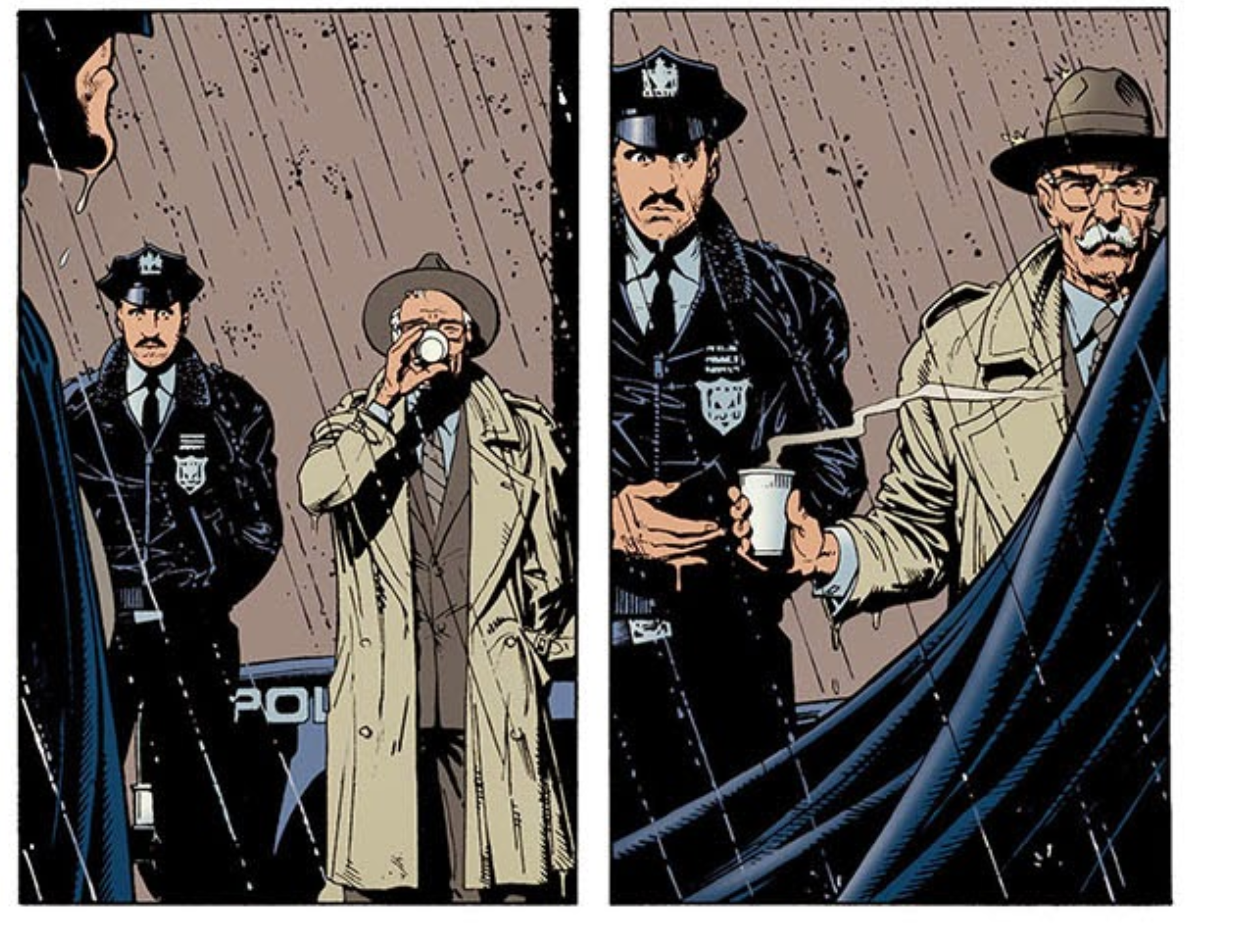
Two panels from Batman: The Killing Joke.

These two panels show closure in the form of action to action. This is the case because in the first panel we see the subject drinking his coffee, and in the next panel he is handing his coffee to someone. This shows the action that the subject is doing and it is done with a simple panel transition.


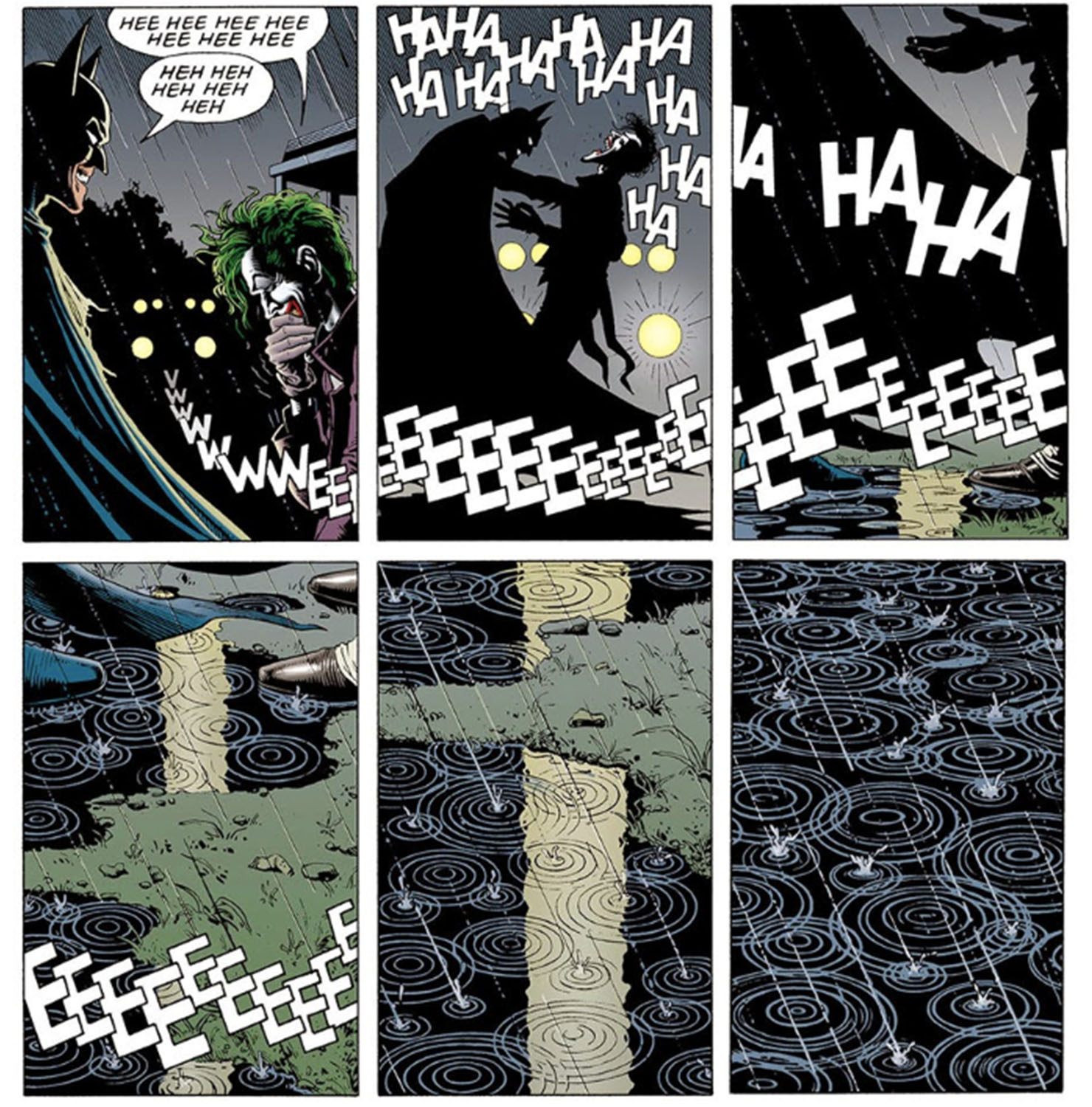
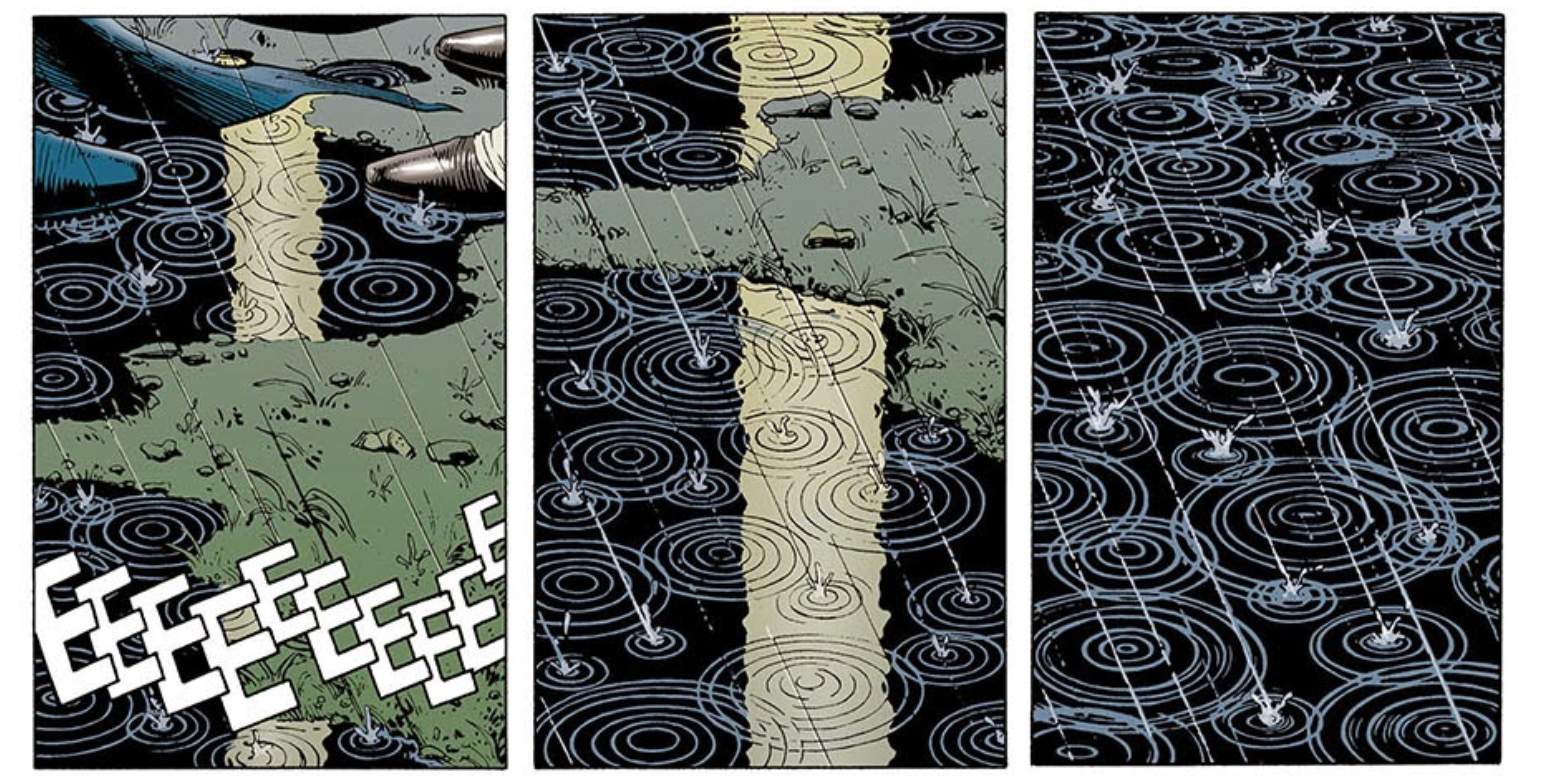
Sequence of panels from Batman: The Killing Joke

This sequence of panels is a good example of time frames because it forces the reader to interpret what is happening in the scene because nothing is said or really shown in the panels. Yet the image keeps zooming in on a part from the first image (the puddle of water), and it leaves the viewer to decide what happened.

Posted in Fall 2019 Archive (201 Blog) | Leave a comment

Closure and Time Frames: Zach Morgan

Since my first project focused more on the mainstream side of comics, I wanted to dive into some deeper subject matter for this project. For that reason, I decided that I want to read Chris Ware’s Jimmy Corrigan: The Smartest Kid on Earth. Listed on NPR’s “100 Best Comics and Graphic Novels,” Jimmy Corrigan is described in a way that I thought made it perfect for this project. NPR says that Chris Ware has “master[ed] the comics medium’s unique ability to create tension between words and images,” which to me sounds like Ware must be proficient in how he manipulates how much the viewer is required to participate in the story through the use of closure and time frames. I also read that this graphic novel is not only a masterpiece, but that it feels “like a series of gut punches,” (NPR). As I began to skim this graphic novel, I immediately felt the sense of sadness from the main character from everything about him including his apartment are bland, unexciting colors along with sad imagery of what his dad walking away from him. It, too, was immediately evident how great of a graphic novelist Chris Ware is.

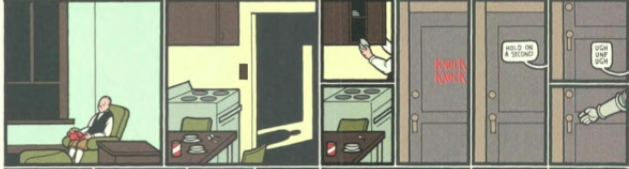
An example of closure from Chris Ware’s Jimmy Corrigan

One example of how Chris Ware uses closure is in this fairly simple sequence of panels. Ware shows Jimmy sitting on his chair in a room, doing nothing, which provides a sense of boredom from this character. Then in the next panel, the reader sees a shadow of man standing in the doorway outside of a kitchen. According to Scott McCloud, what has happened in between these panels is entirely up to the viewer. As a viewer, I pictured Jimmy standing up from his chair to walk into his kitchen. This is an example of subject-to-subject transition as it follows Jimmy through his home. As the viewer reads along, Jimmy is not shown in his entirety in the panel, but the viewer feels that he is there. I think what the viewer feels from two panels has a big effect on how they interpret what occurs in the gutters between the panels.

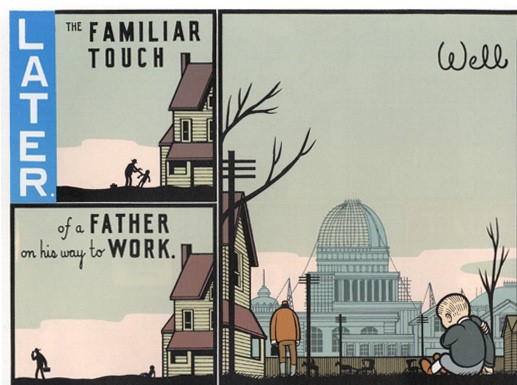
An example of the use of time frames from Chris Ware’s Jimmy Corrigan

Looking at a more complex sequence of panels, one thing that jumps out at me right away from these three panels is that the words are not bound to single panels. Rather, there is a sentence that starts on one panel that concludes on the next. I think this is done intentionally to direct the reader, so they read the panels in order. But I digress, I want to point out how Ware uses time frames to help tell the story of these panels. Through the three panels, you see small pictures of a father and child with the man holding the child by the arm. Then, the father is shown walking away from the boy and the house. Finally, you see another angle more so from the boy’s perspective. Ware manipulates time between the two panels on the left by how much distance he puts between the father and they boy, which indicates to the reader that about 5-10 seconds have passed by and the child is sitting still on the ground. In the right panel, the boy is in the foreground sitting, seemingly in pain, holding his arm. With the painful feeling the reader gets from the boy, paired with all the open space at the top of the frame, time is conveyed in this sequence deliberately to convey the  feeling of loneliness and sadness. Since comics are a sequence of images intended to convey feelings in the viewer, I’d say Chris Ware has checked that box.

https://www.npr.org/2017/07/12/533862948/lets-get-graphic-100-favorite-comics-and-graphic-novels

Posted in Fall 2019 Archive (201 Blog) | Leave a comment

Closure & Time Frames: Jack Kay

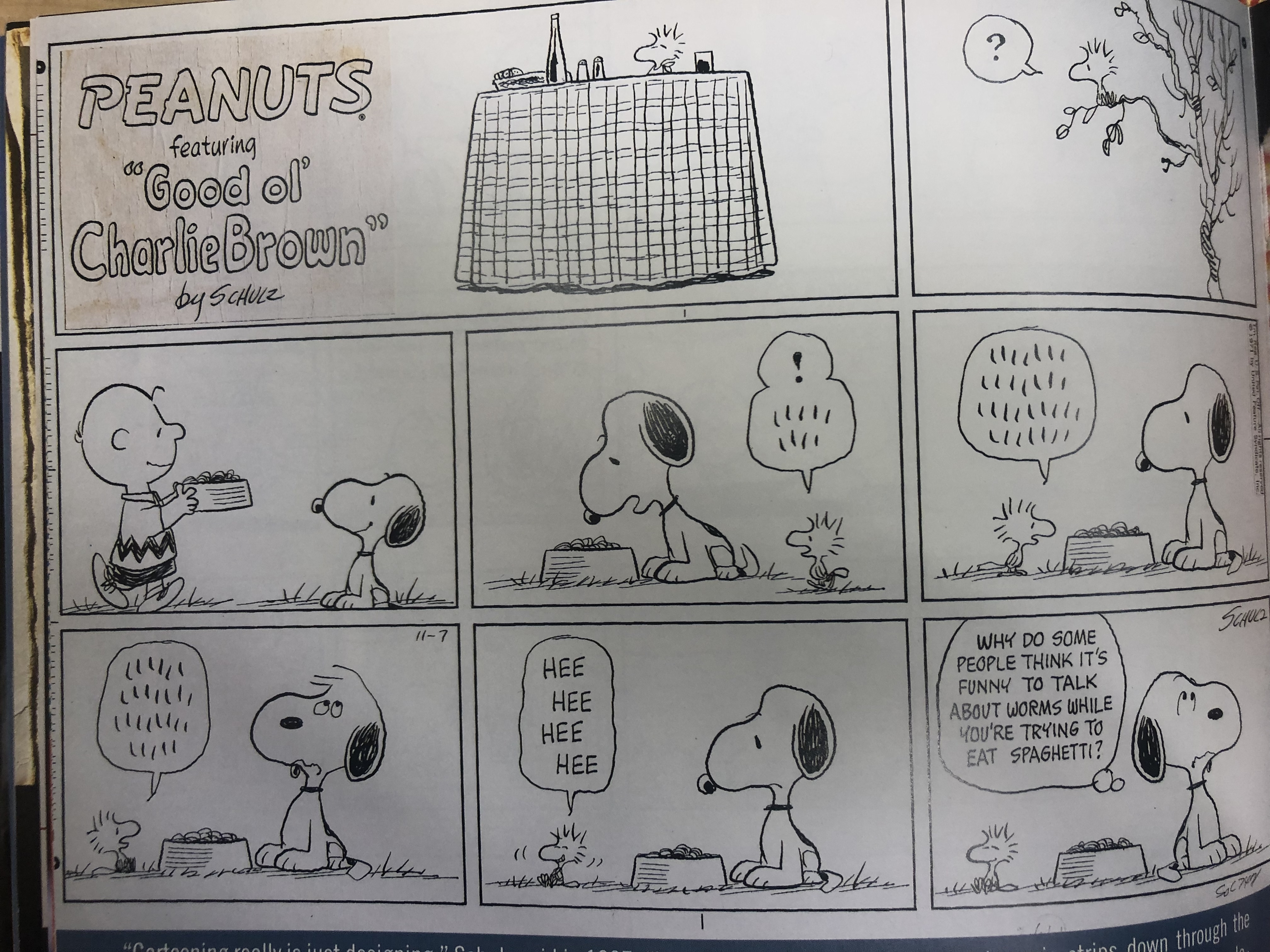
When picking out items, I always look for the most nostalgic items and upon looking for a graphic novel I stumbled upon the Charles M. Schulz “Peanuts” series. Just picking up this book sent my brain back to when I would read these comics and also made me picture Charlie Brown and the Great Pumpkin I would watch with my family every year around Halloween time. This was a complete version of all of Schulz’s “Peanuts” comics and displayed his own commentary behind the ideas.

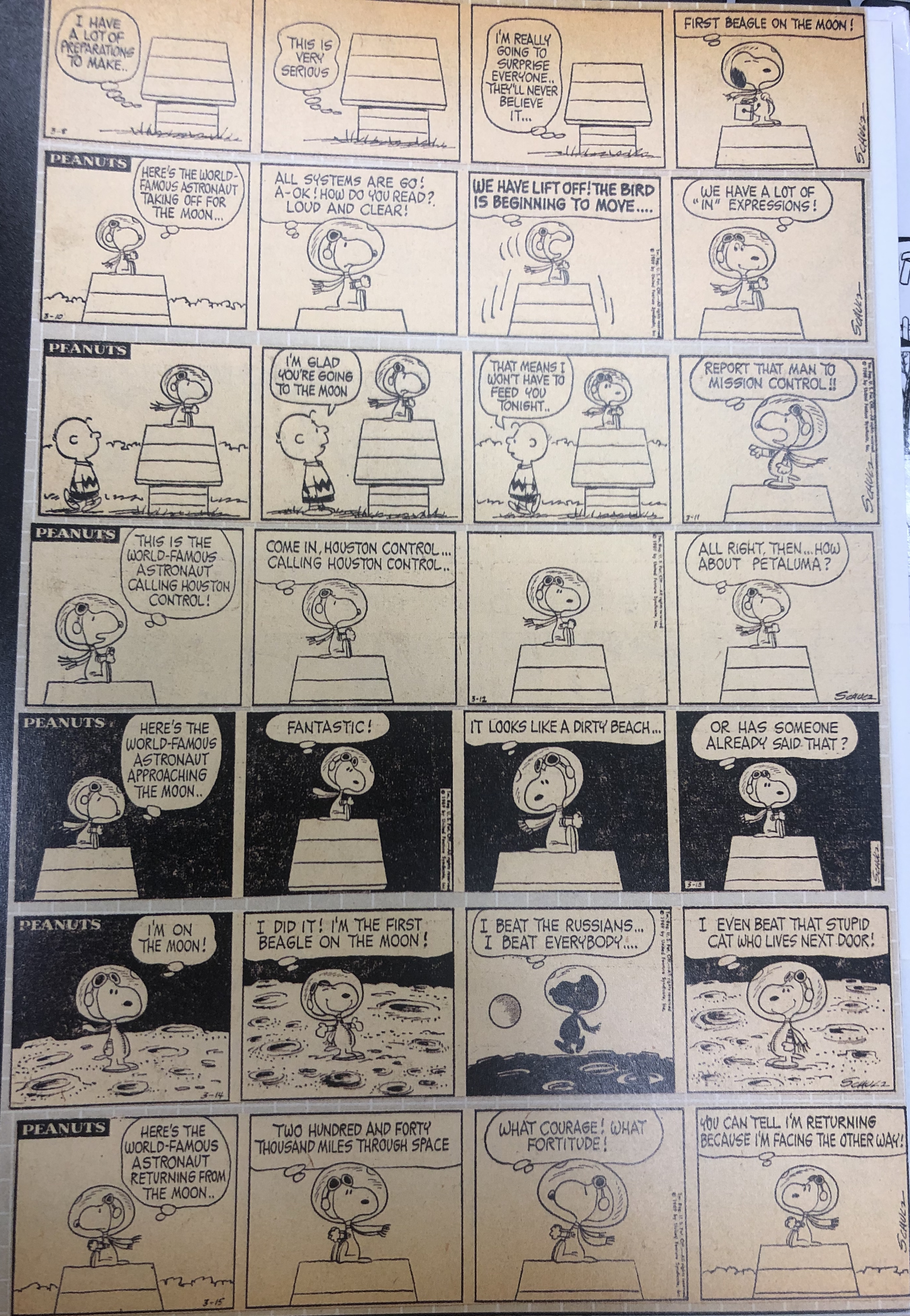
Snoopy’s Moon Exploration

On Snoopy’s adventure to the moon, Schultz allows the reader to infer that for one moment Snoopy is on the ground and then the next he is in outer space. This moment-to-moment closure is shown by the darkness of the background once Snoopy announces he is going up to space. Another interesting move by Schultz is to bring in more closure when showing the last four panels of Snoopy in the same spot as the beginning, this scene-to-scene example makes it seem like Snoopy never actually left his spot on top of his dog house, but instead only visioned his space adventure.


In the next comic, Snoopy is faced with his friend, Woodstock when given dinner by Charlie Brown. Since neither Snoopy nor Woodstock can actually talk, it is expected that the viewer narrates the story. Woodstock notices that snoopy is given a bowl of food and decides to antagonize Snoop. As soon as Snoop goes to eat his food, Woodstock decides to talk to him; Schultz decides to not let Woodstock have words, but instead just lets him talk in lines. This is the start of the Time Frame where the reader has full control of what Woodstock is actually saying to Snoopy. Snoopy reacts to Woodstock in a disgusted way because of what he is shouting to him, but the story is

Woodstock annoying Snoopy

really just based on the reader’s interpretation. The last panel states that Woodstock was talking about worms, but that may just be the shape of the text that was coming out in Woodstock’s speech bubbles.

Posted in Fall 2019 Archive (201 Blog) | Leave a comment

Closure and Time Frames: Phuc Tran

71929795_431875520788832_1371427527704182784_n

Neon Genesis Evangelion vol. 1 by Yoshiyuki Sadamoto

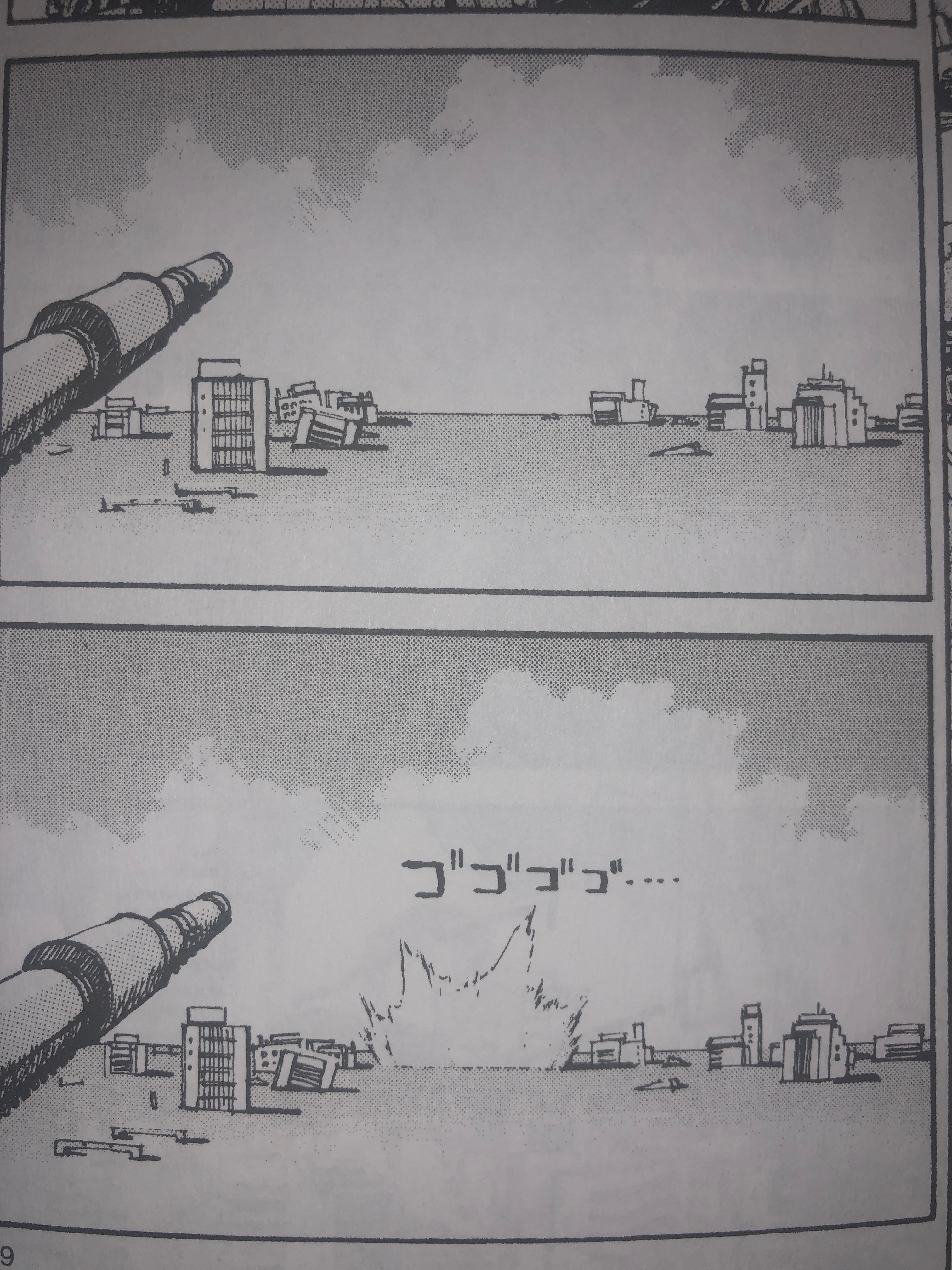
The graphic novel I chose for this blog is”Neon Genesis Evangelion” by Yoshiyuki Sadamoto. This book is about the fight between alien monster and humanity with the help of giant controlled robots. This is a famous manga that Hollywood based on it and make the hit movie “Pacific Rim”. Because of the Science Fiction genre, I believe there would be some interesting shots using different technique to describe the actions which make it perfect for this activity. One of the example for closure that I found is these two frame demonstrate the monster rising from the water. This would be a moment-to-moment or action-to-action closure because the 2 frames point to the same location with the angle, the only different is in the second frame, the water get a big splash when the first one has steady water. This is a great way to describe the action of the object more lively for the viewers as they imagine what happen between those 2 frames rather than just the second frame.

72104946_1305816069590335_5561127705014960128_n

Neon Genesis Evangelion vol. 1 by Yoshiyuki Sadamoto

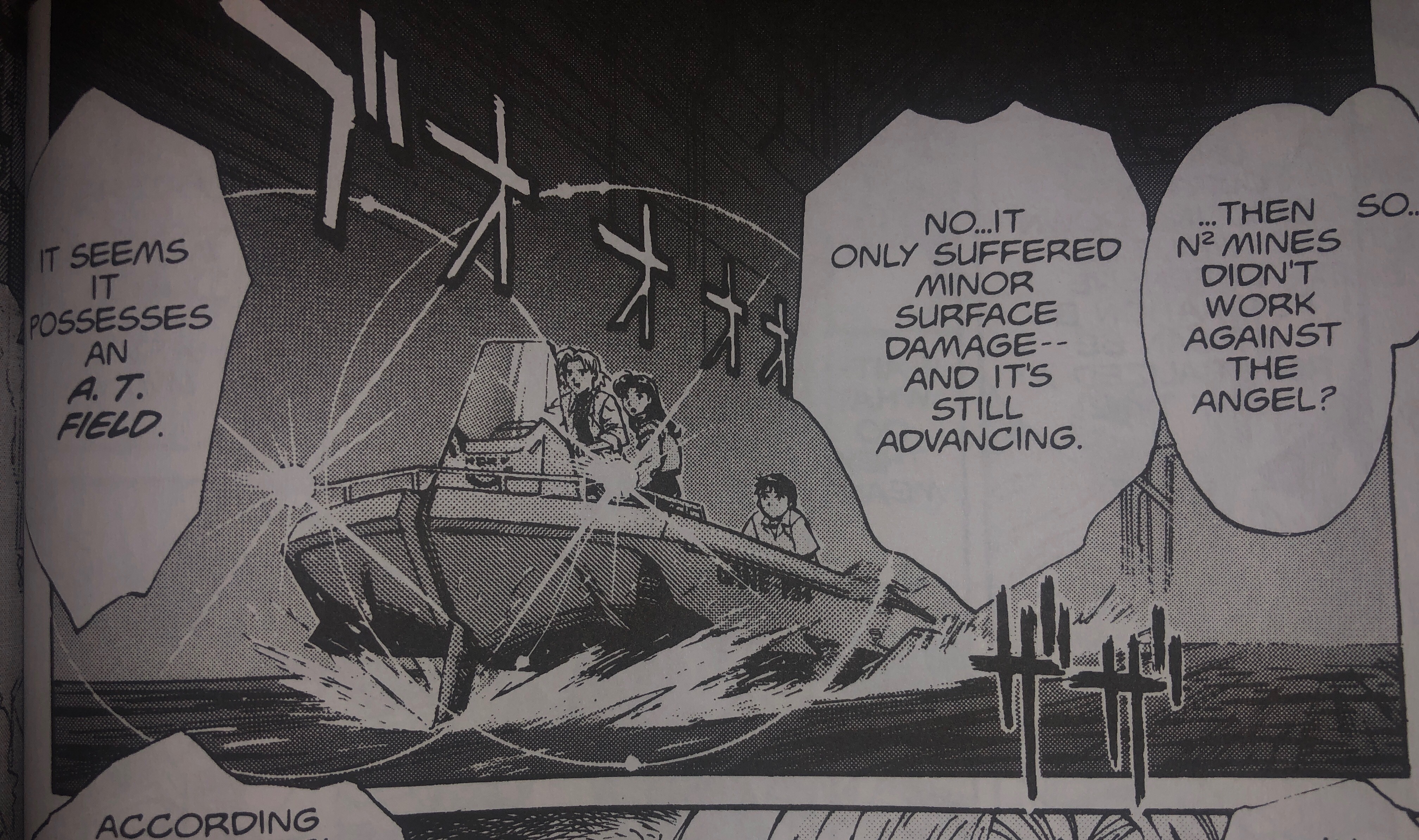
For the time frames, I found this shot very fits to be an example that gives the reader to chance to have the imagination of time. In this scene, the 3 people are in the boat and the two woman is having a conversation. Rather than just a still image as it seems in the picture, this scene describes the continuous movement of the boat when the people on it are talking. So instead of just a blink of an eye, this scene need reader’s participation to view time longer and imagine the boat as it keep moving forward. This is only possible by the length of the text as it they are long sentences and the way the artist drew water as it is splashing backward to demonstrate the movement of the boat.

Posted in Fall 2019 Archive (201 Blog), Uncategorized | Leave a comment

Closure and Time Frames: Bobby Brown

The graphic novel I chose to check out from the WSU libraries is Trees, by Warren Ellis and Jason Howard. I chose this novel because of the quick synopsis that was on the back. It talks about how something had invaded planet earth, and considering I like most things sci-fi, I figured it was a safe bet. I was also able to find two relatively solid examples of both closure and time framing in my novel.

Page 56 from Trees, by Warren Ellis and Jason Howard.

My first example page I photographed from my novel is a strong example of closure. I was able to narrow it down to two different types of closure, those being moment-to-moment, and subject-to-subject. I feel it better fits the description of subject-to-subject since the action that’s happening on the page is basically all happening at one moment, yet it’s split up among 5 different frames. I felt it could also fall under moment-to-moment since it’s being read left to right, but I feel it better fits subject-to-subject. I’m still trying  to get a better understanding of the different types of closure and how to identify them in my graphic novel, but I’m definitely learning how to identify and apply them.


Page 4 from Trees, by Warren Ellis and Jason Howard.

My second example page I photographed from my novel is an example of time framing, specifically one that requires serious viewer participation or interpretation. While this may not directly fit the examples shown on pages 105-106 in Scott McCloud’s Understanding Comics, after skimming through my entire novel this is the closest example I could find. I chose it simply because of the amount of action that was happening within such a short amount of time, and it’s basically right at the beginning of the book. I took some time to look intently at the frames on this page to fully take in the all the action that was taking place, and there’s a lot running and explosions happening; I would also assume the metal dog-like things are what invaded earth. Overall there’s a lot to take in with this graphic novel and I assume that I will enjoy reading it and learning to apply what I’m learning in Scott McCloud’s book to this one.

Posted in Fall 2019 Archive (201 Blog) | Leave a comment