Print Versus Digital Comic: Arron Borja

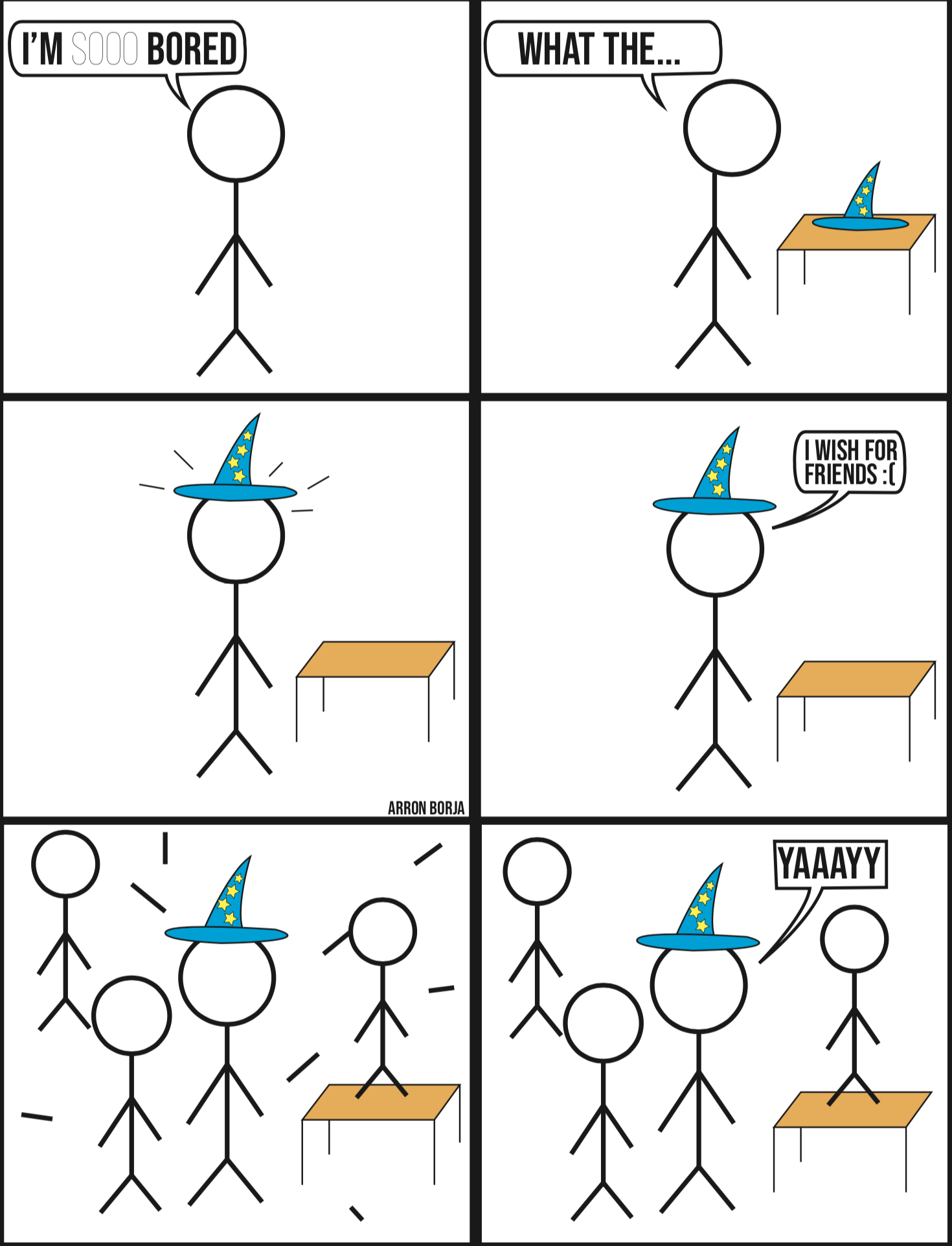
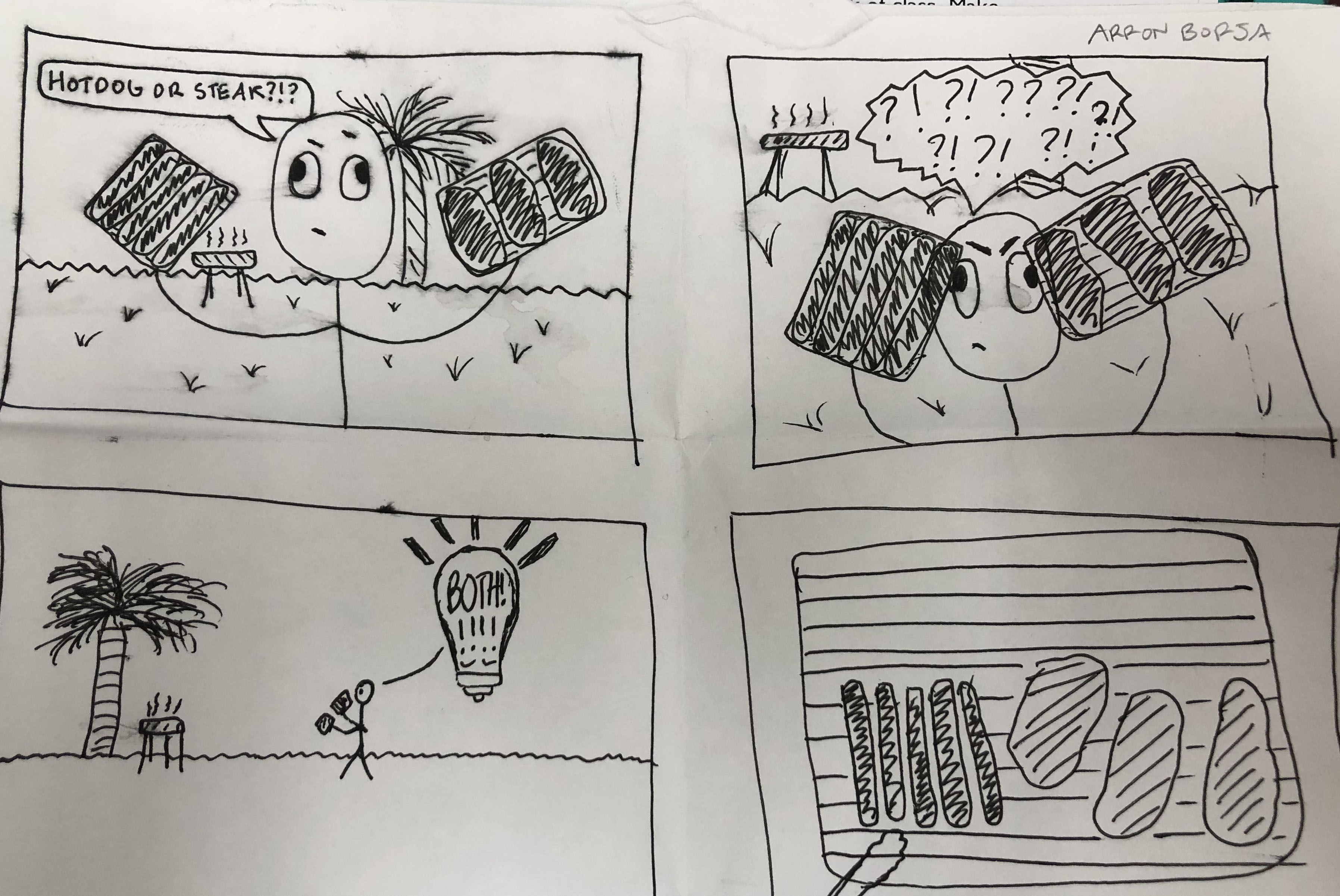
Making a comic by hand is very much different from making a comic by using a digital tool. Benefits of creating a comic by hand include not having any limitations with the way that the content is created. For example, with the pen tool in Photoshop, there is more of a restriction as to what I can really do or create. However, if I was to use pen or pencil on paper I have full control of what I am creating. Using digital tools does have it’s benefits as well. For example, I was able to create exact replicas or objects and items in each frame, creating a perfect consistency with the sizes and shapes of the objects. With drawing my comic by hand, each object/item was not perfectly replicated in the frames following. To me, it doesn’t really matter if I read comics on a screen or on a paper, as long as I understand the story and what’s going on. The only thing that would concern me is if the author of the comic purposely did things with the story or the design of the comics so that I would absolutely need to read the comic on paper to receive the full experience of the comic.

Posted in Fall 2019 Archive (201 Blog) | Leave a comment

Print Versus Digital Comic: Jon Klaveano

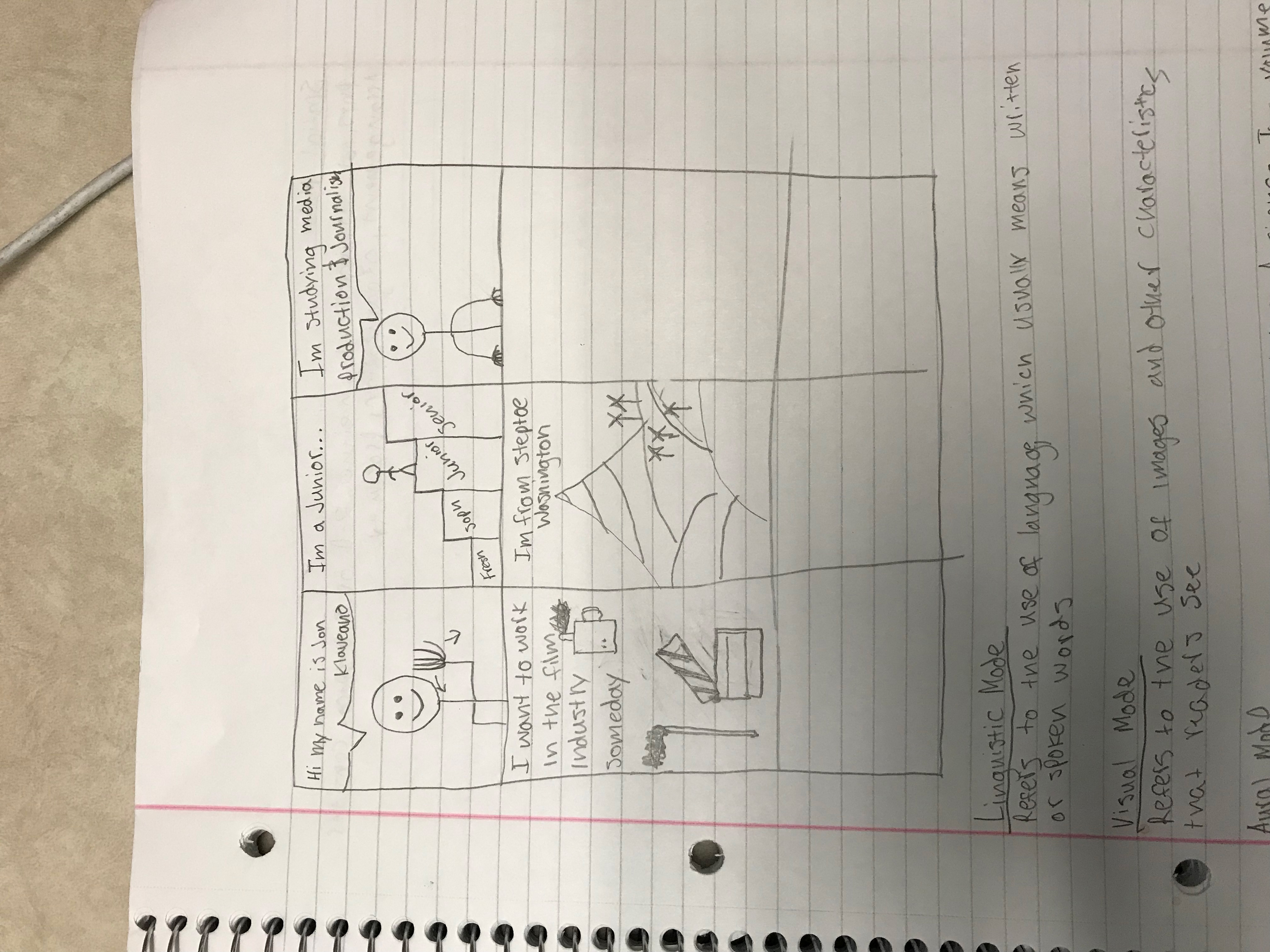
Creating my original hand drawn comic was quite the experience. Most of the time I spent on this project was spent thinking about what I should make the comic about. I thought alot about my drawing ability and it played a major role in my final project. It played a huge role in why I didn’t include certain things. That being said I played it safe and drew stick figures but im still happy with the end product. I was able to tell a story through the comic strip that encapsulated me pretty well. I used thought bubbles and drawings of different objects to make my comic more creative. The hand drawn comic I made definitely has a better sequence of photos than the digital comic. but from a creative and artistic perspective it is lacking.

Creating my digital comic was a lot less stressful of an experience. I knew I wasn’t limited by my artistic ability because of the adobe software. I tried accounting for the first chapter of “Understanding The Invisible Art Comics” while creating the digital comic. I think the words I included in the digital comic help to convey the message I’am attempting to tell. If I did the project again I would try and make my photos more congruent and more related to each other.  I have used Adobe Photoshop before, so it was merely a matter of remembering how to use it.  I remembered using certain tools in adobe photoshop from other classes I have taken.  tools such as layering, lasso, and the cropping tool helped me to create the digital comic. I utilized pictures I had made and taken for two of the photos used in the digital comic. I also used a free use photo from the top of Steptoe Butte which is located in Steptoe, Washington.  The first photo is of me and my siblings on thanksgiving last year. The second photo was made for a television show I helped create for Cable 8 called “Bored & Stranded.”


Posted in Fall 2019 Archive (201 Blog) | Leave a comment

Hand VS. Comptuer Comics: Emily Bartholomew

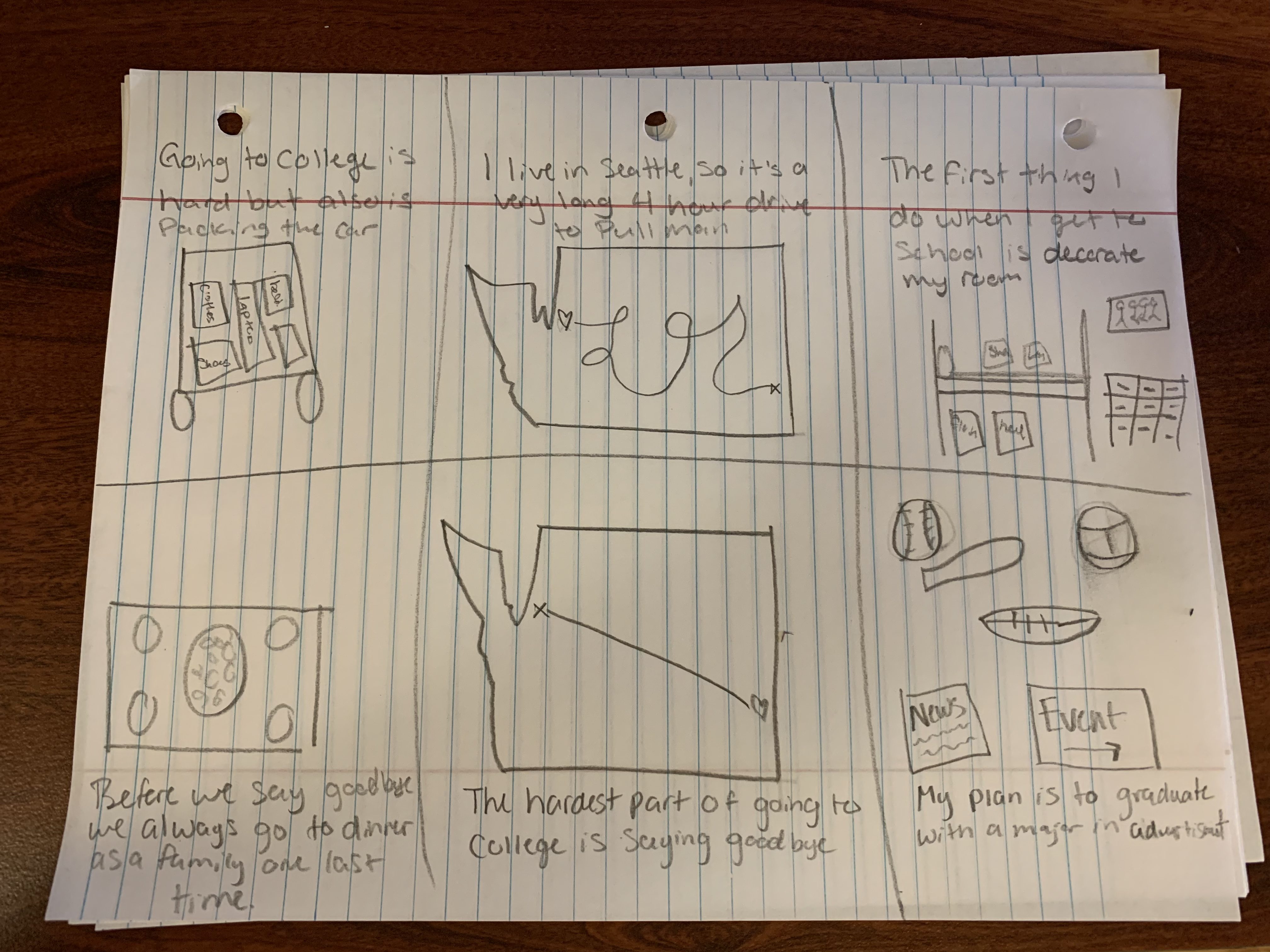
This is my hand drawn comic strip, that I decided to turn into a digital comic.

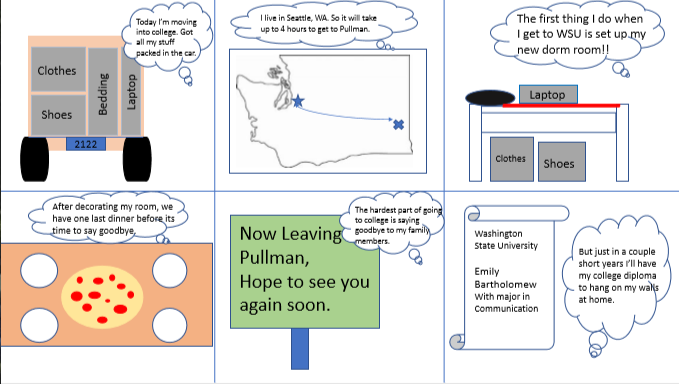
This is my digital comic strip that I made in Microsoft PowerPoint

My hand drawn and digital comic are very similar, yet very different. The hand drawn comic strip was easily the hardest one to perform. I had an idea of what I wanted the comic to look like but knowing my artistic skills I knew it wasn’t going to look the way I wanted. Since I’m not an artist I also didn’t have the tools that some of my classmates had to make their comic strip colorful and exciting.

On the other hand, with the digital comic I made I was able to add color and make it the way that I somewhat had planned. I was also able to get the perfect shapes I wanted for the state of Washington and add some vibrant colors to the comic to make it more exciting for people to read or look at. There was an easier advance using the computer by being able to add texture in my background and having people actually know what you drew instead of people trying to guess what you drew.

Both of the comics executed the story that I was trying to tell my audience. Whether somebody was reading it on a physical piece of paper or if they were reading it on their computer or tablet. When it comes to drawing comics, I lean more towards the digital side, but if I was to read one, I would rather want to have a physical copy of the comic. With some authors I feel that you can miss some parts of the story by not being able to touch the texture that they used in the background to get that full affect.

Posted in Fall 2019 Archive (201 Blog) | Leave a comment

Print Versus Digital Comic: Kristine Zorn

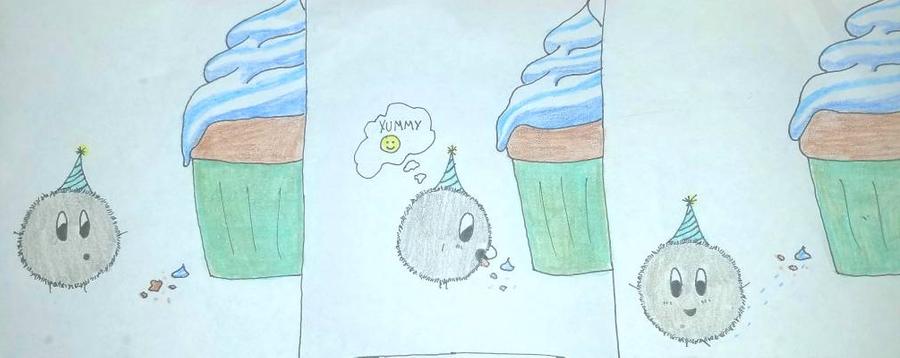
Dusty’s Birthday-Print Comic-Created with printer paper, felt tip pen, and colored pencils Designed by Kristine Zorn, August 2019

Depending on the tools you have creating print and digital comics can be very similar. I use a drawing tablet and pen which makes my digital comic process closer to my print comic process with paper and pencil. Virtual rulers and grids help to simulate the way rulers can be used in print to makes frames and lines. However, there are a bunch of differences. One of the most noticeable differences to me is the way color and texture appear on paper versus digitally. The type of paper and tools used, like pencil, pen, watercolor, or markers, all change the texture of the drawings. There are ways to simulate texture digitally, but it isn’t always easy or accurate. In most digital art I’ve done, there isn’t much texture to the color at all.
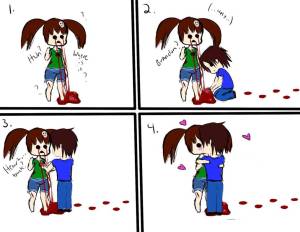
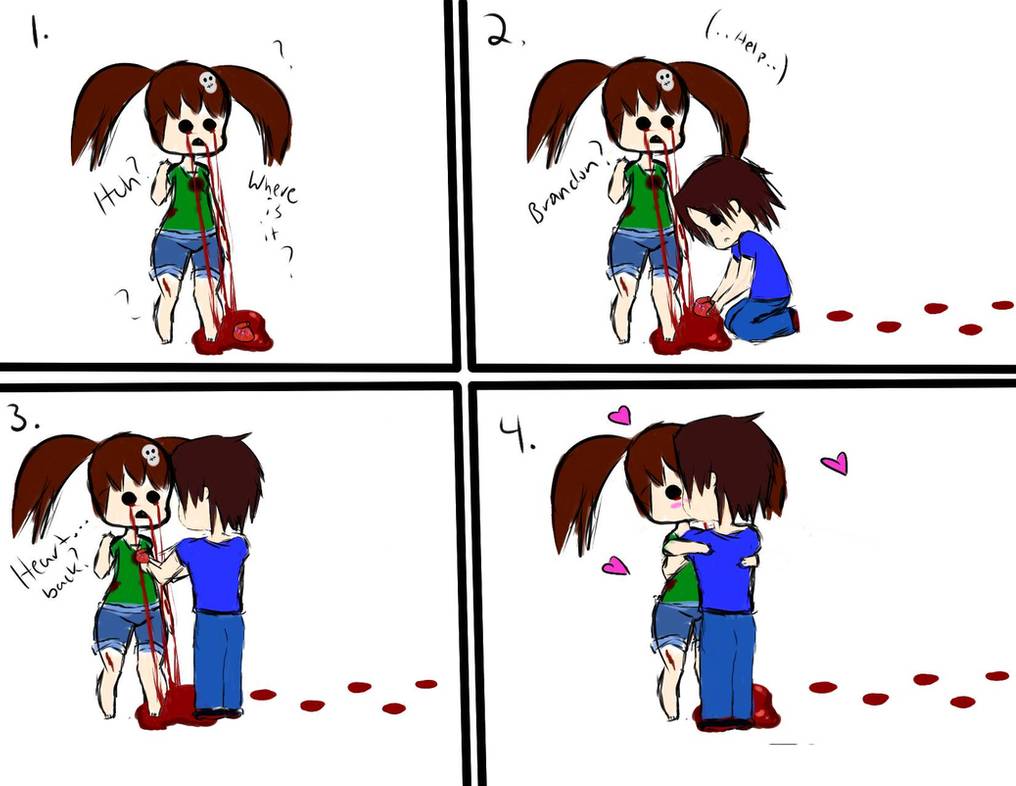
Undead Love-Digital Comic-Created in Photoshop using a drawing tablet-Designed by Kristine Zorn, August 2019

I don’t like print or digital more than the other. There tends to be a learning curve when it comes to drawing digitally. It feels a lot different than paper because of the smooth texture of the screen and smoothness of the pen nib. There is also a bit of parallax that occurs when drawing digitally which doesn’t happen when drawing on paper. I prefer to sketch on paper because of that it feels more natural to me. When it comes to color, I like digital tools. I find it easier to get an even tone of color in larger areas. The ability to undo also can help with coloring mistakes which can sometimes be irreversible in print. For most projects, I sketch on paper and then finalize lines and color digitally.

It can nice to read on paper and physically feel the page and you turn it. Print can be taken anywhere and don’t require a connection to the internet like most webcomics would. But there is one distinct thing that I love about reading webcomics, the ability to write comments and see thousands of others’ comments as I read is a unique, shared experience. One difference I often see in webcomics is that they are read by scrolling vertically. Print comic books allow for cliffhangers at the end of the page before you flip and for surprises on the next page. Cliffhangers and surprises have to be set up differently in vertical webcomics. I have also experienced problem reading webcomics when a panel in the middle of a chapter doesn’t load and interrupts the story, which is never a problem in print unless a page has been ripped out.

I had already finished my comics before reading chapter 1 but even after reading it I don’t think it would have changed my approach much.

Posted in Fall 2019 Archive (201 Blog) | Leave a comment

Print Versus Digital Comic: Dane Graves

This gallery contains 2 photos.

My print and digital comics are completely different from one another, other than trying to portray some sort of emotion. My print comic was more time consuming than my digital comic to make, but I think that’s because I was … Continue reading

More Galleries | Leave a comment

Print Versus Digital Comic: Brayden Jacobs

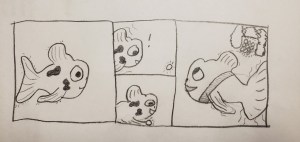
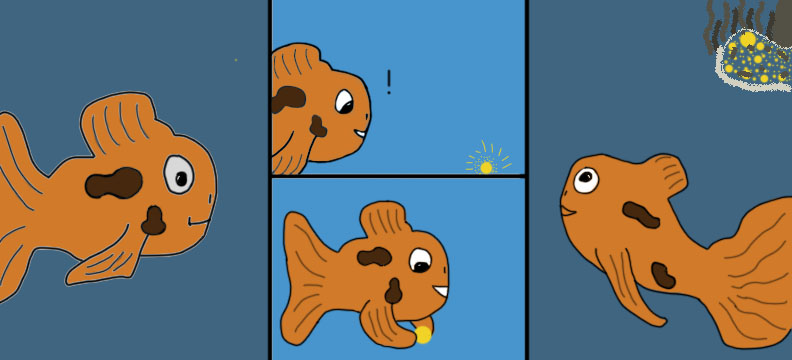
I chose a simple narrative for my comic; Fred the Fish spending his hours in the vast ocean searching for shining relics to collect. The two comics are drastically different apart from the basic character design, as the introduction of color in the digital version brings out the story in a more descriptive manner. It’s much easier for myself to create digital art as I have more experience with programming and Photoshop than I do with pen and paper. I made better use of the spatial aspect in my digital comic and obviously put more effort into the details. I wanted to keep it simplistic but descriptive with only having 4 panels. In the end, I decided to change a few smaller aspects in the digital version such as not including the ‘backpack’ that is present in the final frame of the drawn version. It didn’t fit the narrative without personifying Fred the Fish.

Hand Drawn Comic

Hand Drawn Comic – Fred the Fish

I decided to avoid text in my comic. I not only wanted to avoid personifying Fred but also wanted the reader to decide what the fish’s motives were. It would be boring if I had narrated the scenes and told the reader exactly what was going on. Text is an integral aspect of comics and while it is not present in these two adaptations of my comic, future works will definitely include text and many other aspects as my knowledge of comics grows throughout my semester in DTC 201.

Digital Comic Adaptation – Fred the Fish

The first chapter of Scott McCloud’s “Understanding Comics” may not have directly influenced my piece, but what he talks about is present in my pre-set understanding of what a comic is. It has a directional flow, distinct panels, is meant to read left to right and a style of art that is true to me. Scott’s definition of what is a comic is broad and allows the artist to have freedom with their works, as any art form should be. While I may have started the semester with a dislike towards comics, I hope this class and my time creating them may change my perspective.

Posted in Fall 2019 Archive (201 Blog) | Leave a comment

Expo Marker Comic

Picking up an expo marker and putting it on lined paper was a very simplistic task. It was easy enough to create within a couple minutes, while also describing my whole life in 6 squares. The perks to drawing a comic like the one above, is that I have the freedom to draw whatever without struggling with technology. With simple stick figures and simple designs, the medium is there. I grew up in California came to Washington State University after getting accepted and now I am in greek life along side school. The drawbacks of creating a piece like this is that it is very basic and does not seem like it is college level work from my experience. Looking at comic books I have noticed the amount of time put into each piece and I am very aware that my comic is not comparable to the ones in Scott McCloud’s book.

On the other hand, the digital comic was fairly harder to make. As one could tell, I am not the best with technology and someone can easily tell because I have no clue on how to make the first picture in this blog, right-side up. I have no true experience with the Adobe Illustrator and it may show on my comic. I am not trying to bash on my piece, but not being able to find the fill widget really made my comic look bad. The online piece; however, assisted me with connecting lines and making my poorly drawn cars actually look somewhat smooth. The comic really hit home to me because it is what had occurred the day before so drawing this really depicted my life. I looked at my phone because my friend needed a ride and In return I got a ticket.

jujube

Digital Comic

The Understand Comics book did not help me draft any certain ideas for my online comic, but did give me a good basic understanding of comics in general. I hope that by the end of this course I will be able to create a college Level comic and not just this basic one I have created.

Posted on by jackkayyy | Leave a comment

Print Verses Digital Comic: Elora Buschini

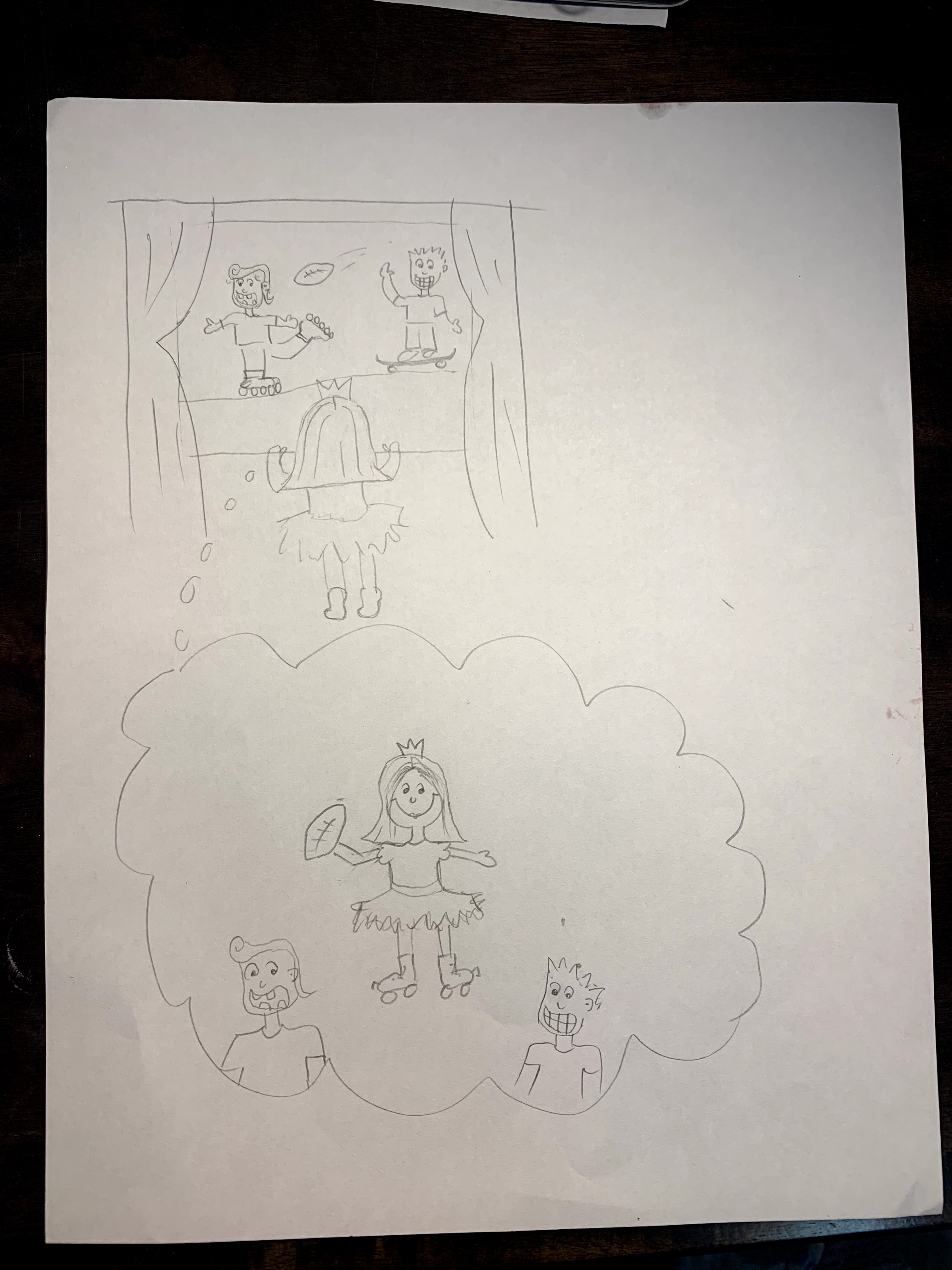
My digital and print comics are very similar. I used my print copy in order to make my digital copy which helped me to have a better finished design for my characters now. The difference is the digital one has more clear lines and makes the art work look stylistic rather than flawed. Since they are so similar I think it would benefit to go back and add more details into my digital comic.

From reading Scott McCloud’s “understanding Comics” it helped me to make a decision on what I think a comic is. I think a comic can really be any image that is telling a story. It can be complex and abstract or a more literal comic strip, but both would be valid.

img_1766


Posted in Fall 2019 Archive (201 Blog), Uncategorized | Leave a comment

My first digital comic, used Adobe Illustrator

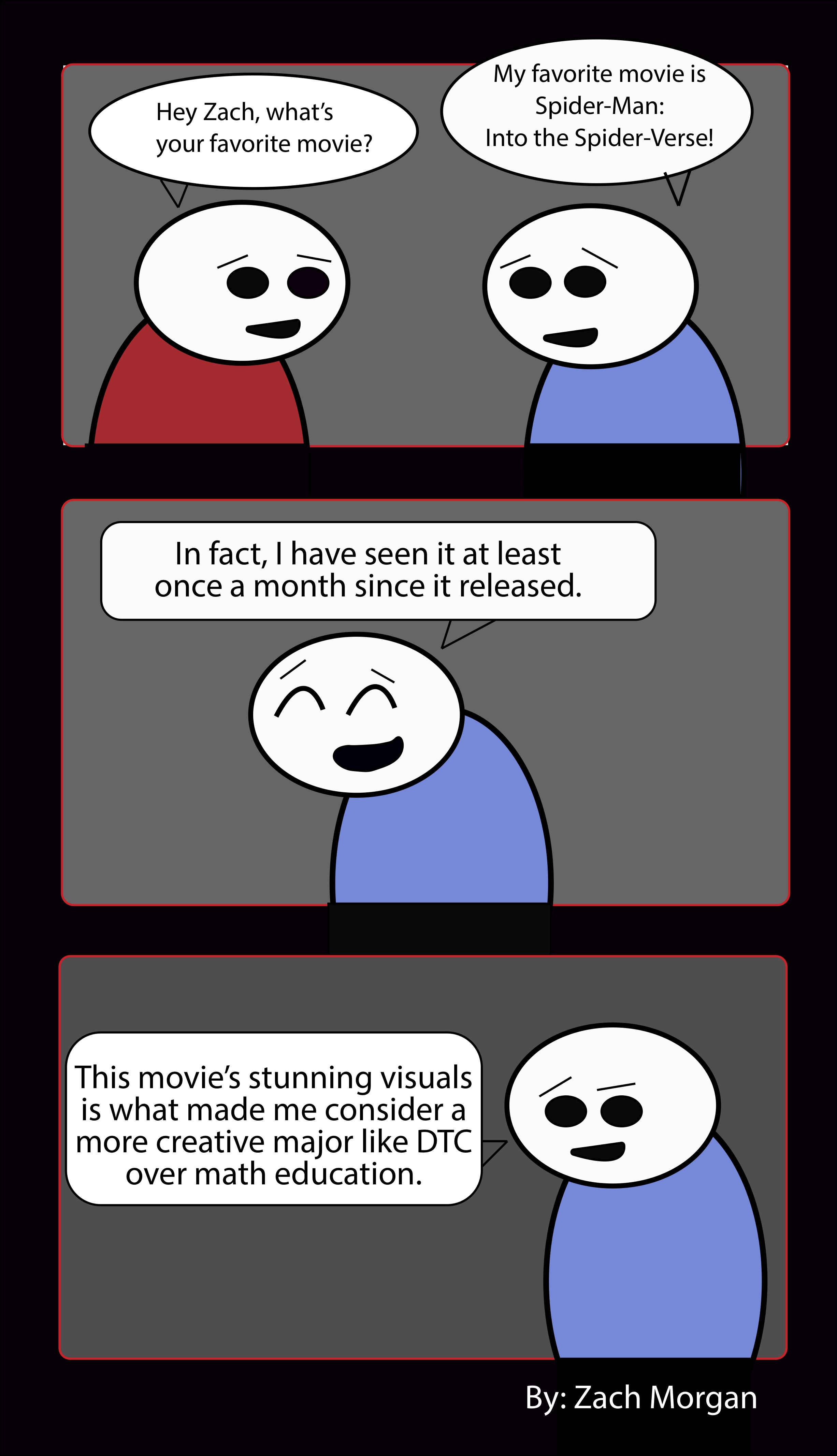
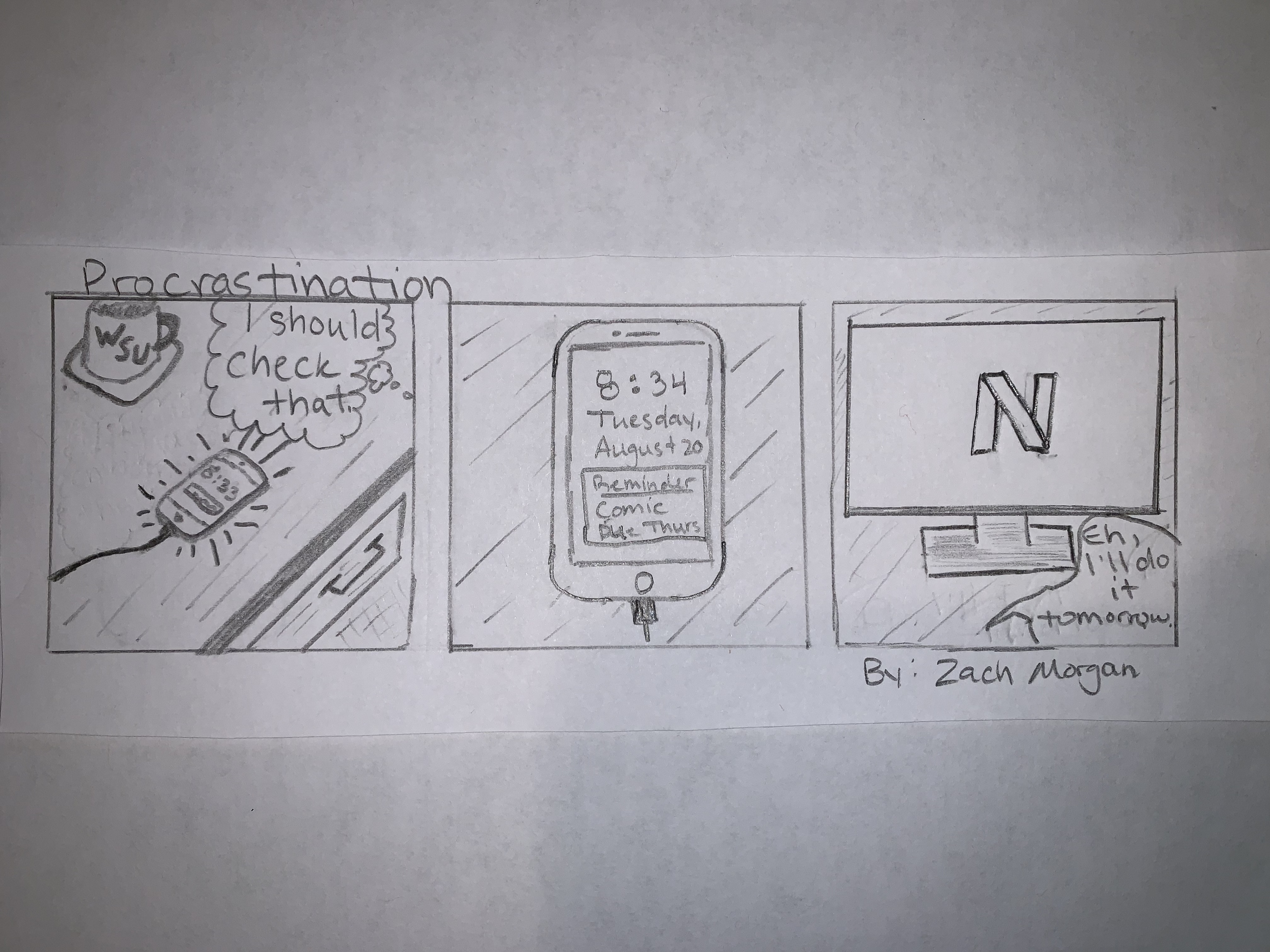
Coming into DTC 201, I had already taken a class in high school that utilized Scott McCloud’s Understanding Comics,so I came in feeling very comfortable with the topic of comics. However, I did not come into the course feeling comfortable with the creation of comics. As a result of this mixed experience, I felt like I kept having these great ideas for creative and interesting comics with no idea how to go about physically creating them. With that being said, after creating both a print and digital comic, one big takeaway I had was that it felt easier to make my comic with the modes of communication while creating the digital comic. With the print comic, it was harder to put my exact idea on the paper, so it was hard to put attention on elements of the comic other than the artwork. Overall, I preferred creating a digital comic because I felt like my lack of Adobe Illustrator skills were much less of a handicap on my imagination than my lack of hand drawing skills.

Like the creator’s experience, I think that there is a great difference in the experience between print and digital for the reader. The difference as the “viewer,” as Scott McCloud would say, is the suspension of disbelief that you feel. When reading a comic on a screen, the viewer is very much aware that they are reading a story and there can often be a lot of detail missed on a screen. Reading a print comic, however, allows the viewer to engage with the story through an added sense of touch, which enhances one’s suspension of disbelief.

One aspect that stood out to me from reading Understanding Comicsis that McCloud makes the decision to have a character of himself taking the reader through the medium of comics. McCloud’s comic-self constantly speaks directly to the reader and makes himself very much the core of the book. When making my digital comic, I decided to make the last two panels consist of just me presenting a “fun-fact” and then explaining how the movie I talk about impacted my academic path.


Posted on by morganz28 | Leave a comment

Print Versus Digital Comic: Your First & Last Name

Write the post. Add pictures. Check the proper categories.

Posted in Uncategorized | Leave a comment