Point, Line, Plane, and Balance: Feifei Zhong

Feifei Zhong DTC 336


Time Management

Image from boltonhitech.com,indicated the need of time management.

boltonhitech.com

This is an image I randomly found online, which I think match the design the request for the class. First of all, I was attracted by the color of the picture, the images contained multiple colors and self-drawing that drew my attention. Looking closer of the image, I think it is organized and sort by many different parts. It’s designed it as an easy and simple to use for the viewer. The word of “time” is place in the center of the image, with that it came with many lines to made the points for the schedule. There are mostly the key words, not too much of the details, but already easily for the people to read along with the drawing, the space is full so not many white space for anything else. I believe the shape is tending to be square so won’t be awkward to look at.

The image gives a contrasted of the color and user are able to find out what they are looking for quickly. It brings the user sight to the center of the page, which gave lot easier. The background color is white which show the relax able feeling of the image, the readers are able to focus on the text. From this picture, I can know that time management can extend to many different ways, then the author design it like a sunflower, these ways are stretched out from time management like petals stretch from stamen. The color chosen from this image is very rigorous. Never a color from this image pops out, they come together very soft and smooth, but when we see these colors individually, they are very saturated. Moreover, some small doodles next to the contents also help us to understand meanings easier. Another good way for these small doodles is can make this image looks funny.  From structure facet, it is well organized, although it seems like kind of messy.


Posted in Uncategorized | Leave a comment

Point, Line, Plane, and Balance


DesignObserver_poster.jpeg-01

Poster for “Design Observer“, a website about design and visual culture. Poster design by Jaemin Kim, a graphic designer from New Jersey. Kim has a BFA in graphic design from Mason Gross School of Arts. Click image for larger size.

I found this poster online. I didn’t read every single line, but I know that it’s about a graphic design website. I thought it looked well-designed, and could be analyzed for this assignment. The first thing that draws your eye is a point, directly in the dead-center of the page – “Design Observer”, with “Design” being in bold. There are a number of other points on the poster as well. “Change Observer”, “Observer Media”, “Observatory”, and “Places” are all individual points. Your eye will move from one to the next, taking in the information below the larger text before moving on to the next point. The color is also chosen well. Your eye goes to the information that the artist wanted you to see first due to the dark. It is heavily accumulated in the center of the page. I would argue that the entirety of the black aspects of the poster can be considered a plane. It divides the colored parts of the page without ever being really divided on its own (whitespace notwithstanding).

There are also some black spaces with no text in them. These are likely there to direct the eye into the colored areas. These areas contain some background information as well as credits for whoever is involved with “Design Observer”. I would argue that the colored sections in the top left and bottom right are planes. They have length and width, dismissing them as lines, and are a combination of pieces, dismissing them as points. The text is different between each piece, but they’re connected by their colors. The use of white space is methodical, dividing each paragraph or piece of text into its own point, while the colors maintain what group they are a part of.

Overall, I would say that that this poster follows a symmetrical balance. If you were to cut a diagonal line from the top right to the bottom left and aligned them together, you would have two very similar sides. Colored text in one corner, black in the other. Though not 100% symmetrical, it’s very close to it. There’s structure and order, which is why I don’t believe it can be considered to be asymmetrical.

There isn’t a lot of depth in this poster – not thematically, but literally. It’s all flat. You could maybe argue that the “Design Observer” in the center looks like it’s at the end of a tunnel, but I doubt that that was the intention of the artist. I wouldn’t say that it’s a fault in the image, however. As far as I’m concerned, there’s nothing wrong with a flat or minimalistic design if it fits the tone of what is being presented or advertised.

Posted in Sample Posts by Students, Spring 2016 Archive (336) | Leave a comment

Point, Line, Plane and Balance: Dree Ancira

power_of_words_by_estranged_illusions

Power of Words by Mary Paulusma. She made this in 2007 as a class assignment while studying typography. 

For my visual example I chose a piece called “Power of Words” by Estranged Illusions. I chose this piece because I was drawn to it very quickly. With the high contrast and very vivid color elements that are displayed throughout the composition. This image is fully made up of text but uses it in a way that forms the very prominent outline of a hand doing “rock on” in sign language.

In this chapter we studied point, line and plane which I feel like this piece uses each element in some way or another, but primarily line and plane. I found that if you zoom in a little closer to the image you can see that they are not just random words stuck together that starts to form the hand. In most of the cases within the composition it is a sentence or saying strung together that forms a line of its own. Not only did I find the line factor in that way I saw it through the use of negative space in the piece. On the outer contour line there is plenty of “white” or negative space so to speak, but we are still able to fill in the line with our minds because of the way it flows. Since the work is very recognizable it is easy to understand the way that the piece is moving. Another area where line was found was in the black border around the whole picture, this gives the work a sense of depth.

Plane was the next primary factor in this work, of course it is very clear from the start that there is a very large plane in which the whole composition was made on. The white space that is making the whole work come to life and stand out. It made me think as if a hand was being held in front of a wall or window because it is just open and empty space.

I think that this work is very symmetrical for the most part. If you were to put a line down any particular side of the work and fold it, the work would stay pretty balanced for the most part. I think the use of color as well helped balance out the work quite a bit as well. If the whole hand was made of only variations of the color red it wouldn’t be quite as eye catching without the black that makes it stand out.

While looking at this work it was easy to see that most of the font was scaled either smaller or larger. This is clear because it can be difficult to read where the text is very tall compared to where the text is much more short. You can also see significant variations in the thickness of each text.

Posted in Uncategorized | Leave a comment

Point, Line, Place and Balance

Poster created by Graphic Designer Andrew Ackroyd, a contributor to deviantart.com

Poster created by Graphic Designer Andrew Ackroyd, a contributor to deviantart.com.

As far as line, this piece is mostly made up of lines of text. However, not all of these lines are going the same way, creating an asymmetrical symmetry. The two lines of text stretching diagonally to the upper right-hand corner from just beneath the cluster of arrows, continuing below the title create a sort of frame for the title. Furthermore, the blank space between the title and the text above and beneath it exist as lines in the form of negative gaps.

The repetition of lines of text with similar lengths that are all slanting the same way creates a rhythm within the design. The shift in direction also contributes to this rhythm. In addition, the clusters of lines slanting the same way in turn create columns. The rhythm and columns allow the information to be presented in a logical way, while still creating a visually interesting piece. Furthermore, a balance is created through the different directions that each section slants. In terms of typographical planes, the title itself is a great example. Each column of text could also be considered a typographical plane. The black background is the most obvious plane here, while each individual arrow is a little less obvious example of a plane in the form of a shape with edges.

The change in direction of different columns of text helps the viewers’ eyes to move naturally across the information. The first thing I see when I look at this text is the big title in the middle, which is the focal point. The arrows above the title also catch my immediate attention, while drawing my eyes upward across the text. My eyes then move to the top middle where the location and time of the event can be seen. Next, my eyes move to the explanation of the exhibit, which begins above the title and continues below it. Lastly, my eyes move to the column of text that is slanted to the right explaining the work’s inspiration.

Lastly, the black background exists as a negative space in the piece. The white and green content that make up the poster exist as positive space because they contrast with the black. There is a great sense of depth and movement within the piece because the scale of the elements included are all very different, causing the eye to focus on each of the elements separately and together as a whole.

Posted in Sample Posts by Students, Spring 2016 Archive (336) | Leave a comment

Book Jacket Design

507822398_4454be3139_b

“Buffalo Hide”, Captured by artist McBeth. Accessed on Creative Commons Flikr. Taken on May 20, 2007.

Throughout the story, Ray mentions Buffalo Hides several times. At the end of the story, he also compares his back to a buffalo hide when he is in the river. I am thinking that I will use this as a background for the book cover, and having other elements from the story on top of it, since it is a pretty neutral composition. My goal with using this as a background is having other images on it, looking like a brand on the skin. I might also use an American flag brand on the skin, as the short stories also have an underlying tone of the effect of the “American Dream” and settlement on the US.


4394644886_d284a56661_b

“The Serpent”, captured by Stuart Anthony. Accessed on Creative Commons Flikr. Posted on February 27, 2010.

Fire is a huge part of the story, and is the reason that Ray loses his job. His irresponsibility is what caused the fort to burn down, and to hit an oil rig, the town’s new livelihood. Smoke is the aftermath of fire, and the results. To me, I would potentially use smoke as an alternative background, or use smoke to outline a silhouette of a person or animal, as smoke can be used to show the results of his actions. I think that it acts as an effective symbol, because it is usually smoke that alerts people to fire. In this case, his irresponsibility can be compared to fire, and the smoke can be compared to the results of his actions. He also smokes cigarettes, drawing another connection between Ray and smoke.


3314685742_5f56718eec_b

“PBR Can”, captured by Tim Burns. Accessed through Creative Commons Flickr. Taken on February 27, 2009.

PBR is a huge part of the story. Ray and Charlie are often drinking beer, wether in the celebration or on the job. He also smokes cigarettes often, and this can is surrounded by cigarettes. Both of these items are commonly associated with leisure and addiction, as well as passing time. This suggests that he is bored at his job, and does not care about it. I was thinking about using outlines of cans and cigarettes as the brand on the buffalo hide.


79127729_ac30b26e23_b

“Oil Rig”, posted by Gary Henderson. Accessed on Creative Commons Flickr. Taken on December 28, 2005.

Obviously, oil rigs are a huge part of the story. They are the new center of the economy of the area where Ray is located. I was also thinking about using an outline of the oil rig on the cover as a brand in the background of the can and the cigarettes. Ray has a lot of resentment toward the oil rigs, and says that the jobs are “too much work” compared to his own. But his own dissatisfaction and boredom with his own job has led him to potentially work on these rigs, as his irresponsibility has led him to destroy his own livelihood.


Below is the first draft of my book cover:

I am planning to make the flag look more like a brand into the skin, but I wanted to check that I was going in a good direction before I put more work into it in case it was not a solid design choice.

First Draft of the Book Jacket Design - Made by Jamie Marks

First Draft of the Book Jacket Design – Made by Jamie Marks

Posted in Fall 2015 Archive (336), Sample Posts by Students | Leave a comment

Pattern Design: Douglas Kim

The organic design I chose is this photo of Vincent Van Ghogh recreated in Legos. This pattern is organic because a lot of what is presented here is done in a more fluid way. The picture of Van Ghogh may be geometric in terms of how all the pieces all the same but the colors really make it flow more like an organic patter. The different uses of colors really allow it to be a different than a bunch of dots. Speaking of dots the pattern is done in a dot architecture. The light blue gives a good contrast to the skin tone color and browns that represent Van Ghoghs face.

A portrait of Vincent Van Gogh made in legos. The artist is unknown but the picture can be found here.

The second pattern design that I have chosen is a geometric representation of a tiger. The shapes are more angular and are broken up into mostly triangles. Even though the picture the patterns create is symmetrical, the overall uses of different sizes of angular shapes make the picture look not as refined compared to if it was made with more organic shapes. The colors also help distinguish the image as the oranges and white allow the viewer to know what kind of animal we are looking at. If the colors weren’t present then we would not know if this was a lion or another cat like animal.

instantShift - Fresh and Excellent Photoshop Tutorials

A geometric representation of a tiger. The author is unknown but it is used a tutorial for Photoshop on this blog.

Posted in Fall 2015 Archive (336) | Leave a comment

Zach Nelson DTC 336: Pattern Design

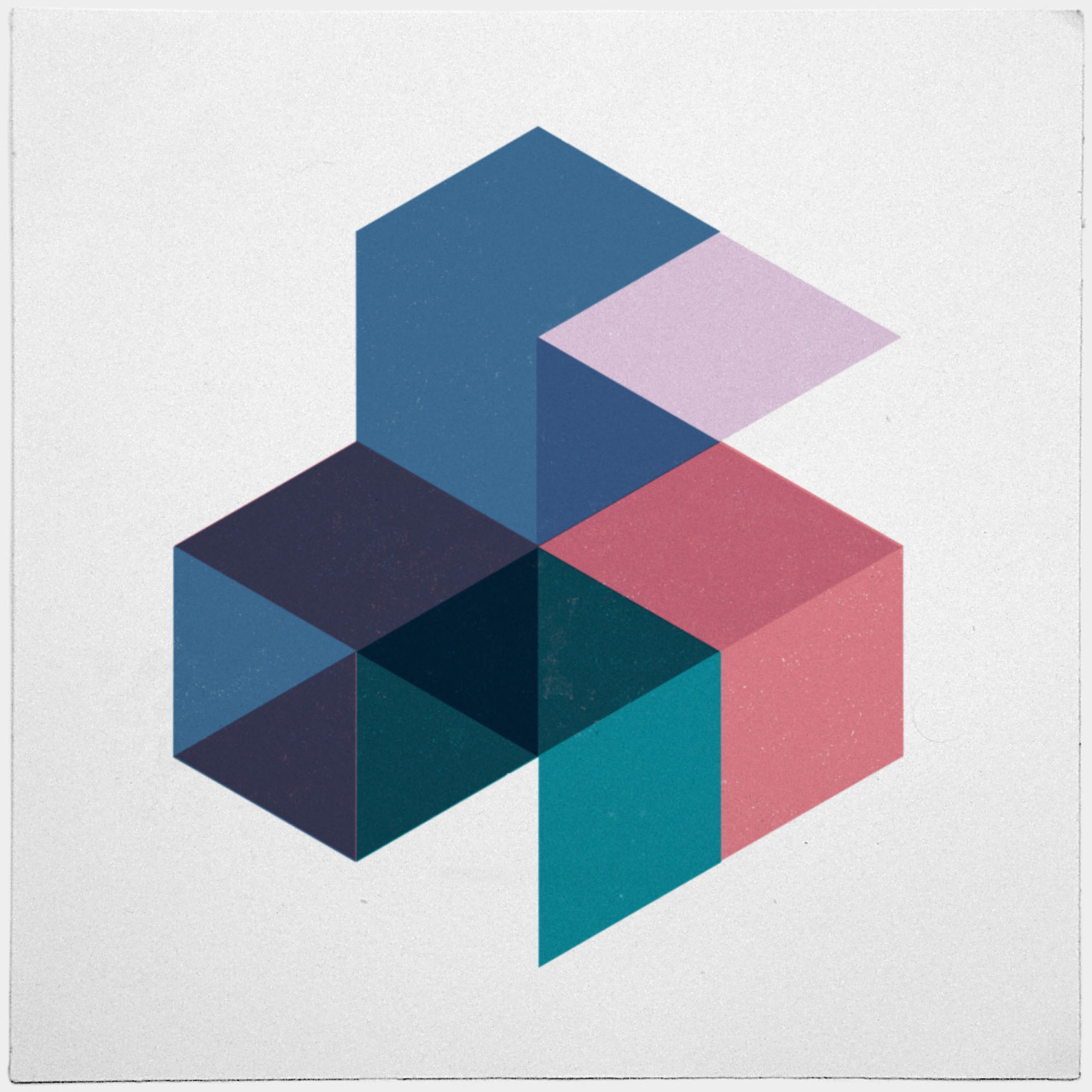
This is a geometric peice of work done by Tilman, a graphic designer living in Nuremberg, Germany.

This is a geometric piece of work done by Tilman, a graphic designer living in Nuremberg, Germany.

This piece to the left is a Geometric piece of art done by Tilman. It is very easy to identify this as geometric due to the pattern of triangles and diamonds pieced together and repeated often. Tilman uses different values of colors to distinguish the shapes apart from each other. For example the three values of blue that he uses you can decipher them from the other shapes. There isn’t really any figure-ground relationship here due to the fact that you cant really tell what he was intending on making besides a group of triangles and diamonds. I found the picture aesthetically pleasing I just couldn’t really figure out what it was. I found Tilmans work at http://geometrydaily.tumblr.com/.

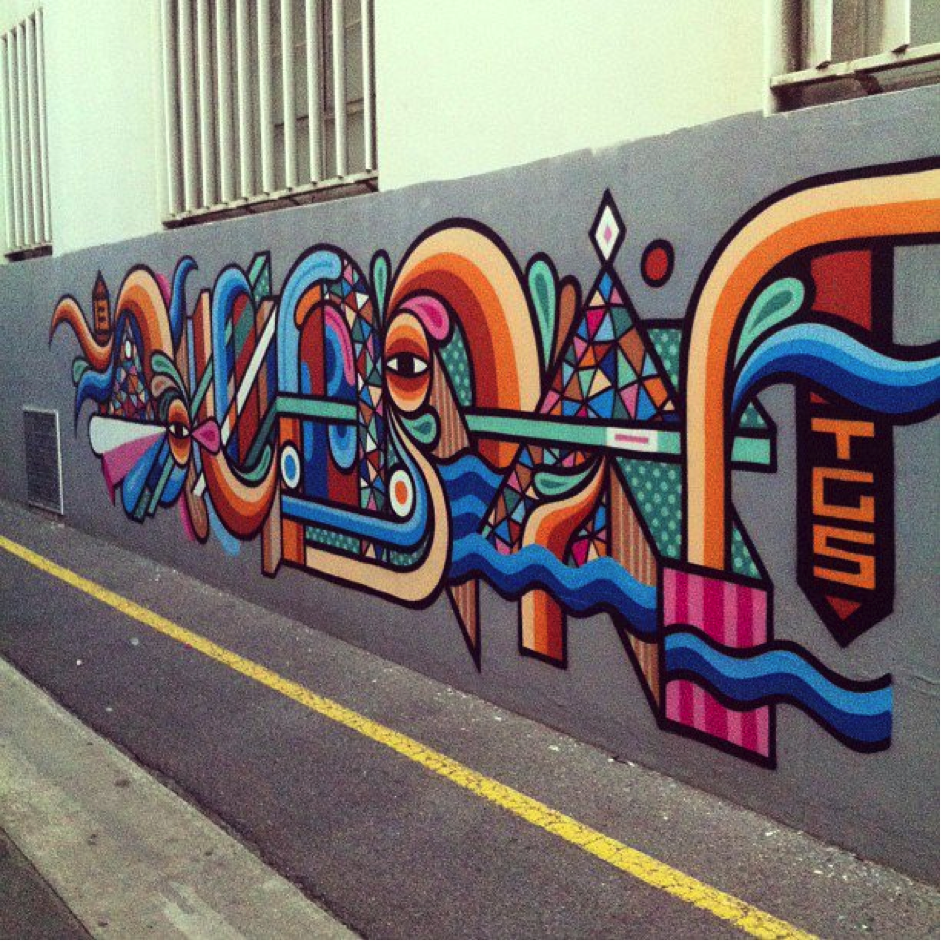
The picture below is a organic street painting done by Brad Eastman in Sydney, Australia and i found to be a pretty good work of art. There is some figure-ground relationship as you can see eyes,  some water and a rainbow. I felt this was organic due to all of the different curves and misplacement of things that really go together nicely. I think the value of colors go very well together as he used many values of range and blues to really attract the eyes as you look at it. All of the colors seem to be vibrant colors that are connected well to made your eyes really have to look at the whole picture before leaving. I found this painting on http://www.beastman.com.au/.

This piece of organic street art was done by Brad Eastman out of Sydney, Australia.

This piece of organic street art was done by Brad Eastman out of Sydney, Australia. 

Posted in Uncategorized | Leave a comment

Pattern Design: Jamie Marks


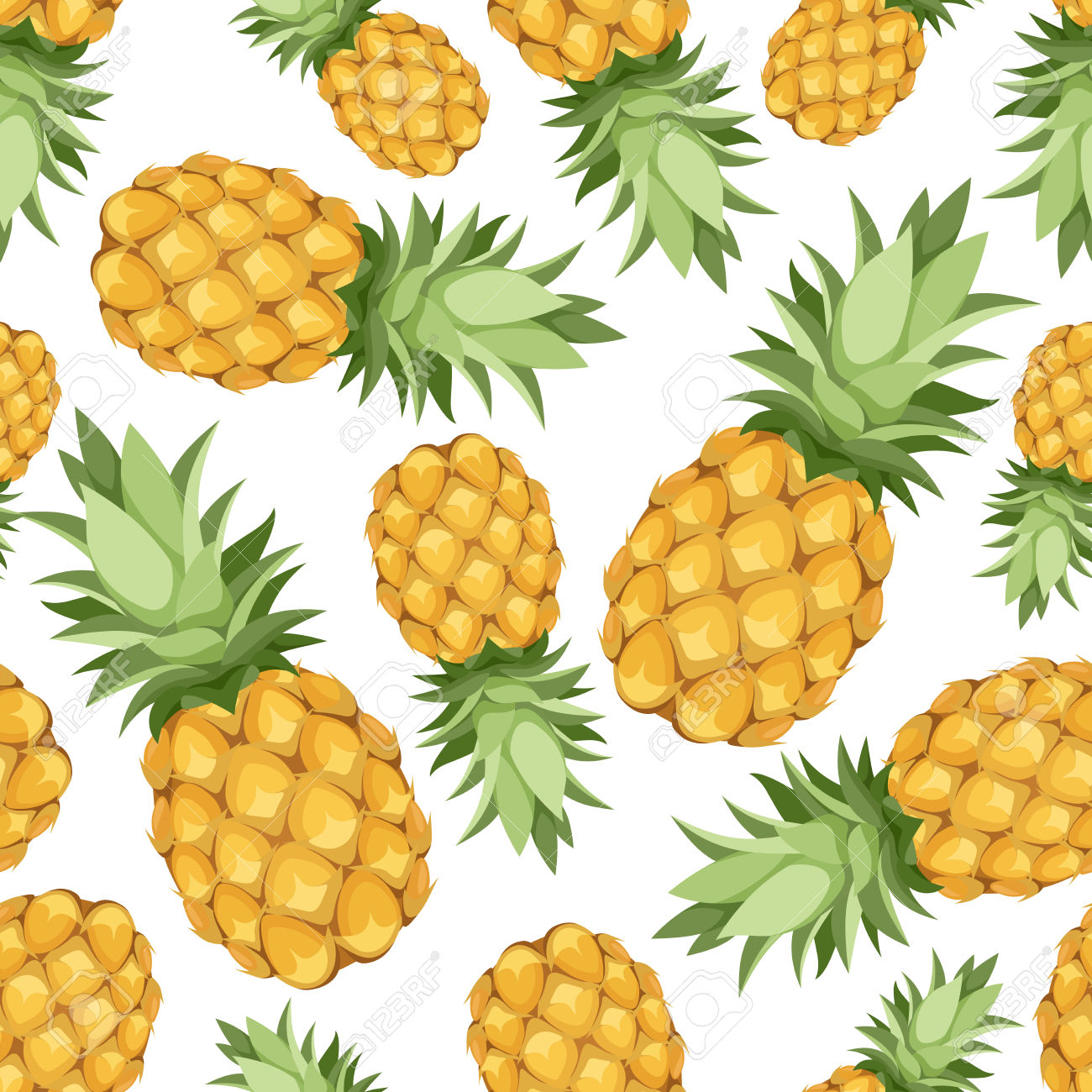
"De fondo sin fisuras con la ilustración vectorial piñas" is a pattern created on a vector image sharing site, es.123rf.com, created by Russian artist Nadejda Tchijova. The date the artwork was published is not available.

“De fondo sin fisuras con la ilustración vectorial piñas” is a pattern created on a vector image sharing site, es.123rf.com, created by Russian artist Nadejda Tchijova. The date the artwork was published is not available.

Organic pattern:

I chose this pattern as an example for an organic pattern because, while the pattern repeats seamlessly, there are no regular lines, shapes, or continuous design elements aside from the subject. No two parts of the design are the same, aside from the fact that it is made up of illustrations of pineapples. I believe that the pattern is built to be repetitive, because if you look at the edges of the image, you can see that each pineapple that has been cut can be completed by the corresponding section of the pineapple on the opposite side of the composition, so if you folded the pattern it would look like a whole object. I believe that this pattern follows a “dot” architecture. The pattern is overall light in color value, composed largely of white, yellow, and green. The few dark colors present in the pattern serve as a contrasting element to more prominently show the lightness of the overall pattern. The colors are all located close to each other on the color spectrum, as yellow acts as the base color in yellow, orange, and green, the main colors in the composition. The colors are similar enough where they all go together, but different enough with the undertones of green and orange where they have a nice, soft contrast.

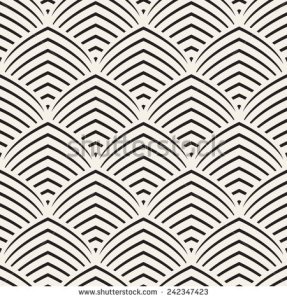
"Seamless pattern. Stylish ornament. Geometric background. Vector repeating texture. Striped pointed arches", created by "Curly Pat" on ShutterShock.com as a stock vector image. The date it was created is unknown.

“Seamless pattern. Stylish ornament. Geometric background. Vector repeating texture. Striped pointed arches”, created by “Curly Pat” on ShutterShock.com as a stock vector image. The date it was created is unknown.

Geometric Pattern:

This pattern is clearly geometric, as it is composed of clean, repeating lines, and can be repeated seamlessly from any point to be a continuous pattern. Each element of the pattern is identical within its shape. I would call this composition a grid, as all of the elements are interwoven rather than created in rows/stripes, and are not individual like dots. The color scheme, black and white, is the ultimate contrasting combination of colors. Each color  is equally pronounced, as they are the lightest and darkest, most saturated and most devoid of color, contrasting color combination possible. They are also the lightest and darkest values possible. The design does not have a lot of dimension, and is largely a flat-looking composition.

Posted in Fall 2015 Archive (336) | Leave a comment

Pattern Design : Mariela Diaz

https://us.marimekko.com/fabric/kaivo-hw-cotton-fabric-063003-001 This design is from a collection of fabric. It can be use for table cloths, curtains, and cloths.  It Kaivo Hw fabric.

https://us.marimekko.com/fabric/kaivo-hw-cotton-fabric-063003-001
This design is from a collection of fabric. It can be use for table cloths, curtains, and cloths.
It Kaivo Hw fabric.

http://www.theshallowtree.com/ON-REPEAT  This patterns were hand draw with pens. All the drawings and patterns that are made by Peter-John de Villiers.

http://www.theshallowtree.com/ON-REPEAT
This patterns were hand draw with pens. All the drawings and patterns that are made by Peter-John de Villiers.

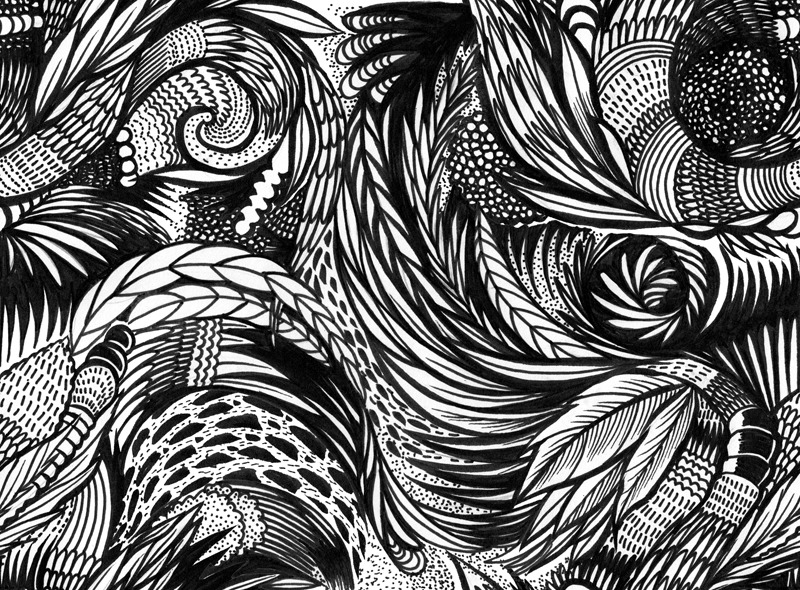
I decided to use this to design/ patterns because both of them deal with curve in their patterns but in different ways. In the first image the design is more simple and seems more Geometric because it has symmetric feel to it. If i cut the image/ the pattern in half vertically or horizontal it will be the same. It seem like was made by a machine. This pattern has points ( dots)  going through the middle. This image has has a dots. black and white lines curved repeated three times going down the image. This image compared to the other doesn’t play with scale or orientation of the pattern. In this design the artist designed to use regular patterns compared to the second image that the artist used some type of irregular forces.

The second image/ pattern I decided to use has a lot of curves and swirls in the design  but it was drawn by a human hand . It has a more organic feel because when you look at the pattern it has a smooth like wind pattern. The pattern was repeated through out the image but the scale of the repetition is different and as well the type of patterns use to make the swirls. Even though this pattern doesn’t play with color it didn’t make different scales of leave patterns on the cloths. It also change the orientation of the swirls.

Posted in Uncategorized | Leave a comment

Pattern Design: Ryan Stuart

Pattern 1

This is a black and white design that pushes the frame of the picture as well as does a bit of figure ground reversal by weaving the the images in and out of each other.

For my geometric design I chose a black and white pattern made of “L” blocks that manage to create an optical illusion. The “L” block are connected in such a way that they appear to be popping out at the viewer and lacing in and out of each other. The pattern is repeated diagonally from top left to bottom right and spreads up and down from there. The pattern can also be viewed from top to bottom, bottom to top, and top right to bottom left. The reason this pattern would be considered geometric because it is a series of hand crafted geometric blocks with clear cut lines that allow each other to fit perfectly in one another.

pattern 2

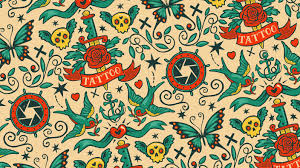
This colorful display of butterflies skulls and birds creates a beautiful organic pattern that emphasizes how color comes to play in patterns like this.

For my organic design I chose a pattern that changes on each row, and then alternates between the two. The first row is a pattern of butterflies skulls and knives, while the second pattern is of boat wheels birds and anchors. I believe that this is an organic design because most of the objects in the pattern are of organic things such as the butterfly the skull and the bird. I also think that this is an organic design because the objects do not fit into each other to make a perfect pattern and fill all of the negative space. This pattern can only be viewed from one angle. It moves from the left to the right and then slightly up the page at an angle but not drastically. The colors also affect the pattern because each different object is a different color, but in the next row, the colors flip. So the butterflies and skulls go from color 1 to color 2 to color 3, while the wheels and birds go from color 3 to color 1 and color 2.

Posted in Fall 2015 Archive (336) | Leave a comment