Point, Line, Plane: Jasper Barbosa-Rodríguez

A point. A point can be everything and nothing all at once. Given the placement, whether that placement is deliberate, or undirected, gives a point its purpose and is up to the designer who put it there. It can be sequenced with other points and form into a line, or it can be another drop in an ocean of points, which then become a plane – either way, each point has the same amount of potential as another, given time and space. According to Graphic Design: The New Basics, “A plane can be solid or perforated, opaque or transparent, textured or smooth” (pg. 38), making each point in a plane necessary to convey what the designer intends.

vietnam

A snapshot taken from page 7 of Will Eisner’s “Last Day in Vietnam: A Memory” (2000).

Now that the philosophical aspects of points have been beaten to a pulp, let’s see what we’re talking about being put into practice. Shown to the left is a sample of 2000’s “Last Day in Vietnam: A Memory” by famed graphic novel forefather, Will Eisner. Here we see actual points creating tonal variation, much like the halftone process in old photographs. Eisner used this kind of pointillism to emulate sepia photos from the late 1960s in his graphic novel, and built up the darkness to simulate heavy shading. In doing so, he created planes and implied lines along the scenery that draw the eye towards areas without as many points, as seen with the hand of the soldier gesturing towards the “right pretty” country. The country itself could be argued as a point of focus, being surrounded by a dark frame and even having a finger pointing it out in the image.

Eisner also manages to blend his images together using this tonal variation, but zooms in and out of an important figure, giving us spatial translation, which helps to differentiate the images from each other as different parts of the novel’s tiers.
Posted in Spring 2017 Archive (336) | Leave a comment

Formstorming: Jasper Barbosa-Rodríguez

Lynda Barry didn’t have an easy childhood growing up, as is apparent within the first fifty illustrious pages of her imagination-saturated novel, What It Is. In it, she begs to question a new philosophical query per page, to which she admits there are no answers, and leaves the possibilities and nuances for the audience to consider. From telling of her past, living in a trailer park with abusive parents, Lynda finds that fairy tales, stories, and fables, alongside her imagination, are her solace in a world of Brady Bunch-like TV programs. Amidst her reflection on her memories, she asks if memories are of any substance and why they

fullsizerender

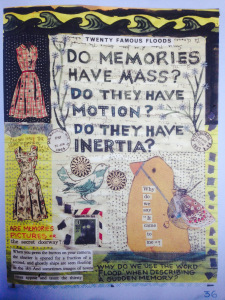
Page 36 of Lynda Barry’s What It Is.

are referred to as being floods (e.g. do they have mass, motion, or inertia), which can be seen to the left on page 36 of her book. Through formstorming, she achieves a visual representation of a flood by bordering the top of the page with waves, and carries on a sub-aquatic theme with fish and octopi throughout her no
vel, as if we are submerged in her flood of memories.

On the same page, she asks betwixt two illustrations of dresses: “Can you have the same memory twice?” I believe, however small the blurb might be, that this also directly correlates with formstorming as a means of displaying the same thought process twice, but in an innovative way, with having two very similar dresses. However, she almost answers the question with a dysmorphic “no” through exhibiting the two eerily similar, yet nonidentical, dresses. She’s essentially saying you cannot have the same memory twice, because memory adapts and changes all the time. One image you remembered two minutes ago will not be the same image two minutes from now, and so on. Her illustration, then, could arguably be considered a form of alter ego formstorming, showing two versions of the same thought, as seen on page 27 of Ellen Lupton and Jennifer Cole Phillips’ Graphic Design: The New Basics.

Through the original display of memory retrieval, or recall, we are given only a taste of some of Ms. Barry’s indelible shower thoughts. It would be interesting to see how, if she had taken a second longer on each of her collages, how different they would have turned out, based on what we see with the alter egos of the two dresses.

Posted in Spring 2017 Archive (336) | Leave a comment

Scale: Angelica Tibule

image1

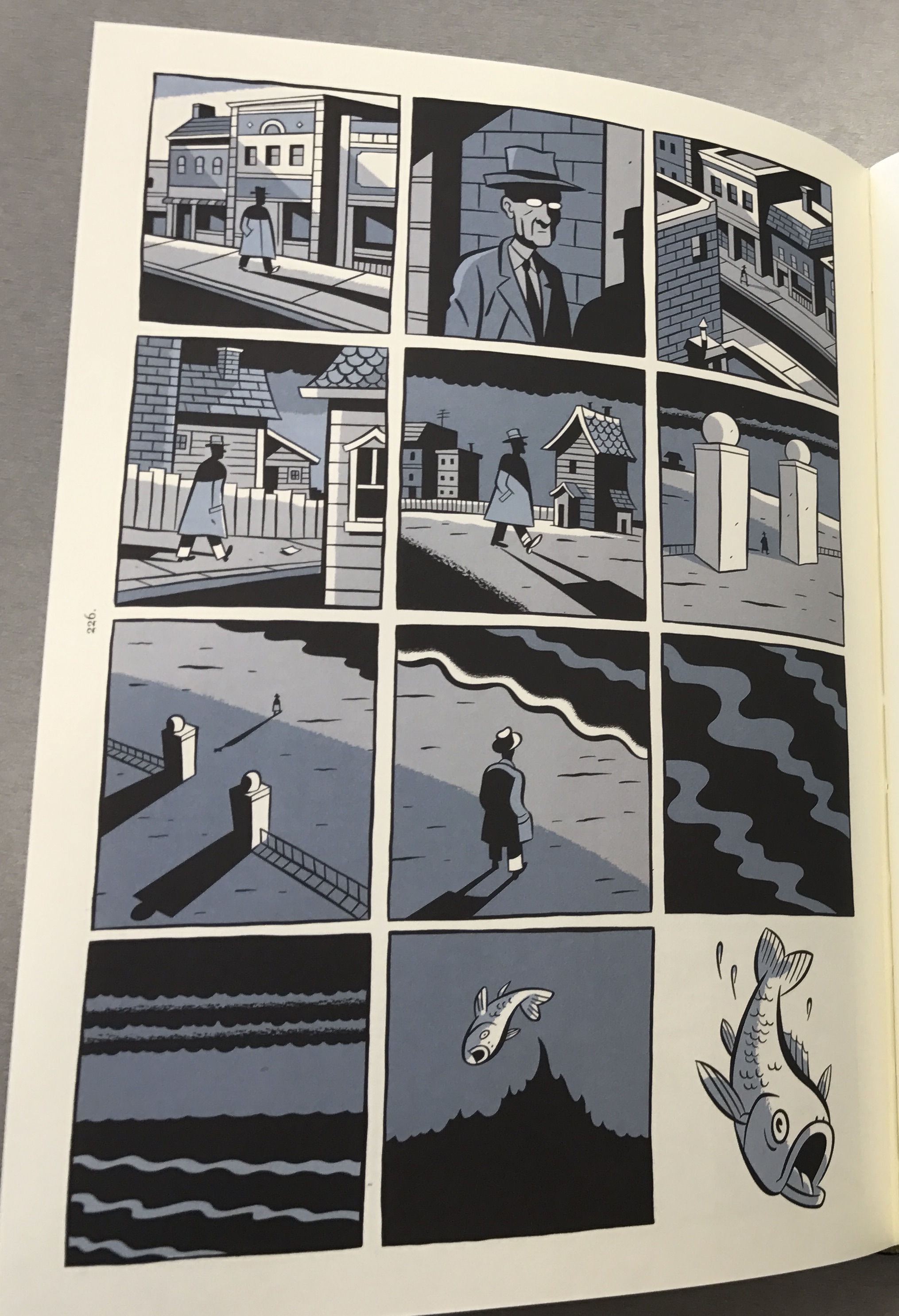
McSweeney’s Quarterly Concern: 13th Issue “Clyde Fans” by Seth pg. 226

Scale is a principle of design that can create an illusion between large and small visual elements. Looking at the comic, the cartoonist, Seth, shows his viewers the importance of scale in design. Unlike other comics, this certain page of Clyde Fans does not have any dialogue involve. It simply focuses on the character and lets the audience understand what the story is about by looking at each panel. According to Graphic Design: The New Basic, it is important for the artist to properly scale each visual element by focusing on sizing, placement, and colors to create depth and motion (62). Looking at this comic, I noticed Seth uses different angles to create a sense of motion as his character is walking towards the shore. For example, Seth uses bird’s eye view in two panels of this comic in the third pic of the first row and in the first pic of the third row. Seth first gave us a view of the town the character is walking in to give us an idea of where he is at and where he might be headed to. In addition, he also made sure that his audience knows how giant the posts of the gate are when the character is standing right beside them. Lastly, Seth uses size to create an illusion that the character is far away from the gate.

Posted in Spring 2017 Archive (336), Uncategorized | Leave a comment

Scale: Andrese Collins

The technique of scaling helps the viewer or reader get an aspect of the drawers intentions to either bringing a realistic focus on scaling or bringing in a dramatic look to make a specific point. Scaling is used at its best when all components of the picture are scaled to its complimentary sizes. Scaling in sizes can also be a great way to display a sense of dominance or emphasizing on a focal point. When scaling the size of an art piece proportionately to the size of the objects, they will then become relative to each other, allowing the reader to understand important details and characteristics within the characters, background, etc.

http://www.jimwoodring.com/artwork/comics/

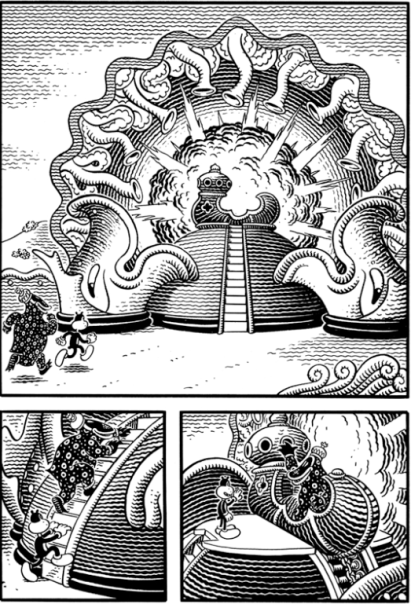
Excerpt from Jim Woodring’s comic, Congress of The Animals

In this page of Jim Woodring’s, Congress of Animals, you can see in the 1st panel that the characters are shown running towards a large temple like building with steep stairs. Throughout the comic the characters have never been drawn at such a small scale until now as their approaching an object that’s much larger than them.

The objective of Tom’s scaling on this page seems to bring a focus towards the main point of the page, which is to emphasize on the kings “vehicle” that he uses because the object is centered and loaded between explosions, tentacles, and fish-like statues  which is a set of elements that can really attract any readers eyes. With the focus point, the reader can subjectively notice  that the characters goals were to successfully travel to the top of the temple like building so that the king could go back home.

Posted in Spring 2017 Archive (336) | Leave a comment

Scale: Alex Gutzwiller

Scale is an important graphic element for artists to use within their comic or graphic novel. According to Ellen Lupton and Jennifer Cole Phillips, with the use of scaling techniques an artist can create an image that has appeal, movement, depth, illusion or tension, as explained in their book, Graphic Design: The New Basics. Additionally, scaling elements often enhances the understanding or emphasizes an important detail of the story. Scale is thought of as either being objective or subjective. An objective scale refers to the correlating measurement between the replica/model and the real-life measurement it represents. Whereas the subjective scale concerns the impressions one has of an object’s size. Such as an object’s appearance within a design may be larger in relationship to our own bodies, as Lupton and Phillips stated. The use of scale therefore makes an image interesting and active. 

scan0124

page 53 of Mimi Pond’s graphic novel, Over Easy (Drawn & Quarterly, 2014)


Over Easy, by Mimi Pond is a coming of age graphic novel about a college senior that looses her financial aid to cover her last year. She goes to work in a 1970’s California diner. In this story, Pond tells about the day-to-day activities within the diner, the workers and customers. On page 53, Pond uses scaling to emphasize the mountain of dishes that a tired waitress faces after a long day on her feet with an aching body. In the top right frame of this page the scale is appropriate to the size of the object. The waitress is portrayed lifting normal size dishes with the correct appearance to her body size illustrating the objective scale element. However, in the bottom frame of this page, Pond uses a subjective scale by over exaggerating the size of the pots and pans in relationship to the waitress’s head making them larger than actual size pots. The way Pond drew the pots in relationship to the waitress’s head is also an example of relative scale. The pots and pans are much larger than the waitress’s head emphasizing the task of washing a large, messy pile at the end of a long shift. Within in this frame, we can also see the contrast of scale as the larger pots are in the front that seems to create the wall of work to be done. In contrast the smaller dishes are hanging up on the hooks receding into the background representing the goal of finished work. The contrasting sizes of these pots create a tension between the work to be done and the goal of finishing the task. The contrast in pot sizes also adds to the feeling of depth and movement because we can see the dishwashing in front of the waitress’s worn-out face and the hooks of the clean pots behind – placing us into the scene knowing that the goal is to turn around and walk to the back of the room to hang the pots.

Posted in Sample Posts by Students, Spring 2017 Archive (336) | Leave a comment

Scale: Eva Guillen

the-principles-of-uncertainty-image-2

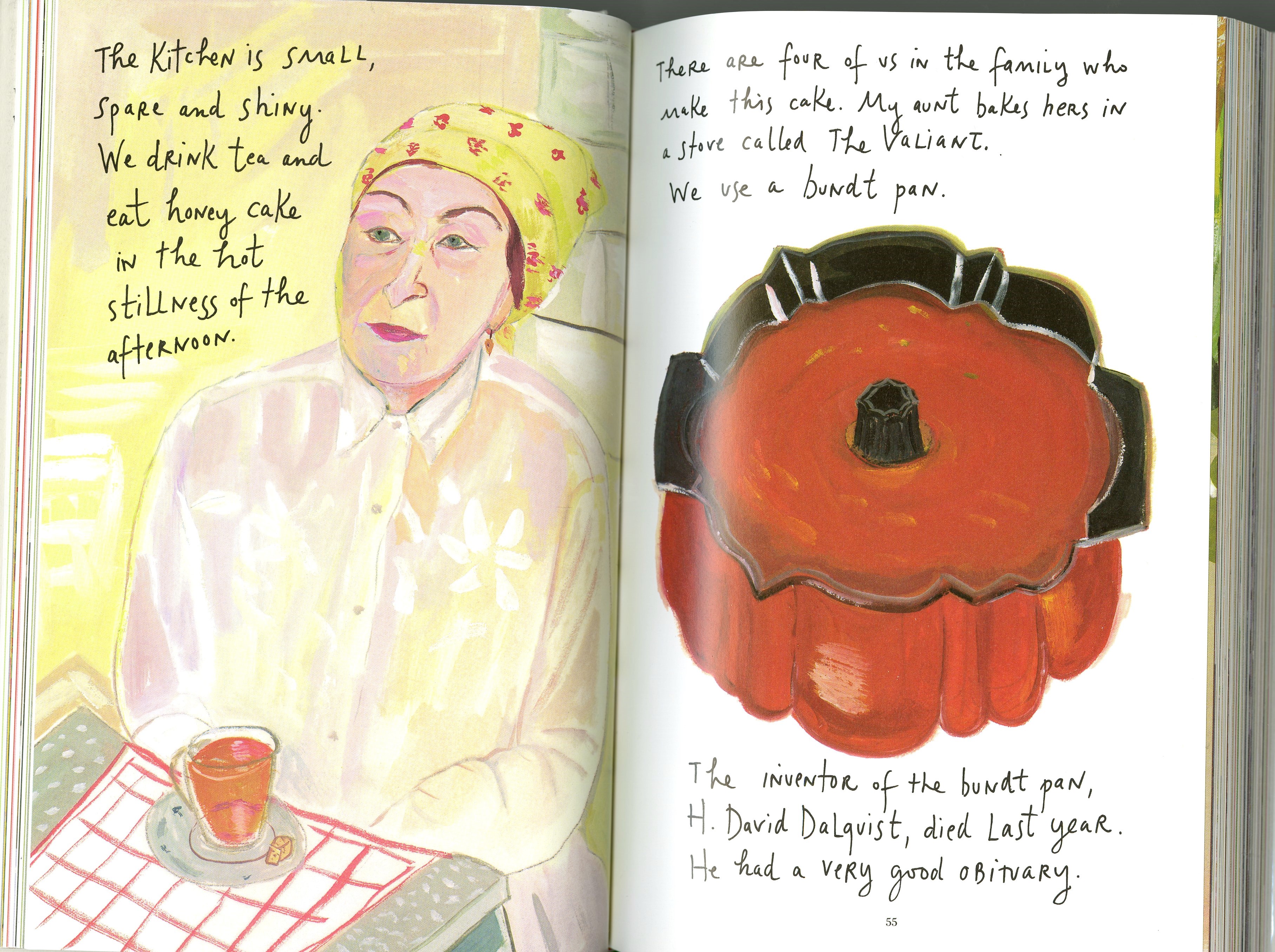
Pages 54 & 55 from the graphic novel The Principles of Uncertainty by Maira Kalman

In this example from the graphic novel The Principles of Uncertainty there is a great demonstration of scaling. The image on page 54 looks to be scaled so that it fits the whole page. While on page 55 the image looks to be scaled in a certain size so that it can fit between the text. Objective, like stated in the book “Graphic Design The New Basics” by Ellen Lupton and Jennifer Cole Phillips is about the dimensions of the physical object a representation of the object and what it might show. Subjective is a focus on the size of the object which is again talked about in the same book as mentioned before. My example can show how a contrast of scale can make an image more meaningful. Page 55 of my example does a great job of showing how the scaled imaged draws the eye of the reader to center and gives the impression of the importance of the image. This is especially shown and made present against the white background and the surrounding text. I also believe that page 54 of my example can show how scale can be relative, the scaling done in this image is fit to the entire page making the image appear large. Making the scaled image in page 54 be visually dynamic compared to the next page, due to the scaled image being the background instead of the center. Scale helps imply movement because as an object is scaled bigger in different scenes, a reader or viewer can assume that the object is getting closer. Or as an object is scaled to become smaller in a comic strip it can be assumed that the object is moving further. Therefore scaling makes an impact on the importance of an image, the movement, whether its relative or contrast.

Posted in Spring 2017 Archive (336) | Leave a comment

Scale-Miguel Bustos

around-the-world-in-80-moodsIn this page of Around the World in 80 Moods by Azeu Lost, scale is implemented to show depth and size of their surroundings.  In the top frame, we see them walking on a brick path.  Objectively, we know that the all the bricks are the same size and shape.  Subjectively, the drawing of the bricks is warped adding the third dimension and giving the picture a sense of depth.  The artist uses the characters in the next frame to show that he has zoomed out.  The two characters are still the same size but their relative size to the frame is smaller letting the reader know that the space being displayed is much larger and wider than the previous frame.  The last frame that are bigger again showing that the space represented is smaller.
Posted in Spring 2017 Archive (336) | Leave a comment

Scale: Leandra Choy

img_5003

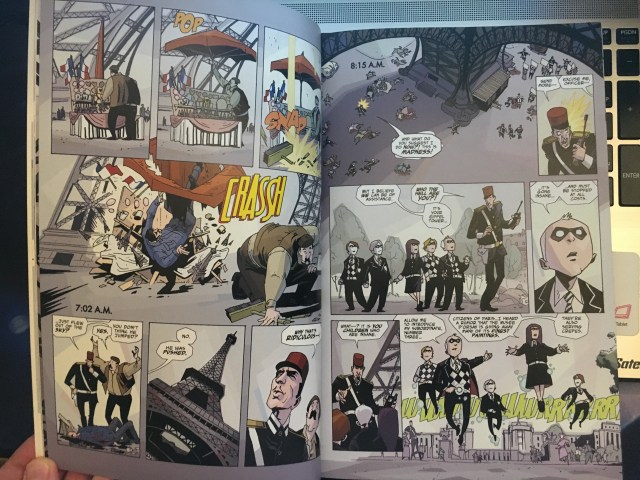
Two pages from The Umbrella Academy by Gerard Way and Gabriel Ba (pages are not numbered for some reason.)

When we talk about scale on graphic design terms, it can be described in two ways which are objective and subjective. According to Graphic Design The New Basics by Ellen Lupton and Jennifer Cole Phillips, scale being seen as objective means the actual size of an object and the similarity between the actual thing and a small model of it. Think of those little collectible cars and compare them to the actual car itself. Both have the same characteristics (visually at least) but the model is obviously smaller. On the subjective side of things scale means comparing things to your physical self, or in other words your own impression of an object. Let’s say that you are holding a hamster. Subjectively the hamster is relatively small compared to you. Next, you’re standing next to an elephant. The elephant is much larger than you scale wise.

My example for understanding scale comes from the graphic novel The Umbrella Academy by Gerard Way and Gabriel Ba. From the two pages I choose there are examples of both objective and subjective scale. First of all, for objective scale, you can see the kids dressed in black and white are different sized in each frame. Each of the kids are still the same but they are drawn at different sizes depending on what is happening in each frame. For subjective scale, the Eiffel tower is shown in almost all the frames but is drawn to scale compared to the characters in the graphic novel. Of course in real life we know that the tower is giant compared to us, so it makes sense that its giant compared to the characters in the graphic novel despite it being a fictional story taking place in the real world.

When drawing something to scale it must be relative to other objects within its environment. Going back to the example with the Eiffel tower, it is relative to the size of the people. As we know the tower is giant in real life, since the world in the graphic novel takes place in the real world all of the people, souvenir stand, trees, etc. Also when drawing things to scale, depth is created. The last frame on the right page shows the kids drawn larger than the buildings in the background. This creates the illusion of depth. When something is in the distance, it appears smaller and when something is closer it appears larger.

Posted in Spring 2017 Archive (336) | Leave a comment

Scale: Emma Garcia

Scale is considered to be objective and subjective which refers to the dimensions of the

pg-128-and-129-the-nearsighted-monkey-book-picture-this-by-lynda-barry

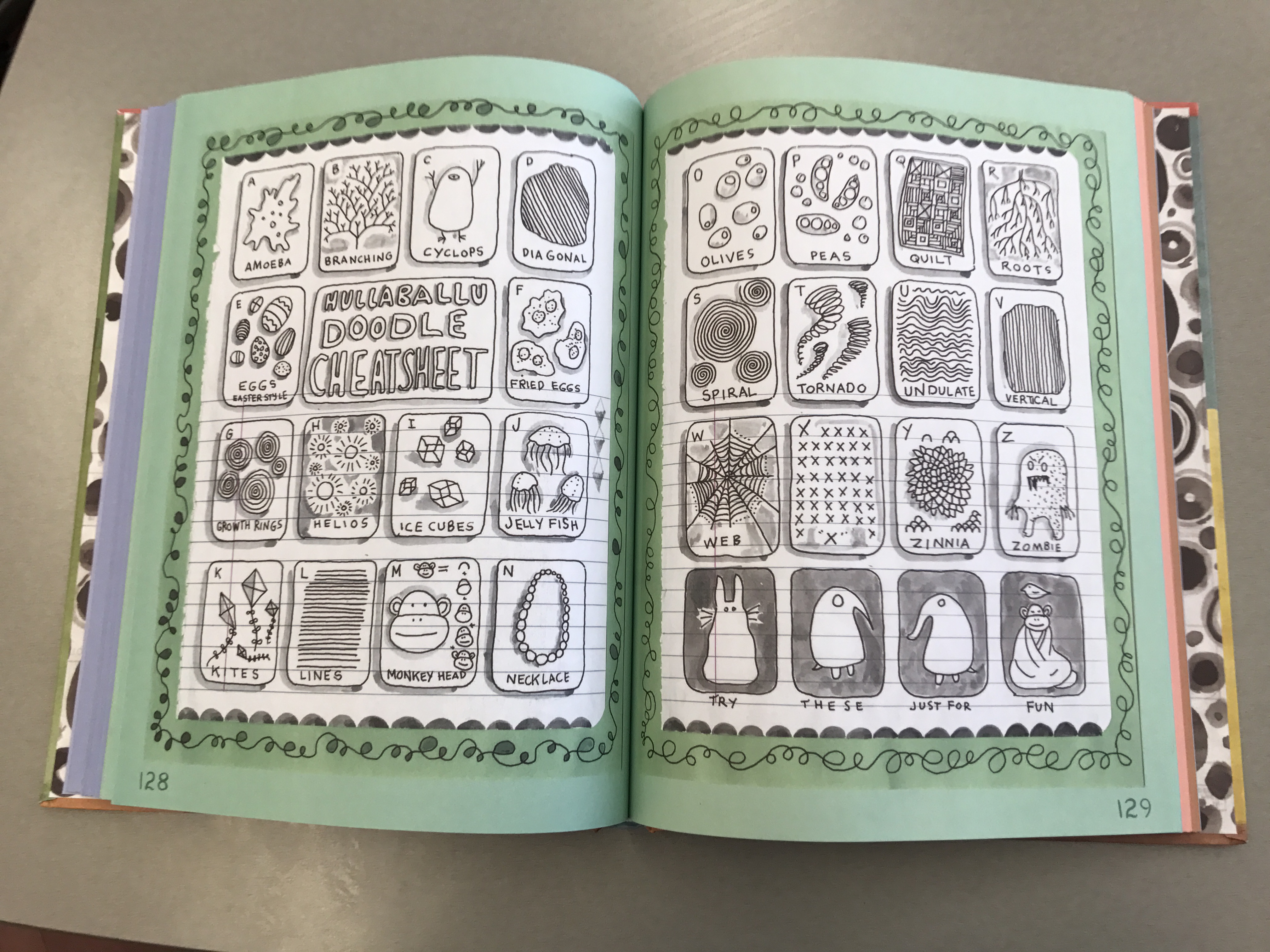
Pg. 128-129 The Nearsighted Monkey Book Picture This By Lynda Barry

images and the correlation they have between what the picture is meant to be and the correlation of the image and the actual depiction of the image.  In this image from Lynda Barry’s graphic novel, The Nearsighted Monkey Picture This, she has both pages full of frames with small images inside of them that look as though they were drawn with pen and paper. This presents the aspect of depth and movement because of the details in each of the pictures and the actions they are representing. In each frame, the images are depicting something different. Depth is seen because the frame brings more details to the overall page showing how the images could be larger in reality. Lynda Barry presents scale in how she decided to place the images in their own frame at a specific size, this helped the images to move off the page. This shows how scale can be relative because the images are smaller than they appear but the elements surrounding them are much larger. In the book, Graphic Design: The New Basics it says that “scale is a verb” meaning that when you scale a graphic element the dimensions should change along with the image not just one aspect. This is seen in the example by Lynda Barry on both pages because she frames all the drawings and fits them with the correct dimensions into the frames within the page. Scale impacts an image in many ways, in this example, it presents contrast by using black and white drawings that fit into the frames.


Posted in Spring 2017 Archive (336), Uncategorized | Leave a comment

Scale: Jon Williams

img-015.jpg

Comic strip by Chris Ware, from the building stories collection.

The sense of scale here tells a lot. In the first two frames, the size of the building from frame one to frame two gets larger, letting the reader know that the individual is moving. As the character moves through the panels, they take up more and more of the panel until they look almost right at the reader, and disappear. The story that’s implied here is that they’re going somewhere they might not want the reader to follow. If we read the text, we see a very pessimistic view of their situation. The weather is turning, they’re slowly heading in a direction, and then they just stop appearing in the strip. The city, which in other frames was small and in the background, is now level in the last panel, implying that there’s a shift in perspective. We’re no longer looking over the shoulder of the character, we’re overlooking a city block, as if to say we may have misplaced the character. It’s daunting, it’s depressing, and it’s a really good way to end this comic.

Posted in Spring 2017 Archive (336) | Leave a comment