
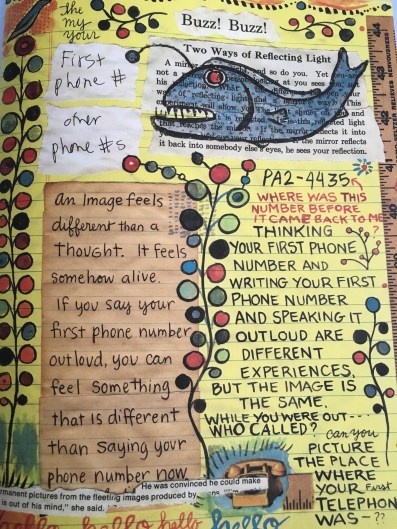
Lynda Barry “What It Is” page 34
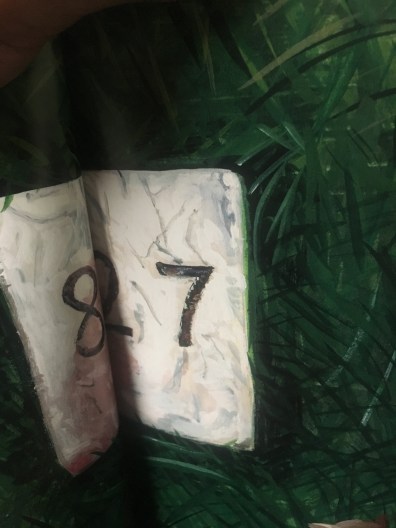
“And The Pursuit of Happiness” Maira Kalman page 68-69
On page 68-69 in “And the Pursuit of Happiness” by Maira Kalman she illustrated temporal layers. Temporal Layers are overlapping forms, images, and text blocks that suggest depth and motion. In one of the pictures above there is what looks like a white piece of paper white the numbers 7 and 8 in black on it laying in what looks like a field of green grass. This layering is important because of how it exemplifies depth. I could be using my own imagination but I feel as if the layers Maira Kalman made in this picture are what pieced the picture together perfectly. There is not much transparency on the image of the book or the grass but I get a feeling that the image of the book is lapping the grass.
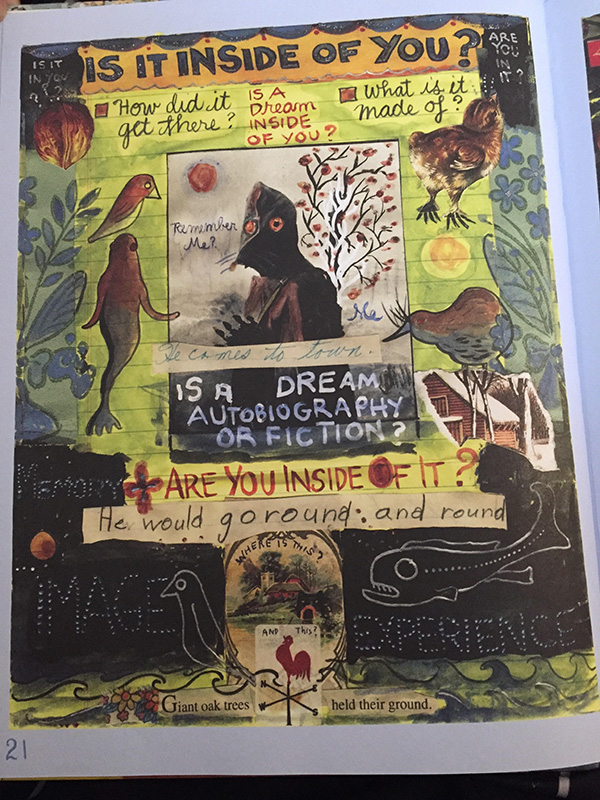
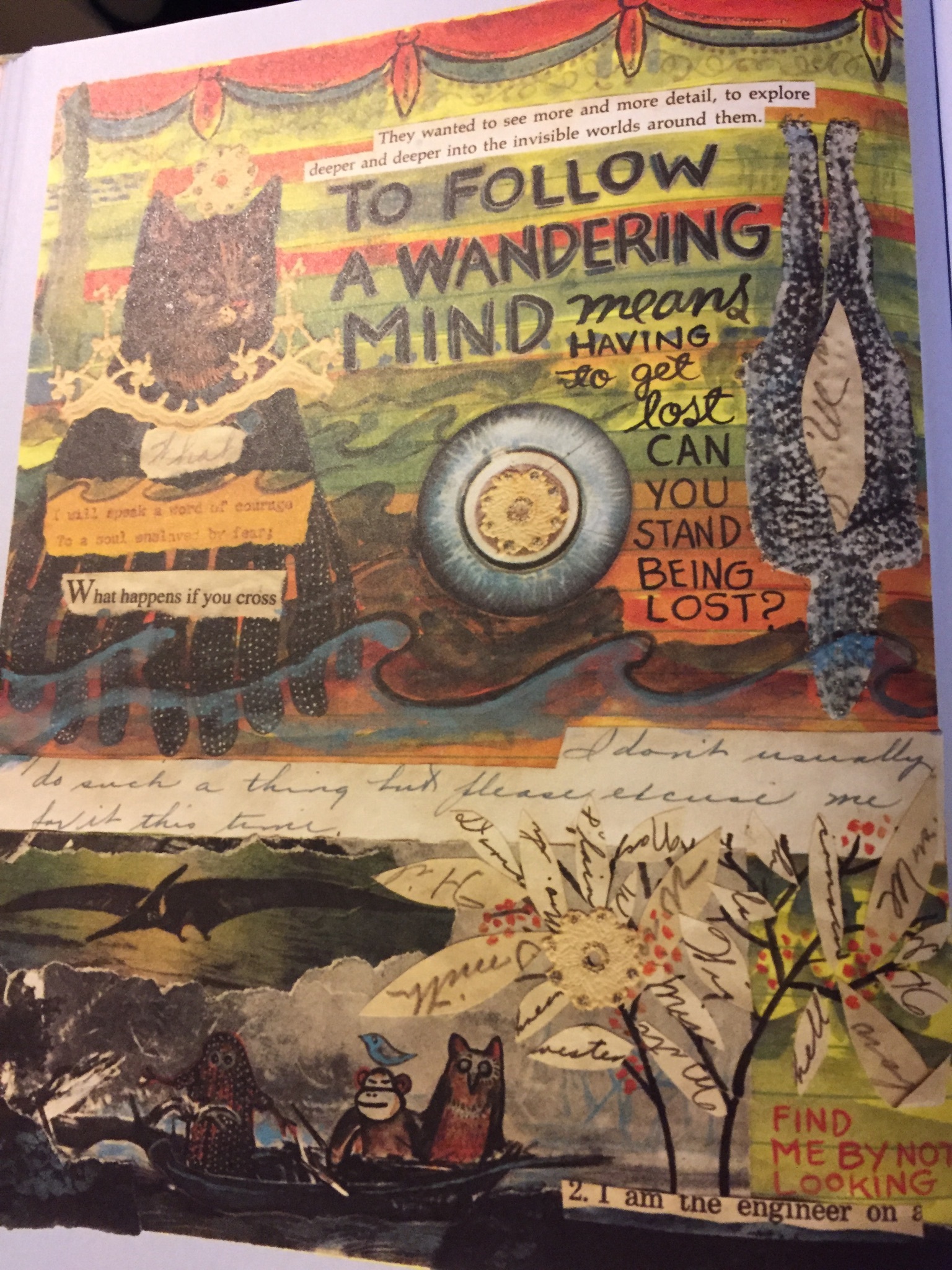
On the other hand Lynda Barry demonstrates many different important layering techniques on page 34 in “What It Is”. I immideately noticed the physical layers, layers that were not digital but real paper stacked on top of another piece of paper. Lynda used the cut and paste method with the image of the fish and blended that same printed layer image with a temporal layer ( low opacity). This deal of work is important because even though there are no real focal points you can get an idea of what is supposed to be read/looked at first/last. For instance the background itself is yellow like phonebook paper and the next layer on top of the background are pieces of paper that look like they were scanned on, a drawing of a fish on top of that layer, and then a little bit of typography is going on around that fish image. Perspective is everything and I feel like if you look too close at these images they will seem confusing but as you pan outward and look at it from a view further away all of this work makes more sense and can be read/viewed easily.
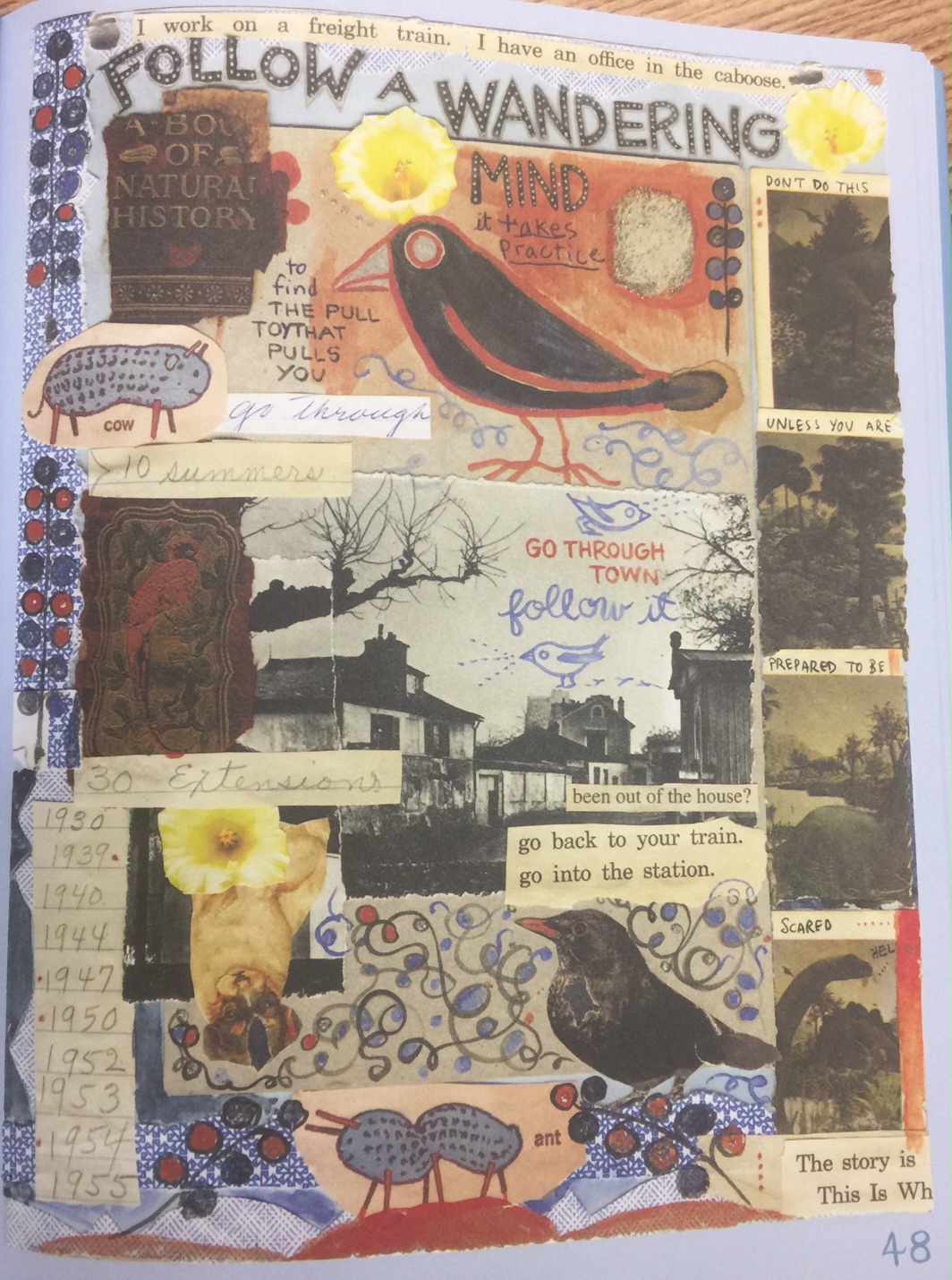
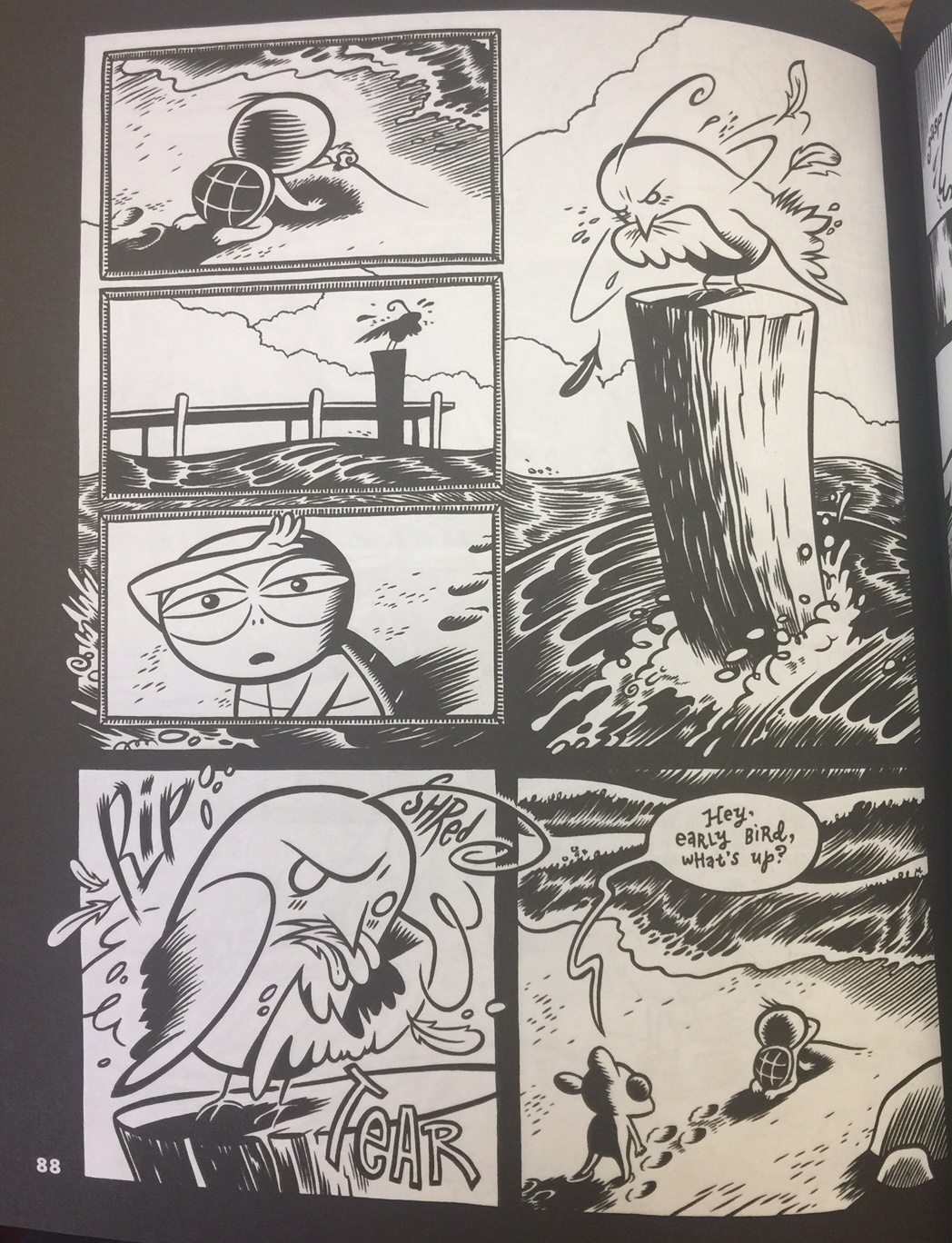
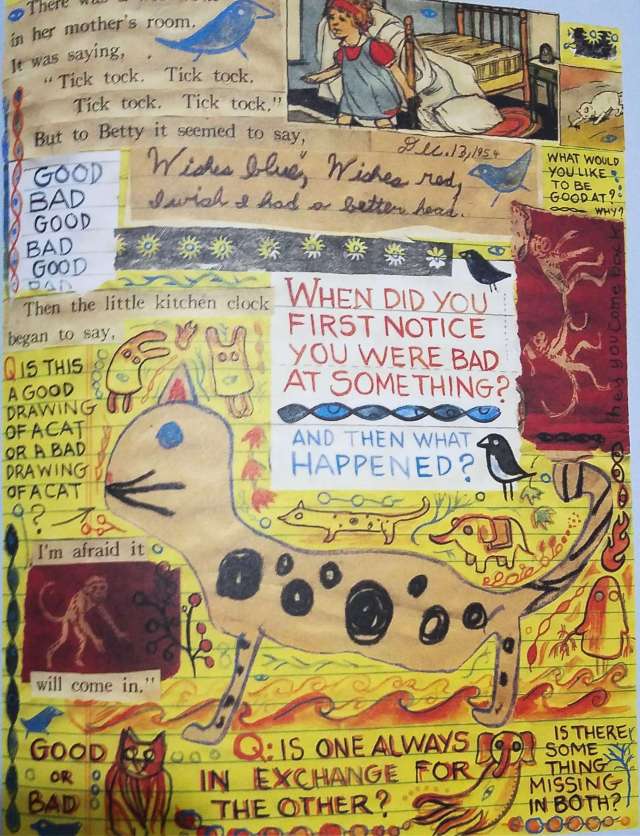

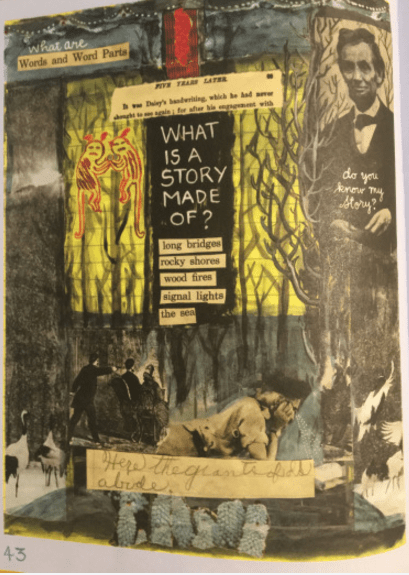
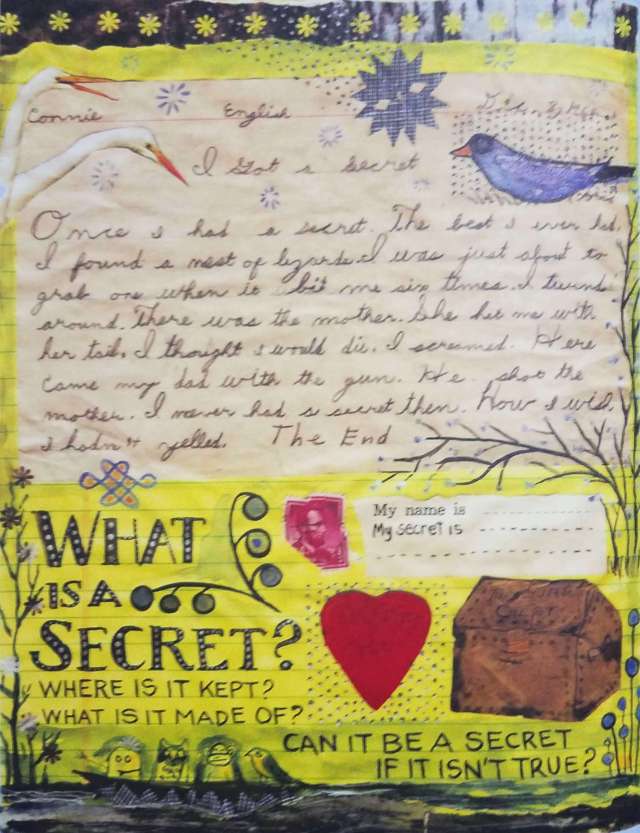 Another feature of this page that gives it texture is the cutout images, brown treasure chest, heart, stamp, the two geese, blue bird, etc. These aspects give the page a handmade scrapbooking feeling, like they were just glued on top of this page. It helps the page come to life and differentciates itself from the writing or background of the page. The upper half of this page which is the half that looks like it was cut off from a piece of notebook paper also adds texture. It to looks like it was glued by hand to this page, adding texture because we assume theirs a ledge on its borders. The tree branches painted on would add no texture if they were just flat on the page but since it crosses from the background to the notebook paper t adds texture by being on varying dimensions. In conclusion, examples of texture can be found on almost every page of “What It Is” by Lynda Barry, you just have to find one that speaks to your understanding of “texture”.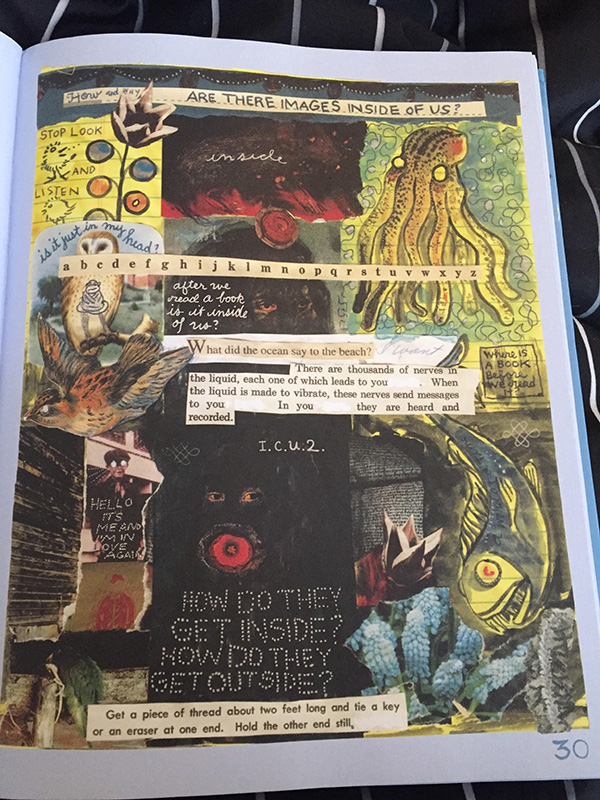


 Kristin Becker's DTC Classes at WSU