Past, Present, and Future Technology: Interview Ideas: Melissa Urueta

1) Reflects on how the future technology described in “Soonish” relates to notions of oral history as you understand them from the StoryCorps project

The way  that Kelly Weinersmith, the author of the book Soonish, describes the future of technology is just as someone would if they were telling their story with the StoryCorps project. She tells the perspective of the technological advances that we have now and compare it using references from scientists about what the human race will be capable in the future. This is a form of oral history because the author is piecing all of these advances of technology in order to provide an insight on how what it would be like in the future, possibly. Some examples of this would include having robots do everything for us, even building our buildings, and manipulating DNA in crops in order to make it into whatever scientists want.  In the introduction of the book the author notes and she is  not necessarily trying to predict anything, but give insight on the topics and outcomes that could possibly surface based on the current technology. But this is all taking place in the form of a book, a story if you will, makes it a perfect fit as a history that is written and not spoken.

For this oral history project I want to interview someone who depends on technology for their job, and how that has affected them since they started working in the position. I want to focus on the impact modern technology has made in that specific occupation and how it has improved since they first started. This description fits most jobs now, but I think that it makes it interesting understanding personal perspectives about technology in the workplace, for example grocery stores, “what did they do before the scanning and had to do everything manually?” It would be interesting to know the perspective of someone who witnessed that firsthand. I could also focus on one technologic advance that that person has seen firsthand expand and what it was like to see it first come out, like a computer. I really want to focus on the effects and technology has personally affected  their lives.
Posted in Fall 2018 Archive (201) | Leave a comment

Past, Present, and Future Technology: Interview Ideas: Melody Huerta

A big part of oral history in my opinion is the thoughtful answers that someone can get about a specific experience. Regardless of if that experience felt the same to everyone is what is important when it comes to oral history. The point is to hear what that specific person felt in that moment. For this assignment I read chapter two of “Soonish: Ten Emerging Technologies That’ll Improve and/or Ruin Everything” by Kelly and Zach Weinersmith. Where in which they talk about the wasteful and expensive nature of launching a rocket into space and what can be done to create reusable rockets and improve on the technology in general. What I think this has to do with oral histories is that it matters to keep all the mistakes we have made to remember and improve on them.

Soonish : Ten Emerging Technologies That’ll Improve And/or Ruin Everything pg 19

Having rockets as they are now is not diminished by new technologies that are occuring now but are used as a starting point. Being able to track our progress in technologies is important but with oral histories it is also important to understand what the public feels about things like this. Technological advancements in reality have a lot to do with the people they are created to serve. Getting someones opinion on a social issue right now as time passes slowly to us. But in the future listening being able to see how directly technology can affect a person is just as important as the technology itself.

The person that I would like to interview for my project would have to be my younger brother. I have always been interested in the way that people younger than me or in different stages of life use technology. In particular I wanted to talk about the pressures of being digitally literate in the time and place we live in now. Often times I feel that I did not receive much education on things that some take for granted these days. Being able to use a computer is something that I was expected to know but I feel my age group was sort of left to figure that out on our own. Now I have noticed that being able to access a laptop and being able to use and understand technology is something that has been implemented into different parts of public schooling.  Another person going along with the idea of digital literacy that I could talk to is one of my parents. Not only are they lacking in digital literacy when it comes to using different mediums and softwares but they also grew up in a different time and country. Maybe even before asking questions about their experience with all things digital explain to them what digital literacy even is. So I think it would be interesting to here how digital literacy has changed over the years and how it varies from country to country. Having digital literacy for all different types of groups is important because whether its accessible to people or not it still will effect everyone.


Posted in Fall 2018 Archive (201) | Leave a comment

Past, Present, and Future Technology: Interview Ideas: Emmalina Krist

A chapter of the book, Soonish, that I found interesting focuses on possible future advancements in “Bioprinting,” or the ability to create human organs available for transplant in a lab, as opposed to transplanting them from donors, thus eliminating the need for long wait queues to access these life-saving surgeries. This seems to slightly relate to oral history because the author presents a hypothetical question to aid in the explanation of this technology, in the form of a short narrative.

For this audio project, I feel that I would like to interview my father, if possible, because he was raised in an extremely different time and place from myself. He was raised in post-war Poland, during a time when the Communist Party was in power, and immigrated to the United States to escape the living conditions there. I would like to ask him how technology from this time in his life differed from what is available currently and find out if there is any kind of technology that has impacted him more than others. One thing that I have noticed about him is that he makes an effort to buy the latest versions of technology, such as phones or laptops, when he can despite high costs, and I have wondered if that is a result of his upbringing, especially because our family members that remain in his small hometown still use older technologies, such as flip phones, and are unwilling to adapt to newer interfaces.

Posted in Fall 2018 Archive (201), Uncategorized | Leave a comment

Past, Present, and Future Technology: Interview Ideas: Emily Bruckner

I chose chapter 11, which discusses the concept of future brain computer interfacing, as it relates almost directly to the progression of oral history. In this chapter, the writers relate that we all collectively have the sense that we would like to improve our brains and that one day we may be able to change them in almost any way we like. We dream of technological enhancements that will make us smarter, improve hand-eye coordination, change, recover, or delete memories, and prevent bad emotions. Our brains cannot be exactly interpreted and read like code in a computer’s software, but we are getting better at interpreting the brain’s metabolic signals and electrical impulses. We now have technologies that indirectly measure electrical impulses in the case of the EEG, detect blood flow throughout the brain with the fMRI, and we can also read and predict limb movements with the invasive ECoG, which is situated on the surface of the brain. We even have the ability to implant paralytics with devices that enable them to remotely manipulate cursors on computer screens and even robotic appendages; going forward, it’s more likely that we will use rising technology to heal and improve damaged brains than to upgrade healthy ones. However, it may be that one day, most people have some sort of augmentation used to expand cognitive functionality. In relation to oral history, if we could one day come up with a device that perfectly and accurately stores our own memories, we should have the ability to flawlessly recount our histories and stories with the precision of a machine. This would allow for accurate unbiased retellings and the ability to remember them indefinitely. Of course, with every advancement comes forth an equally likely problem, namely hacking implanted devices that could cause detriment and even bodily harm to implantees.

The person I would most like to interview, is my dad. He’s been to college twice in his life, for two separate degrees. The first time he went to college he was in his early 20’s and received a degree in aeronautical engineering, which he wasn’t able to even use because at the time, his field wasn’t hiring. More recently, he received a bachelor’s in computer science. I would like to be able to discuss with him how his experience in college changed over the two different times he attended, especially since he opted for online study more recently, and how he had to adapt to the changes. I would like to discuss with him how the online education system made aspects of learning more easy or difficult for him and where he thinks attending college online will go in the future.   


Posted in Fall 2018 Archive (201) | Leave a comment

Past, Present, and Future Technology: Interview Ideas: Andy Snow

For this assignment, I read a chapter in Soonish that discusses the Synthetic Biology which encompasses making medicine and industrial inputs of technology. In this chapter, biology and DNA of food has been altered using technology so scientists can control the breeding of life in a way that has never been done before. Scientist have been manipulating DNA in different scenarios like atomic gardening, as mentioned in Soonish. This kind of technology has taken billions of years to perfect through evolution. Synthetic biology combines biology and engineering and is used to help figure out the DNA of people, along with assisting in medical diagnostics and treatments. The example that Soonish uses is a dog that goes out into the yard and rolls around in dirt, tracking in diseases and bacteria. Synthetic biology determines cells and DNA by figuring out the cell types and putting them together in a way that alters the final DNA strands and the chemicals used to make this happen.

This topic relates to oral history because it shows the records of history and how technology has helped shape the future through evolution. It is interesting to think about where the world was decades ago and where it is now with the technological advancements that have been made. Ages ago humans were not able to change DNA or alter food chemicals to satisfy customers but with the evolution of technology, it is now possible and it improving as scientists research more efficient ways of going about biology.

For this project, I would like to interview my father who works in the finance business at a bank. My goal is to talk with him about communication, specifically iPhones and the change in cellular devices and how they benefit him in his line of work. When I was younger, my father would share stories with me about the lack of cell phones and the alternative ways of going about communication with his friends and family. My father was born in the 60s and is much older and wiser than I am which is why I would like to speak with him about the pros and cons of this form of technology. I am curious to know what kind of applications he uses on his smartphone, and if it is challenging for him to upgrade his phone as newer advancements are made. My father was more acquainted with land lines and is unaware of the constant changes on his iPhone. I am very interested as to what his thoughts are about communication and technology in his business.

Posted in Fall 2018 Archive (201) | Leave a comment

Past, Present, and Future Technology: Interview Ideas: Kaleb Parrish

In the book Soonish: Ten Emerging Technologies That’ll Improve and/or Ruin Everything by Kelly and Zach Weinersmith, section 6 was titled Robotic Construction and discussed how in the future technology should develop robots that help work construction. This section builds off of the previous section that emphasizes use of software and robots. Specifically, it talks about how we should be moving forward and towards robots working construction jobs to help build homes. This relates to the oral history because the author talks about history of building homes and connecting them by how things were done in the past to how they are done in the present, and then hoping the future. The chapter talks about how in the past they argue how things were done much faster. In 1917, Thomas Edison had an idea of making homes and that was instead of making a new home every time (demand), you would just get the mold of one and pour concrete into it. However, a man by the name of Ernist Neufert thought with his ideas to build homes on the back of a train and collecting raw materials as a train would go on its journey. Unfortunately, none of these ideas caught on but it brought the mindset to now in which advances in robots making houses can be a future thing. This relates to oral history because it helps society keep a record of past events and ideas.


When thinking about choosing an individual for this oral history project, the first person I think of is my best friend who I relate to the most, and that would be my dad. The theme of my interview will be health and specifically, the advancement in surgery. My father and I, as well as the rest of our family are huge football fans. We both played in high school and college, and due to the intensive play of the game, both ended up having the same surgery on the same shoulder (left). What I want to focus on in my interview is the difference in surgeries because back in his time when he had it, they had to cut his shoulder open, thus he has one huge scar till this day. For my surgery a few years ago, it was orthoscopic and I have 4 tiny cuts that have almost gone away so to talk about the difference interests me and hopefully you as well.

Posted in Fall 2018 Archive (201) | Leave a comment

Past, Present, & Future Technology: Interview Ideas: Jaclyn Erickson

I focused on section six in the novel, about Robot Construction and how in the future they believe that robots could work in the construction business. This was a very interesting section to me because my father was in the construction business for sometime in his life and eventually worked his way into real estate. Being very close with my father I went to all of his open houses and was constantly looking at new designs and new advancements each home was receiving. Boy has technology and modern designs changed even since i was a young girl. For my oral history project i want to interview my dad and see his insight on how technology has evolved not only through his personal experience within his job but also how technology has advanced since he was a child.

Robotic Construction was a very interesting read about how robotics should be implemented into the construction work force in order to build homes quicker. This is a perfect example of oral history because throughout this section is discusses how in the past homes were build much quicker than they are today, past to present. Which in all honesty makes sense due to todays homes designs are much more complex and overall larger than they used to be. In the novel its mentions both Tomas Edison and Ernist Neufert, and gives example of what was going through their minds back in the day. Tomas thought that instead of making a a new home every time someone asks, why not make a mold and pour one and have a house ready before people ask. Ernist’s idea was to build homes on the on the backs on trains so while the train continues on it’s way to its final destination. This way they could collect materials as they travel. Although these ideas were never actually used it allowed us to think more about how we design new structures and the type of technology used to create these structures. These oral histories are important because they allow us to learn from the past and further our knowledge for future advancements.

Posted in Fall 2018 Archive (201) | Leave a comment

Past, Present, and Future Technology: Interview Ideas: Zachary Larson

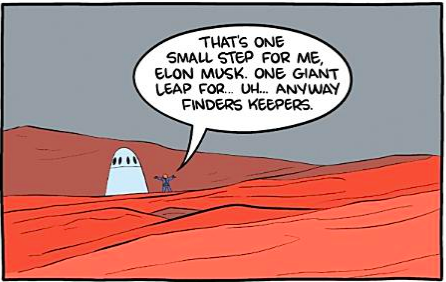
Kelly Weinersmith and Zach Weiner illustrate the potential of the new technologies and where they might lead us in their book, “Soonish: Ten Emerging Technologies That’ll Improve and/or Ruin Everything.” As more agencies, such as Space X, begin to emerge, space exploration is opening up to the public. The possibilities of where this technology might take us are intriguing yet there is some skepticism in how far humanity will be able to take it. Space tourism has become a very real market for the future that is once again turning heads to the sky. As the opportunity and ideas continue to build around space exploration, we must also be asking the ethical questions as well. This type of technology is expensive. So much so that it’s hard to reason with putting our money in the skies when we have already have limited funds on the ground.

No matter what this adventurous technology ends up turning into, I am sure it’s going to leave its place in the history books. That being said, it is vital that we document the feelings and emotions of our progress so that society can go back and analyze the path we took. Capturing the oral history of these developments is an important and unique way to record the history. In the same way StoryCorp records peoples perspectives and feelings about history, we should talking to the leaders in space exploration to understand what they are in search of and their overall motives in general.

If I was going to sit down with someone in our world today and discuss the potential of our technologies and where they’re headed I would grab a cup of coffee with Elon Musk. I would ask him questions about space exploration, how far he thinks we can go. I would press the reality of artificial intelligence and weigh out the potential benefits and drawbacks. I would try to get an optimistic perspective from him as well as his skepticisms and where he truly thinks we are headed.

Posted in Fall 2018 Archive (201) | Leave a comment

Past, Present, and Future Technology: Interview Ideas: Deyanira Tovar-Moreno

For the reading of the book. Soonish: Ten Emerging Technologies That’ll Improve and/or Ruin Everything, I decided to read the chapter, BIOPRINTING: Why Stop at Seven Margaritas When You Can Just Print a New Liver? I was intrigued by the title as I am currently learning about new technologies in my DTC 101 class, including 3D printing, and wanted to know if this technology had the capacity to advance enough to be able to help with certain medical tasks. In the chapter reading, the author describes a scenario where they are diagnosed with liver failure and are put on a wait list to receive a new liver. However, this waitlist consists of over 15,000 people who are waiting for a liver transplant, and the author quickly becomes frustrated with the lack of options outside of this list. The author then goes on to imagine a future where 3D printers are so scientifically advanced, that they are able to create organs to fill the gap for people on waiting lists. This concept of technology aiding in the advancement of medical practices, relates to the notions of oral history because throughout every decade, milestone advancements are made within the medical industry. There are several recorded events where technology allowed for people with rare or even common disabilities to be aided with a new conception. Furthermore, oral history allows for us to better understand how these advancements have helped people with diseases or illnesses that otherwise impeded them in their daily lives. For the project, I plan on interviewing someone who has been helped by a new medical technology, such as a tracker that tracks breathing, blood pressure, heart rate, or something of that nature. Trackers seem to be fairly new and common, and therefore I would like to interview more than a few people who use trackers for different reasons and ask them to explain how this technology has changed their life, and what their life was like before they were able to use this technology.

Posted in Fall 2018 Archive (201), Uncategorized | Leave a comment

Past, Present, and Future Technology: Interview Ideas: Issaya Saleumsay

Reading the ten pages to the intro of the book, “Soonish: Ten Emerging Technologies That’ll Improve and/or Ruin Everything“, I feel like having an oral history of someone that is older than the interviewer is a reliable and more credible source. It gives the people time to evaluate how time has changed and the way the world and people are going in order to see the future of this world in technology. For example, in the book, it explains how they had movies and TV shows that had flying cars and it explains how that is all handy dandy for that time period, but now we don’t have flying cars because people just think that’s ridiculous. However, instead of having flying cars we now have cars that can drive themselves. I think that the book explains the importance of being able to see the change of technology and we need to appreciate that more.

For my project, I haven’t really decided on a topic yet. However, if I had to pick one on the top of my head, I would probably choose the lifetime of phones. For example, pager to flip phone to blackberry, etc. I would use the theme of past to present. I would interview someone (probably one of my parents) and ask them how has the phone changed from when you could remember to now. My goal for this project is to get the timeline of the phones from possible before phones even existed and back to pager status. I think that this would be a really interesting topic to interview someone who lived in that timeline and compare it to how kids are raised now and see the difference in the world of technology. This will also show how the world has changed in maybe 50 years or so. Maybe at the end of the interview, I would throw in a bonus question with how future phones would look like and how soon they would come especially with the iPhone X and it’s new features.

Posted in Fall 2018 Archive (201) | Leave a comment