Interaction of Color – Daniel Smith

IMG_4024.JPG

In this piece by Ken Wong, the colors all seem to share the same shade or tint. That is to say, if converted to purely grayscale, the colors would all seemingly be the same. The hues in this picture look to be pulled from the darker end of the pastels. The color that has the steepest contrast to all the others is the pinkish purples of the “brain” and the accents on the shirt, the icecream and the bicycle icon. Surprisingly, this is image has a really dull, muted color scheme but it’s still fairly warm due to the yellow greens and the soft oranges in the background. Some of the colors are somewhat complementary but most of the colors are analogous. As I said at the beginning they all share around the same shade or tint. I mean, yes there is pinks, oranges, greens, and yellows, which are all close complements but the fact that they’re the same tint, they become more analogous. There are blue and red accents down at the bottom that don’t really fit in the color pallete of this piece but yet they don’t stick out so much that they are disruptive to the piece. Lastly, the saturation of the color is very low. That is to say the intensity of the colors are not very high. The colors in this piece, with the exception of a few pinks and purples, are fairly muddy and dull and desaturated. Overall the value of this piece is fairly dark everywhere but the center where all the bright whites and light blues are. This is because the dark dull muted green background the vibrancy of all of the other colors are pretty low.  Ken Wong “Puffy Jr”
Posted in Fall 2014 Archive (336) | Tagged | Leave a comment

Stefan Lindeman- Interaction of Color

Color Guide

By: Haley Fischer (http://www.haleyfischer.com/blog/2014/1/21/senior-thesis)

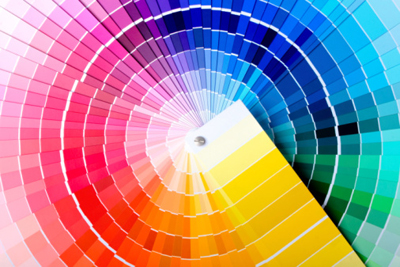
I chose this image to represent interaction of color because of the way the design really blends all the colors into each other. Some design only focus on primary colors (red,yellow,blue) or some with secondary (orange, green, purple). But in this design, it looks as if it is a graduated color wheel made up of small tiles that have a different shade of the color in it’s segment. The choice of order is not random either, the colors adjacent to one another are next to one another on the color wheel so they blend together more effectively. As you move vertically on the design, the color in the segment changes in saturation so it becomes lighter closer to the center and darker/more saturated as you move toward the middle, then lighter toward the edge. This technique playing with value and saturation gives this design a much more unique feel than if it was just simply a color wheel. By having different saturations, the wheel becomes much more detailed and provides countless more color options. There is also texture in the design which gives it an interesting feel. Between each color palette there is a white blank space which gives the feel that each square is on it’s own (almost like a post it note). This gives each square a raised feeling that looks like tiles, so when you look far away each color segment appears to be just a color, but as you get closer, its made up of tiny squares each with a different hue and color. This is a great example of selective emphasis, how the designer uses color to change the way the shapes are perceived.

Posted in Fall 2014 Archive (336) | Tagged | Leave a comment

Interaction of Color – Colin Weickmann

License Copyright All rights reserved by Let's Be Friends Okay

License Copyright All rights reserved by Let’s Be Friends Okay

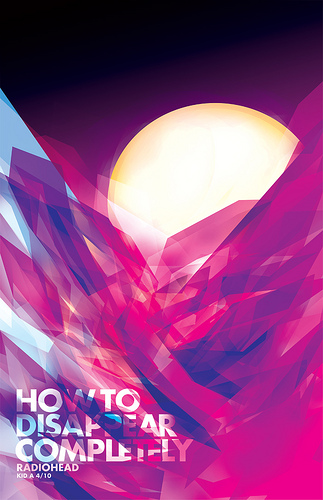
This is a poster designed based upon the song “How to Disappear Completely” by Radiohead. It showcases an interesting interaction between colors and effectively demonstrates the use of color in a design poster.

When we look at the poster, there are three main colors that stick out: blue, red, and purple. On the left side of the poster we see a shade of light blue, yet as we draw our eye over the poster from left to right we see the blue becoming darker. These different hues provide contrast, balance, and a sense of warmth when compared to the fiery red found in the middle and right of the poster. While there seems to be only one shade of red, the interaction of the primary colors blue and red creates the secondary color purple. The purple within the poster is subtle, yet the intensity of the red makes the purple feel warm along with the darker blue and seemingly radiates out into the black sky that fills the upper half of the poster. The yellowish moon or sun behind the color design also creates an interesting contrast to the mix of primary colors below it as it is noticeably lighter than the rest of the colors on the poster (except the light tinted blue). This element actually makes the sun/moon almost more intense than the other colors in the poster and I would argue is the first thing an observer would view.

Posted in Fall 2014 Archive (336) | Tagged | Leave a comment

Interaction of Color – Rashaad Siddick

by HOWARD SCHATZ, for ZINK MAGAZINE

by HOWARD SCHATZ, for ZINK MAGAZINE

When examining this piece the first thing you notice is how vibrant and saturated the colors are. The artist seemed to purposefully mix none complementary colors together to create a vibrant piece of artwork. The purple/pink color really intensifies the yellowish green and blues around it. These secondary colors work well together and really attract the eyes to trace all over the plane of her face. The value of the green seems unstable when it is contrasted with the purple vibrancy. The temperature of the picture over all is a very warm feeling ass the colors and intense and have a high value. If the colors were duller then this would give off the opposite and make the overall temperature of the picture appear to be much cooler. The Hues on this picture all seem to be fully saturated as the colors seem to be absorbed when combined with each other on her face. I found that sometimes if I did not look close enough or attentively enough, I would miss some blues on her face against the purple and red. In addition you notice that the artist made selective emphasis in the middle of the face by creating a sort of circular shape where most of the color was calm an didn’t have a combination of a lot of hues and complimentary colors as the outside did. Finally I would say that the colors used in this piece do have some groups of Analogous colors as blue, purple, green and yellow all are adjacent to each other on the color wheel.

Posted in Fall 2014 Archive (336) | Tagged , , , , , , , , | Leave a comment

Interaction of Color- Andrew Sears

This piece by Prachi Jain combines bright tones of a color with dull tones of the same color. The piece uses a combination of primary colors in the top and bottom sections with tertiary colors in the left and right sections. The brighter colors in the top and bottom sections are intensified by the dull colors used in the left and right sections because the dull colors are sort of drab so they make the bright colors seem even more energetic than they already are. In the case of this piece the artist used a hue to create the difference in the sections. The saturation of the colors makes the bright red look brownish in the dull sections. Different values are also displayed in the piece with the use of the bright green, red, yellow, and orange; these colors are all light and unstable so they keep the eye moving around, where as in the dull sections the color combinations are more stable because of the drab colors. The colors used in this piece are complementary, which can be seen with the color interaction between the green and the red in the top and bottom sections.

https://www.behance.net/gallery/5105101/Color-and-Typographycolor

Posted in Fall 2014 Archive (336) | Tagged | Leave a comment

Interaction of Color – Nathan Taylor

The Smashing Book #3 by Multiple Authors.

The Smashing Book #3 by Multiple Authors.

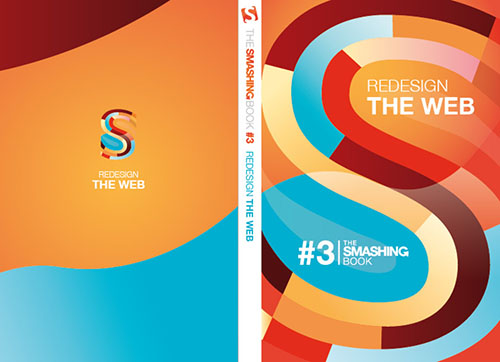
I have chosen “The Smashing Book #3” as an example of the interaction of color. This book cover utilizes many different colors, ranging from dark browns to reds to light blues. These colors interact and contrast with one another to give the book cover feeling and depth. The lighter, cooler colors such as the light blue and white highly contrast the dark browns and strong reds that they lay next to on the cover, which creates the letter “S.”

The colors themselves are highly saturated and therefore very vibrant. This is beneficial to the book, as it is focused on modern design (with the main focus being web design) which commonly uses bright and vibrant colors rather than low-saturated ones.

The colors on this design compliment each other very well. As mentioned before, there is a strong contrast between the warmer and cooler colors. However, the cover is dominated mostly by the darker, warmer colors, which allows for an overall warmer feel when viewing the image. The cooler colors only serve as a bonus, giving a highlight to the dominant warmer colors.

Posted in Fall 2014 Archive (336), Uncategorized | Tagged , , , , , | Leave a comment

Interaction of Color – Emilee Shimazu

Orbital Mechanics – Tatiana Plakhova (complexitygraphics.com)

The image I chose to use for this blog post is part of Tatiana Plakhova’s Orbital Mechanics series. I believe that this gorgeous image is a great representation of color interaction, especially because the spiderweb of color that makes up the foreground object isn’t large and solid, but rather made up of a thousand smaller lines and dots. The background is extremely desaturated, featuring a primarily black canvas, and in a smaller space, a very faded blue that is used to highlight the saturated foreground colors of green (which is saturated) and white (unsaturated), which both interact with each other to create a beautiful, vibrant foreground that stands out against the unsaturated background colors. There are tints of yellow both on the foreground and background, bleeding out from the foreground image as though actually casting light on the black background. There are a lot of analogous colors in the foreground as opposed to complementary colors. The range of hue is from yellow to green and blue, all of which blend into one another and diminish each other rather than standing out on their own. The colors that make up the globe outline are blue and purple, the two colors bleeding into each other rather than having defined edges that separate them. The intensity of the foreground colors really makes the green and white stand out against the globe, but the black background also makes it really pop for the eye.

Posted in Fall 2014 Archive (336) | Tagged | Leave a comment

Blog #4 Interaction of Color – Tim White

Bambi_vs_Godzilla_On_the_Nature_Purpose_and_Practice_of_the_Movi.large

Bambi vs. Godzilla Author: David Mamet Publisher: Pantheon Publication date: Feb. 6, 2007 Designer: Brian Barth Typeface: Knockout http://bookcoverarchive.com/book/Bambi_vs_Godzilla_On_the_Nature_Purpose_and_Practice_of_the_Movi

This book cover was published by Pantheon and written by David Mamet. I believe this is a powerful example of interaction of color because although there is multiple colors being shown, there is one that is dominant over the others. The color yellow completely dominates this book cover. Because of the amount of space that color is taking up, it is diminishing the green, orange, red and pink colors. If you were to stare at the middle of the book for a little while, it would seem as if the entire cover was yellow. The whole cover acts as a hue because the colors blend with the next color coming from both the top and the bottom. Towards the top of the composition, you can clearly see that there is some orange and pink. Just above the black line that goes across the top of the book, it shows a little bit of red. The top is more engaging than the bottom because there are more colors. The bottom of the book has more of a lemon/lime look to it. As the value of each color gets lighter, the more of the next color in the hue we can see. Each color is not on its own. In other words, we cannot determine a “darker” red that looks brown because it changes to a more pinkish color. The colors are close in value if you were to choose the top or bottom section, but looking at the cover as a whole, it is a composition of multiple hues. Going from the bottom to the top, the temperature seems to get hotter. Green, being a mellow and calm hue, changes to yellow, which is what we associate with the sun. However, it makes a dramatic switch to a more cool color: pink. There isn’t that much saturation in this composition, as each color is solid and pure on its own. The order of color on this cover seems to portray a more complementary look until it gets to the top of the cover, where it may start a analogous color relationship.

Posted in Fall 2014 Archive (336) | Tagged , , , , | Leave a comment

Interaction of Color – Lacey Kido

Dr Seuss, Dr Seuss Illustrator. 1971. http://www.barnesandnoble.com/w/lorax-dr-seuss/1101109833?ean=9780394823379

“The Lorax” by Dr Seuss, Dr Seuss Illustrator. 1971. Barnes and Noble.

I’ve chosen to examine Dr. Seuss’ book cover for “The Lorax” for this post. As is commonn for all art work for his stories, there is a constant mix of vibrant colors, sometimes colors that don’t seem like they would work well together but somehow they are aesthetically pleasing and not too harsh on the eyes.

The obvious stand-out colors are the yellow and pink that top the trees in this image, noting their importance to the storyline before the reader even opens the front page. Against the tiffany blue background, these two colors are intensified. The blue sky and green foreground have light saturation and interact in a way that allows neither color to overpower the other. There are multiple hues of yellow on the cover, in the tree top, tree base, and the Lorax’s mustache, thought the difference is infantismal. The colors are complementary in their interaction, composed of more than primary colors, and because they are all from different places on the color wheel the cover is not anagulous.

Posted in Fall 2014 Archive (336) | Tagged | Leave a comment

Interaction of color – Alden Paguada

This photo gallery of eighth grade student artwork from Art Teacher Jessica Stanton's classes at Sand Creek Middle School, Inspired by Henry Monroe

This photo gallery of eighth grade student artwork from Art Teacher Jessica Stanton’s classes at Sand Creek Middle School, Inspired by Henry Monroe                                               

In this picture inspired by henry monroe demonstrates a good example of color contrast. We see that red and yellow stand out against purple and light green, and light blue. We have present complimentary and analogous colors. we see that the light green and sky blue sit very close to each other, therefore depicting a harmony between the two. Because light green and sky blue has some elements in common they reflect or show minimal color contrast. Analogous colors have cooler temperatures.  On the other hand we have the colors red and yellow, two primary colors that are completely opposite of each other, known as complements. Complementary colors have a warmer feeling .  There is value present in this picture, for example: the sky blue has a low value of light and low intensity. There is not much addition of black, therefore no shading is present. Theres is some tint present in the sky, we see a mixture of blue and white. The colors yellow and orange on the second building are close in value (light) and intensity but have a slight different hue. Now, if we see the building in red and yellow, these colors are very close in hue and value but are different in intensity (addition of black or white). The streets are being neutralized by adding more white, making them look more gray, in another words lowering its saturation.

Posted in Fall 2014 Archive (336) | Tagged , , , , , , , , | Leave a comment