Interaction of Color – Katie Malberg

The designer for this book cover was Isaac Tobin, retrieved from bookcoverarchive.com.

The designer for this book cover was Isaac Tobin, retrieved from bookcoverarchive.com.

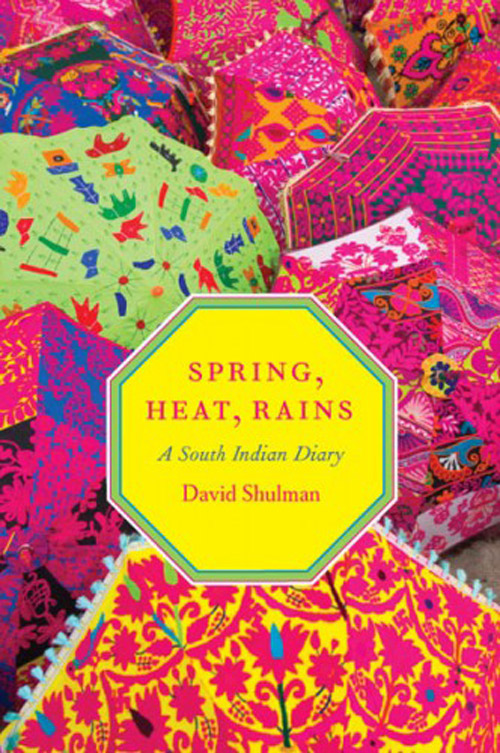
The cover designed by Isaac Tobin for the novel Spring, Heat, Rains  provides a great arrangement of colors, on what appear to be decorative pillows. If looked at individually, they each seem to hold a different pattern, but as a whole they create a harmonious balance. All the colors used are in high saturation. The main color used is magenta, and it works to unify the entire cover of the novel. The other colors, that is green, blue, orange, yellow, red, black, and white interact with the magenta to create diversity within the design.

The interaction of color is nicely arrayed in this cover. Many blue hues are used with the magenta to create the patterns. In the one on the left, the value of both seems to be the same, but the blue is higher in intensity. This makes the blue diminish the magenta. The pillow in the upper right-hand corner has the opposite effect. The blue is a darker shade than the magenta, and thus the magenta pops out more in the pattern, while the blue recedes as negative space. This use of lighter and darker hues creates the effects of optical mixing. With the different colors put against the magenta, it makes it look like it’s in a different hue or value, but this is not the case. It’s the exact same color, but looks shaded, tinted, saturated or desaturated, depending on the context it’s surrounded by.

The title of the book resides in a bright yellow octagon, intensified by the magenta. The cover’s color relationships are both analogous and complementary. The blue and magenta, black and white are complementary colors, while the red, magenta, orange and yellow are analogous colors. There are primary colors on the green pillow, with yellow, red, and blue figures, while the green background is a tertiary color. Overall, the dominant use of magenta in accordance with the other colors creates a very harmonious cover for the novel.
Posted in Fall 2014 Archive (336) | Tagged | Leave a comment

Interaction of Color – Becka Prater

http://abduzeedo.com/tallest-skyscrapers-illustrated-romain-trystram

Burj Khalifa by Romain Trystram. This was part of a series called “The Tallest Skyscrapers”, to illustrate skyscrapers all over the world. This is located in Dubai.

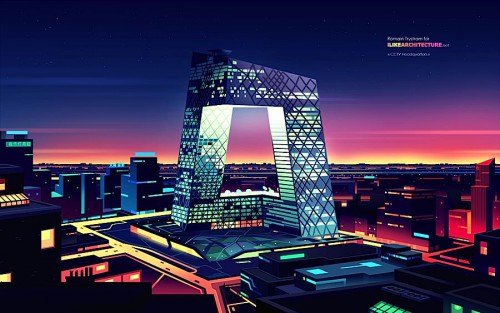
In this color, the illustrater, Romain Trystram, used primary colors and secondary colors. In addition, he used warm and cool colors so the warmer colors (red, orange, yellow) stood out more. It created a vibrant color contrast. All of the colors in this picture are highly saturated and also quite intense because the darker hues and darker colors bring out the brighter ones. This picture is full of both complementary and near complementary colors. The blue and purple complement the orange and yellow and the red and orange are analogous on the color wheel. There is selective emphasis on the building and the roads below, even though the building is a cooler color and the road warmer colors. They both stand out from the top and bottom of the picture. The horizon also stands out to emphasis that it is dusk. The darker colors are definitely muted in this picture since the brighter colors stand out a lot more.

However, on the lower part of the illustration, the other buildings seem to fade to a darker color as the hue darkens. It shades into the darkness to further emphasis where the eyes should be drawn to on the picture. However, the tint is apparent towards the middle of the main, looped building as your eyes approach the middle of it. The tint in the middle of the illustration makes the dusk look a lot brighter, compared to the dusk at the edges of the picture, which are slightly more shaded and darker.

Posted in Fall 2014 Archive (336) | Tagged | Leave a comment

Interaction of Color – Eileen Lim-Hing

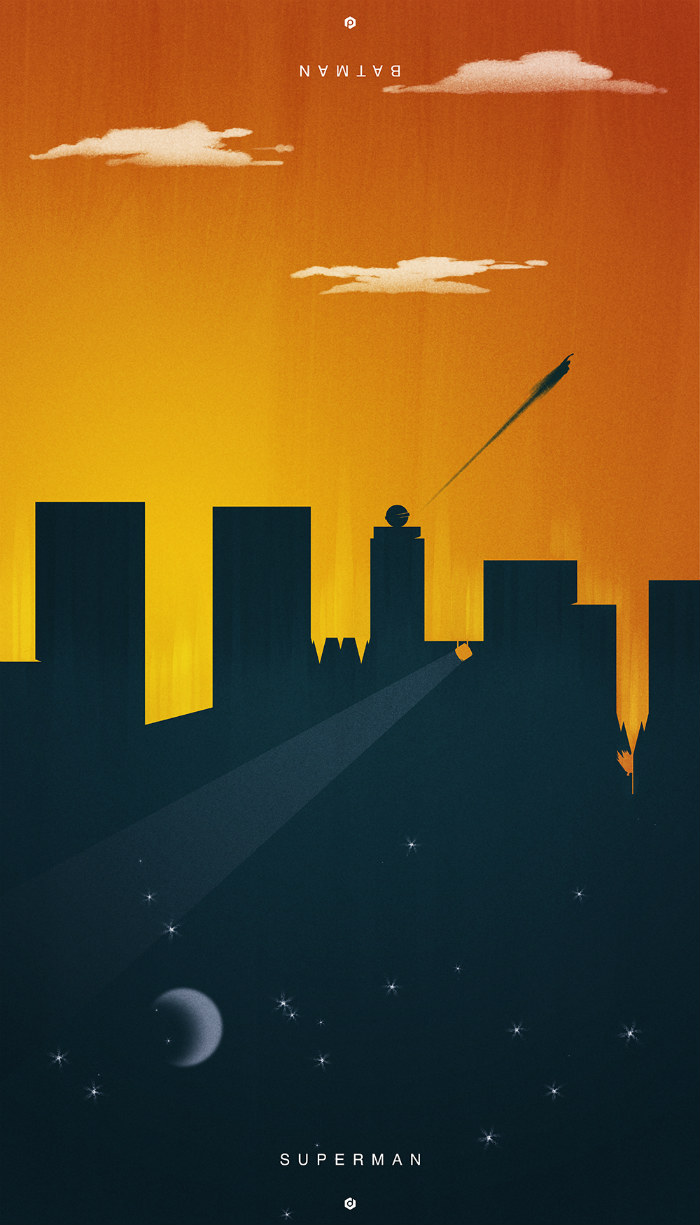
"Batman vs. Superman" By Doaly Link for website

“Batman vs. Superman” By Doaly
Link for website

“Batman vs. Superman” poster designed by Doaly is a good example of interaction of color. The contrast between the sky and the buildings is significant. When comparing the sky and the buildings it can be seen as complementary because the buildings are close to black and the sky is close to orange and orange and black sit on the opposite side of the color wheel. This makes the temperature opposing since it is warm vs. cool colors. If looking at just the sky you can say there it is analogous because orange and yellow are close on the color wheel. This makes the sky seem warm. The bottom left hand corner of the sky is very saturated because the yellow is brightest in that corner verses the top right hand corner where the orange is a darker saturation. By having the sky have yellow in it, it adds intensity by making the sunset seem bright. The light shining out of the building creates tint almost because its a light grey color mixed in with white to give it that look. Having the moon almost white creates contrast between the dark buildings, which makes the moon stand out.

Posted in Fall 2014 Archive (336) | Tagged | Leave a comment

Interaction of Color- Megan Thompson

Once in Lifetime Book tittle: Talking Heads http://www.sagmeisterwalsh.com/work/project/talking-heads/

Once in Lifetime
Book tittle: Talking Heads
http://www.sagmeisterwalsh.com/work/project/talking-heads/

The picture to my left titled “Once in a Lifetime” represents a positive combination of colors. To begin, my eye is first drawn to the yellow saturated background that defines the color choice for the

piece. I use the term color choice because, by choosing that soft yellow it set the hues and values for the rest of the piece. My eye then moves toward the golden baby. The golden baby is an analogous color because it is built off the same hue as the background color, which in this case is a golden brown yellow. I believe the author chose to use such an analogous color because it blends in the object but keeps a similar color wheel. Next, my eye is then drawn to the two dogs. I would describe that these dogs have a different intensity color among the spectrum of colors that were chosen. The intensity is described because it goes along with the color wheel but has the darker tones to make it stand out. The intensity is a darker brown but till has the yellow combination to complement the picture as a whole. Once looking at these dogs, the background is the next area that my eye is attracted too. The back ground colors complement the piece because they are colors that exemplify the opposite of what is originated. Some of the colors that are included in the complement spectrum are reds, greens, blues, and orange. These colors are soft in the background and highlight the other characteristics of the painting. These objects are relatively small in scale compared to the large baby and dogs. This is because the main objects represent the strongest use of color while the smaller scale objects trim the overall piece.

Posted in Fall 2014 Archive (336) | Tagged , , , , , , , | Leave a comment

Interaction of Color- Stephanie Jones

Punching Holes in the Rah Rah by Steve Banks shows a good combination of complimentary colors. The graffiti is a red hue that stands out against its complementary color blue, which is the background. The color interaction between the two hues makes the red stand out. Having both the blue and the red being primary colors, the artist added secondary colors such as the green and orange giving the image a better contrast between the colors.

Since the red is the dominate color in this photo, the artist uses cool colors in the background to make the red pop. This adds a balance of warm and cool temperature to the photo. The value of the background (green and blue) is darkened to make the red and orange stand out. The red and orange have a strong saturation because they are made bright to stand out against the background. The red has a white outline causing the red value to lighten and have a greater intensity to it. This photo has a good color interaction throughout it.

Posted in Fall 2014 Archive (336) | Tagged , , , , , , , , | Leave a comment

Interaction of Color – Sean Jones

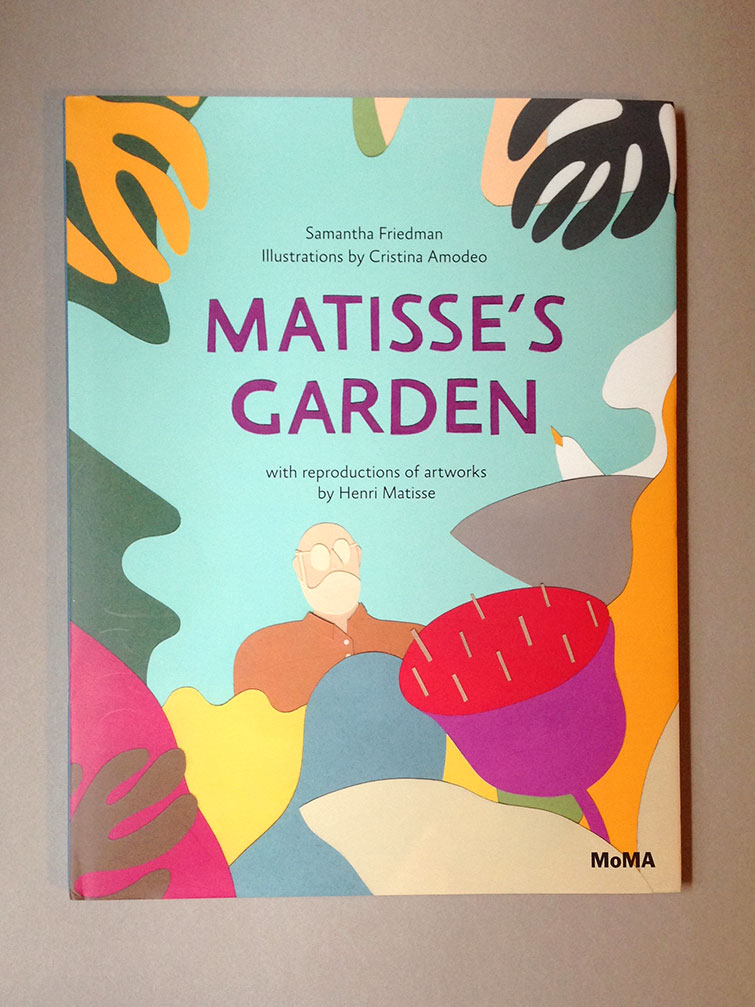
The interaction of color on “Matisse’s Garden” by Samantha Friedman is of interesting nature.  Most of the colors in the cover have a higher level of saturation such as the reds, purples, black and orange however some also have a lower level of saturation like the light blue background and some greens.  The hue and shades of color gives for a nontraditional feel as it almost projects a pastel feel.  The red and purple “flower” or whatever that is definitely pops out due to the high saturation factor.  The colors surrounding the “flower” are slightly less saturated but are still more than the blue background which gives the effect of depth.  As far the the color congruity goes, there is a wide array of color choices and it is not analogous but more complimentary because of how many colors there are.  Primary and secondary colors are used as well as shades like grey.  Notice how the designer purposely used colors in a shade and saturation that we’re not typically used to seeing.  Doing this along with the odd color choice makes this book cover stand out as different than most.  You can obviously tell that the artist of this image was strongly focused on making an impact through the visual spectrum.


Matisse's Garden


Posted in Fall 2014 Archive (336), Uncategorized | Tagged | Leave a comment

Interaction of Color-Joseph Varnadore


“Hello NY” has a cover by Julia Rothman that serves well as an example of using similar colors in a way to create contrast. The cover uses mostly desaturated colors, with each one being a varying shade of red, orange or pink. Rothman also uses whites to create natural borders around the colors, so that even though they are not saturated, the stand out from one another. The primary exception to this being the yellow-green hue used for the various trees in the art, as they pop out from the rest of the covers art as being highly saturated.

As I touched on early, the white interacts with the various shades of red, being a naturally good border for them, stopping them from bleeding together. These also server as the primary colors, as the eye gets attracted to the hard shapes out in the city to the fore ground. The art in general carries a warmer temperature to it, despite the abundance of white and greys in it. The primary colors are analogous to one another, as you can see they all carry the same sort of “root” color. The way that the colors become desaturated as they get closer to the edge of the top also does well with drawing the reader’s eye back down to the title.

Posted in Fall 2014 Archive (336) | Tagged | Leave a comment

Interaction of Color- Jesse Pearson

Cover of Loop, by Koji Suzuki, found on the Book Cover Archive. Designed by Chip Kidd.

Cover of Loop, by Koji Suzuki, found on the Book Cover Archive. Designed by Chip Kidd.

The book cover I chose only has three colors: yellow, red, and black. The yellow is extremely saturated, while the red is a darker shade. The two colors are both primary colors, so I wouldn’t say that they are complementary, nor would I say that they are tertiary. However, they both are warm colors, and they could be considered analogous.

The cover uses alternating patterns of the yellow and red to create an especially vibrant juxtaposition. Because the difference between the shade of red and the shade of yellow is so great, the point where they meet actually creates a very interesting phenomenon. The red and yellow seem to create an orange hue where they meet, despite there not being any actual orange hues in the cover. This contrast creates a sort of vibration effect, and it makes the piece feel very unstable, as if the cover is shifting, or moving ever so slightly as the viewer looks at it.

Additionally, the point at which the yellow meets the red (the tops and bottoms of the yellow rhombus) creates a juxtaposition between the darker shade of the red and that of the yellow. The color of the tips of the rhombuses seem to have a darker shade, even though the yellow remains constant throughout, similar to the Bezold Effect.

Posted in Fall 2014 Archive (336) | Tagged | Leave a comment

Interaction of Color – Susan Cannarella

This poster was done by Albert Valencia and showcases a multitude of interactions with colors and how his rhetorical choices effectively represent the posters meaning. When we look at the poster, the two main colors that stick our are Orange and Blue, which are complimentary colors. The color interaction between the two of these colors give the poster balance. Orange being a secondary color while Blue being a primary color. There is a balanced contrast between the two when we look at how the distribution of colors are placed on the poster. The cascading blue on one side is equal in weight and size to the cascading orange on the other side. Hints that indicate the temperature of the poster would be the design of the palm trees which is often associated with summer, beaches, and sun. In addition to the hues of the colors themselves which indicate a warm temperature. The Blue hue moves from a lighter seafoam blue which can be seen at a lighter value or tint of blue. But then this recedes down into a low saturation of blue mixed in with the orange when combining the two tints. The logo of Mickey Mouse is outlined with bands of extremely tinted blues which progresses slowly into a tinted orange and then cuts off into white. When we’re looking at the intensity of the posters colors, the middle bands of the cascading blue and orange are sharp in hue. We can also note that looking at the bands of colors side by side, we can see that the colors intensify if we continue down the bands of colors when they started off a very tinted color. With the logo placed in the center with a strong bold blue color that outlines it, against the cream colored background, the logo’s boarder diminishes the background, making a clear statement between what is in the foreground and what is in the background.

Posted in Fall 2014 Archive (336) | Tagged | Leave a comment

Interaction of Color – Ashley Davis

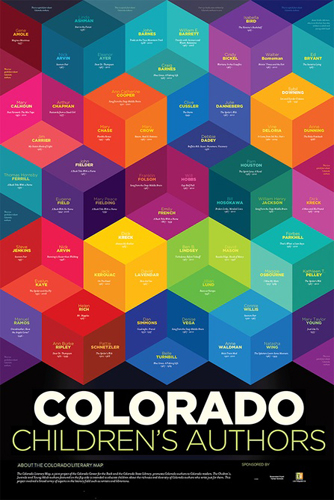
Nathan Zehr. Poster for Colorado education. Graphis.com

Nathan Zehr. Poster for Colorado education. Graphis.com

The poster design is a good use of various colors to portray the blocks on the page. Each color either helps intensify or dim the colors around it, depending on which color it borders. For example, the blues that are side by side tend to diminish and blend together as one; it’s harder to differentiate each one. However, when the blues are next to a complementary color such as an orange, they stand out a lot more. Same with the purple and yellow blocks; being complements, they help the other pop and in this design, those blocks are the most attention grabbing because of it. This design also uses a variation of complementary and analogous colors, as some of the blocks have minimal differences between them all. There are red blocks connected to purple blocks, and green blocks connected to blue blocks. So while there are a couple instances of complementary colors (purple and yellow together, blue and orange together), it’s mostly an analogous composition.

There is a good contrast of hues, intensity, value, and saturation in this design as well. Each block has a different hue, one being darkest and one being lightest, which gives the perception of depth to each square. The variation in hues also shows difference in value of each of the colors. The darker colors have a lower value (and in this instance also a darker intensity) and the lighter colors have a higher value. The intensity of certain colors stand out among the rest; the yellow, orange, and pinks in particular. The top yellow square has a bright intensity to it, and the left pink square on the second row does as well. Lastly, the saturation of some of the squares is much lower; the colors look almost muddier because of the purity of the saturation. It’s especially apparent in the blues; the blue square on the second row, and the middle blue square on the bottom.

Posted in Uncategorized | Tagged , , , , , | Leave a comment