Framing: Sanaya Nordine


img_0294

“Damara” by Mary Borsellino, Page 125 of Paradox Space

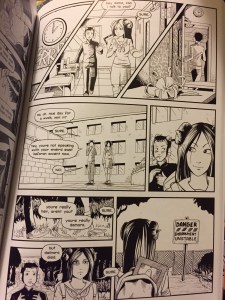
This page from Paradox Space’s “Damara” shows a variety of ways framing can make a black and white comic more interesting. Comics are made up of boxes, or “frames”, which are arranged to show sequences of action. The borders of these frames change depending on the author’s motivation and intended effect. In this one-shot comic, time lapses are frequent, so transitions are made to reflect how time is passing. The top row shows the ring of the clock, and the two characters leaving the classroom to have a chat. With this framing, we can understand that these actions are connected, and what will happen next with little dialogue.

It’s also important to understand frames in terms of the what borders don’t show. In the bottom row you can see the panel that consists only of feet, background, and some dialogue. We can infer from this frame that the same characters are walking outside, even though we don’t see their faces. The framing in this row helps add to the illusion of motion.


Posted in Uncategorized | Leave a comment

Matthew Donald: Formstorming

blog1

Formstorming is a creative process in which artist’s and designers gather information and/or material that will help to form creative ideas. The idea of formstorming is to help designers think outside of the box so-to-speak, and see things in unique and unorthodox ways by triggering ideas that go beyond familiar.

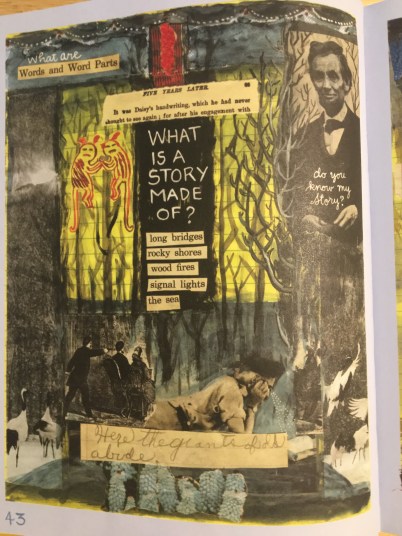
In this image taken form Linda Barry’s What It Is, she poses the question, “What is a story made of?” This is a great way for a designer to begin the formstorming process, by asking a question and grabbing visual representations of possible answers to the question. The more possible answers and different angles of approach used, the more unique, creative, and groundbreaking the ideas that are triggered will be. You can see that she has compiled several images around the question that are possible answers to what she see’s as elements or iconic images in storytelling.

Posted in Spring 2017 Archive (336), Uncategorized | Leave a comment

Scale: Sanaya Nordine


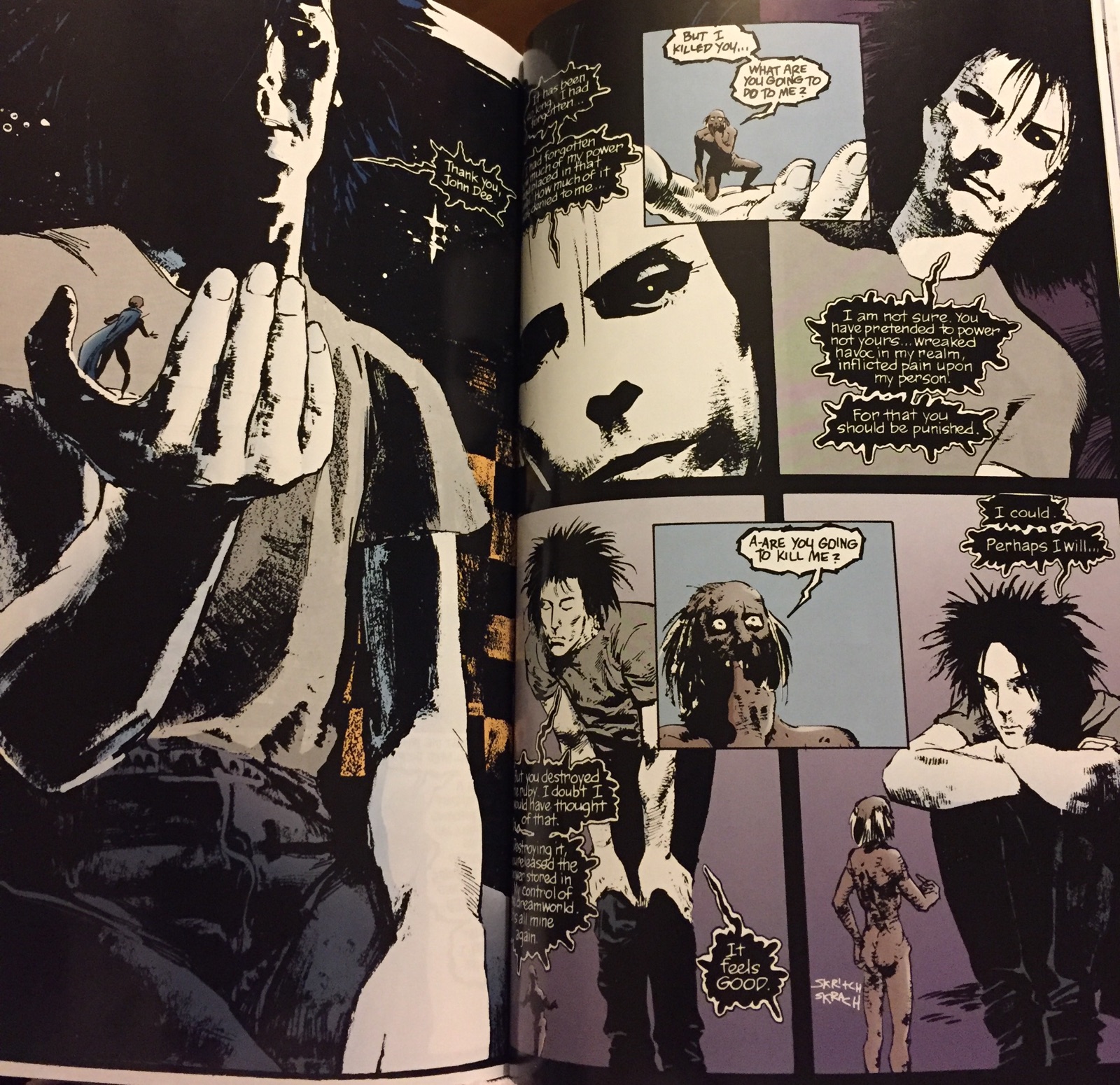
These pages from Sandman by Neil Gaiman provide us examples for Ellen Lupton and Jennifer Cole Phillips’ concepts of objective and subjective scaling in Graphic Design: The New Basics. According to the authors, objective and subjective scaling refer to the sizing of characters or images in relation to each other and what this means. “Objective” scaling refers to scaling kept in the same proportions. In terms of the image above, this would be the (kind of) proportional scaling of the giant Sandman vs. the tiny John Dee. On the other hand, scaling is “subjective” when characters are enlarged or shrunken to add emphasis in framing.


Our example above happens to be both objective and subjective. The pages presented are scaled objectively because there are no other frames to compare them with. In terms of the rest of the comic, however, this scaling is subjective. At this point in the graphic novel, the Sandman has just regained his powers from John Dee, the tiny figure in his hand. Visually, your eye is drawn to the Sandman because of the physical hierarchy of the two characters. This depiction, however, is an exaggeration compared to the rest of the novel, where Sandman is the same size as humans.

Posted in Uncategorized | Leave a comment

Matthew Donald: Point, Line, Plane

march-book-2

Image taken from “March: Book Two” by John Lewis, Andrew Aydin, and Nate Powell 

This image here has several points, lines, and planes. The word ‘MARCH’ is a point and a plane. It is a point because it is placed dead center of the page and is the first thing you look at when you see the image. The words in ‘March’ forma plane throughout the center of the page as well, due to the fact that the letters form a line with breadth and direction.

The way ‘March’ and ‘Book Two’ are positioned creates a set of lines. According to the book “Graphic Design the New Basics” by Ellen Lupton and Jennifer Cole Phillips, designers use different arrangements of words build line segments that create unique and interesting typographic shapes. To do this, artists use font size and alignment; which you can clearly see in this photo with the words ‘Book Two’ in smaller font and aligned to the right edge of the word above.

Above and below the title phrase in the middle of the image there are two planes delineated by the third plane which is the backdrop for the title. The two edges of the top and bottom planes in the image are the same two edges that create the shape of the plane that sits behind the title.

There is also a clear usage by the artist of linear perspective in this image. If you take a look at the pond in the image you can see that an optical distortion has been created by the way the angle of the vertical edges of the pond recede. This gives viewer the perspective of the individual standing at the podium. This design is creative and balanced because of the even flow and contrast throughout it, as well as the presence of point, plane, and scale techniques.


Posted in Uncategorized | Leave a comment

Scale: Jasper Barbosa-Rodriguez

Lupton and Cole Phillips’ chapter on “Scale” from their Graphic Design: The New Basics ostensibly spells out the importance and pragmatism derived from the way certain objects are placed and how they appear in contrast to another according to size. The clarity and placement involved is relative, as well as the physical objective nature of the structure itself being subjectively rendered, and it all depends on how the author portrays the object. Whether they decided to pair it with an object or background of similar hue, or something on the opposite end of the spectrum, all plays into the end result of how large, small, or impactful the object appears.

A spread from "Teen Titans: The Future is Now" by Geoff Johns

A spread from “Teen Titans: The Future is Now” by Geoff Johns

In the example I have provided from Geoff Johns’ “Teen Titans: The Future is Now,” we see how scaling works to give the spread a punch (not to mention some actual punches from Starfire, et cetera). Scale is subjective in this example, because if you consider that these characters are all roughly similar sizes as humanoids, the characters who appear larger or smaller make those who are nearer to the center more pronounced, along with the role of color. In the comic, they are objectively showing that Superboy is pretty much the size of a tiger by having the two of them fight each other on the same plane. To go with that reasoning, Starfire is much larger than Wonder Woman, giving their objective sizes, as they are also on the same plane. Although it may seem chaotic, there is a flow that allows for the scaling to work, especially in regards to color. When you get closer to the edge of the pages, the gradient is dark, but the center is a rich, fiery color. With color and the use of foreshortening, there is a lot of depth to the artwork, along with the heavy contrasting lights and shadows. Captain Marvel, Raven, and Dark Raven, who are smaller in comparison to the rest, add movement with their subjective scaling, especially when compared to the size of Kid Flash’s head at the bottom of the page. It gives a lot of focus to those in the center, as these crime-fighters all seem to be suspended in space choke-holding and about to strike blows.

Posted in Uncategorized | Leave a comment

Matthew Donald: Framing

Blog 3 Image.jpg

This photo here is an example of framing and how it can be used in graphic design. In this picture, the artist used several frames of various shapes and sizes to separate the images and provide a sequence that allows the ready for storytelling. In this image you can see a vast number of borders within borders used to delineate pictures. An example of this you can see in the main picture that there is a window frame within the border of the larger photo. Also you will notice that the smaller images are all seemingly held together by a larger thick white border that surrounds the page. As you look at the main image that is largest and centered you can notice that a lot of the smaller images that surround it are smaller crops of from a different perspective of that same image. As the lady sleeps on the couch the artist shows in some of the other smaller images a dream that she may be having. I did not notice any implied frames in this image. I can’t tell if there is an implied specific order to the images within the larger frame, however; in what seems (to me) to be the last image in the frame the artist introduces a new element when they show the old man leaving what seems to be a doctor’s office in a wheelchair. I found it interesting that throughout all of the other framing and cropping on this page, we don’t see the old man in the wheelchair until the end.

Posted in Uncategorized | Leave a comment
m121

Artwork from “18 Days” by creators Grant Morrison and Mukesh Singh.

According to Ellen Lupton and Jennifer Cole Phillips in their book ‘Graphic Design The New Basics’, scaling (within the context of design) can be both subjective and objective. According to the two authors scaling is objective when the dimensions of an object are translated proportionately to either a larger or smaller size. For example, a city developer may create a model replica of a new development in a much smaller but proportionate size to that of the actual city development. Scaling is subjective when an artist uses size comparison and contrast to emphasize an object or deemphasized another, creating the impression that a certain aspect of an image is of greater importance.

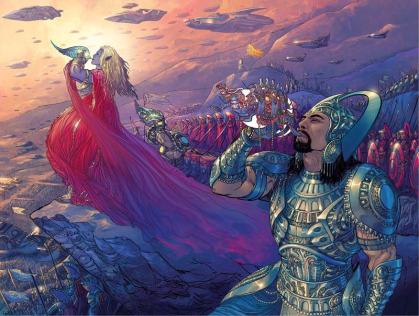
The image above, taken from “18 Days” by Grant Morrison and Mukesh Singh, is an example of subjective scaling in that it shows what seems to be a male of some sort of royal status and a woman to his right (who seems to be his counterpart) with an army of soldiers behind them. The two are drawn much larger than the rest of the characters on the page, the male being larger than the female. This draws the viewers eye immediately to the male figure, then to the female just slightly in the distance, and finally to the rest of surroundings depicted in image, including army of soldiers behind them.

The positioning of the male and female within the frame is also important to the scale. The fact that the male is made larger than the other figures and details on the page, combined with his position in the bottom right corner of the page, in contrast to the woman who is positioned towards the top left corner and drawn slightly smaller in size implies to the viewer that the male in this image is of most significance.


Posted on by Evo Official7 | Leave a comment

Form storming: Gilian Fejes

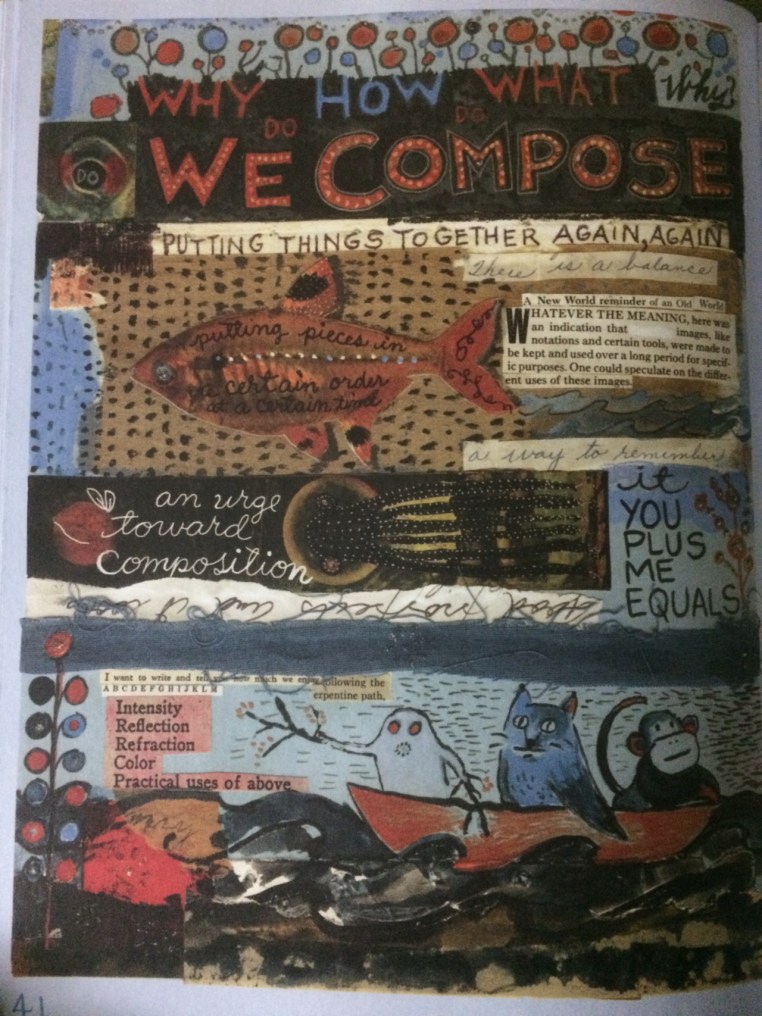
Formstorming, an act of visual thinking. Designers use many ways of formstorming for inspiration and creativity to spark. Form storming can be used as a type of creative vessel to transport an idea into an actual composed art piece through the power of this creative expression activity. By trying different methods of the same idea, it is forcing your mind to expand that image into something new, which is the creativity that is ideal for this activity Formstoriming methods try to steer away from digital mediums to allow full creativity without distractions, including coming up with one hundred ways to make an image out of one word. For my example, I chose page 41 out of What It Is because it is a page about composing. This page is about “putting things together again, again and again.” Reforming different images for the same meaning, just like the definition of formstorming.

what.it.is.jpg

Posted in Uncategorized | Leave a comment

SCALE : Gilian fejes

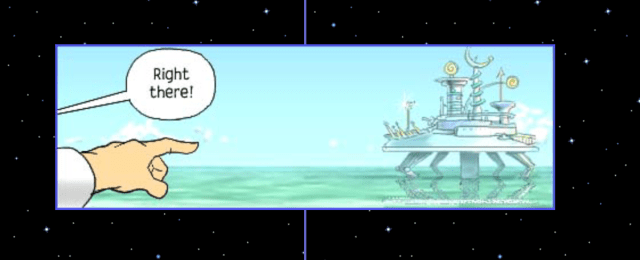
SCALE: Scale is the size of an object or the actual image itself. The scale of an image is crucial for the context of the image. The bigger the scale, the more it is the focal part of the imagery. The smaller the scale the more it is a miniscule detail of it. For my graphic novel example, I chose a piece out of ‘Zot’ written by Scott McCloud. In this example the hand is on scale as the size of the ship. In this photo the ship isn’t the most important part of it. It is actually the hand and the actual gesture of it pointing to the ship. The scale of an image  can put a lot of meaning and story behind a picture, especially in graphic novels where you rely on images and text boxes to convey and entire story to the audience.

Screen Shot 2017-01-30 at 10.54.59 PM.png

Posted in Uncategorized | Leave a comment

Framing: Gilian Fejes

FRAMING:


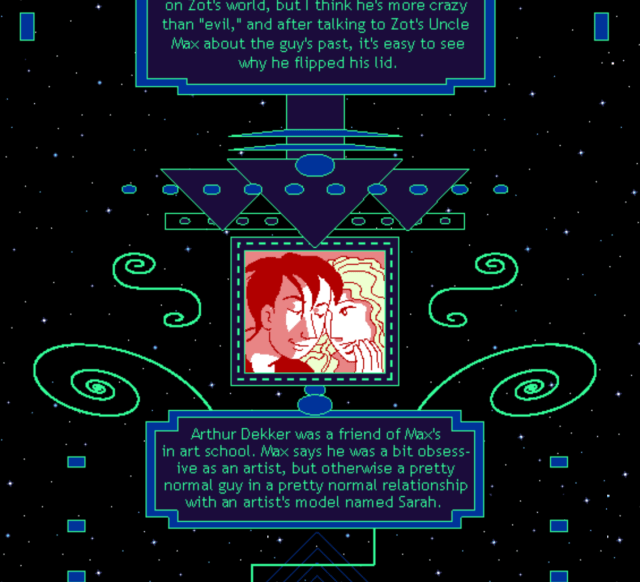
Frames for an image are everywhere, the outskirts of what you see is essentially a frame. The surroundings of an image can add a lot of meaning. A lot of designers now take a minimalist approach and barley add any framing at all for a simple look. Sometimes the empty space can actually create a new image. Framing isn’t just surrounding an image, it is working techniques that mesh or contrast well together to create an enticing aesthetic Frames can be used to further deepen an image and add a more dynamic appeal to it. For my example, I chose a snippet out of ‘Zot’ written by Scott McCloud. In the comic the dialogue was explaining to the audience how expressive he is as an artist. The illustrator for this certain comic framed the image and the text with nonlinear lines and designs everywhere to add a more eclectic sporadic feel to go with the character’s personality.


Screen Shot 2017-01-30 at 10.27.53 PM.png

Posted in Uncategorized | Leave a comment