WSU Art Museum: Samuel Jonsson


Conrad Atkinson uses a wide arsenal of different textures, colors and mediums to portray an abstract opinion of contemporary issues

I chose this example because the centered focus made it very apparent and eye-catching for me. The colored pencil border highlights the black and white image as the acrylic paint tops the image to add even more focus to the photograph. The acrylic paint also acts as a transition from the the colorless photo into the colored border. Also, the corners and and middle parts of the border act as pointers to the middle of the piece.

The audience’s eye are forced to the center of the piece and the photograph. However, the eye movement quickly switches to the text as the contrast of the text makes it stick out. There is a clear connection between the text as the football player in white puts his hand on the football player in black. However, it’s still obscure and abstract what exactly Connon Atkinson was trying to say.

Perhaps, it’s an appreciation between the passion he has and the Post-Modern art styles he’s come to adapt. In another scenario, the player in black might have lost to the player in white and then it shows an admittance to defeat by his passion to Post-Modernism and if that’s the case then the theme is changed entirely. The Border of the piece also makes it seem like this took place in the past, but the font and jersey’s are so simple that it doesn’t give a clear distinction of when this took place.

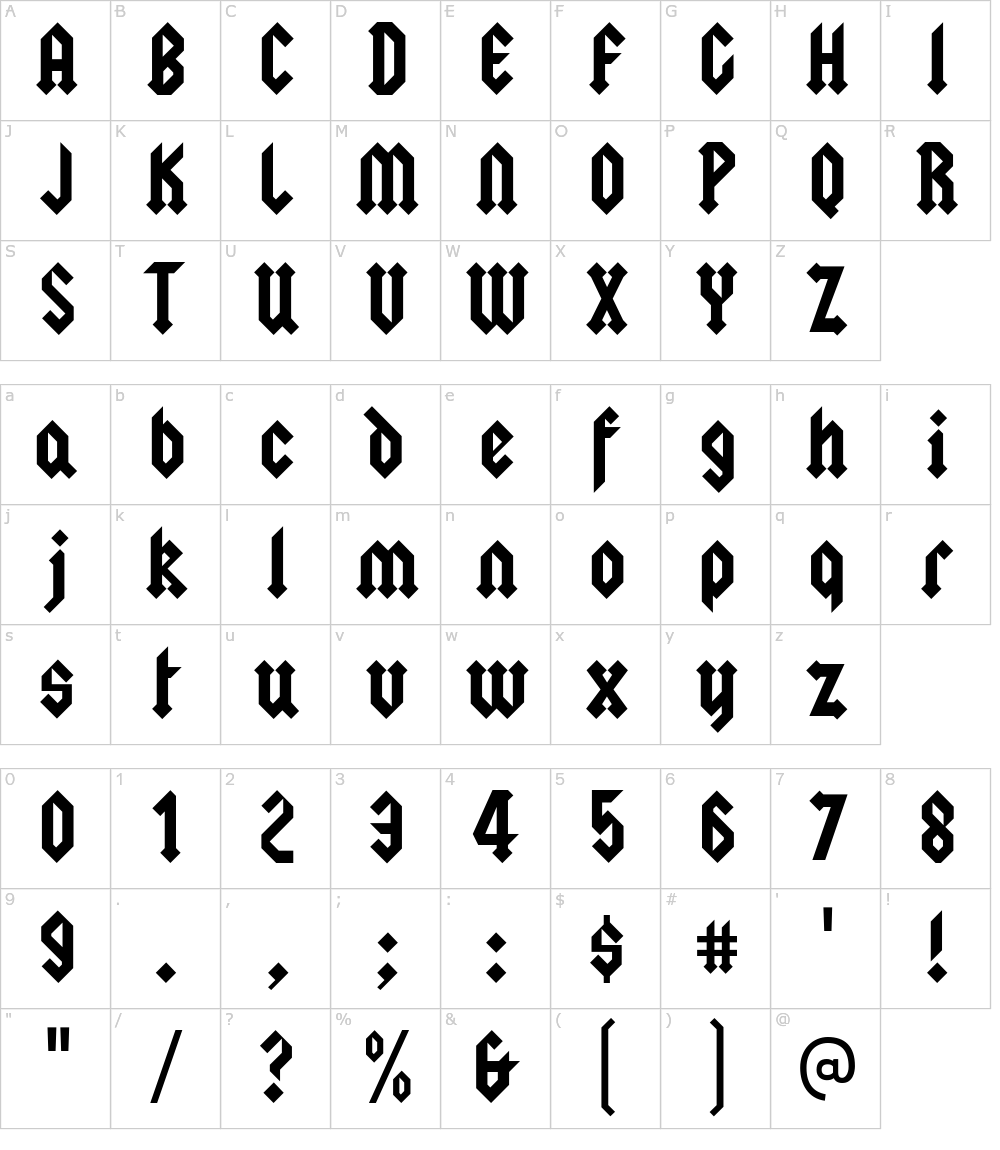
Originally, I was gonna go with the AC/DC Squealor font, but I really like the thickness and the blocky shapes of these letters because it would be a good inspiration for the long lengthy block shapes that I want to make. With some changes to angular direction and sharper endings, I would feel more comfortable using this as a basis for the outcome I’m trying to make.


Posted in Spring 2018 Archive (336) | Leave a comment

WSU Art Museum: Abby Larson

Artwork by Nancy Chunn in 1996. Photo taken in WSU Art Museum, March 22, 2018.

This piece of art was interesting to me because it turned the commonplace newspaper into something unexpected. The artist, Nancy Chunn, created the piece in 1996. The artist seems to have added her own interpretation of what each article is about to the newspaper, paying special attention to color, size, spacing, and uniformity. All of the art created by the artist goes together, cohesively and seamlessly. I like if you don’t read the text, both the newspaper and her art, while more than a decade old, could look like it was made today. The fonts, colors, and mediums are all design choices that have withstood the test of time.

I would like to try and work this into my typeface.  I want my font to be something that is not only visually appealing now, but also in the future. I am going to make it interesting enough that you have to look at it for more than a second to understand it, and yet elegant enough that, like Chunn’s work, you don’t necessarily have to read all the text to understand the emotions the piece is trying to convey.

Posted in Spring 2018 Archive (336) | Leave a comment

WSU Art Museum: Jacob Granneman

I chose this piece because I feel it exemplifies the style I hope to create. It is old in it’s medieval style, but it is also displayed in a plain modern-esque fashion. I find the very angular thin portions of the letters fit the geometric portion of my intended style. In contrast, the curved scrolly-like portions of the letters is far more organic and natural. This fits the modernism vs. faith type of approach I hope to display.

I definitely think my design will be

This piece was done in correlation with other pieces containing words rhyming with “News.” Unfortunately, I did not acquire the author’s name.

influenced by the techniques employed in this typeface. I too, want to have angular letters that give way to ascenders and descenders that curve or appear more organic. I will achieve this through thinner letters, and will most likely be inspired by the thinner parts of the “News” letters.

My hope is to combine attributes of modern typefaces, such as Helvetica, Futura, Avenir, and Raleway, with the more traditional, almost medieval style of typefaces like that of the “News” piece. Hopefully, they will meld well, similar to the combinations of thin/thick and angular/curved in this example. Ultimately, I expect to end with a typeface the feels new, but has elements of older, legendary fonts.


Posted in Spring 2018 Archive (336) | Leave a comment

WSU Art Museum: Ana Giles

IMG_9151 (1)

“Making Tide and Other Stories” By Eroyn Franklin

IMG_9148 (1)

“Museum of Chinese in the Americas” By Tong Zhi

While on our trip to the museum, the two pieces that mostly caught my eye was the gay Asian poster and “Making Tide” a contemporary comic book. The text used where each Asian person’s name was written on the poster is the text that stood out to me because I want to incorporate very wide and bold letters for my type face design. I will most likely make mine more wide than what is used on the poster. The comic book first grabbed my attention because of the big red circle on the front. I then noticed the all uppercase font in the center of the circle. I like how this font is more whimsical than the other example. My idea is to have a font that has elements of both put together, plus my own personal spin, to create a font.

Posted in Spring 2018 Archive (336) | Leave a comment

Type Anatomy: Jocelyn Urias

I have chosen to talk about the Fleuron, a journal of typography that was produced in seven lavish volumes. Every individual volume contained a big diversity of papers, specimens, illustrations, inserts and facsimiles beside essays by leading writers of typography and the book arts. It was edited by Stanley Morison and Oliver Simon and this book was published in 1923, it is also written in English. There is a variation of different languages inside of this book which makes it really interesting to look at because it is not only based on one language but in multiple.

28927931_1713608588702797_1115003078_oIn this image, there are a lot of different examples of typefaces, where some letters are with a normal geometrical shape but others have almost like a italic way to see it. The final and the terminal in some letters have a little circle and others are just a straight line. Also the fonts goes from being pretty big to descending to the bottom at being almost impossible to read unless someone with a perfect vision.  The typography looks were clean and clear, even thought it is an old book, it was conserved pretty good to maintain the quality of this. There are also differences between lower case which ends up eat the x-height, and upper case, which ends up at cap height.

28944864_1713608505369472_1287796858_oIn this other image, there are some examples of the designs the first letter of a new paragraph is, in this one image, in the top middle, there is a pretty detailed design around an I that complements with the N next to it, years ago, this was the trend in books. As our eyes can see, all the different paragraphs are in the same style, starting with a pretty design in the very first letter. The styles change every time even thought they are the same letter. Also, the font is like a cursive way where it shows a lot of descenders and ascenders being pretty long and curved.

Posted in Uncategorized | Leave a comment

Type Anatomy: Amanda Harle

In the selected text, I believe that it has the visual presence it does because of its presentation of a poem. I’m unsure exactly what it is because of the different language, but the text is written in an italic serif scripted font (the typeface also pairs nicely with the floral design on the top right corner). Each uppercase letter has a “fancy” added line to the script-like text that is a part of the baseline each uppercase letter. Also, the lower caseletters have an ascender and descendeder that falls just short above and below the cap height of each uppercase. Since the letters are categorized as a serif, they have a consistent look and flow to each word and has a delicate apperance with the script/italic feeling of each letter formed into a word. I want to say that this text is material based, by the feeling of the branches/thrones of the flowers. If the text is indeed a poem, it gives more of a texture in the words individually giving the poem more of a visual to the reader.

Posted in Spring 2018 Archive (336) | Leave a comment

Type Anatomy: Jacob Granneman

This manuscript was created by the Catholic Church in 1500 A.D. for use in Masses and special ceremonies.

I chose to analyze the book of music, written in Spain in 1500. It is a latin song book, for use by the Catholic Church in masses and special ceremonies. It is a handwritten manuscript, even though its as created post-Gutenberg. The lettering is done in a calligraph style, with the music notes interestingly simplified to mere squares and diamonds. The first letter of many lines, is often illuminated in someway, suggesting this book is meant to call back to the popular age of detailed, flowery, hand-written pieces of religious material.

The individual characters are quite precise, in spite of being penned by hand. Throughout the work, the baseline and x-height of nearly all the letters appears uniform. There is a clear, and expert use of uppercase and lowercase letters, as well as a set width, that is consistent through the work. Being calligraphic, the characters are not necessarily sans-serif, but do not follow the steady reputation of serif type. Most of the characters assume an upright posture, but several capital letters lean at an angle from their cap-height. The ascenders and descenders are often quite equal to each other in overall size and length. The style of writing is pretty organic, but has geometric qualities, such as the uniform spacing and ascender/descender height/depth.

The example clearly demonstrates a large visual presence, due  in part to the size of the text and the book. The letters are striking and angular, but still calculatingly curved in places. There is an air of authority about the letters, as they punch out of the page, and seem to even move into there positions with the shifts in thick and thin members. Ultimately, the hand-written letters appear as exact as type, which  should tell you all you need to know about the precise care and attention that went into designing and producing such a typeface.


Posted in Spring 2018 Archive (336) | Leave a comment

Type Anatomy: Jennifer Wenning

Mary Martin Rebow Letters

I decided to use the Mary Martin Rebow papers for this post mostly because cursive, as a written text, isn’t very popular anymore, and in some schools isn’t being taught.  I don’t want to call it a lost language but it’s easy to see how it could be, sooner rather than later.  The handwriting is really fluid as the script moves from letter to letter, and I would definitely say it’s organic and humanist, and not at all modular; the kerning of the letters is produced entirely by our brain and not a machined setting.  Since these are hand written letters, the baseline isn’t exactly horizontally straight across the papers, there is some tilt to the lines.  However, it’s a flaw that you have to be looking for, because as you read the notes, you don’t notice the difference at all.

One of the most interesting things about cursive writing (and how our brains work) is that even though it’s not machined, the cap-height and x-height are mostly uniform.  The x-height is really the measurement that shows the uniformity even though a human hand is what produced the letters.  The ascenders and descenders of the Rebow letters are also pretty exact in their display, though its the descenders that have the same bottom point and angle throughout each of the letters I saw.  Depending on the letter, the ascenders height is different: if a letter had a loop at the top such as the lowercase f, it has a slightly larger height than the letter I, where the top is pointed instead.

Mary Martin Rebow Letters

The stroke of each letter is the same but you can definitely see where Mrs. Rebow ended some of the letters as there is an ink dot where the pen sat.  By it’s nature, script or cursive handwriting is sans-serif because you don’t lift the pen from paper as you write words out, the only time the pen is lifted is to move to the next word.  But in theses letters, there is a flourish added to the ascenders of the lowercase b’s and d’s which just adds pleasing details to already beautifully written letters.

Posted in Spring 2018 Archive (336) | Leave a comment

Type Anatomy: Miranda Hansen

The text that I chose to analyze was Queery Leary Nonsense by Edward Lear.

20180306_140303

The front cover.

I chose this text because it was both eye-catching due to it’s beauty and the obvious quirkiness of the author. I also appreciated how the author included a lot of diversity in his style (different handwriting “types”, non-linear text positioning, images/sketches accompanying text, sporadic uses of color) but when peeking through the work you can still discern that this all came from the same mind.

The text itself appears to be printed by a metal typewriter. It has a clean, almost- minimalist appearance, which contrasts well with the whimsical nature of the rest of the book. It presents information without distracting the reader. The posture of the text is upright and tight to one another, as if conserving space and the set width is compressed. The text is lowercase, with the first letter capitalized and the letters sit on the baseline in a flat and uniform manner. A few letters (like the y’s) do drop below the baseline, but not so far that they disrupt the tight spacing. The font is decidedly serif, and despite the modular appearance the serif allows for light decoration which makes the font feel less robotic.  The high contrast between letters adds to this effect, and also makes them seems slightly more humanistic, which makes them look more natural next to the art style used in the sketches.

20180306_140415

A example of the title text, a sketch and the paragraph text.

I feel the decorative yet precise style of the typeface compliments the rest of the visuals in the book well, which could be a difficult task due to the diverse style. One example of this fluid changing of style that made the work so intriguing can be seen in the handwriting itself.  The book seems designed to be read as if it was a journal, with the author taking full liberty in making each page entirely new without constraint from the previous one.

20180306_140653

An example of the handwriting.

One thing I found particularly interesting was the fact that the author seems to go out of his way to change the handwriting depending on which of his characters were speaking or which drawing it accompanied. Beyond the physical challenge associated with altering the appearance of one’s handwriting (while still making it look natural/nice) it also added depth to the book, as if it was encapsulating multiple perspectives.

20180306_140318

The Bird Sketches, which I thought looked remarkably similar to what you might see in a fashion designer’s notebook.

I think overall the book succeeded with both the handwriting and the typeface in providing a cozy, non-distracting companion to the sketches without it being at the expense of seeming impersonal.  After all, the book is titled after the Nonsense Sketches, so having a text that compliments them is a important primary consideration.


Posted in Uncategorized | Leave a comment

Type anatomy: Caleb McEnderfer

This is one side of the sides of a Confederate money created by the author Ed Carver. The photo was taken by Caleb McEnderfer.

This confederate currency uses multiple fonts, but this side only has one font and it is quite large comparing to the other side.  This typeface is uppercase and the serifs do not dip below the baseline as you can see the bottom of the ‘V’ aligns with the deepest parts of the serifs of the other three letters. The hight of the letters all aline at the cap height to create symmetry and I believe was intended to aline because each of these letters does not have any descenders or ascenders.

The curves along the serifs and terminals create organic shapes that follow the same patterns. The ‘F’ and ‘E’ follow the same pattern on the upper and lower terminals and create the same curved shape. Most of the lines are straight, besides the terminals and serifs, which gives it the organic look.  The set width of all the letters are all the same except for the ‘V’ has one compressed line comparing to the other letters.

Posted in Spring 2018 Archive (336) | Leave a comment