Pattern Design: Miguel Tenorio

Artist: Luis Alves This piece is part of his second installment of sketchbook collections. One of four pieces. Retrieved from: http://cargocollective.com/urban-myth/sketchbook-drawings-part-II

Artist: Luis Alves
This piece is part of his second installment of sketchbook collections. One of four pieces. Retrieved from website.

Patterns are unique to look at, they seem to be everywhere you look at, whether it be geometrically created or organically created. So check your own surroundings, you’ll see them. Now allow me talk about this piece that is on the left of your screen – let’s look at the complexity of it right away that comes off this piece. It is not what you would call geometric but inside I find this piece that Luis Alves made to have more of an organic pattern. Why do I say that –  well I said when I introduced this piece, it is quite complex among all the curves surrounding the Frankenstein head. Now it doesn’t come out anything mathematical but rather natural. While looking at the pattern itself it does come along the idea of being tiled/repeated at the same time among each curl but also irregular. When it comes to irregularity, there are several different kind of patterns within the curls themselves from like dots, stripes, blobs and so on. Now with it being tiled/repeated at the same, the patterns within the curls do repeat each other among each curl and are all tiled among each other in a very irregular way. Lastly when it comes to Alves piece, the colors of a purple on top of pale-yellow background gives more of contrast among each other in a positive way that you can signify what is the Frankenstein head or the flower towards the top of the piece because it mainly the pale-yellow with a purple outline to help make it stand out.

Sacred Geometry: Sacred geometry can explain everything. I’m talking about creation. Not just the creation of people, but the creation of all life everywhere. The creation of the galaxy. The creation of the entire universe. Gotten from https://www.newearth.media/sacred-geometry-what-is-it-and-why-should-i-care/

Sacred Geometry: Sacred geometry can explain everything. I’m talking about creation. Not just the creation of people, but the creation of all life everywhere. The creation of the galaxy. The creation of the entire universe. Gotten from website.

Now let’s look at pattern number two that I am very fascinated by and that I constantly see everyday. This is called the “Flower of Life” and it’s part this ideal of sacred geometry, so you named it this is my geometric pattern. Along this pattern itself, it is not overly complex nor is really natural – it is very mathematically drawn out all the time to get the perfect replication of what is know as the “Flower of Life”. Now look closely at the pattern itself, it is very repetitive when it comes to using circles to create this design. While having them tiled on top of each other to give it this very flower-like icon. Colors don’t seem to play a significant role in this pattern other than the idea of black and white to give it a figure-ground relationship.

Posted in Fall 2015 Archive (336) | Leave a comment

Pattern Design: Francisco Guerrero

Iloveyou_the_neighbourhood

Photo from the Neighbourhood’s “I Love You” album cover. 2013.

I decided to use album covers from my favorite bands for this blog assignment. For the geometric pattern, I chose the album cover for the Neighbourhood’s 2013 “I Love You.” I listen to them almost everyday so I often see this cover on my phone. The cover uses an alignment where the three symbols displayed on the cover are in a straight line positioned in the same scale and proximity. They are of equal distance from each other. The symbols are geometric because they are more angular and they are representation of an object. The house is made of square shapes and displayed upside down. The Heart is a generic icon heart that everyone thinks is a heart but in reality a heart is round and looks more like a clenched up fist. Lastly the upside triangle has an eye on it, the triangle contains the eye and the Pattern is in the back and is made of clouds. The pattern is organic because we tend to think of organic things of nature. The clouds are more curvilinear and they feel like they haven’t been altered nor made unrealistic. The pattern is also organic because clouds are abstract and not necessarily symmetrical, not all clouds have the same form.

Imagine Dragon's "Night Visions" album cover. 2012.

Imagine Dragon’s “Night Visions” album cover. 2012.

For my second image, I used Imagine Dragon’s Night Vision album cover. I chose this image because I think it is one of the best releases of this century and because it blends geometric and organic pattern. The rocks on the album provide a pattern effect on the lower half of the album cover. Even though those are rocks, it doesn’t necessarily make them organic. I think they are more geometric because the rocks are shaped to be pentagons and have hard edges than a rock is supposed to have. The rocks are edited to be consistent and similar to one another. They are used repeated over again to make a pattern. The overall cover gives off an organic feel to it but if you analyze the pattern of the rocks, they are geometric through symmetry and balance.

Posted in Fall 2015 Archive (336) | Leave a comment

Pattern Design: Joshua Coleman

Pattern titled "Duo", by Karel Martens, taken from pattern foundry.com

Pattern titled “Duo”, by Karel Martens, taken from pattern foundry.com

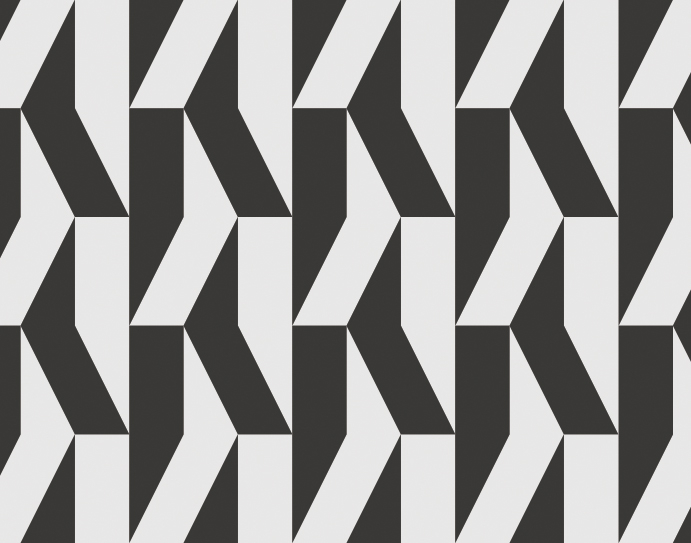
For my geometric pattern I chose this design by Karel Martens. To me this pattern seems more geometric because of the angularity that is presented. The pattern serves more as a grid in the sense that the basis of the pattern is composed of vertical black and white alternating stripes running down the page. The black and white colors play off each other in a kind of “kick-stand” way (the white diagonal rectangle makes the eye lead down to a reflected black rectangle). The contrasting colors create a complication in determining which color is negative/positive space. Although, It seems that in the vertical stripes set off the opposite color (the black stripe makes the white rectangle pop more). The overall value of the composition is very much middle grounded, because the black and white don’t give the other a hierarchy.

Organic pattern titled "Afriko" by Korner Union taken from pattern foundry.com

Organic pattern titled “Afriko” by Korner Union taken from pattern foundry.com

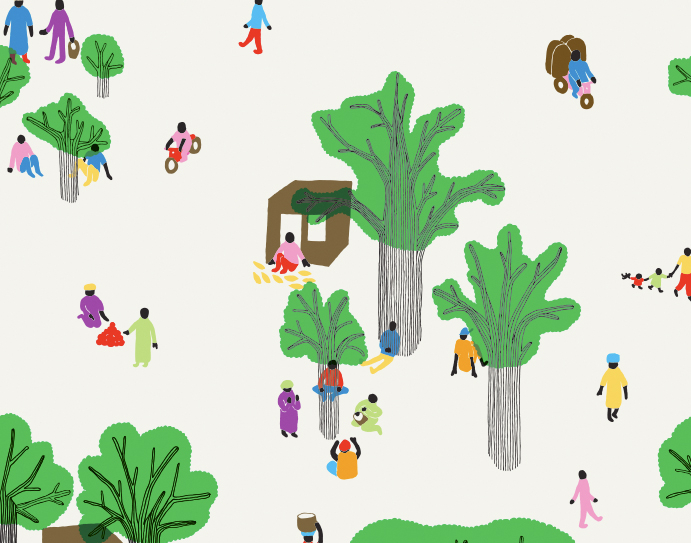
For my organic pattern I chose a design by Korner Union. The curvy forms of the trees and the non-angularness of the people made me feel this was more of an organic pattern. This pattern doesn’t really adhere to the principles of spot, stripe, grid in the reading. To me it resembles a painting. The colors are pastel based, Union makes use of bright colors light greens, yellows, and light blues to create focal points to his viewers. A couple of the trees seem to be repeated throughout the overall design, but if you look closely the branches of many of the trees are slightly different than any other on the page – kind of like a snowflake. Some colors like the blues and purples of the peoples shirts interact well with each other because Union has clustered them together. But, those same colors don’t necessarily interact with the greens of the trees as well because of how far they are spaced out.

Posted in Uncategorized | Leave a comment

Pattern Design: Mark Midgett

Designed by Bordalo and is titled

Designed by Bordalo and is titled “Garbage, the new street art aesthetic

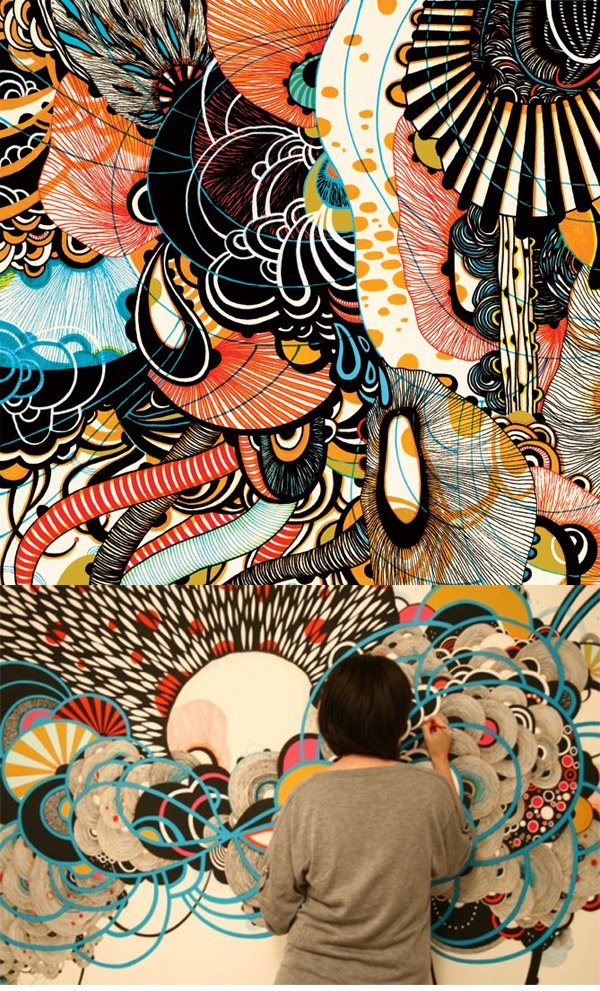
The first photo that I’m going to analyze and discuss is a representation of an organic pattern. This piece is named “Garbage, the new street art aesthetic,” and I believe that it has a great Urban City aesthetic vibe to it. The lines in this design are a large contribution to the overall flow of the of the pattern. It seems as if the visual organization is meant for the viewers eyes to travel from the top to the bottom seeing that the pattern tends to get more and more detailed as the piece reaches the bottom. The colors also play a large role in how it is viewed because the patterns tend to hold more drastic colors at the top such as orange, yellow, black and blue, and tends to gather more neutral colors towards the bottom such as beige and and black. I found this pattern to be organic because it holds a mass amount of abstract detail, and there isn’t a lot of symmetry within it but a sense of free pattern design.

Created by Fashion Design Consultant Emily Kiddy: Used from corresponding website http://emilykiddy.blogspot.ca/2015/02/springsummer-2016-younger-girls-fashion_10.html?m=1

Created by Fashion Design Consultant Emily Kiddy: Used from corresponding website http://emilykiddy.blogspot.ca/2015/02/springsummer-2016-younger-girls-fashion_10.html?m=1

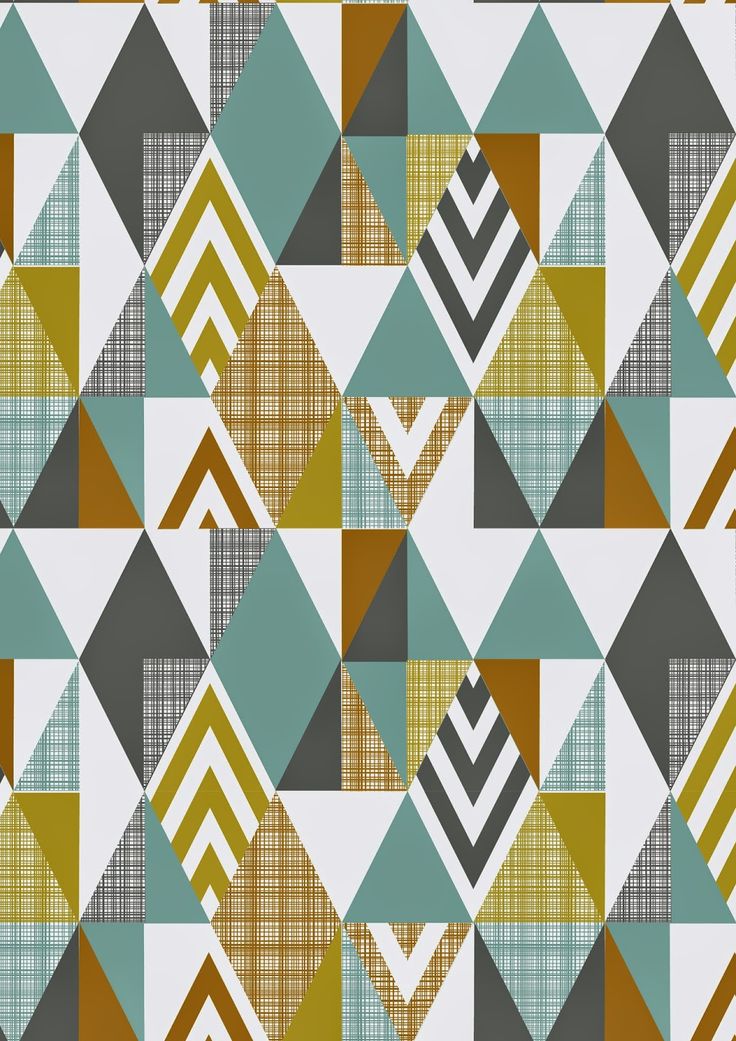
For my geometric design I decided to go with something that I discovered on a Fashion Design Consultant’s blog. The designers name is Emily Kiddy, and she is a freelance graphic designer. I found this piece to be a great representation of what a geometric pattern should convey because the elements within the design hold a solid amount of repetition and symmetry all while still providing exciting aesthetics for the viewer to enjoy. The colors, shape, sizing, and spacing are all very well placed and contributes largely to the overall flow of the pattern’s aesthetic. In fact, if you were to take this design and cut it in half horizontally, those two pieces would be almost, if not exactly the same. I can appreciate this design as being geometric because I believe that as a graphic designer, organic designs are very easy to be creative, but a graphic designer who can take symmetry/geometry and make it appealing is truly stretching their abilities as a graphic designer.

Posted in Fall 2015 Archive (336) | Leave a comment

Pattern Design: Katelyn Orum

Designed by a blogger who goes by the name "Decor8 Holly." http://decor8blog.com/2012/09/24/color-me-pretty-september-shades/

Designed by a blogger who goes by the name “Decor8 Holly.” http://decor8blog.com/2012/09/24/color-me-pretty-september-shades/

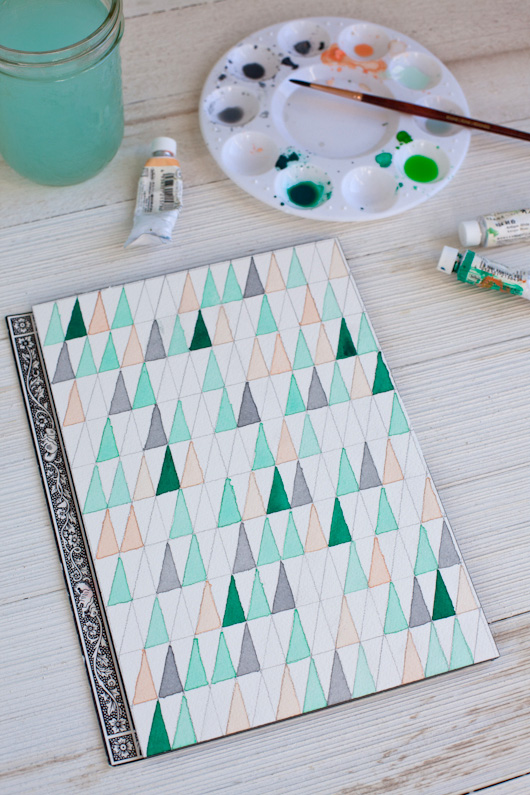
The first photo is my geometric pattern. First of all I liked this one because it is both abstracted while being representative. It’s abstracted because it is just a simple repeating triangle, but due to the nature of the colors they’re representative of a forest. The colors, although some have an orange-ish tint, are cool colors. I look at this pattern and instantaneously think of a forest in the winter. The reading states that a pattern consists of points, lines, or grids, and this one has lines and grids. It is simple in that in only has one repeating element. It changes color, but it does not change scale or orientation.

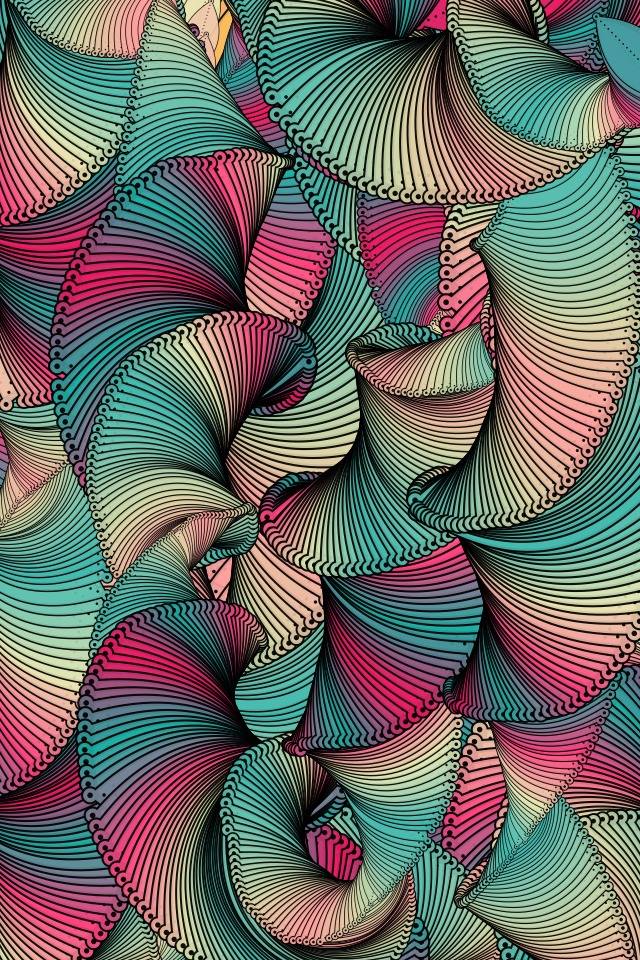
For the organic pattern, I chose one I found on a blog called, “Trendvee.” This one is a little more complex than the geometric, but similar in that they both look hand made. This pattern changes in orientation throughout the composition, and has a warmer feel to the colors, even though there are blues and greens.I think this is because the magenta over takes the turquoise and the “white” color is slightly orange. Rather than grids, this pattern consists of lines. It is very repetitious, but not at all uniform. I also love how dynamic this is and it looks 3D.

Posted in Fall 2015 Archive (336) | Leave a comment

Pattern Design:Erik Lemus

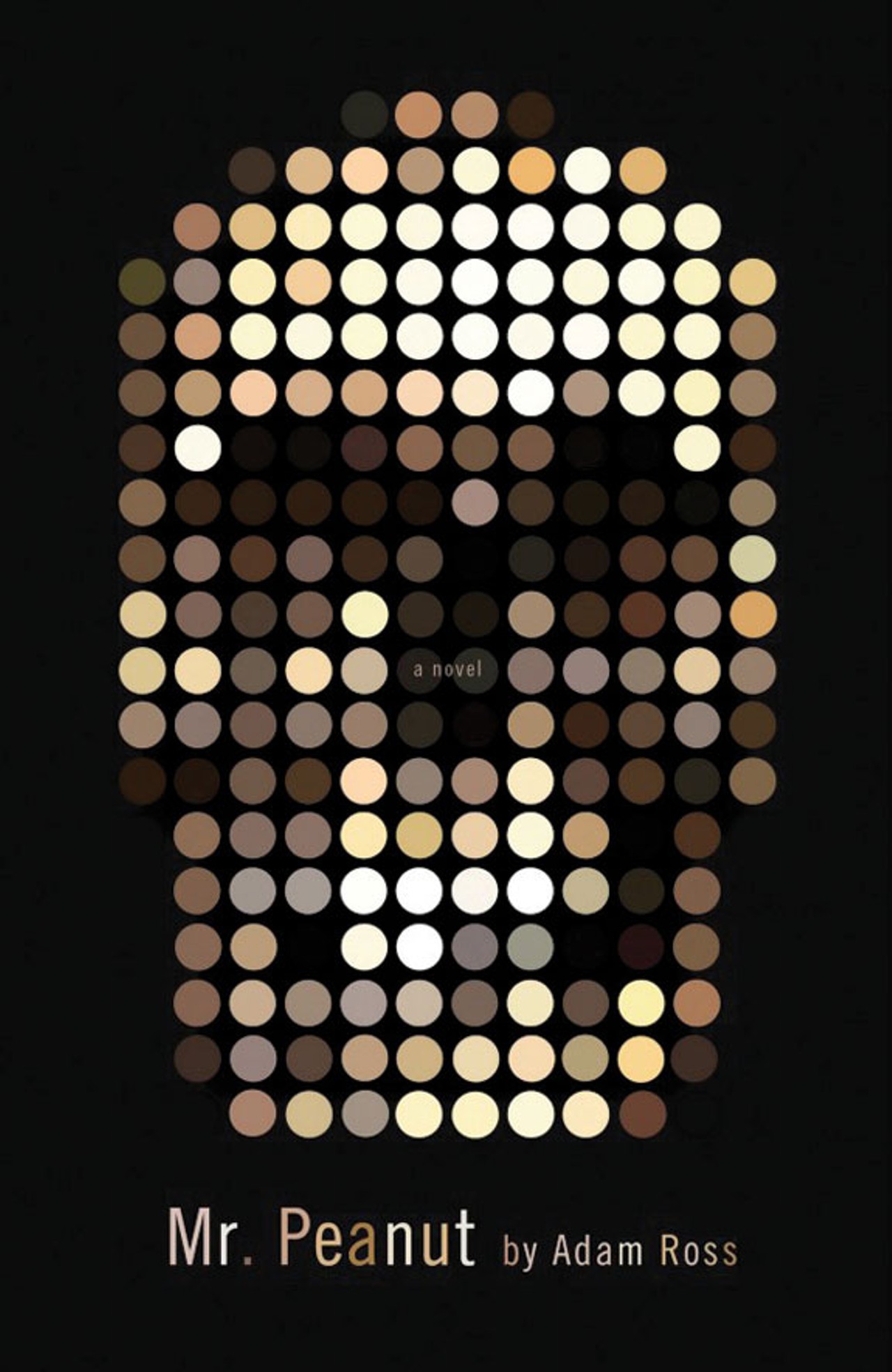
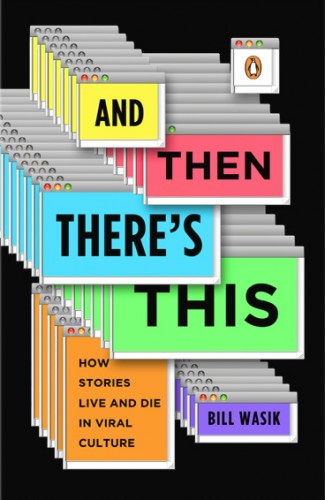
For the two visual patterns selected I chose, Mr. Peanut and and then there’s this. Mr Peanut is the cover with the most organic representation  pattern. These patterns are more organic due to the fact that there is a representation of a skull with the use of dots.  These dots are a representation of organic because there is no actual form that reads as geometric rather more as an abstract pattern with the use of color and dots. The skull its self is a representation of a much more freeform canvas. As the tiled appears to be representing a repetition of dots that convey the image of a skull.  These dots also use different types of color to represent each dot, each color can convey a mood and have a representation that describes reality or codifies information as we perceive a given color to colors around it. For example, this image has an irregular repetition but it also uses skin tone colors to interact with each other as it represent a skull. As for the other cover that I chose And then there’s this has a more geometric pattern representation to it since there are actual rectangles used for the title. These rectangles are repeated a few times to give the title a stronger meaning as it sits on a colored back ground.  This pattern has more of a regular repetition as the rectangles repeat on top of one another giving this cover a more geometric feel. The color also gives it a different representations as designers use colors to either make something stand out or hide. This is being used to differentiate and connect, to highlight and hide. As for and then there’s this book cover uses bright colors to enhance the title. For this cover its well seen that the designer uses the opposite colors because opposites attract enhancing the title much more.

Posted in Fall 2015 Archive (336) | Leave a comment

Design Blog #3: Currency Design Analysis

10485802_1017404488311389_6184352465311109399_n 12079294_1017404494978055_1725120979545758828_n

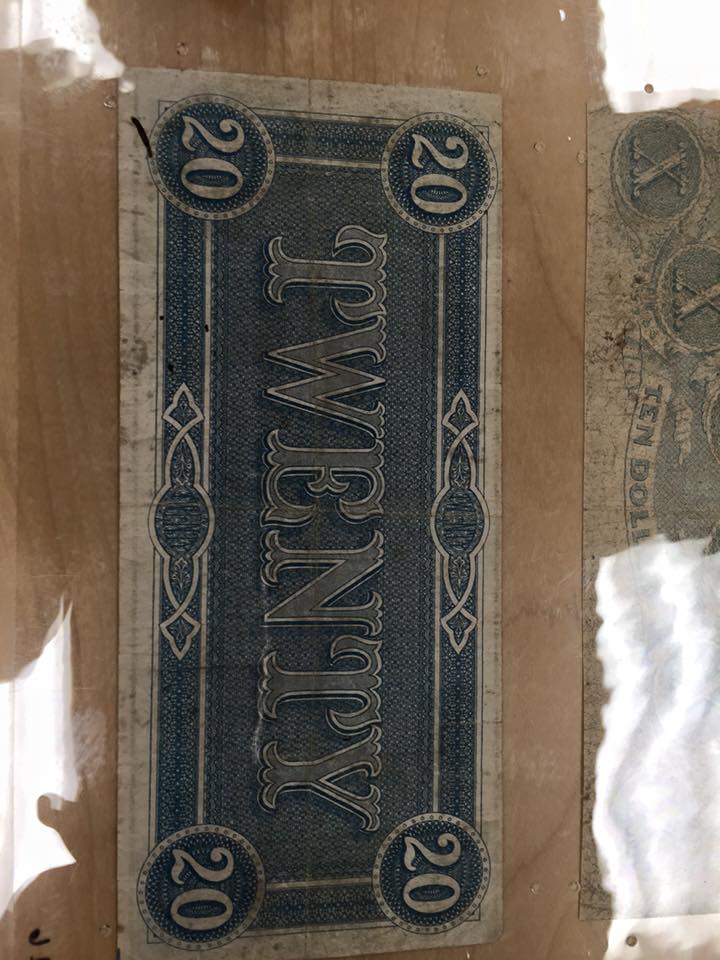
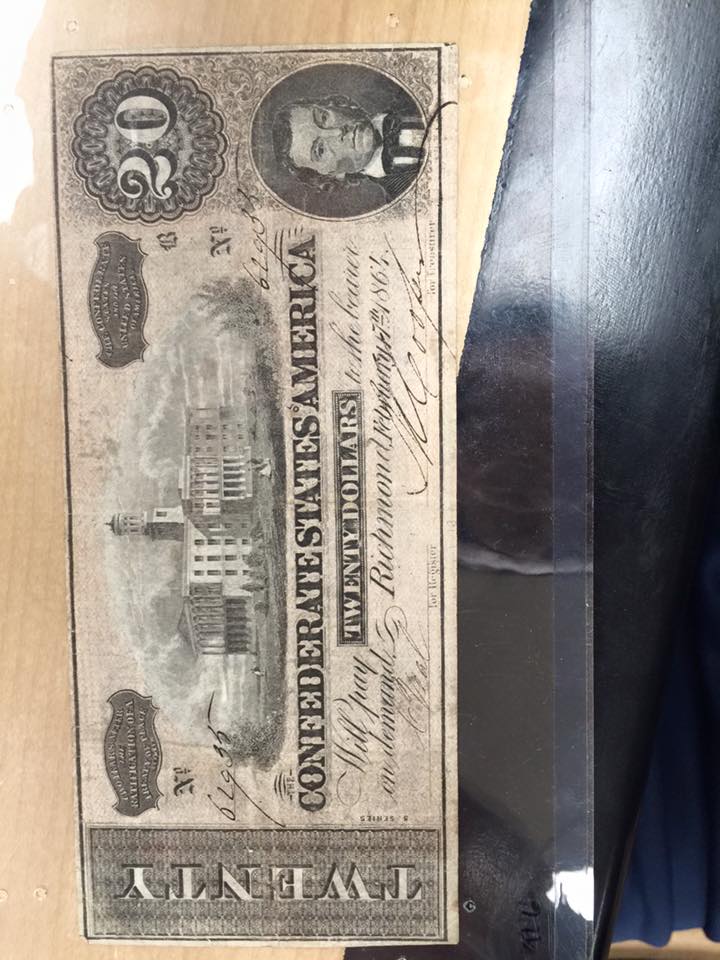
After the Civil War broke out in 1861, the newly established Confederate government began to issue its own money as legal tender to the citizens of the South. The 1st note from the Government of the Confederate States of America was issued in April of 1861. Notes were issued for the next three years, ending in 1864. A total of 70 different types were issued into circulation.

Almost every Confederate note was painstakingly hand signed and numbered. These notes were printed on large sheets and then cut apart by hand. It is not uncommon for these notes to have uneven margins, as getting these notes into circulation was more important then making sure each note had an accurate cut.

Counterfeiting became a major problem for the South. The North played a big role in this action by printing counterfeit notes and distributing them in the South causing massive inflation. When the Civil War was over, the Southern infrastructure was in disarray. The Southern banks had no money to loan, and the price of cotton fell drastically. Confederate notes had no value at all. The US never recognized the Confederate States of America as a legitimate government, so the money, stocks, and bonds that were printed by the Confederacy had no value, and could not be transferred into US funds. Anyone who had invested in the Confederate government, with notes, bonds, or stocks, lost the value of what they had invested.

Posted in Uncategorized | Leave a comment

Currency Design Analysis: Leah Baird

2015-10-06 14.02.19

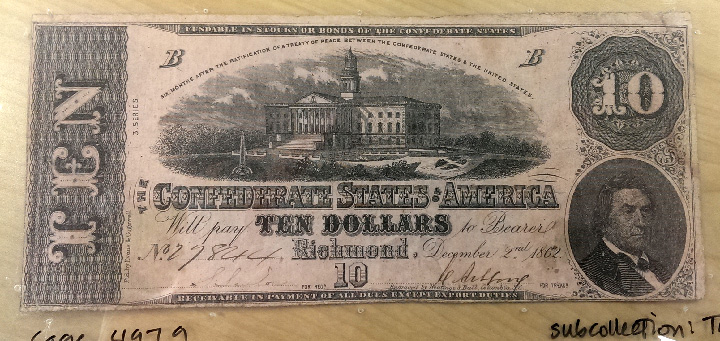
Front of $10 Confederate Bill Confederate States of America Currency Collection. Manuscripts, Archives, and Special Collections. Washington State University Libraries. Pullman, WA.

2015-10-06 14.03.29

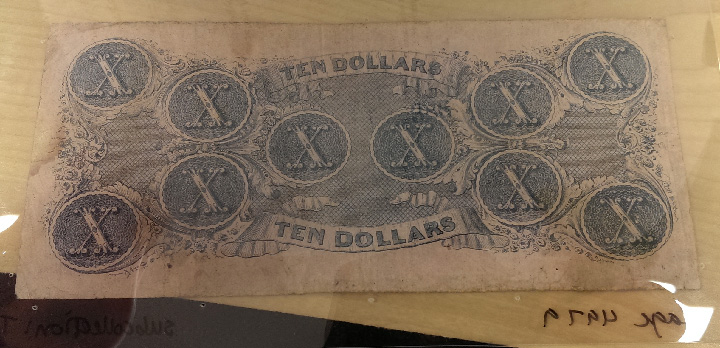
Back of $10 Confederate Bill

The bill I chose is the 1862 Confederate $10 bill. I chose it partially because of the history behind it, and partially because I found it visually appealing – especially the details on the back. The bill was donated to the WSU library archives by the United States Treasury. The original engraving was done by Keatinge and Ball in Columbia, South Carolina. This particular bill was printed in 1862 as part of the B/3 series (both indicators appear on the bill) by Evens and Cogswell.

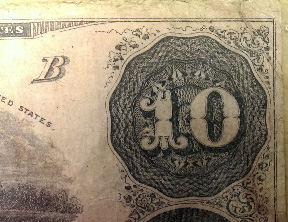
The front of the bill has an illustration of a state building, maybe the confederate capitol building, plus an illustrated portrait of an unknown white man. The “B” in the corner, as stated earlier, indicates the series of the bill and when it was printed. There are floral elements and accents around the numerical ’10’ on the right side of the bill. The left side of the bill has ‘TEN’ spelled out, at a 90 degree angle, and a background of interwoven lines. The back of the bill, the part that really caught my attention, is a series of ten circled ‘x’s arranged in an x. There are additional floral elements present on the back, a contribution to the continuity between the front and back of the bill, as well as illustrated ribbons containing the words “TEN DOLLARS”. The background pattern is crosshatching, and additional interwoven, almost braided lines.

This bill does not contain a significant amount of color. The front of the bill is exclusively printed with black ink, though varied shading and weight add depth and a dynamic feel to the illustrations and décor. The back of the bill appears to be printed with blue ink, with the same weight and shading techniques used. Unique to the back of the bill is the crosshatching in the background. This provides the illusion of a solid background without actually printing nothing but blue, and adds to the contrast of the ‘white’ or negative elements on the page.

2015-10-06 14.02.35

Detail of ’10’ on Confederate Bill

There are multiple kinds of type present on this bill. In “The Confederate States of America”, all the text is capitalized with the first letter of each word sized up enough to differentiate it. “The” and “of” are angled at the beginning and between two of the words respectively, assumedly to save space on the bill and make sure the Confederate States was the focal point of the text. Script, Old-Style Serif, and Sans-Serif fonts are all represent on the bill, not including the actual hand-written signatures on the bottom. The typography dictates the function of the bill and indicates its worth. The hierarchy of text also makes it clear that the engraver/printer wanted to focus more on the worth and origin of the bill than, say, where it was printed, which series it was printed in, and why it was printed. The tiny text stating all of this is nearly lost in comparison to the much larger, and bolder, text in the center. The primary typography on the back would be in the decorative ‘X’s which are the same fancy serifed font from the front of the bill. This decorative type is another way the design is consistent between the front and back of the bill.

I would be really interested to see a United States bill from this same era and compare them visually, I’d be curious to see if they had connecting elements or if the Confederates tried distancing themselves in more than politics from the northern states. Overall this bill is a fascinating look into history, and though other bills had better color, or more visually interesting typography, overall this one is a really solid example of currency design. At least for the 1860’s, I can tell you now there wont be many floral elements in my final design.

Posted in Fall 2015 Archive (338) | Leave a comment

Currency Design Analysis: Jacob DeLeon

Front of Chinese currency donated to Holland-Terrell Libraries

Front of Chinese currency donated to Holland-Terrell Libraries

back of Chinese currency donated to Holland-Terrell Libraries

Back of Chinese currency donated to Holland-Terrell Libraries

The currency that I choose is an Chinese bill that represents 1 customs gold unit. I really like this bill to its simplicity. If we look at the front of the bill there is noticeable line work that is bordering the whole bill. The line work on the corners are almost a word holder of the text. there are no real icons on the front unless the charters of the Chinese language considered icons due to the fact that I do not know what the says on the front. There is a very intricate line pattern right below the portrait. this line work is symmetrical and has a mix of 4 colors. This ties in with the matter of having the lines as a placeholder for the text. The portrait of the man is the of the top have of the bill. The bill is presented in a vertical way, thus the portrait and the line work take up about half of the bill. When we look at the back of the bill right away your eye will be pulled towards the illustration of “The Central Bank of China” this takes up more than half of the back of the bill. There is more intricate line work that borders the whole back of the bill. Also right below the bank we have more line work as a text holder for the words “one customs gold unit” Due to the how the bill is split into 2 sections on the front and back it has a feel of unity between both sides of the bill. The color scheme on the back of the bill only has the color red. This color red is only represented as the serial number. The front of the bill has the same red numbers for the serial number yet there are more colors. The intricate line work under the portrait is split in half on the right side the line work is a mix of blue and orange which are a very common complementary colors. On the left hand side we have green and blue which are also complementary colors. lastly the typography of the bill is a mix of Chinese and English. On the front of the bill we only have Chinese. The back of the bill is only in English. This is due to the fact that on the bottom of the bill it states “American Bank Note Company” Thus I believe that this note was made in America for the Chinese, I’m not sure if China did not have the means of printing their own money but the typography of the words are thick bold lettering that do not have serifs.

Posted in Fall 2015 Archive (338) | Leave a comment

Currency Design Analysis: Tyler Steckler

What if our money were designed to celebrate science instead of presidents

What if our money were designed to celebrate science instead of presidents

For my third blog post I have chosen the 100 dollar bill from the “What if our money were designed to celebrate science instead of presidents” article we have discussed many times in class. One of the very first thing that catches my eye is the size of the 100 in comparison to all the other bills. They are all sized to scale from lowest bill being the smallest and the highest bill being the biggest. That only adds density to the bill. It feels like more and looks like more. The second item that catches my eye on the side of the bill with the mountain ranges and meandering stream. The stream gives the bill a sense of motion a implied depth perception which I really enjoy about the bill it makes me squint and want to look deeper into the mountain ranges. What also helps with the depth is the color density at the bottom of the bill and fades away as you look deeper into the bill. Blue is a great choice for the piece because it can represent water and snow because water is a form of snow. The next item on my list of eye candy is the two differently colored blue triangles placed symmetrically in the middle of the bills, these are not the only triangle shapes throughout this entire collection of bills every bill has implied triangles all over. Just not as prominent as the main two triangles on each side. I really enjoy how they have almost all of the typography located in one general region of the bill, it makes it easy on the eyes. A crucial item for every bill is its numerical symbol I really enjoy that on the side with the most noise and graphics they keep the 100 small simple and quiet, where on the opposite plain side it is loud and easy to read. The overall balance this bill demonstrates from the front and back of bill is amazing. Finally the overall idea of switching from famous presidents faces to scientific discoveries and images actually represents our country better. It show progression in society and technology as well the beautiful aspects of our country as well.

Posted in Fall 2015 Archive (338) | Leave a comment