Formstorming: Javin Nash


Ellen Lupton and Jennifer Cole Phillips describe the term “formstorming” as an act of visual thinking to unlock and deepen solutions to design problems. In the second edition of Graphic Design the New Basics, they say formstorming moves the maker through recognizable concepts to compel us with their originality. By repetitively making the same subject over again, but slightly different each time, designers are forced to think outside of their comfort zone. A Plus is a perfect example of formstorming from our book. Working with the letter ‘A’ as the main subject the designer repeatedly created the same capital letter ‘A’ but in their own creative and unique way one hundred colorful times, using texture, depth of field, and gesture to change the viewers perception of the composition. This procedure was probably tiresome and got boring after a while. From my observation I can say that formstorming makes you think outside the box and gives you a creative outlook on a particular subject of how something can become constructed. On page 15 of What It Is, by Lynda Barry the page is full of examples of what formstorming is from Ellen and Jennifers definition. The repitition of eyes and circles found on the page to the shape and outline of how the page is divided into rectangles. These rectangles are used as boarders to separate the different subjects on page 15. The eyes corelate with the title of the page “Where Are Images Found” since you must use your eyes to see an image, I feel like I know exactly how Lynda felt when creating this page; or at least somewhat of her thought process. Barry must have a special feeling towards birds and fish because I noticed them not only on page 15 but from pages 16-50 images and sillouettes of these animals will show up in corners of the book.


Posted in Spring 2017 Archive (336), Uncategorized | Leave a comment

Formstorming: Angelica Tibule

fullsizerender

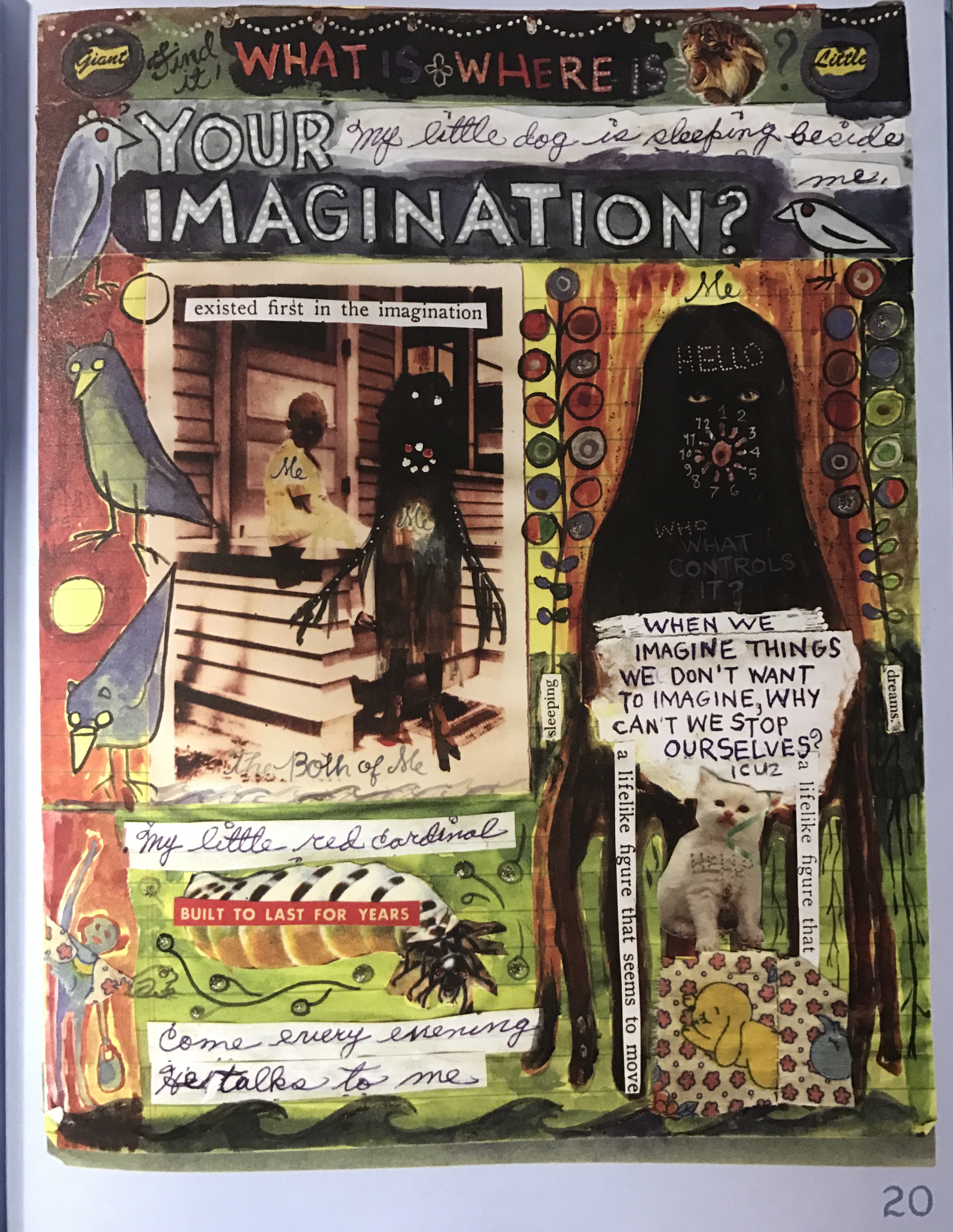
Page 20 from Linda Barry’s graphic novel What It Is

According to Graphic Design: The New Basics, Ellen Lupton and Jennifer Cole Phillips define formstorming as an act of visual thinking (13).  Formstorming is a way for designers to dig deep into their imagination and challenge their creativity. By reading and looking at the first fifty pages of What It Is by Lynda Barry, she explores and questions the way her mind works as a way of brainstorming and creates illustrations of her thoughts, memories, and past.

As an example of formstorming, on page 20, Barry creates different compositions of what she believes represents the word “imagination”. She simply questions, “What is your Imagination?”, “Where is your Imagination?” and thinks deeply into how far her imagination can go throughout her book. One question that stood out the most was, “When we imagine things we don’t want to imagine, why can’t we stop ourselves?”. I believe that question is a good example of formstorming, because our ability to imagine is limitless. One small imagination can lead us to deeper imaginations that allow us to think outside the box.

In addition, one hundred iterations is an example for a designer to dig deep into their thoughts and broaden their imagination. As a way of formstorming, Barry creates different font styles and different repetitions of certain compositions in each page of her book, such as the birds seen on page 20.  Overall, creating different styles of a composition will help designers exercise their creativity and discover new ideas.

Posted in Spring 2017 Archive (336) | Leave a comment

Formstorming: Nikki Aviles

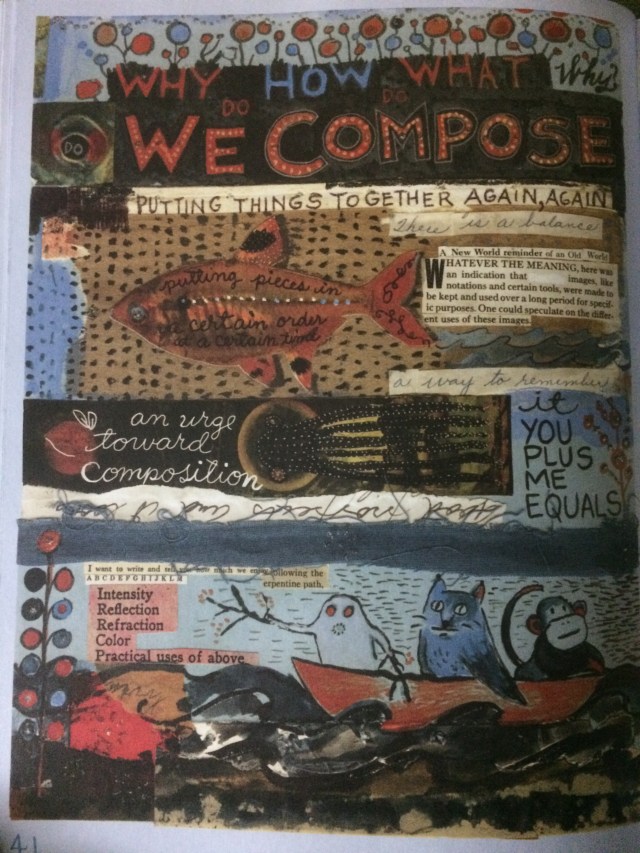
In Ellen Lupton and Jennifer Cole Phillips second edition Graphic Design the New Basics, the term “Formstorming” is described as a tool for visual thinking. This tool forces designers to think outside of their comfort zone by repeating the same subject over and over again, but just differently every time. The One Hundred Iterations example in their book is a classic example of Formstorming. In this exercise, designers took one subject and came up with 100  iterations of that subject.  Although this may have been an exhausting process, formstorming really makes you think about how things are composed/put together and allows you to expand ones thinking. Lynda Barry poses a bunch of thought provoking questions on  page 41 of her book What It Is, that I thought went hand and hand with the formstorming reading from Ellen and Jennifers novel such as: Why Do We Compose? How Do We Compose? What Do We Compose? lf you look closely, all three of these questions were formatted as one, and made to be the “title” of that page. This may not be the same subject repeated 3 different times, but just the title alone makes you think about how Barry composes things and whats going on in her head. I also noticed throughout the book she drew the same images and figures, but they just appear differently on each page. For example: The fish, the cat and monkey at the bottom of the page, and the octopus in the middle of the page. What It Is, is an excellent example of formstorming, and creative repetition. img_4231

Page 41 from Lynda Barry’s graphic novel, “What It Is.”

Posted in Spring 2017 Archive (336), Uncategorized | Leave a comment

Formstorming: Elise Detloff


what-it-is-page-33

Page 33 from Lynda Barry’s graphic novel, “What It Is.”

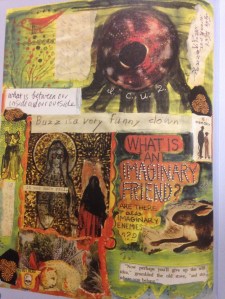
The first 50 pages of the graphic novel, What It Is by Lynda Barry, explores very heavy ideas such as the loss of innocence and imagination that comes with age. Many of the pages feature text that asks questions such as, “What is an idea made of?”, “Are there images inside of us?” and “What is an imaginary friend? Are there also imaginary enemies?” The tone of the illustrations continuously feels melancholy, there a many dark shadows and strange creatures lingering in the background. This tone and the many questions Lynda Barry poses through cut out letterings and scratchy inkings seems to convey this fear that she has about growing up and losing the dreams and illusions that come with childhood.

In Graphic Design: The New Basics, Ellen Lupton and Jennifer Cole Phillips introduce the process of formstorming. This process really relates to the themes of losing imagination over time in the sense that formstorming requires and invokes creative thinking. When you formstorm you take a design with specific problems that you want to fix and then you rework that problem over and over again in various ways. By engaging in formstorming, you get all of the obvious and easy solutions out of the way and begin to use more creative, nuanced solutions which results in discovering a more unique outcome.

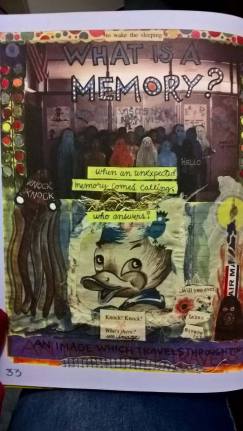
One of the ways that Lynda Barry engages in formstorming is by using the technique called dailies. Dailies are a creative act daily with a constant conceptual theme. Some examples include drawing a word several different ways or designing album covers each day. In this way, the artist is pushed to try increasingly new and different ideas. An example of this can be seen in Lynda Barry’s book. She definitely repeats several types of creatures on each page and repurposes old text from novels or notebooks. Reusing those elements in a new way is an example of formstorming, like a collage project. For example, on page 33 we can see several instances of repurposed images and text, from the fabric with the duck to the cut out strips of print and paper. All of these elements create a collage that seems both professional and childlike. This page also features the dark figures huddled in a group that appear throughout the pages. The collage style is consistent throughout the book, making What It Is reminiscent of formstorming.

Posted in Spring 2017 Archive (336) | Leave a comment

Formstorming: Logan Quaranta-Rush

formstorming

Page 29 from Lynda Barry’s graphic novel, “What It Is.”

In Lynda Barry’s graphic novel, What It Is. The reader is moved from page to page by a collage of images and different texts pulled from magazines, newspapers and other handwritten notes or essays. We see a repetition of this through the book followed by some what clearer drawings and writing that allow the readers a break from the broken and mismatched texts. These pages have the same style of drawings and writing on them as to portray a clearer line of thought and further development in these pages. The pages that are not as developed are still just as important as the ones that are, for they show Linda’s process of formstorming as defined by Ellen Lupton and Jennifer Cole Phillips in Graphic Design: The New Basics. This helps her reach that same childhood feeling that she fears she has lost with age. On page 29 of What It Is Lynda uses drawings of imaginary friends and maybe even imaginary enemies to help develop the question she poses on this page, “What is an imaginary friend? Are there also imaginary enemies?” This page begins the next set of ideas that Lynda talks about as a child on page 37. But here on page 29 we begin seeing an idea of the unseeable being able to see us, with her use of “I.C.U.2” near images of dark eyes, bringing the thoughts to life and giving what is not there, a form of existence. This she develops into the blinking cat and her eventual realization that it does not exist.

Posted in Spring 2017 Archive (336) | Leave a comment

Formstorming on the line of creative drivel, Conor Reich

img_0368

In the first 50 pages of “What it is” Lynda Barry hosts a procession of superfluous philosophical questions related to creativity. If you are like me, this book may seem like a collection of creative drivel backed by a well meaning intention to derive and teach creative meaning as related to how we use images. So far, the book appears to me to be an over-extensive exercise in Formstorming.  Each page is illustrated in a dramatic fashion in order to achieve creative distinction. Coupled with the illustrations, open ended questions are repeatedly asked yet rarely they have answers. In my opinion, this is an exhausting read, certainly not due to a lack of content, but rather due to the seemingly unnecessary over use of images and scrapbook like clippings. The book doesn’t have a natural flow as it often doubles back on itself to repeat questions and the like. In other words, I found it easy to dismiss the contents housed within the book. Yet, that is the point is it not?

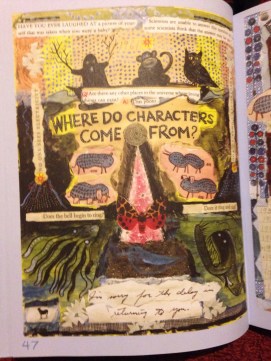
Through the repetition of dramatic illustrations Lynda Barry is accentuating our natural ability to overlook and dismiss the importance of images in our life. She claims both the memory and imagination of a being are inherently alive in one way or another. The beat which drives the hearts of these mental mechanism’s is completely dependent on the being’s ability to create and remember images. In fact, most of the questions Lynda proposes can be answered with a response which calls upon the importance of images. For example, she asks the readers where stories, characters, and personal experience come from. the answer is simple, as all these things start with images and then evolve from that point onward.  In the image attached to this post she asks the reader where characters come from? Underneath the question Lynda has formstormed a few different animals which all have similar peanut shell like bodies. She does this to call attention to fact that images are the genesis of character creation.

Lynda Barry’s use of formstorming throughout the pages of “What it is” is almost impossible not to notice. Through the mass production of images she calls attention to the importance of images themselves. In this book, the images speak louder than the words. Which may be exactly what Lynda is calling attention to. Images are alive and they encapsulate our entire existence. Without images our world would be in a danger of becoming lifeless.

-Conor Reich

Posted in Spring 2017 Archive (336) | Leave a comment

Formstorming: Toree Boutz

In the graphic novel, What It Is by Lynda Barry, we learn about her life as a child, growing up ignored in a broken household. During this time she found solace in the cheery posters on her wall and in story books. The childlike faith she had in the realness of the stories she read had a profound influence on her as she grew up. Now, she writes her graphic novel as an explanation for the images that held such significance in her life and to get in touch with the childlike creativity she fears she has lost since becoming an adult.

Barry uses a type of formstroming to tell her story in this graphic novel. Formstorming, as defined by Ellen Lupton and Jennifer Cole Phillips in Graphic Design: The New Basics, is described as a process of “visual thinking” – a way for designers to find dynamic solutions to design problems they face. Formstorming creates space for a designer to think critically about multiple ways to solve a problem. Easier, more obvious solutions are found first, and then more creative, complex solutions are found through this process of repetition.

I see formstorming in Barry’s novel in the way chunks of her book is organized. She tells her story on pages of, what looks like, yellow notepad paper using words and watercolor paintings. This is seen on page ten. Then, the notepad pages become covered in thicker layers of paint and glued down material. This style can be seen on page twenty-two. These pages are less about storytelling and more about expressing what is going on in Barry’s mind in a visual way. These collage pages are more disorganized and more messy, the way our train of thought tends to be, or the way a child’s mind dreams.  She alternates between these two page styles, telling her story and then showing the thought processes behind the story.

By designing her book this way, Barry solves the issue of how to both tell her story and show her story and her thinking processes. This unique solution is an example of formstorming.

Posted in Spring 2017 Archive (336), Uncategorized | Leave a comment

Formstorming: Emma Garcia

img_0548

Pg. 30 in What It Is by Lynda Barry

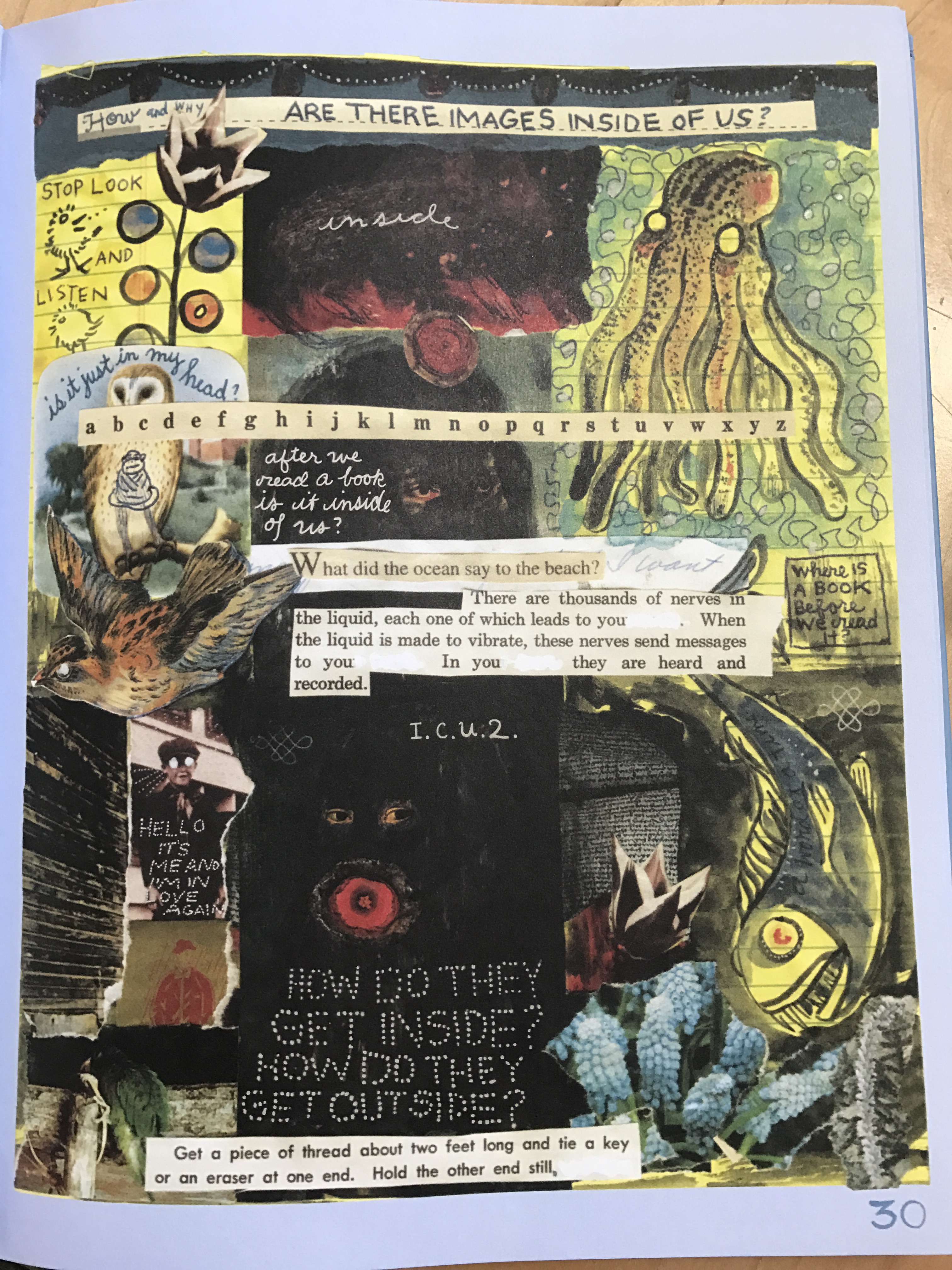
While reading What It Is? By Lynda Barry, I discovered that Lynda Barry is directing the reader’s attention to the human’s ability to dismiss a thought or an image of creativity. As people we doubt ourselves and in the reading, the character presents the difficulty of discovering more creativity. Throughout the reading, Lynda Barry forces you to think about these things and asks a lot of questions. For example, on Page 30, she asks “How and why are there images inside of us?” This is one of the many pages that directly correlates to the idea of Formstorming. On this page, there is a collage of images and words that could be examples of images in our minds. This page could be seen as a form of formstorming just in the way it presents each of the pictures in different ways. In the image, she presents her expression of imagery by placing a variety of images on this page.

This expression of thought is Formstorming because it presents an act of visual thinking on how images come to our minds. In the book, Graphic Design: The New Basics, the authors Ellen Lupton and Jennifer Cole Philips explain Formstorming as an act of visual representation. The deeper the research involved the better and more creative the thoughts. Many exercises such as One Hundred Iterations, which is a formstorming exercise that takes one idea and displays it in 100 different ways, can be seen on multiple pages of What It Is? This is a great way to open your mind and discover creativity. The definition correlates in the presentation of formstorming, through the collages of images on every page being a visual representation of an idea giving the reader the opportunity to question and find answers.


Posted in Spring 2017 Archive (336) | Leave a comment

Form storming-Miguel Bustos

what-it-is-p-14

Page 14 from Lynda Barry’s book, What It Is.

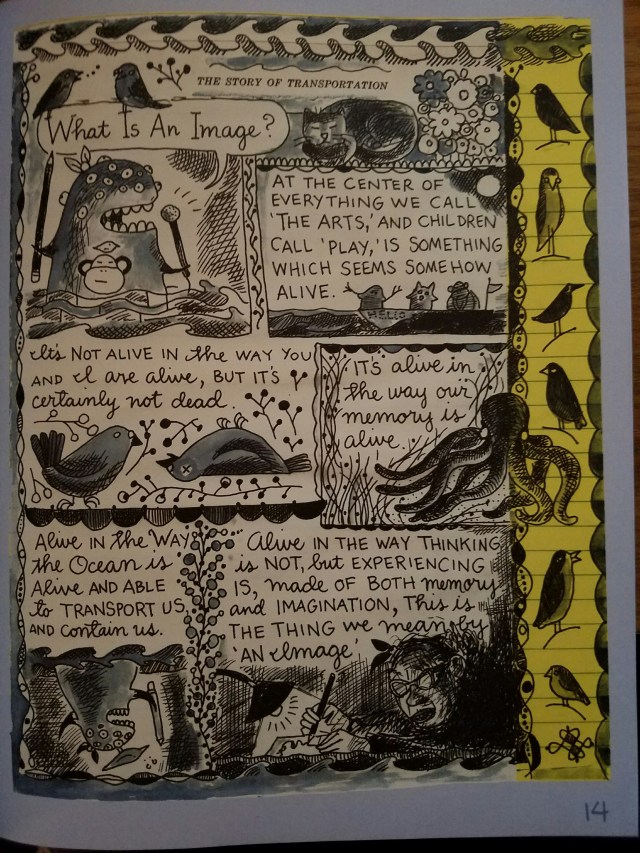
Images are as important to an artist as diction to a poet or flavor to a chef.  Images are alive, perhaps not breathing but most definitely speaking.  They can take on an idea and shout it out to so many people at once.  A flag is an image but it can inspire some of the most wondrous, magnificent, and heinous things human beings are capable of.  Lynda Barry spends the first part of her book trying to explain how the images we make are alive and how they can reach out and touch another person in ways that are unique to that medium.  Developing unique images that are one’s own has and always will be a struggle for all artist.  One way for an artist to find something new is to engage in formstorming.  The idea behind form storming is that you recreate the same image or idea many, many times, but differently every time.  This forces your mind to think of something new, broaden your pool of inspiration and create something truly your own.  You begin to approach the same problem from different angles, shedding a new light on it.  I have a small advantage in that I am bilingual and can instantly approach it from a new place by simply thinking about it in the language of my fathers.  This colors it with different cultural and social norms that add a new flavor to the image.  On page 14 of What It Is, there are several little birds.  Each one is unique and drawn differently but they are all the same idea.  A personal style has emerged that is unique to that artist.

Posted in Spring 2017 Archive (336) | Leave a comment

Formstorming: Alexandra Borders

20170115_180102

Page 33 taken from Lynda Barry’s book “What It Is.”

Ellen Lupton and Jennifer Cole Phillips define formstorming along the lines of being used as a tool to infuse a concept with creativity and originality to produce several new results. With this in mind, it seems as though Lynda Barry thought about this while putting together her graphic novel, What It Is. In fact, this book could have certainly been written with the prime intention to demonstrate this idea of formstorming.

Through at least the first fifty pages of her book, Barry repeats certain images and messages throughout in unconventional and crafty ways. Things such as memory, time and space, the mere idea of images, birds, memory, books, reading, writing, sea creatures, and imagination. The entirety of the book stands as an excellent model of formstorming, just as well as each page individually. Page 33, for example, asks the question, “What is a memory?” Barry uses memory in various ways, asking this question and simply stating the word. Seen in this page is memory through the chosen images, both possibly representing a memories of their own along with representing the meaning of memory. The image of the cluster of people in what looks like a school gives an aura of a dark time that might have taken place, and the picture of Donald Duck adds to this through reminding of adolescence. Giving life to memories with words and images.

Barry successfully does this with every page, tying a great deal of images and quotes to the notion of memories, the processes of remembering, recalling, and forgetting. She weaves the same themes in creative and interesting ways that is not seen the exact same way anywhere else, letting it all stand on its own, and demonstrating formstorming superbly.

Posted in Spring 2017 Archive (336) | Leave a comment