
The key components to type anatomy are small variation that define what the type is, but every typeface has some constants, like a base line or a cap height. Some of the defining factors of typefaces are serifs, which give letters a nice endpoint that protrudes from the horizontal of the letter. Ascender heights and overhangs also are key components of a type face, they either break out above the cap height or dip below the bottom line to appear more proportional, without them some letters would appear smaller. The piece I chose from manuscripts archives is “First Lady of Printing” by Peter Blumenthal published in 1958. The typeface in this piece is a looks to be a traditional Baskerville with shaper serifs
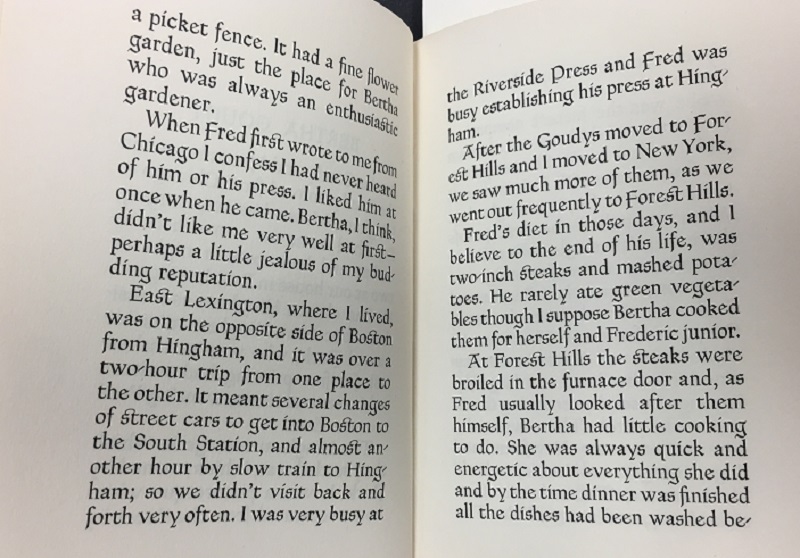
First Lady of Printing
and a more vertical axis. The Baskerville typeface was introduce by John Baskerville during the mid-eighteenth century, at the time their sharp forms and high contrast were considered shocking. The reason I this type is because it almost looks like a blend with the Baskerville and soban typeface which looks sharp and clean like the Baskerville but yet has an old style feel to it with its large overhangs and ascender heights. I also liked how between almost every S and T on the page there is a ligature type things that connect the two, but these go very high above the cap height and really stand out. The descenders of the G’s and Y’s are also very unique, they both kind of reflect each other but the one on the g is a lot bigger and more extravagant compared to the y.
 Kristin Becker's DTC Classes at WSU