
Layers constitute nearly every element of design. The overlapping components of an image sequence are crucial in how we both read and produce graphic images in the world around us today.
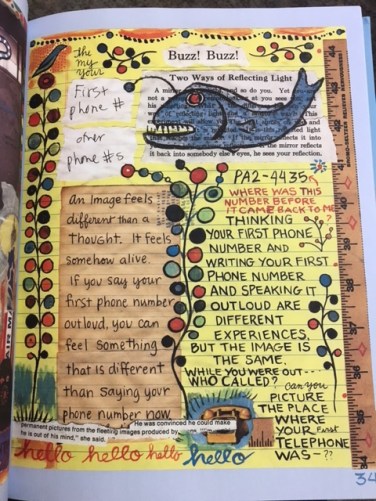
Page 34 of What It Is by Lynda Barry
With in the advancement in digital technology that we currently face, layers are becoming more and more complex as well as diverse in terms of usage. That is why Lynda Barrys graphic novel What It Is is an interesting example of layering. Barry uses the cut and paste technique very often, as you can see the fish image pasted over the text, and the text at the bottom covering the image of the phone. I think this was used to provide depth, as well as to generalize a style which is doodling, and usually when you doodle, its messy and covers previous images you made. Even though these are digital layers, she has made them appear physical in appearance.
The graphic novel that I will be examining further is DayTripper by Fabio Moon and gabriel Ba. I think every design choice in this book was done beautifully.
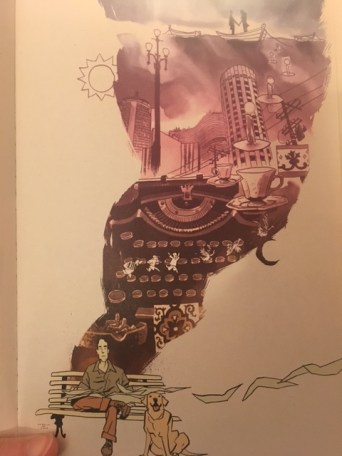
Page 1 of DayTripper by Fabio Moon and Gabriel Ba
For example… layers! The very first page on the novel opens up with the image of what appears to be a man daydreaming on a bench. Unlike Barry’s novel, which used many different types of mediums in order to portray layering, this novel uses color in order to get that message across. Images, as well as different colors are overlapping within the boarders of the “daydream” to give off the impression that he is reflecting on more than one experience in his life. The dark ominous color at the bottom which shows his typer writer (he writes obituaries and hates it because his fathers a famous novelist) , tells us that part of his life is not his favorite, but the warmer colors that start to fill the dream at the top, give us the impression that he is more fond of those memories. The colors give each image space and explain without words that this bubble consists of multiple memories.
 Kristin Becker's DTC Classes at WSU