
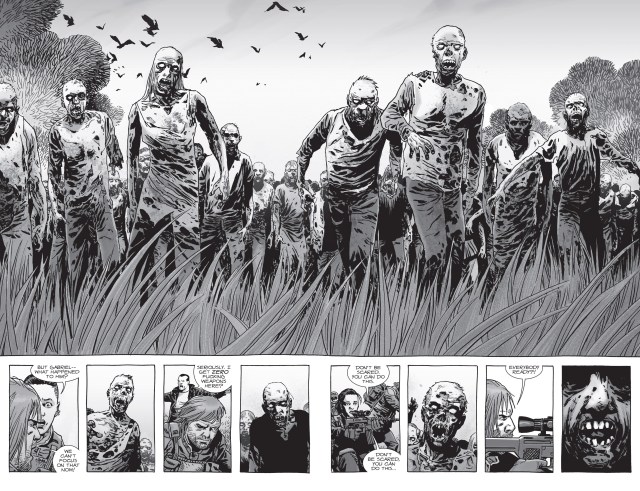
The Walking Dead By: Robert Kirkman, Issue 158, Page 9
Texture allow illustrators to clue the reader into the nature of things within the world they are creating. Texture can refer to the type of paper the final product is being printed on, or more likely, it refers to the physical manipulation of surface details within the illustrations. Take the picture above as an example. The dead truly appear to be alive, not because they are simply walking upright, but due to the textured details littered throughout the illustrator’s work.
The zombies’ clothes have been ripped and torn. They are dirty, and their skin is rotting and decaying before our very eyes. Overall, they look rough. This further emboldens the theme of a lost world present throughout the series. Essentially, these rough creatures are bringing about an end to the character’s previously finely tuned, polished, and luxurious lifestyles. The humans struggling to survive as pale and smooth in comparison to the rough and darkened dead.
The reader can even easily identify the types of materials characters are wearing. For example, in the third smaller panel, we can see a man wearing a leather jacket over a white t-shirt. The picture is small, yet texture is the only thing needed to truly make the image identifiable.
More textures appear throughout the page, Each blade of grass adds to the page in the same way that each whisker adds to the face of the bearded hero in the third small panel. Texture makes the world feel authentic and alive.
 Kristin Becker's DTC Classes at WSU