
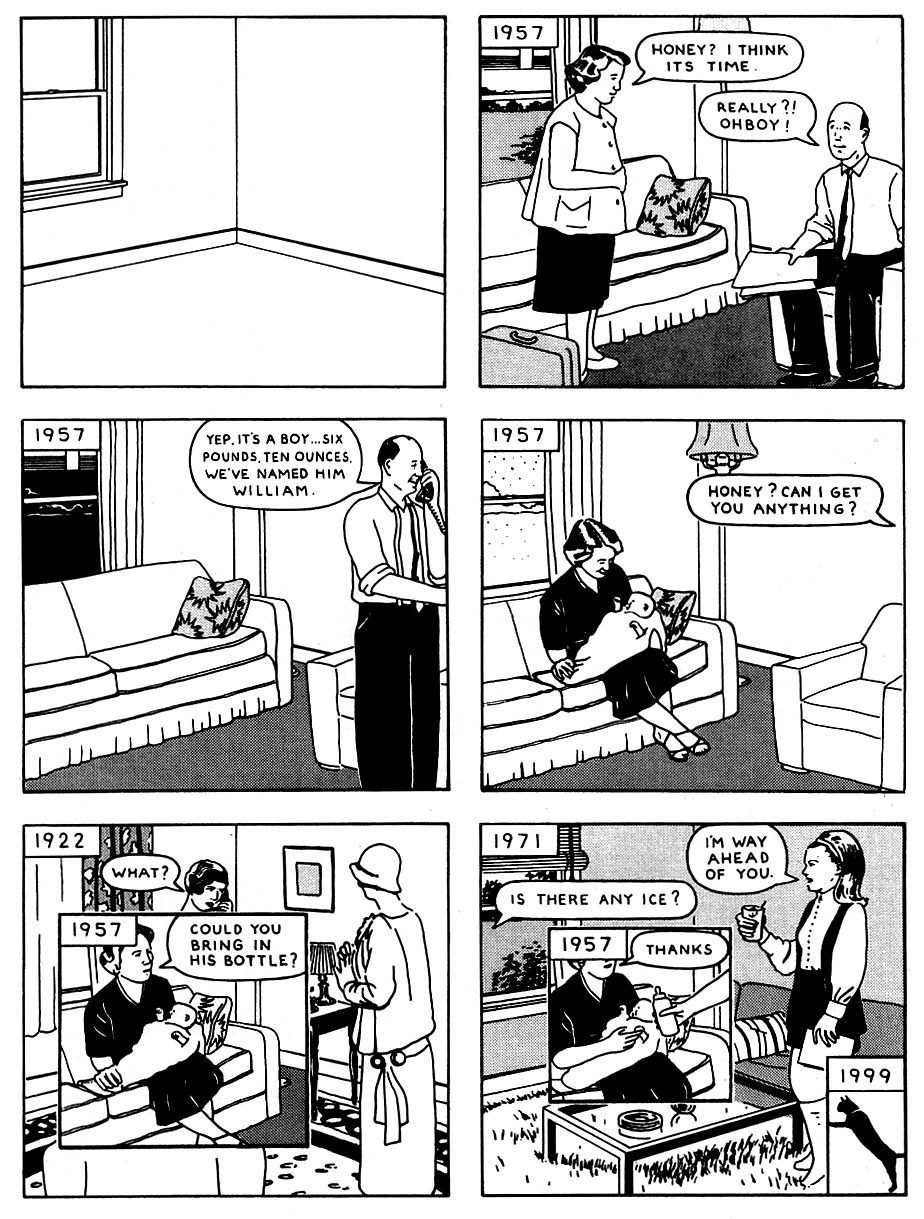
Page from
Richard McGuire’s graphic novel, Here (Pantheon Books, 2014).
Ellen Lupton and Jennifer Cole Phillips explore the idea of framing in their book, Graphic Design: The New Basics. Generally, frames are often meant to bring special attention to a piece by lifting and separating it from its surroundings. Additionally, frames can also help us better understand an art piece or object.
Frames may fulfill their purpose in many different ways in many different contexts. For example, in comic books, often times frames are created using borders around each piece of the story. This can help readers understand the sequence of the events in the story being told, as well as what should be noticed in each frame.
Richard McGuire’s uses borders like this in his graphic novel, Here. Boxes of the same size are created using thin black borders, in which images that tell the story are drawn.
In addition to more obvious frames, like borders, frames may also be implied. These kinds of frames may be created through a camera lens, margins, or the page size of a book. In Here, McGuire uniquely places frames within frames and uses shifts in scale of the frames to tell multiple stories at once. He simultaneously tells of one story in 1922 using one frame, and tells a story in 1957 using a smaller frame within it, scaling it to look like the woman is sitting on a similar couch. This creates a more dynamic story for readers, and we are able to grasp it thanks to the framing McGuire uses.
 Kristin Becker's DTC Classes at WSU