
For the purpose of this blog post I chose to write about a Chinese bill. The first thing that I noticed was that since they had limited tools and paper their counterfeiting measures were not so great; therefore, they had to use other techniques to not have their money reproduced illegally.
For example, the bill that I analyzed had various features that one could take as being “counterfeiting measures”. The people who created the bill, that I analyzed, used various colors, patterns and designs. Thin lines created a design along the border and throughout the bill. In some of the areas the overlapping of the lines created darker or more visible areas of color.
It may seem silly for the design patterns to be counterfeiting measures; however, we must keep in mind that back in the 1920’s the individual(s) who made this bill did not have the technology that we do today. Today I can create a figure in illustrator and use the pattern making tool to recreate it multiple times and it will only take a few clicks and adjustments to do so. Taking this into account that is why one of the reason why our bills have changed. For instance, like the new 100 dollar bill was recently changed to keep up with the access to technological advances that people have.
They also did layers upon layers on this bill. If you look closely you can see the colors of one design seeping through other colors and patterns that were later applied.
Furthermore, the color scheme is the first element that caught my eye because it was not working together in any way. The six or so colors did not seem to follow any analogous or complimentary color wheel. In my point of view they just worked with what they had and then colored the numbers and square designs in the back in red, so they would stand out.
Last, but not least, like in any composition, typography is an important element in this bill. is an interesting aspect of the money for various reasons. Only on the front side of this bill, I counted four different fonts. Apart from the inconsistency in fonts the text is an English, which is interesting considering it is a Chinese bill. Nevertheless, if you look closely you can see that the bill was made by an American factory which accounts for the text as well as the front of the bill being similar to an American bill.
Mely
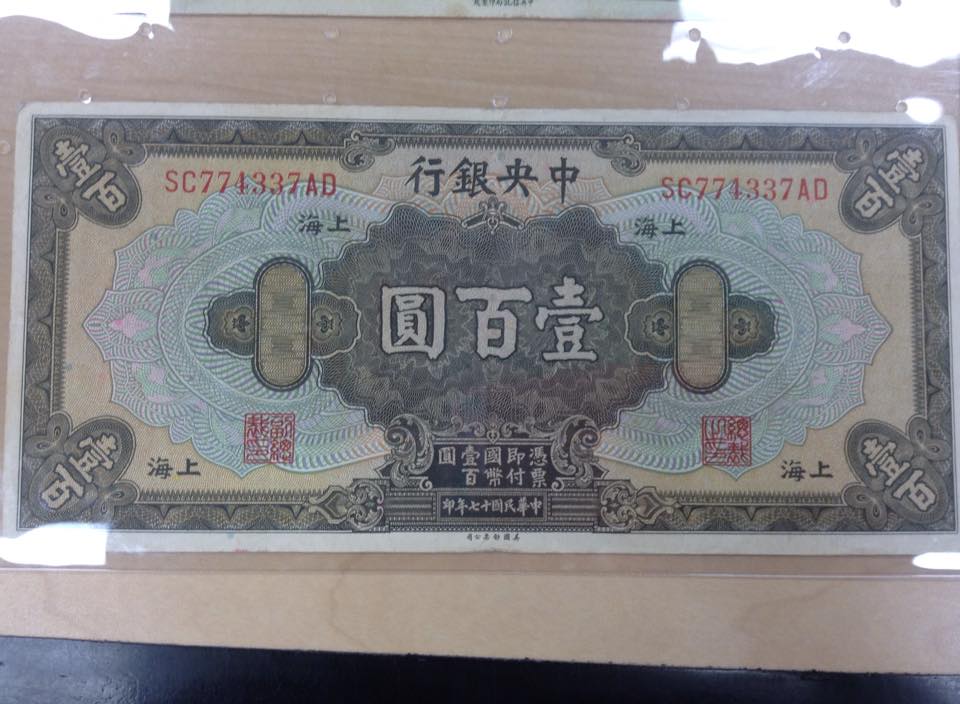
Chinese Bill Back Holland Terrell Library
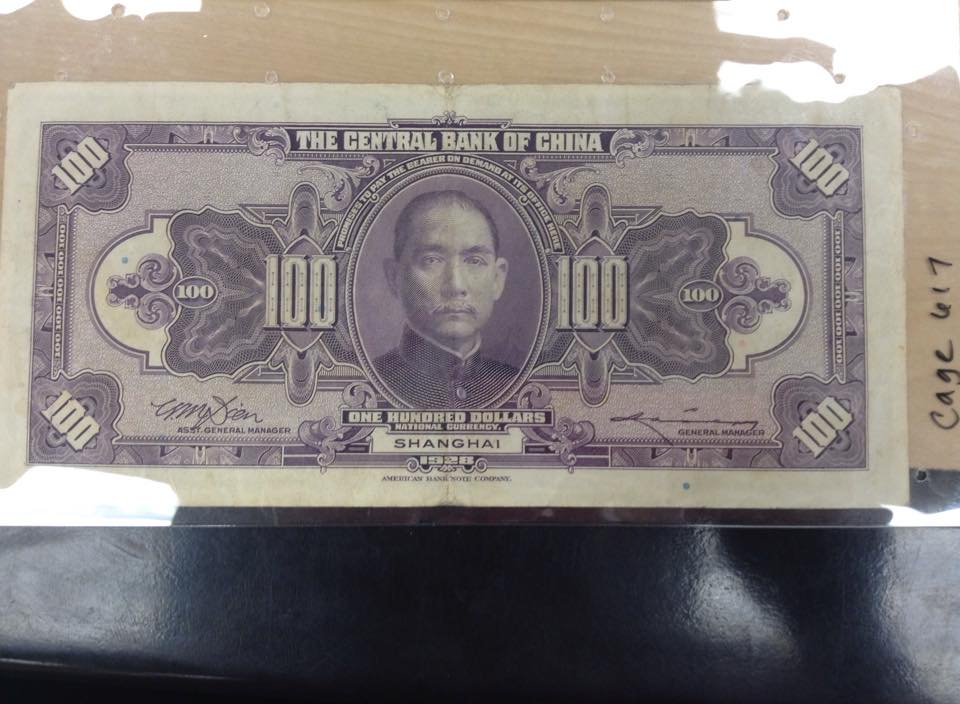
Chinese 100 bill Front Holland Terrell Library
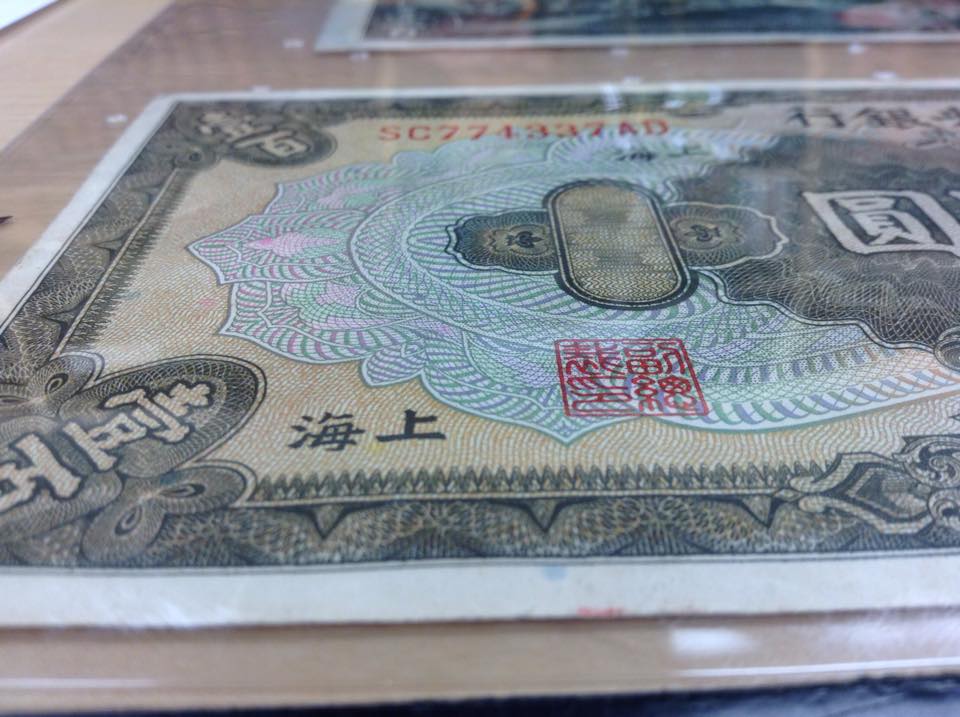
Close up Chinese Bill Holland Terrell Library
 Kristin Becker's DTC Classes at WSU